
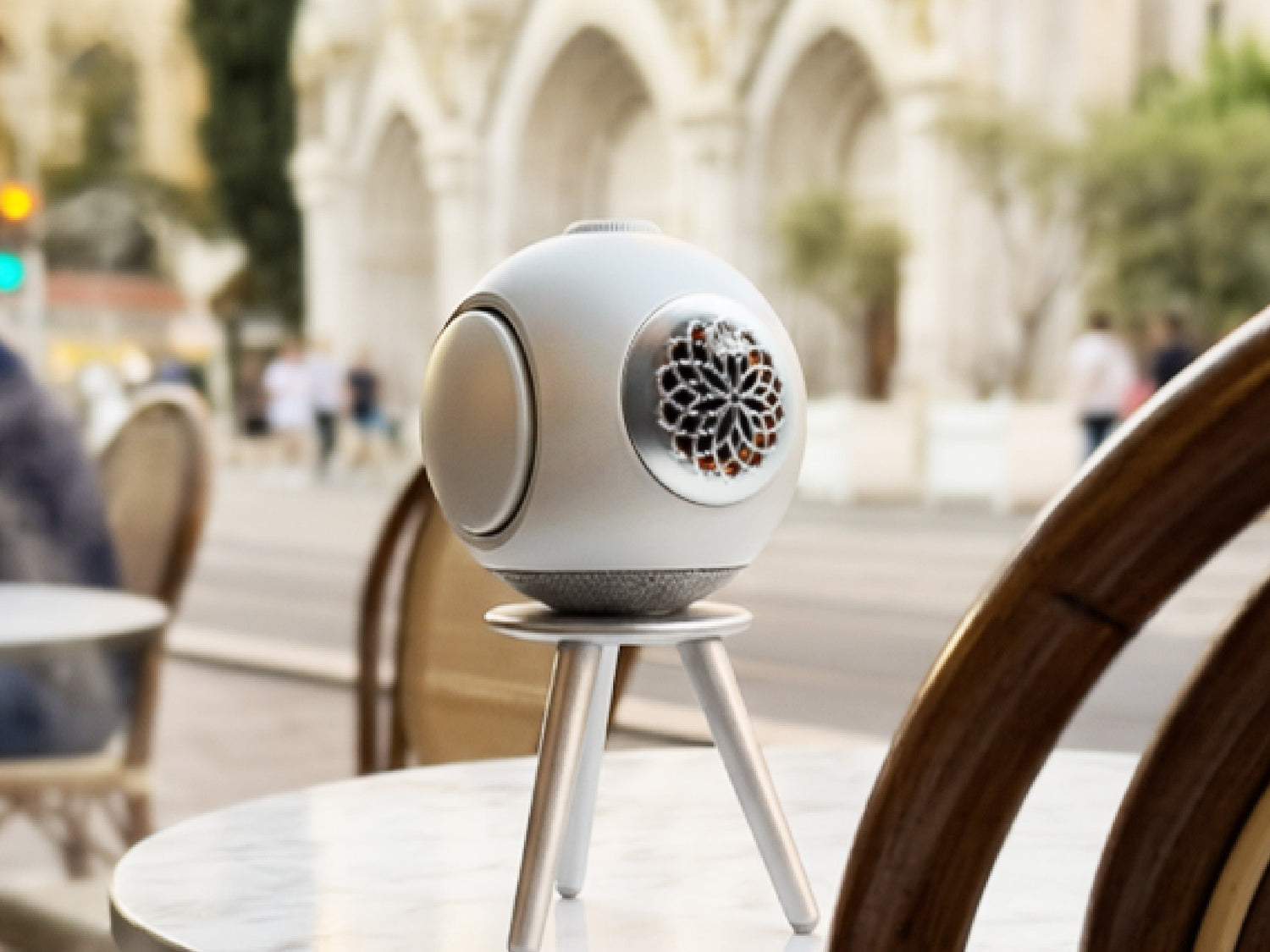
Most people think speaker quality is about one thing: loudness.
Turn it up, feel the bass, enjoy the music.
But anyone who has pushed a cheap speaker too far knows the truth:
At some point, the sound stops getting better and starts getting worse.
That “worse” is called distortion, and it is one of the main reasons music feels harsh, tiring, or artificial even when a speaker looks powerful on paper.
If you are choosing a portable bluetooth speaker, a wireless bluetooth speaker, or searching for the best sounding bluetooth speaker, understanding distortion is more important than knowing wattage or frequency numbers.
Because distortion is what separates:
- clean, emotional sound
from - loud but uncomfortable noise
This guide breaks down what distortion actually is, how it affects your listening experience, and how better speaker engineering prevents it even in compact best small bluetooth speakers and best budget bluetooth speakers.
What Is Distortion in Simple Terms?
Distortion happens when a speaker is no longer able to accurately reproduce the original sound signal.
Instead of playing music as it was recorded, it starts:
- bending the sound wave
- adding unwanted frequencies
- compressing dynamic range
In simple language:
Distortion is when sound stops being faithful to the music.
What Distortion Actually Sounds Like
Most people recognize distortion without knowing its name.
It often sounds like:
- harsh vocals at higher volume
- crackling or buzzing in bass
- “flat” or compressed music
- loss of detail in instruments
- fatigue after listening for a while
A quick example:
A song sounds great at 50% volume.
At 80%:
- bass becomes muddy
- vocals lose clarity
- highs feel sharp or painful
That is distortion starting to appear.
Why Distortion Happens in Speakers
Distortion is not random. It has clear physical causes.
1. Driver Overload
Every speaker has a limit to how far its driver can move.
When pushed too hard:
- it loses control
- movement becomes irregular
- sound waves become inaccurate
2. Enclosure Limitations
In poorly designed enclosures:
- air pressure builds unevenly
- internal reflections interfere
- resonance becomes chaotic
3. Power Compression
As volume increases:
- the speaker consumes more power
- but output efficiency drops
So instead of getting louder clearly:
- sound becomes compressed
4. DSP Over-Boosting
Many best budget bluetooth speakers rely heavily on digital signal processing (DSP) to boost bass and loudness.
But when pushed too far:
- artificial enhancement introduces artifacts
- bass loses texture
- sound becomes unnatural
Why Small Speakers Distort Faster
Compact speakers face a physical limitation:
They must produce bass using:
- smaller drivers
- smaller air volume
To compensate, manufacturers often:
- increase power input
- boost bass digitally
- push components harder
This is why many best small bluetooth speakers sound great at moderate volume but break down when turned up.
Volume vs Clarity: The Real Trade-Off
One of the biggest misunderstandings in audio is assuming:
louder = better
In reality:
- clarity decreases as distortion increases
- beyond a certain point, volume reduces quality
Clean Sound vs Loud Sound
Clean Sound:
- balanced frequencies
- clear separation
- natural tone
Distorted Sound:
- compressed dynamics
- harsh highs
- muddy bass
The goal of a good wireless bluetooth speaker is not just loudness it’s maintaining clarity as volume increases.
Why Good Speakers Don’t Distort Easily
High-quality speakers are designed to control energy, not just produce it.
They focus on:
- controlled driver movement
- stable air pressure
- efficient resonance handling
Helmholtz-Inspired Acoustic Control
One advanced method used in modern speaker engineering is the Helmholtz resonator principle.
This involves:
- trapping air inside a chamber
- controlling how it moves
- reinforcing specific frequencies naturally
Instead of forcing bass or volume, the system:
- distributes pressure evenly
- reduces stress on the driver
- improves efficiency
This helps reduce distortion at higher output levels.
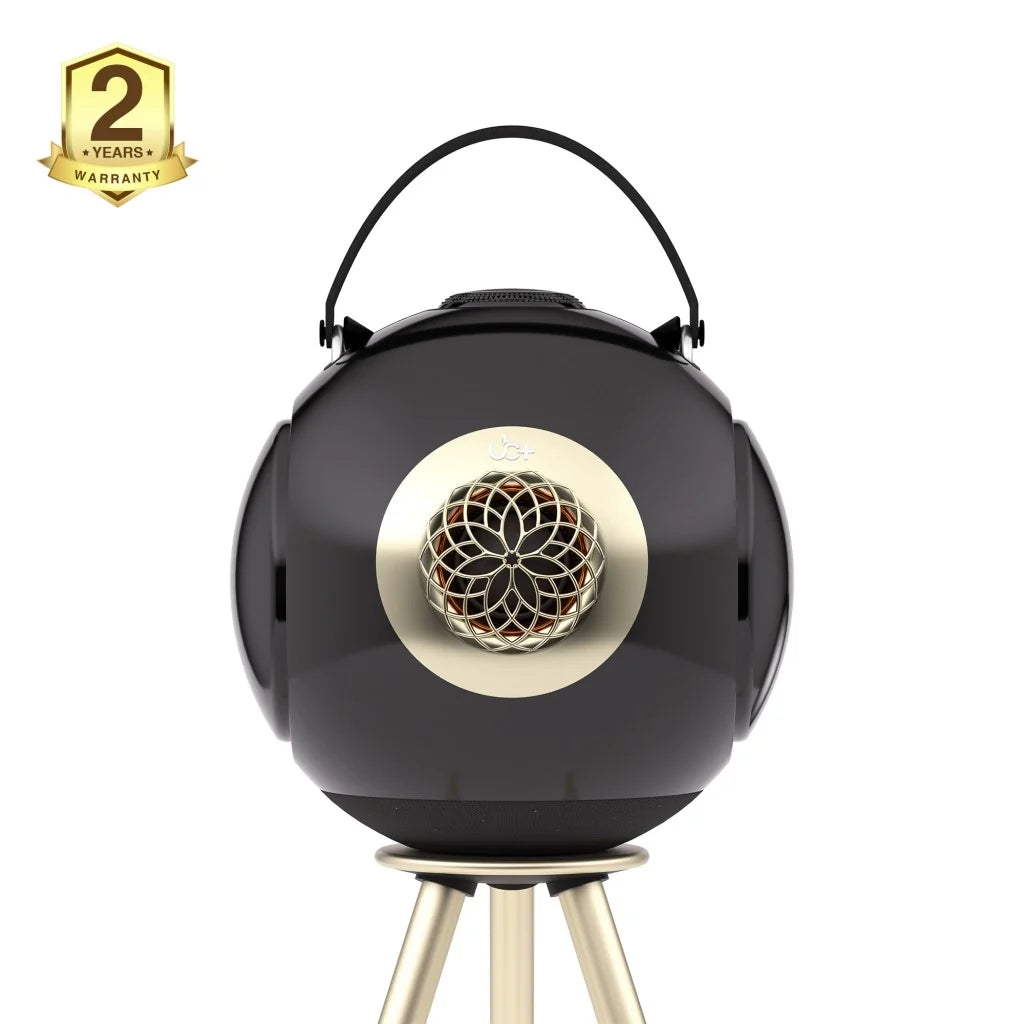
Spherical Enclosures: Stability Through Shape
Shape matters more than most people realize.
Traditional Box Speakers:
- have flat internal walls
- create standing waves
- allow uneven pressure buildup
This increases distortion risk at higher volume.
Spherical Speakers:
- have no parallel surfaces
- distribute sound evenly
- reduce internal reflections
This leads to:
- smoother bass
- cleaner mids
- more stable output at high volume
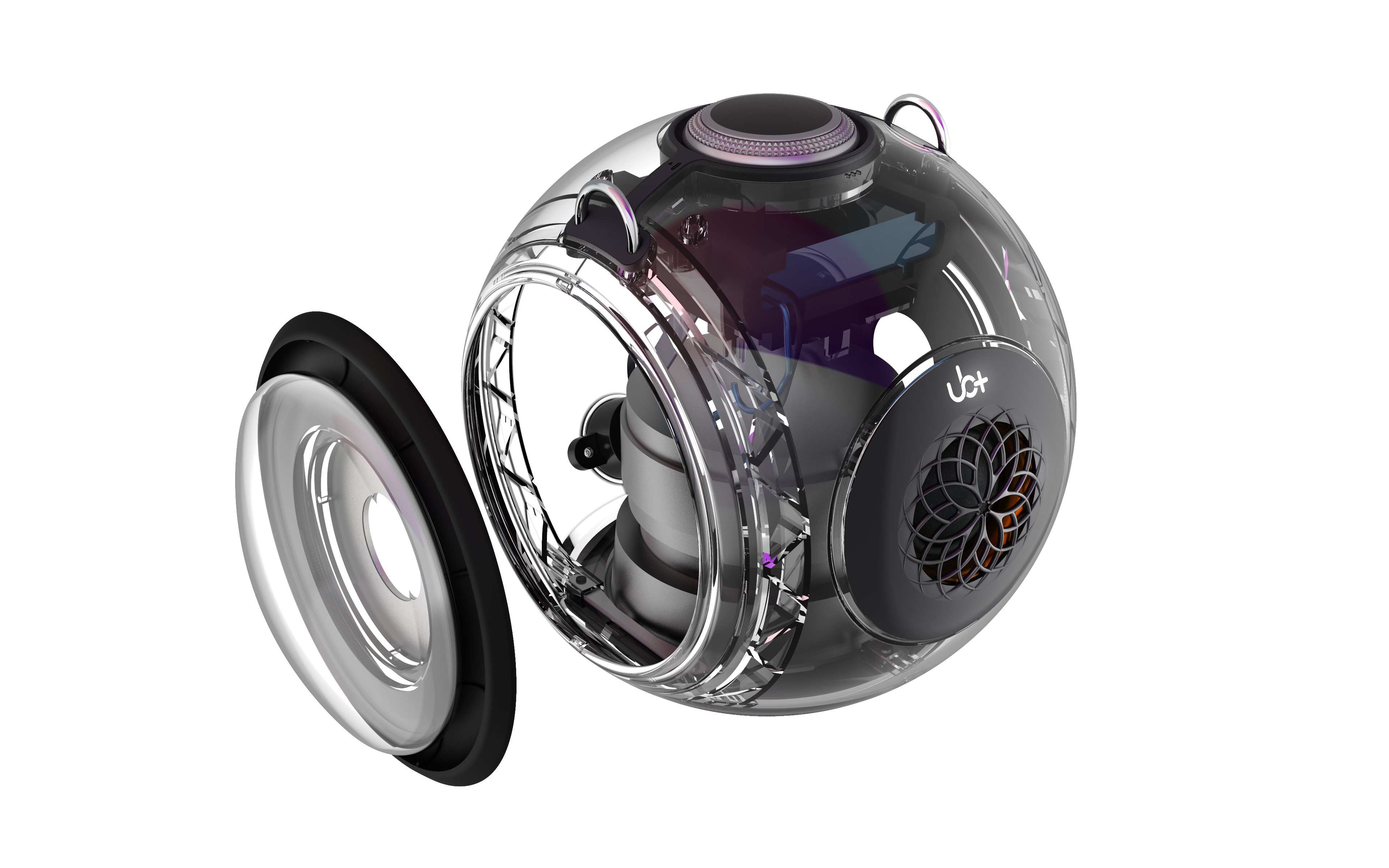
Dual Passive Radiators: Controlling Low-End Distortion
Bass is where distortion appears first.
To control it, many advanced speakers use dual passive radiators.
How They Work:
- internal air pressure moves radiators
- they vibrate in response to bass frequencies
- energy is distributed more efficiently
Why Dual Systems Matter:
When placed symmetrically:
- movement is balanced
- vibration cancels out
- enclosure remains stable
This reduces:
- rattling
- bass breakup
- low-frequency distortion
3.5× Air Movement and Why It Helps
Some modern compact speakers increase effective bass output by expanding the surface area involved in air movement.
When passive radiators are optimized:
- air displacement increases significantly
- bass becomes stronger without overloading the driver
This allows a portable bluetooth speaker to produce deep bass without distortion even at higher volume levels.
Downward-Firing Drivers: Reducing Stress on the System
Instead of pushing sound directly forward, some speakers use a downward-firing driver.
This design:
- energizes internal air volume
- allows pressure to build evenly
- reduces direct strain on the driver
Result:
- smoother output
- lower distortion risk
- more natural bass response
Distortion Behavior in Speaker Types
|
Feature |
Basic Portable Speaker |
Engineered Audio Speaker |
|
Bass Handling |
DSP boosted |
Mechanically controlled |
|
High Volume Behavior |
Distorts early |
Maintains clarity |
|
Driver Stress |
High |
Optimized |
|
Air Movement |
Limited |
Enhanced |
|
Sound Quality at Max Volume |
Harsh |
Balanced |
|
Listening Fatigue |
High |
Low |
Why Distortion Matters More Than Loudness
A distorted speaker may still be loud but it loses:
- emotional depth
- instrument separation
- listening comfort
This is why many users prefer a slightly quieter but cleaner wireless bluetooth speaker over a louder but harsh one.
The Hidden Cost of Cheap Loud Speakers
Many best budget bluetooth speakers prioritize:
- marketing loudness numbers
- bass exaggeration
- compact design at low cost
But often lack:
- driver control
- proper enclosure design
- resonance management
This leads to:
- early distortion
- reduced lifespan of components
- poor long-term listening experience
Why Audiophile Speakers Sound Cleaner
The best sounding bluetooth speaker designs prioritize accuracy over exaggeration.
They focus on:
- linear driver movement
- controlled bass response
- stable internal pressure
This results in:
- clearer vocals
- better detail
- less fatigue over time
What You Should Listen for When Testing a Speaker
Instead of focusing on volume, pay attention to:
- Vocal clarity at medium volume
- Bass control (not just intensity)
- High-frequency smoothness
- Consistency as volume increases
If any of these break down early, distortion is present.
How to Avoid Distortion When Buying a Speaker
When choosing a rechargeable bluetooth speaker, look for:
- efficient acoustic design
- passive radiator systems
- stable enclosure structure
- balanced tuning rather than boosted sound
Avoid speakers that rely only on:
- “extra bass” marketing
- high wattage claims
- exaggerated frequency ranges
Why Modern Design Reduces Distortion Naturally
Advanced speakers don’t just “handle” distortion they prevent it.
They achieve this through:
- better airflow control
- symmetrical vibration cancellation
- spherical acoustic geometry
- mechanical bass amplification instead of digital boosting
This is why compact speakers today can outperform older, larger systems.
Final Thoughts: Clean Sound Is the Real Quality
Distortion is not just a technical flaw it changes how music feels.
It turns:
- detail into noise
- emotion into harshness
- rhythm into fatigue
Understanding distortion helps you choose better not louder audio.
Whether you’re selecting a portable bluetooth speaker, a wireless bluetooth speaker, or evaluating the best small bluetooth speakers, the goal is simple:
Find a speaker that stays clean when pushed, not one that only sounds good when it’s quiet.
Because real quality is not how loud a speaker gets.
It’s how well it holds together when the music gets intense.
Experience Clean, Controlled Sound
→ Compare dB1 vs dB Mini
→ See color options
→ Check current price
Because great speakers don’t just play music louder.
They keep it pure, even when you turn it up.


Hinterlasse einen Kommentar
Diese Website ist durch hCaptcha geschützt und es gelten die allgemeinen Geschäftsbedingungen und Datenschutzbestimmungen von hCaptcha.