
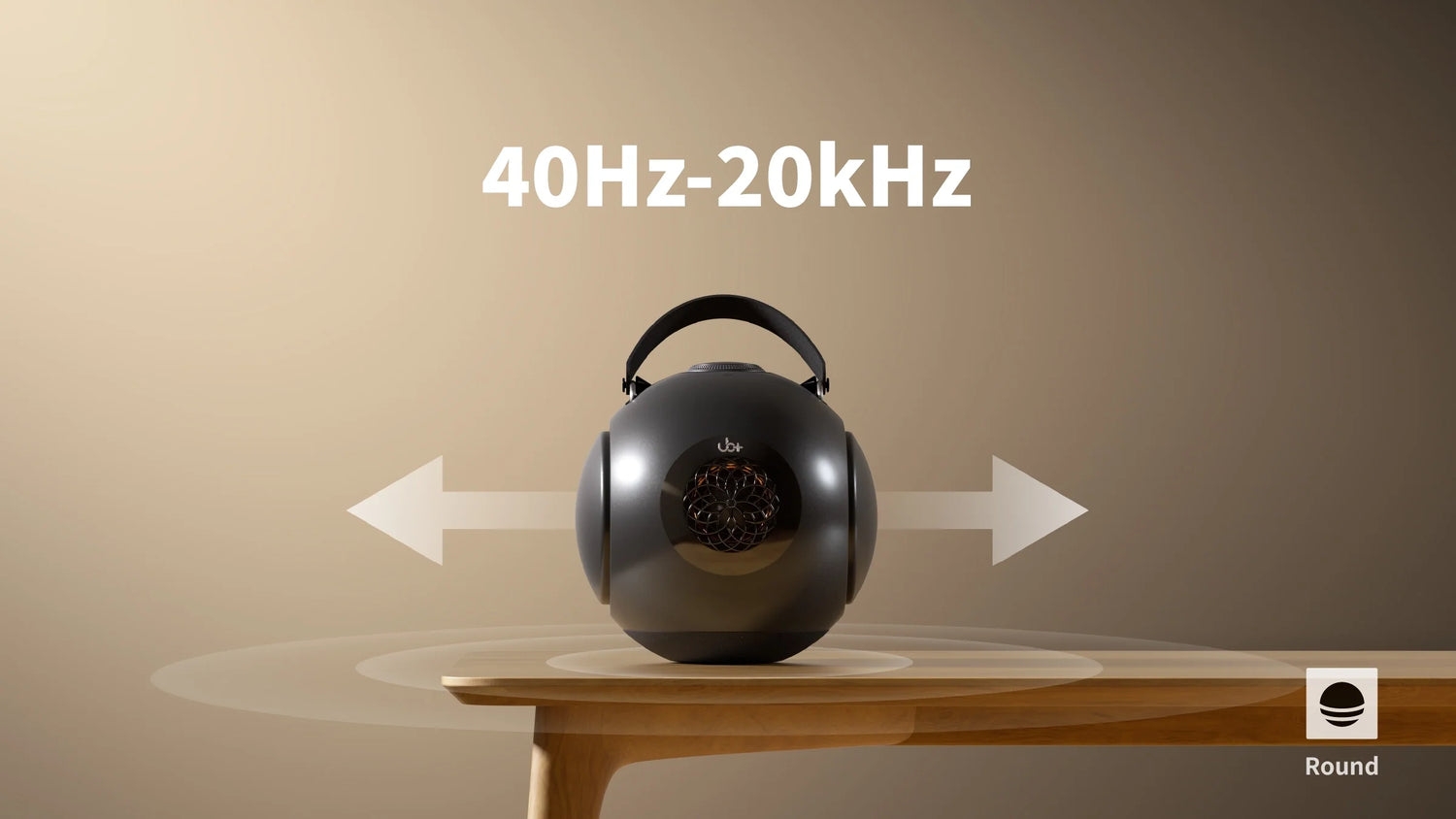
If you’ve ever searched for a bluetooth speaker, compared a portable bluetooth speaker, or tried to decide between two wireless bluetooth speaker models, you’ve probably seen one number repeated everywhere:
Watts (W)
10W. 20W. 50W. 100W. Even 200W “peak power” claims on compact devices.
At first glance, it feels like an easy way to judge performance. More watts should mean louder sound, right?
Not quite.
In reality, watts are one of the most misunderstood specifications in audio. They often tell you very little about how a speaker will actually sound in your room, how clean it will remain at higher volume, or whether it qualifies as the best sounding bluetooth speaker for everyday use.
This guide breaks down what watts really mean, why they are often misleading, and what actually determines real-world sound performance especially when choosing a best portable bluetooth speaker, best small bluetooth speakers, or best budget bluetooth speaker.
What Are Speaker Watts (Really)?
In simple terms, watts measure electrical power consumption, not loudness.
A speaker watt rating describes how much electrical energy the amplifier can send to the driver not how much sound you will hear.
That’s the key misunderstanding:
Watts measure input power, not acoustic output.
Why People Think More Watts = More Volume
This confusion comes from early audio systems where:
- bigger amplifiers produced louder sound
- larger speakers required more power
- higher watt systems were physically larger
So historically, watts loosely correlated with loudness.
But modern compact systems changed everything.
Today, a small wireless bluetooth speaker with efficient design can outperform a larger, higher-watt system if:
- enclosure design is better
- driver efficiency is higher
- resonance is controlled
The Real Measure of Loudness: SPL, Not Watts
If you want to understand loudness, you need to look at:
SPL (Sound Pressure Level)
Measured in decibels (dB), SPL tells you:
- how loud a speaker actually gets
- how efficiently it converts power into sound
Example:
- Speaker A: 20W, low efficiency → moderate loudness
- Speaker B: 10W, high efficiency → louder output
Yes, the lower watt speaker can be louder.
This is why watts alone cannot define a best portable bluetooth speaker.
The Missing Factor: Efficiency
Efficiency determines how well a speaker converts power into sound.
Two speakers with identical watt ratings can perform very differently:
High Efficiency Speaker:
- produces more sound with less power
- stays clean at high volume
- less distortion
Low Efficiency Speaker:
- wastes energy as heat
- distorts earlier
- sounds weaker despite higher watt rating
Sensitivity: The Hidden Specification Most Buyers Ignore
Another critical factor is sensitivity, measured in dB (decibels per watt).
It tells you how loud a speaker gets with 1 watt of power.
Example:
- 85 dB sensitivity → average output
- 90 dB sensitivity → significantly louder
- 95 dB sensitivity → very efficient system
A small difference in sensitivity dramatically affects real-world performance.
This is why some best small bluetooth speakers sound much louder than expected.
Why Watts Are Often Misleading in Marketing
Many manufacturers use watt ratings as marketing tools because:
- they are easy to understand
- they look impressive
- consumers associate them with power
But there are three common tricks:
1. Peak Power vs RMS Power
- Peak Watts = short bursts of maximum output
- RMS Watts = real continuous power
A speaker advertised as “100W” might only deliver 25W RMS.
2. Inflated Lab Conditions
Watts are sometimes measured:
- without real music playback
- at distortion levels not usable in real listening
- under ideal electrical conditions
3. Ignoring Acoustic Design
Even high-watt systems can sound weak if:
- enclosure is poorly designed
- internal resonance is uncontrolled
- driver movement is inefficient
The Real Drivers of Speaker Performance
To understand real-world sound, you must look beyond watts.
There are four key elements:
1. Enclosure Design
The speaker cabinet is not just a box it is an acoustic system.
Poor enclosure design leads to:
- internal reflections
- uneven bass response
- energy loss
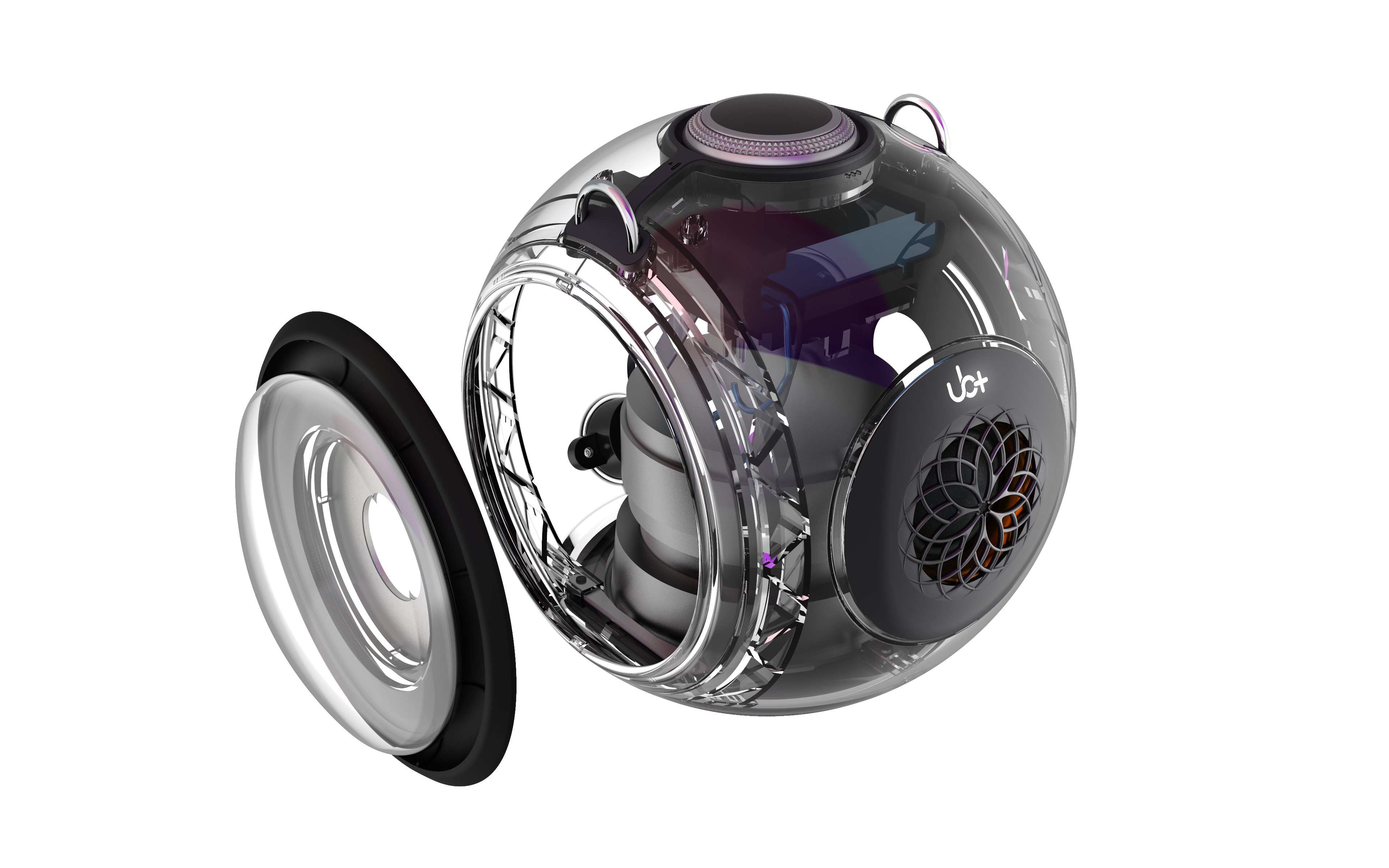
Advanced designs (like spherical enclosures) allow:
- even pressure distribution
- smoother bass
- better efficiency
2. Driver Engineering
A driver determines how air is moved.
Important factors include:
- magnet strength
- voice coil size
- diaphragm control
- excursion range
A well-engineered driver can outperform a higher-watt competitor.
3. Air Movement System
Modern compact speakers rely on:
- passive radiators
- Helmholtz-inspired chambers
- optimized airflow paths
These systems allow portable bluetooth speakers to produce deeper bass without increasing wattage.
4. Resonance Control
Uncontrolled vibration leads to distortion.
Good speakers use:
- symmetrical designs
- structural reinforcement
- internal damping
This ensures clean sound even at high volume.
Watts vs Real Performance Factors
|
Factor |
Watts |
Real-World Impact |
|
Loudness |
Weak indicator |
SPL matters more |
|
Sound Quality |
Not related |
Depends on design |
|
Bass Depth |
Not relevant |
Depends on enclosure + driver |
|
Efficiency |
Not included |
Critical factor |
|
Distortion Control |
Not included |
Very important |
|
Listening Experience |
Misleading |
Depends on full system |
Why Small Speakers Can Sound Powerful
Many users assume a compact bluetooth speaker cannot compete with larger systems.
But modern acoustic engineering proves otherwise.
Small speakers can sound powerful because:
- they use efficient drivers
- they optimize internal air movement
- they reduce energy loss
- they control resonance better
This allows them to achieve strong output without high wattage.
Why High Watt Speakers Sometimes Sound Worse
Higher wattage does not prevent:
- distortion
- harshness
- poor tuning
In fact, high watt systems often:
- push drivers beyond optimal range
- introduce clipping
- increase listening fatigue
So more power does not always mean better sound.
The Role of Battery Speakers in Modern Design
A rechargeable bluetooth speaker must balance:
- power consumption
- efficiency
- sound quality
High watt designs drain batteries faster unless efficiency is optimized.
That’s why modern designs focus more on:
- acoustic engineering
- enclosure optimization
- driver efficiency
instead of raw wattage.
What Actually Makes a Speaker Sound “Loud”
Loudness is not just power.
It is the combination of:
- SPL efficiency
- driver sensitivity
- enclosure resonance control
- airflow optimization
A well-designed system can feel louder at lower wattage because it wastes less energy.
Wireless Surround Sound Systems: Another Watt Misconception
In a wireless surround sound system, total wattage is often misleading.
Why?
Because:
- sound is distributed across multiple speakers
- room acoustics play a major role
- synchronization matters more than power
A lower-watt system with better design can outperform a high-watt system in real rooms.
Why Audiophile Speakers Ignore Watt Ratings
The best sounding bluetooth speaker designs rarely emphasize watts.
Instead, they focus on:
- clarity
- tonal balance
- distortion control
- soundstage accuracy
Audiophiles care about how music feels not how much power is listed.
Budget Speakers vs Engineered Speakers
Many best budget bluetooth speaker models rely heavily on watt marketing.
But limitations include:
- simplified drivers
- basic enclosures
- limited resonance control
Higher-end systems invest in:
- acoustic engineering
- material science
- airflow optimization
This leads to better sound even at lower watt levels.
Helmholtz Resonance: Smarter Bass Without More Watts
One advanced approach used in modern speakers is Helmholtz-inspired acoustic design.
It works by:
- controlling air inside the enclosure
- tuning resonance naturally
- amplifying bass without extra power
This allows deeper bass without increasing wattage.
Why Watts Are Becoming Less Important in 2026 Audio Design
Modern speaker engineering is shifting toward:
- efficiency over power
- design over raw output
- acoustics over amplification
Because users now want:
- longer battery life
- cleaner sound
- compact size
not just higher watt numbers.
What You Should Look For Instead of Watts
When choosing a wireless bluetooth speaker, focus on:
- SPL efficiency
- Driver quality
- Enclosure design
- Distortion levels at high volume
- Real-world reviews
These factors determine real sound quality far more than watt ratings.
Final Thoughts: Watts Don’t Define Sound Design Does
Watts are one of the most overused and misunderstood specifications in audio.
They do not tell you:
- how clean a speaker sounds
- how deep its bass feels
- how long you can listen comfortably
- how well it performs in real rooms
What matters instead is the full system:
- engineering
- enclosure design
- driver efficiency
- resonance control
- acoustic architecture
This is what separates average speakers from the best portable bluetooth speaker, the best small bluetooth speakers, and truly the best sounding bluetooth speaker experiences.
Because in modern audio design, power is not the goal.
Performance is.
Choose Smarter Sound, Not Just Higher Numbers
→ Compare dB1 vs dB Mini
→ See color options
→ Check current price
Because real sound quality isn’t measured in watts.
It’s measured in how naturally music comes to life.


Hinterlasse einen Kommentar
Diese Website ist durch hCaptcha geschützt und es gelten die allgemeinen Geschäftsbedingungen und Datenschutzbestimmungen von hCaptcha.