
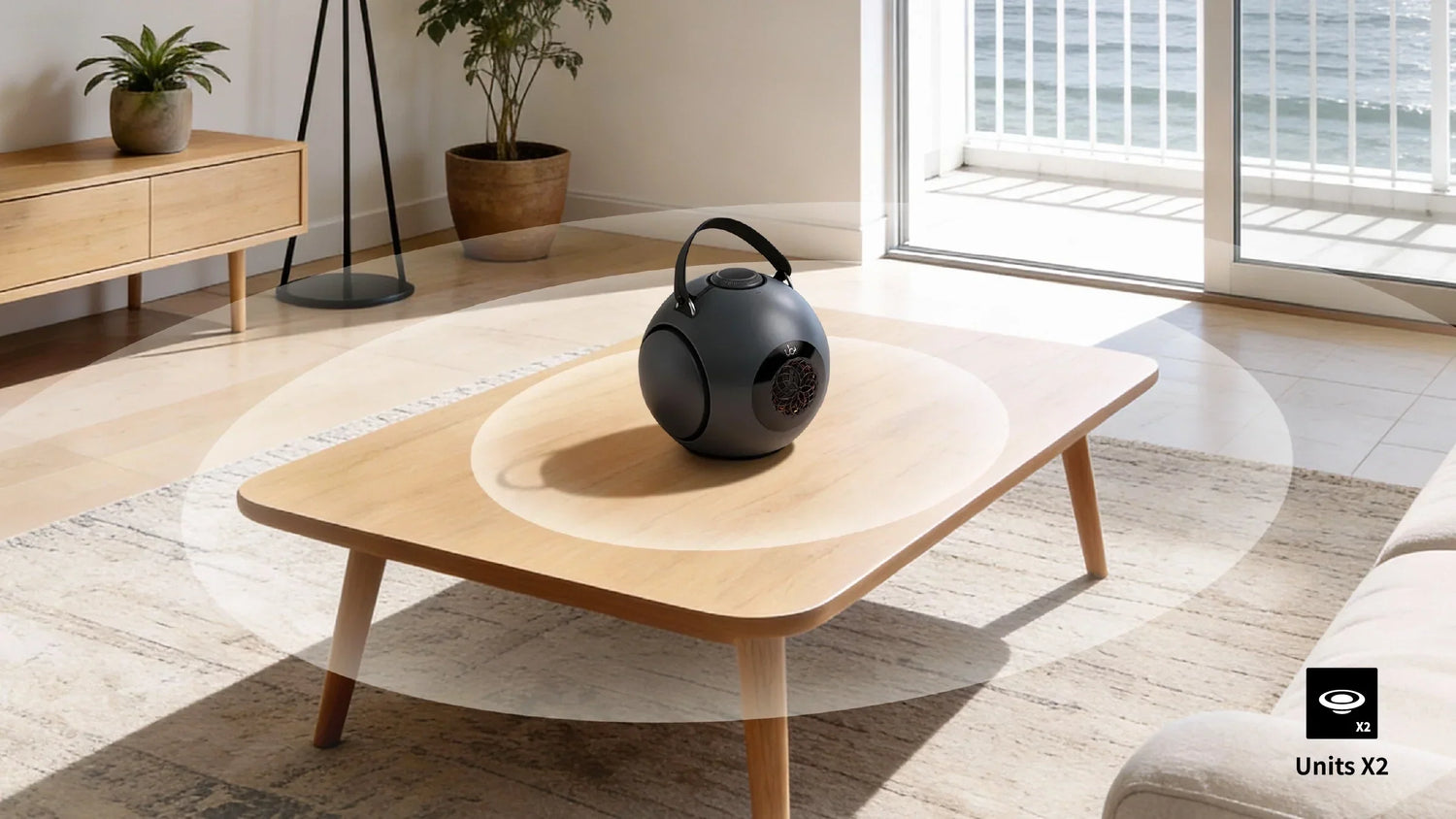
Most people notice bass first.
Some notice loudness.
Others focus on clarity.
But one of the biggest differences between ordinary speakers and truly immersive audio systems is something less obvious at first: soundstage.
Soundstage is what makes music feel spacious instead of flat. It creates the illusion that instruments, vocals, and effects exist in real physical positions around you rather than collapsing into a single point of sound.
When a speaker has poor soundstage:
- vocals feel trapped inside the cabinet
- instruments blur together
- music sounds narrow and compressed
- movies feel small and lifeless
When soundstage is done correctly:
- vocals appear naturally placed
- instruments feel separated
- rooms sound larger
- music becomes immersive and emotional
For decades, people believed strong soundstage required large stereo systems with multiple speakers positioned throughout a room.
But modern acoustic engineering has changed that assumption.
Today, a carefully engineered single-speaker system can create surprisingly immersive spatial sound — especially when enclosure shape, sound dispersion, resonance control, and airflow behavior are designed intelligently.
This is particularly important in modern categories like:
- best portable bluetooth speaker
- high end bluetooth speaker
- audiophile wireless speakers
- compact premium wireless systems
- lifestyle-oriented home audio
In this guide, we will explore:
- what soundstage actually means
- how humans perceive stereo imaging
- why room interaction matters
- how 360° dispersion changes immersion
- why enclosure shape affects spatial realism
- how single-speaker systems can sound larger than expected
We will also explain why spherical acoustic engineering and controlled resonance are becoming increasingly important in modern premium wireless speaker design.
What Is Soundstage?
Soundstage refers to the perceived spatial presentation of sound.
It is the illusion that music exists within a three-dimensional environment rather than originating from a single physical object.
A good soundstage creates:
- width
- depth
- separation
- positional realism
- atmosphere
For example:
- vocals may appear centered
- guitars may seem farther left
- drums may feel deeper in the room
- ambient effects may spread outward naturally
Even though the sound technically comes from speakers, your brain interprets it as a larger acoustic scene.
Why Soundstage Matters More Than Loudness
Many consumer speakers prioritize:
- maximum volume
- boosted bass
- aggressive tuning
But loudness alone does not create immersion.
In fact, poorly controlled loudness often reduces spatial realism because:
- frequencies overlap
- distortion increases
- dynamics compress
- room reflections become chaotic
A refined soundstage creates emotional engagement without requiring excessive volume.
This is why many listeners describe premium best sounding bluetooth speaker systems as:
- larger
- more spacious
- more realistic
- more cinematic
even when they are physically compact.
Can a Single Speaker Really Create Soundstage?
Yes but only if engineered properly.
Traditional stereo systems use two separate speakers to create directional cues between left and right channels.
Single-speaker systems face a harder challenge:
they must simulate spaciousness from one physical enclosure.
Many cheap compact speakers struggle here because:
- sound projects too narrowly
- cabinet resonance muddies detail
- dispersion is uneven
- bass overwhelms spatial clarity
But premium acoustic systems use several engineering techniques to expand perceived soundstage.
How Human Hearing Creates Spatial Perception
The human brain constantly analyzes:
- timing differences
- frequency reflections
- phase information
- directional cues
to determine where sound exists in space.
Even small acoustic changes affect spatial realism dramatically.
This means speaker design influences not only sound quality but also perceived room size and immersion.
Why Dispersion Matters for Soundstage
One of the biggest factors affecting soundstage is sound dispersion.
Traditional directional speakers fire sound aggressively forward.
This creates:
- narrow sweet spots
- uneven room coverage
- limited immersion
You hear the best sound only from one exact position.
Broader dispersion behaves differently.
Sound spreads more evenly throughout the room, creating:
- greater spaciousness
- smoother reflections
- more natural listening
- wider listening zones
This is especially important in modern homes where listeners:
- move around frequently
- sit off-axis
- use open-plan rooms
- want casual immersive listening
Why 360° Dispersion Changes the Listening Experience
Many premium modern speaker systems now focus on 360°-style sound dispersion.
Instead of projecting aggressively in one direction, these speakers distribute sound more evenly around the room.
Benefits include:
- fuller room coverage
- more natural reflections
- improved immersion
- softer directional harshness
- better off-axis listening
This creates a larger perceived soundstage even from compact enclosures.
Why Spherical Speakers Improve Spatial Sound
Speaker shape directly affects sound behavior.
Traditional box speakers contain:
- parallel internal walls
- standing wave hotspots
- uneven pressure behavior
- resonance buildup
These problems interfere with:
- clarity
- phase consistency
- spatial realism
Spherical acoustic chambers solve many of these issues naturally.
Without parallel surfaces:
- reflections disperse more evenly
- pressure stabilizes internally
- resonance smooths out
- sound behaves more organically
This is why spherical speaker systems are often described as:
- open
- spacious
- airy
- immersive
especially during long listening sessions.
The Helmholtz-Inspired Chamber Approach
Some advanced speaker systems use acoustic principles inspired by Helmholtz resonance.
Instead of simply amplifying bass digitally, these systems shape airflow mechanically inside the enclosure itself.
A Helmholtz-inspired chamber allows:
- balanced pressure distribution
- smoother low-frequency reinforcement
- cleaner harmonic behavior
- reduced internal resonance
The enclosure itself becomes part of the acoustic system.
This matters enormously for soundstage because uncontrolled resonance often collapses spatial detail.
When bass becomes cleaner and more controlled:
- vocals separate more clearly
- instruments feel more distinct
- room ambience becomes easier to perceive
Why Bass Quality Affects Soundstage
Many people think soundstage only relates to mids and highs.
In reality, bass quality strongly affects spatial realism.
Poor bass creates:
- masking
- muddiness
- compression
- room overload
This reduces instrument separation and collapses perceived depth.
Controlled bass behaves differently.
Well-engineered low frequencies create:
- warmth
- scale
- atmosphere
- foundation
without overwhelming detail.
This balance is critical in premium audiophile wireless speakers.
Why Passive Radiators Matter in Compact Systems
Compact speakers struggle physically to produce deep bass cleanly.
Traditional small drivers often distort when pushed too hard.
Passive radiators help solve this problem.
Instead of using simple bass ports, advanced systems use:
- tuned passive radiator plates
- airflow reinforcement
- resonance control
Some premium systems even use:
- dual symmetrical passive radiators
- self-canceling vibration
- balanced air movement
This improves:
- bass extension
- cabinet stability
- low-frequency smoothness
while reducing distortion that harms soundstage.
Narrow Dispersion vs 360° Dispersion
|
Feature |
Narrow Directional Speaker |
360° Dispersion Speaker |
|
Listening Zone |
Limited |
Broad |
|
Off-Axis Clarity |
Reduced |
More consistent |
|
Room Coverage |
Uneven |
Even |
|
Spatial Immersion |
Narrow |
Expansive |
|
Group Listening |
Less effective |
Better |
|
Small Room Performance |
Can feel aggressive |
More natural |
Why Distortion Destroys Spatial Realism
Distortion does more than sound unpleasant.
It damages:
- imaging
- separation
- depth perception
- tonal balance
As distortion rises:
- instruments blend together
- room ambience disappears
- vocals flatten
- immersion collapses
Premium speaker systems focus heavily on reducing distortion through:
- stable enclosures
- advanced driver engineering
- airflow management
- resonance control
The Importance of Driver Engineering
Drivers are the physical components moving air to create sound.
High-quality drivers maintain:
- cleaner motion
- lower distortion
- better transient response
- more stable dynamics
This improves soundstage because details remain separated rather than compressed together.
Advanced premium systems often include:
- oversized magnets
- long-stroke voice coils
- wide surrounds
- distortion-reducing rings
These features improve control at both low and high volume levels.
Why Room Interaction Matters
Soundstage does not exist independently from the room.
The room itself becomes part of the listening experience.
Hard reflective spaces can:
- exaggerate harshness
- reduce clarity
- smear imaging
Soft furnishings help absorb excessive reflections and improve spatial realism.
Good speaker placement also matters enormously.
Best Placement for Single-Speaker Soundstage
For the best spatial performance:
- avoid placing speakers directly into corners
- allow breathing room around the enclosure
- avoid blocking sound paths
- position speakers near ear level when possible
Curved and spherical speakers often provide greater flexibility because their dispersion is naturally broader.
Why Single-Speaker Systems Are Popular Today
Modern lifestyles increasingly favor:
- simplicity
- wireless flexibility
- uncluttered interiors
- multi-purpose rooms
Many people no longer want:
- complex stereo wiring
- large floor-standing systems
- oversized home theater setups
A premium rechargeable bluetooth speaker can now provide:
- immersive room-filling sound
- strong bass performance
- flexible placement
- modern aesthetics
without overwhelming the room visually or acoustically.
Why Compact Speakers Can Sound Bigger Than They Are
Speaker size alone does not determine perceived scale.
Several factors influence “bigness”:
- sound dispersion
- bass extension
- harmonic balance
- cabinet stability
- room interaction
A carefully engineered compact speaker can create a surprisingly large soundstage through:
- controlled resonance
- wide dispersion
- stable low frequencies
- optimized airflow
Traditional Box Speakers vs Spherical Acoustic Systems
|
Feature |
Traditional Box Speaker |
Spherical Acoustic System |
|
Internal Reflections |
Stronger |
Reduced |
|
Standing Waves |
More common |
Minimized |
|
Resonance Control |
DSP-heavy |
Naturally smoother |
|
Dispersion |
Directional |
Wider |
|
Spatial Perception |
Narrower |
More immersive |
|
Long Listening Comfort |
Variable |
Higher |
Why Listener Fatigue Affects Immersion
Listening fatigue reduces emotional engagement over time.
Common causes include:
- harsh treble
- distorted bass
- cabinet vibration
- compressed dynamics
When fatigue increases, listeners subconsciously stop focusing on spatial detail.
Balanced systems maintain:
- smoother tonality
- cleaner airflow
- lower distortion
which helps preserve immersion for hours.
Why Premium Wireless Speakers Feel More Cinematic
Many modern wireless surround sound system alternatives rely on advanced spatial tuning and broad sound dispersion to create cinematic immersion without requiring multiple speakers.
A refined soundstage improves:
- movie dialogue realism
- ambient effects
- musical emotion
- environmental scale
This is why premium compact wireless speakers increasingly replace traditional entertainment systems in apartments and smaller homes.
- The Emotional Side of Soundstage
Soundstage is not only technical.
It is emotional.
A spacious presentation makes music feel:
- more human
- more atmospheric
- more immersive
- more emotionally engaging
Good spatial audio allows listeners to relax into the experience rather than constantly hearing the speaker itself.
Why Modern Buyers Care About Spatial Sound
Today’s listeners increasingly prioritize:
- immersion
- comfort
- atmosphere
- room integration
rather than just:
- loudness
- wattage
- raw output
This shift explains the growing popularity of:
- premium compact systems
- curved acoustic designs
- room-friendly speaker engineering
especially among modern high end bluetooth speaker buyers.
Why Good Soundstage Makes Rooms Feel Bigger
One fascinating aspect of soundstage is psychological scale.
A speaker with strong spatial realism can make a room feel:
- larger
- calmer
- more open
- more immersive
This is particularly valuable in:
- apartments
- bedrooms
- offices
- compact living rooms
where oversized systems may overwhelm the environment.
Why Simplicity Matters in Modern Audio
Many listeners want fewer devices and cleaner setups.
Single-speaker systems reduce:
- cable clutter
- placement complexity
- setup frustration
while still delivering rich, room-filling sound when engineered properly.
This balance between simplicity and performance defines modern premium wireless audio.
Cheap Portable Speakers vs Premium Spatial Audio Speakers
|
Feature |
Standard Portable Speaker |
Premium Spatial Audio Speaker |
|
Soundstage |
Narrow |
Expansive |
|
Bass Control |
Often boosted |
Balanced |
|
Room Interaction |
Aggressive |
Smooth |
|
Listening Fatigue |
Higher |
Lower |
|
Sound Dispersion |
Limited |
Broad |
|
Emotional Immersion |
Moderate |
High |
The Future of Single-Speaker Audio
As acoustic engineering improves, single-speaker systems continue becoming more immersive.
Future innovations will likely focus even more on:
- airflow behavior
- enclosure geometry
- spatial DSP
- resonance elimination
- room-adaptive sound
The goal is no longer simply louder sound.
The goal is believable immersion from beautifully integrated systems.
Final Thoughts: Soundstage Is What Makes Audio Feel Alive
Soundstage is one of the most important yet misunderstood aspects of audio.
It is the difference between:
- hearing music
and - feeling surrounded by it.
A well-engineered single-speaker system can now create remarkable spaciousness through:
- broad sound dispersion
- controlled resonance
- balanced airflow
- stable bass behavior
- refined enclosure design
This is why modern premium audio increasingly focuses on:
- spherical acoustic chambers
- 360° sound dispersion
- passive radiator systems
- resonance-controlled structures
rather than relying only on raw power or exaggerated bass.
The best modern speakers do not simply play sound loudly.
They create atmosphere.
They create depth.
They create space.
And when that happens, the speaker itself begins to disappear leaving only the music, the room, and the experience.
Frequently Asked Questions
1. What is soundstage in a speaker system?
Soundstage refers to the perceived width, depth, and spatial positioning of sound. A strong soundstage makes music and movies feel more immersive and realistic.
2. Can a single bluetooth speaker create good soundstage?
Yes. A premium single-speaker system with broad sound dispersion, controlled resonance, and balanced tuning can create surprisingly immersive spatial sound.
3. Why do spherical speakers often sound more spacious?
Spherical enclosures reduce standing waves and internal reflections, helping create smoother resonance behavior and more natural sound dispersion throughout the room.
4. What makes a high end bluetooth speaker sound more immersive?
High-end systems often use better drivers, advanced acoustic chambers, passive radiator tuning, and improved sound dispersion to create deeper, cleaner, and more spacious audio.
5. Are audiophile wireless speakers good for movies and gaming?
Yes. Many audiophile wireless speakers provide excellent dialogue clarity, controlled bass, and wide sound dispersion, making them highly effective for immersive entertainment experiences.
Explore Immersive Wireless Audio
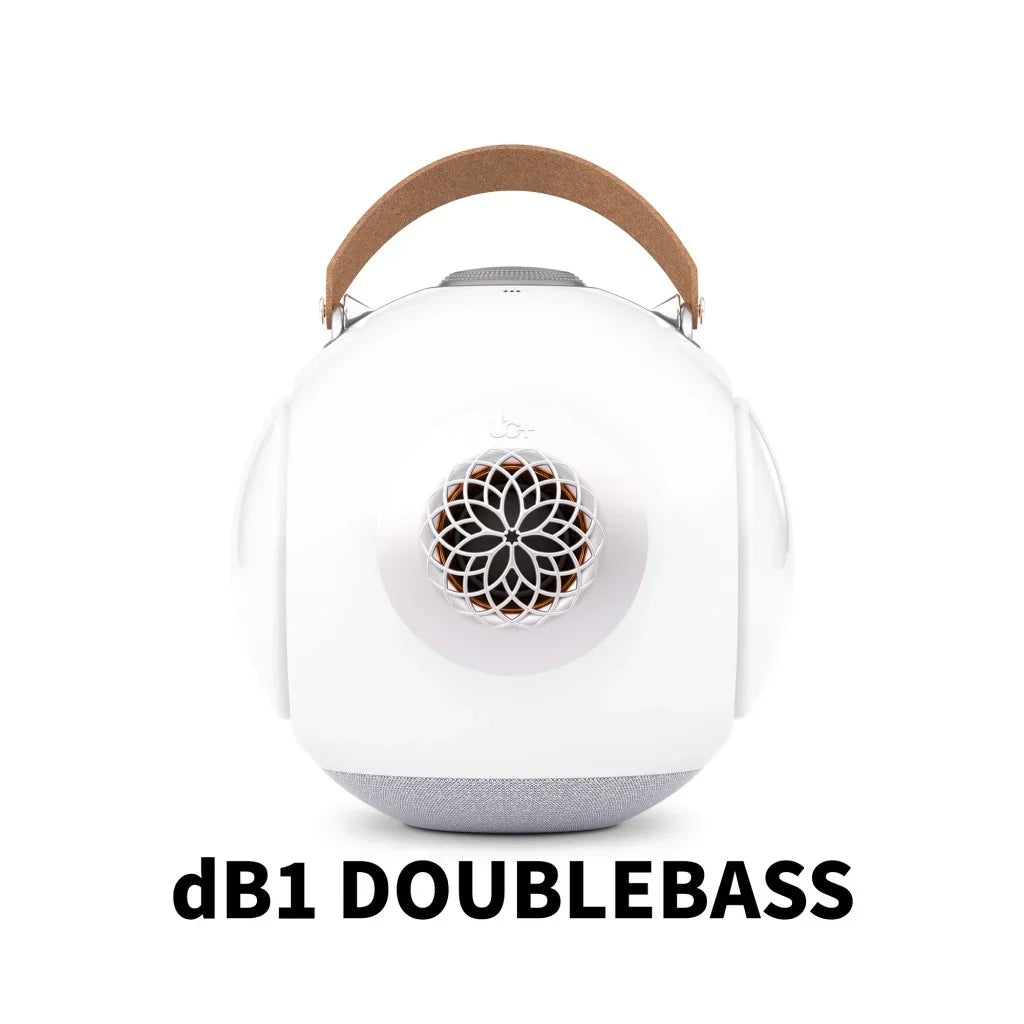
→ Compare dB1 vs dB Mini
→ See color options
→ Check current price
Designed for spacious sound. Engineered for modern living.


Hinterlasse einen Kommentar
Diese Website ist durch hCaptcha geschützt und es gelten die allgemeinen Geschäftsbedingungen und Datenschutzbestimmungen von hCaptcha.