
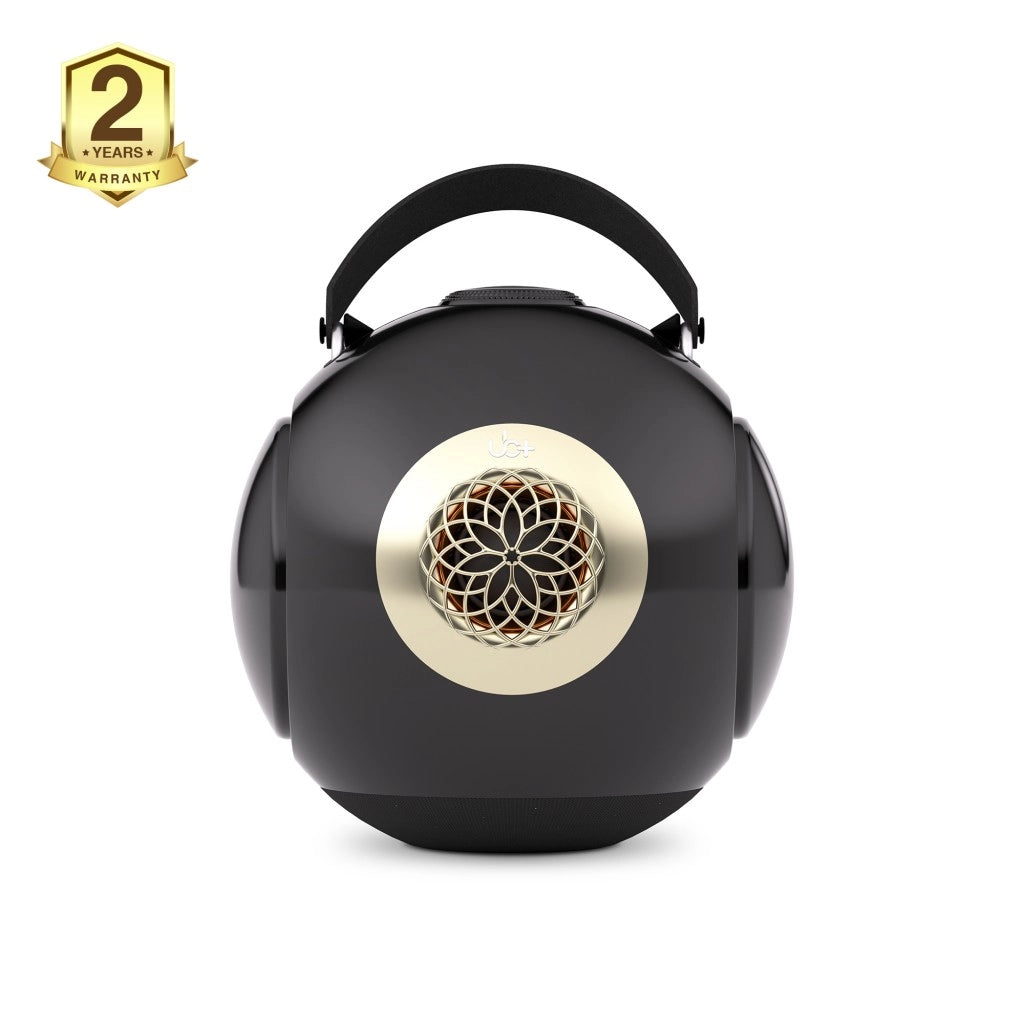

Casual house gatherings sit in a very specific space between everyday listening and full-scale party audio. You are not trying to turn the living room into a club, but you also do not want background sound that disappears when people start talking. The goal is balance: enough presence to fill the room, enough clarity for mixed conversations, and enough bass to keep music feeling alive without overwhelming the space.
This is where many people struggle with choosing a best portable bluetooth speaker or even considering a wireless surround sound system. Most party systems are designed for volume and impact, not comfort. At the same time, small speakers often fail to create the sense of fullness needed for group listening.
The real question is not “how loud should it be?” but:
How do you create room-filling sound that stays controlled, warm, and easy to live with?
That is exactly what this guide explains—using real acoustic behavior, placement logic, and modern speaker design principles, including how systems like advanced spherical acoustic designs influence perceived sound in real rooms.
1. What Makes Casual Gathering Audio Different?
Casual gatherings usually include:
- 3–10 people in a living room
- mixed conversation and music
- shifting positions (people moving around)
- background listening rather than focused listening
This creates unique audio requirements.
A typical rechargeable bluetooth speaker may sound fine alone, but struggles when:
- voices compete with music
- room becomes acoustically “busy”
- people move away from the speaker axis
Similarly, a high end bluetooth speaker designed for precision listening may feel too directional or too “studio-like” for relaxed environments.
So the ideal speaker sits in the middle:
- wide sound dispersion
- controlled bass
- easy placement
- no complicated setup
2. What “Room-Filling Sound” Actually Means
Room-filling sound does NOT mean loud sound.
It means:
- consistent sound pressure across the room
- minimal drop-off in different positions
- balanced reflections from surfaces
- no harsh directional hotspots
A best sounding bluetooth speaker achieves this through a combination of:
- acoustic dispersion design
- cabinet shape
- driver tuning
- bass radiation control
Unlike traditional systems that push sound in one direction, modern designs aim to distribute energy evenly in 360° or near-omnidirectional patterns.
This is why speaker geometry matters as much as power.
3. Why Party Systems Often Fail for Casual Use
A wireless surround sound system or party speaker setup is optimized for:
- high SPL (sound pressure level)
- large outdoor spaces
- bass-heavy impact curves
- directional energy projection
But in small indoor gatherings, this becomes a disadvantage.
Problems include:
- overpowering bass that dominates conversation
- harsh treble reflections in walls
- “hot spots” where sound is too loud
- uneven coverage in corners of the room
Instead of enhancing the gathering, it creates listening fatigue.
Casual environments need control—not aggression.
4. The Ideal Speaker Characteristics for House Gatherings
A proper system for this use case—whether a best portable bluetooth speaker or a compact home unit—should focus on four acoustic pillars:
1. Balanced bass
Not boosted, not missing—just present enough to support rhythm.
2. Wide dispersion
Sound should spread evenly so people don’t need to sit in one position.
3. Controlled dynamics
Music should remain stable even when volume increases slightly.
4. Easy placement
No setup complexity or directional alignment required.
These qualities matter more than raw wattage or size.
5. Why Shape Matters More Than People Think
Most people assume sound quality is driven by power or brand.
In reality, shape plays a major role in how sound behaves in a room.
A traditional box speaker:
- projects forward
- creates directional sound fields
- reflects unevenly off walls
A more modern spherical or curved design:
- distributes sound more evenly
- reduces sharp reflection points
- supports smoother diffusion
This is where advanced acoustic engineering—like spherical resonance control and internal pressure balancing—becomes important.
In systems inspired by Helmholtz-style acoustic principles, internal air pressure behaves more uniformly, allowing bass energy to be distributed rather than forced.
The result is sound that feels:
- smoother
- more natural
- less fatiguing in group settings
6. Placement: The Most Important Factor for Gatherings
Even the best audiophile wireless speakers fail if placed incorrectly in a social environment.
Ideal placement principles:
Center-based positioning
Place speaker in a central or near-central location to distribute sound evenly.
Avoid corners
Corners amplify bass unevenly and create imbalance in group listening.
Maintain open airflow
Do not block speaker sides or rear radiation paths.
Elevation matters
Slight elevation improves dispersion across seated and standing listeners.
Why placement matters more in group settings
In solo listening, you have a “sweet spot.”
In gatherings:
- people move
- seating changes
- sound must adapt spatially
So placement becomes about coverage, not precision.
7. Bass in Social Listening: The Most Misunderstood Element
Bass behaves differently in group environments.
Too much bass:
- overwhelms conversation
- creates room pressure imbalance
- causes fatigue
Too little bass:
- music feels empty
- energy disappears
The goal is “supporting bass”—not dominant bass.
A well-tuned best portable bluetooth speaker should:
- reinforce rhythm
- not overpower vocals
- remain stable at mid volumes
Advanced designs achieve this through passive radiator systems and controlled resonance chambers that spread low frequencies evenly.
8. Why Portable Speakers Often Work Better Than Large Systems
A surprising insight: many casual gatherings sound better with a rechargeable bluetooth speaker than a large setup.
Why?
Because portability allows:
- flexible placement
- optimal positioning per room
- adaptive acoustic tuning by movement
Large systems lock you into fixed positions, while portable systems allow acoustic optimization.
This flexibility is crucial in real homes.
9. Engineering Behind Modern “Room-Friendly” Sound
Modern speaker design is shifting away from brute force amplification toward acoustic efficiency.
Some key innovations include:
1. Passive radiator tuning
Instead of forcing air through ports, radiators move in response to internal pressure.
2. Controlled resonance chambers
Internal shapes manage airflow and reduce distortion.
3. Spherical acoustic diffusion
Sound radiates more evenly across space.
4. Symmetrical vibration control
Reduces cabinet shake and improves clarity at mid volumes.
These principles allow even compact systems to perform like larger setups in casual environments.
10.Casual Gathering Speaker Types
|
Feature |
Party System |
Standard Bluetooth Speaker |
Optimized Gathering Speaker |
|
Sound focus |
Loudness |
Portability |
Balance |
|
Bass |
Heavy |
Moderate |
Controlled |
|
Dispersion |
Directional |
Limited |
Wide / 360° |
|
Setup complexity |
High |
Low |
Very low |
|
Conversation-friendly |
No |
Medium |
Yes |
|
Room adaptation |
Low |
Medium |
High |
11. Why “High End” Doesn’t Always Mean Better for Gatherings
A high end bluetooth speaker often focuses on:
- studio accuracy
- stereo imaging
- analytical detail
But gatherings require:
- warmth
- forgiveness
- spatial coverage
So sometimes, ultra-accurate audio feels too clinical in social settings.
The best choice is not the most precise—it is the most comfortable.
12. Listening Behavior in Social Environments
During gatherings:
- attention is split
- people talk over music
- movement changes listening positions
This means:
- stereo precision becomes less important
- coverage becomes more important
- consistency beats accuracy
A speaker that maintains sound consistency across the room performs better than one optimized for a single listening point.
13. The Role of Acoustic Balance in Comfort
Comfort is the most underrated metric in speaker selection.
A good casual speaker should:
- not fatigue ears over time
- not dominate conversation
- not require adjustment
This is why balanced tuning matters more than “bass-heavy marketing claims.”
14. When Wireless Surround Systems Make Sense
A wireless surround sound system is useful when:
- watching movies
- creating immersive directional audio
- designing dedicated entertainment rooms
But for casual gatherings:
- they are often over-engineered
- require setup
- are less flexible
Final Thoughts
The best speaker for casual house gatherings is not the loudest, the biggest, or the most expensive.
It is the one that creates:
- even room coverage
- balanced bass presence
- effortless placement
- comfortable listening for multiple people
A well-designed best portable bluetooth speaker, rechargeable bluetooth speaker, or carefully tuned audiophile wireless speakers system can outperform large party setups simply because it adapts better to real human environments.
In real homes, sound is not about power.
It is about balance.
Frequently Asked Questions
1. What is the best speaker type for casual house gatherings?
A balanced portable speaker with wide dispersion and controlled bass works best.
2. Is a wireless surround sound system good for small gatherings?
It can be, but it is often too complex and directional for casual use.
3. Do I need a high end bluetooth speaker for gatherings?
Not necessarily. Comfort and coverage matter more than precision.
4. Why do portable speakers work well socially?
Because they allow flexible placement and adaptive sound coverage.
5. How important is bass in group listening?
Important, but it should be balanced—not overpowering.
Explore More
If you want a speaker experience that delivers:
- balanced room coverage
- controlled bass presence
- effortless placement
- and comfortable social listening
👉 Explore UB+ dB1 DoubleBass
👉 Compare models for your room size
👉 Check current availability and finishes
Designed for modern living spaces where sound needs to feel natural, not overwhelming.


Leave a comment
This site is protected by hCaptcha and the hCaptcha Privacy Policy and Terms of Service apply.