

The Science Behind Premium Audio
Imagine listening to your favorite music with audio quality so vivid and immersive it feels like a live performance. That immersive experience is exactly what premium audio technology is built to deliver, whether you are streaming at home or listening on the go with a UB+ Bluetooth speaker. In today's digital world, where audio is central to daily entertainment and communication, understanding how audio technology works helps you get more from every listening session. You do not need to be a dedicated music lover to benefit from it.
This guide explores the science behind premium audio technology to help you understand its evolution. Along the way, you will uncover the core principles behind audio technology and the innovations that make immersive, high-quality sound possible.
The Evolution of Audio Technology
The growth of live entertainment, communication, and the music industry has driven continuous innovation in audio technology. Together, these factors have produced advanced audio systems that benefit people in every walk of life. Whether you are an event organizer or someone who relies on communication devices daily, access to immersive, premium-quality audio matters.
The first sound technology invention dates to 1875, when David Edward Hughes created the carbon microphone. A year later, Alexander Graham Bell patented the loudspeaker he used while developing the telephone. In 1877, Thomas Edison patented the cylinder phonograph.
Toward the end of the 19th century, Oliver Lodge introduced the first moving coil, or dynamic, loudspeaker. He also pioneered using a diaphragm to produce sound and a horn to amplify it.
World War II brought the coaxial Duplex driver to market in 1943, prized in theaters for its impressive sound quality and clarity at high volumes. By 1945, new technologies focused on sound amplification, and High Fidelity (HiFi) sound emerged around this period.
Through the mid-1900s, sound recording and sound reproduction quality were the two areas driving the most innovation. One pivotal concept from this era was directional audio technology, which went on to shape advertising, direct messaging, and other forms of communication.
The 1990s marked the start of the modern audio era, when Dolby introduced the five-channel surround sound system now standard in home and commercial theaters. This shift replaced analog systems with digital audio, which converts sound signals into a digital format. Digital audio's ease of storage, compression, processing, and transmission made it possible to manipulate and duplicate audio files at scale.

Core Principles of Audio Technology
Basic Acoustic Elements
Essential acoustic elements form the backbone of sound and audio. Sound is made up of vibrations, or sound waves, that travel through the air or another medium before reaching the human ear. These sound waves appear as oscillating pressure waves that move through a medium in cycles of compression and rarefaction.
Frequency is another key acoustic element, defining the number of sound waves and measured in Hertz. Frequency also determines pitch: higher frequencies produce higher pitches, and lower frequencies produce lower pitches.
Amplitude measures the height of a sound wave, or what is commonly called loudness, in decibels. The higher the amplitude, the louder the sound.
Perception is the final essential element, describing how the brain interprets incoming sound waves. The ear converts sound waves into pressure variations and electrical signals, which the brain interprets as pitch, volume, and sound. Because of this, every individual perceives sound and audio quality slightly differently.
Analog vs. Digital Sound
Understanding the difference between analog and digital sound is essential to understanding the science and evolution of audio technology. Analog sound represents sound waveforms continuously, in their most natural form, such as on a vinyl record or cassette tape. It captures subtle nuances that shape audio quality, though its natural form also makes it vulnerable to degradation over time.
Digital sound converts sound waves into digital signals, making audio files easier to edit, manipulate, store, and duplicate without affecting quality. Digital formats like CDs and MP3 files can capture comparable audio quality, with slight variation introduced by file compression.
Choosing between analog and digital sound comes down to how you plan to use the audio and how processing affects that goal. Analog offers rich, warm quality but is prone to degradation and harder to edit, while digital offers more consistent quality after reproduction, with compression sometimes reducing depth.
Processing and Reproduction
The final principle of sound technology is processing and reproduction. Capture starts with a device such as a microphone, which converts sound waves into an electric signal; different recording devices suit different capture needs.
Once sound is captured, it must be processed. Analog sound can be improved through equalization and amplification, while digital sound can be manipulated using software for a wider range of editing options.
The final step is reproduction, where the processed sound is sent to a device such as a speaker or headphones. The electric signal is converted back into sound waves to faithfully represent the original recording.
Understanding these core principles is essential to achieving your desired audio quality, alongside knowing how to use the right sound and audio equipment for your setup.
What Makes a Premium Audio System?
Speakers and Drivers
Speakers are the devices most people associate with producing and transmitting sound, and the driver inside is what does the actual work. A dynamic driver, the type used across the UB+ lineup, is one of the best options for delivering powerful sound across a wide range of frequencies.
More advanced formats used in premium home and studio equipment include planar magnetic and electrostatic designs. A planar magnetic driver uses a thin, flexible diaphragm attached to a suspended magnetic field for superior sound quality with low distortion, while an electrostatic driver uses a thin, perforated electrode for detailed, accurate sound, though electrostatic models remain the most expensive option with minimal distortion.

|
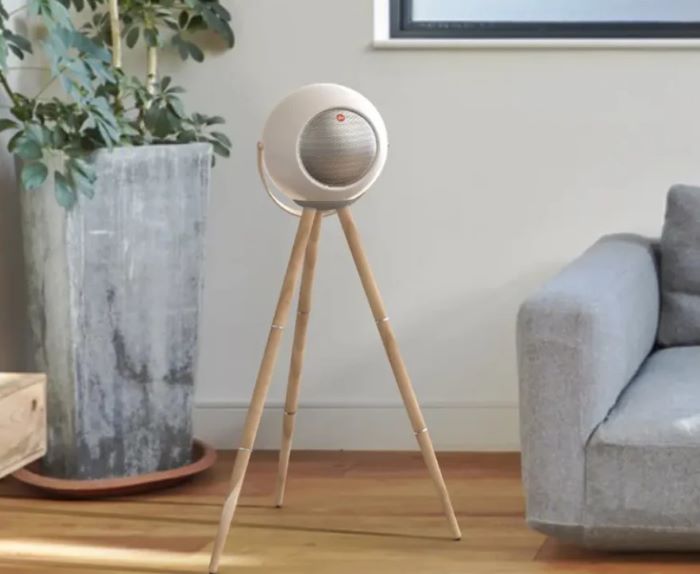
Smarter Engineering Creates Better Sound The UB+ dB1 DoubleBass demonstrates why advanced acoustic engineering remains important even in a wireless world. Its patented Helmholtz Resonance-inspired spherical acoustic chamber, based on the principles of the Helmholtz Resonator, distributes internal air pressure evenly to reduce standing waves, minimize phase distortion, and improve harmonic reproduction. Its 4.5-inch downward-firing mid-bass driver works with dual symmetrical passive radiators whose combined surface area is approximately 3.5× larger than the active woofer. This patented architecture creates mechanical bass amplification while the opposing radiators provide a self-cancelling vibration architecture, directing energy toward controlled bass rather than unnecessary cabinet movement. The system is supported by a 90 mm oversized neodymium magnet, 35 mm long-stroke voice coil, 20 mm piston movement, 18 mm extra-wide surround, and aluminum shorting ring, along with approximately 40 Hz–20 kHz frequency response, 93 dB SPL, Bluetooth 5.3, and up to 20 hours of battery life. Compare UB+'s speakers to find the right balance of portability, acoustic performance, and everyday usability. Explore premium finishes that combine distinctive industrial design with advanced acoustic engineering. Explore current specifications, pricing, and availability directly from UB+. Because wireless doesn't have to mean compromised. The right speaker combines freedom from cables with engineering designed to move sound naturally. |
Sound Technologies
New sound technologies are what make premium audio systems capable of superior sound quality. Active noise cancellation uses microphones and advanced settings to eliminate ambient noise for a more immersive experience, which is especially useful in noisy environments.
Wireless technologies are also shaping premium audio systems, using Bluetooth and related standards to enhance sound quality alongside convenience and practicality. High-resolution audio is another core component of premium systems: any equipment certified for Hi-Res audio can reproduce sound at a higher frequency, capturing more nuance and detail.
|
Six Drivers, True 360° Coverage The UB+ S1 Circle shows how driver count and placement matter as much as raw wattage when it comes to room-filling sound. Six precisely arranged drivers, dual 2.5-inch woofers, dual 1-inch tweeters, and dual passive radiators, are built into a spherical enclosure that projects audio outward in every direction rather than firing it toward a single wall. Most compact speakers rely on a single woofer-tweeter pair, which limits their coverage to whichever direction they're pointed. Doubling up on both drivers lets the S1 Circle maintain a consistent, balanced mix from any position in the room, while dual 3.9-inch × 3.35-inch passive radiators reinforce the low end without adding extra power draw. Output totals 40W (20W per channel) across a 45Hz–17kHz frequency response, with 93dB SPL, Bluetooth 5.3, IPX5 water resistance, a 16-hour battery, and a built-in microphone for hands-free calls, a feature that sets it apart from UB+'s other spherical speakers. Six drivers and true 360° coverage make this the pick for filling a room evenly, not just aiming sound at one wall. Six finishes, including Mars Rustic Orange and Pluto Obsidian, the widest color range in the UB+ lineup. Explore current specifications, pricing, and availability directly from UB+. Because 360° sound only works if the engineering actually delivers it in every direction, not just on the spec sheet. |
Sound Quality
Premium audio systems depend on devices and equipment engineered to optimize sound quality, with the quality of the speaker being the single most important factor in how sound is perceived. Superior speakers deliver higher accuracy and clarity.
Design and housing materials also matter, since they help control the vibration and resonance that can affect sound quality and perception. Choosing equipment built around Hi-Res audio and active noise cancelling technologies is one of the most reliable ways to achieve a detailed, immersive listening experience.
|
Full-Range Sound in a Compact Body The UB+ dBMini proves that compact doesn't have to mean compromised. Most mini Bluetooth speakers top out around 10–15W and roll off below 60Hz; the dBMini runs a 4-driver system, a 3-inch woofer, a 1.5-inch tweeter, and dual 3.4-inch passive radiators, inside a 128mm sphere that weighs just 0.65kg. That driver configuration pushes 40W total output (25W woofer, 15W tweeter) and reaches down to 45Hz, a frequency range most speakers this size can't touch. The same spherical, symmetrical-chamber design used across the UB+ lineup reduces the standing waves that cause coloration in rectangular mini speakers. Specs include 90dB max SPL, a 45Hz–20kHz frequency response, Bluetooth 5.4 with 75ms low latency, IPX5 water resistance, TWS true stereo pairing, and a 4,500mAh battery rated for up to 20 hours of playback with 2-hour fast charging. The most portable way to get full-range UB+ sound, built for a bag, not just a shelf. → Compare dBMini vs dB1 DoubleBass Weigh portability against maximum bass output to find the right fit for how you actually listen. Explore current specifications, pricing, and availability directly from UB+. Because a speaker you'll actually carry with you beats one that stays plugged in at home. |
The Future of Sound Technology
High-resolution streaming is one of the top trends shaping the future of audio technology. As more streaming devices support high-quality audio, demand for higher-resolution streaming is expected to drive further software and hardware development toward a more seamless experience.
AI and machine learning represent another major trend. While the full extent of AI's impact on audio technology remains unclear, machine learning algorithms are increasingly common in audio settings and are helping create more immersive experiences that adapt to individual listener needs.
3D audio and spatial sound are also gaining ground, projecting sound in three-dimensional space to make the listening experience more engaging and realistic, much like AI's personalized approach to audio.
Sustainability will influence the materials used in audio equipment going forward, which can, in turn, affect sound quality. As sound continues to intersect with more areas of daily life, expect deeper integration with other technologies, along with a stronger focus on portability, longer battery life, and robust performance in future audio devices.
Conclusion on the Science of Audio Technology
Exploring the evolution of audio technology reveals a fascinating intersection of science and innovation. Understanding the core principles that govern sound and audio quality makes it easier to evaluate the components that come together to create a premium audio experience.
Whether you rely on audio equipment professionally or simply enjoy listening to music for entertainment, audio technology's impact on daily life is undeniable.
Frequently Asked Questions
What makes audio technology sound "premium"?
Premium audio quality comes down to the accuracy and clarity of the speaker's drivers, supported by technologies like Hi-Res audio, active noise cancellation, and thoughtful housing design that reduces unwanted vibration and resonance.
What is the difference between analog and digital sound?
Analog sound captures the continuous, natural waveform of audio and offers rich, warm tone, while digital sound converts audio into digital signals that are easier to store, edit, and reproduce consistently, with a slight trade-off in depth due to compression.
Why does wireless audio technology matter for sound quality?
Wireless technologies such as Bluetooth let speakers deliver strong sound quality without the constraints of cables, combining convenience with the performance features found in modern high-resolution audio equipment.


Leave a comment
This site is protected by hCaptcha and the hCaptcha Privacy Policy and Terms of Service apply.