
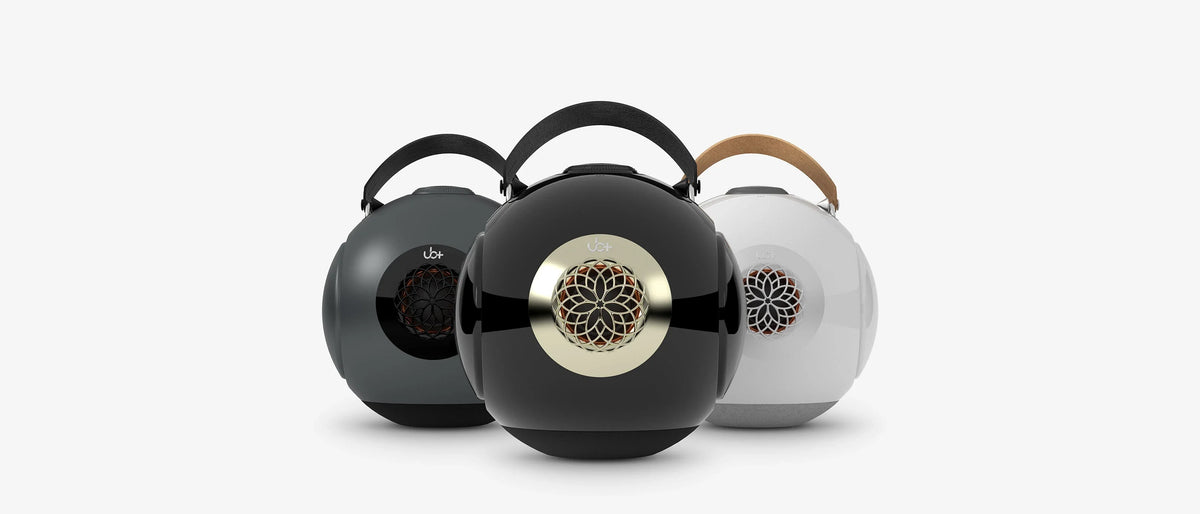
A Bluetooth speaker that sounds good at low volume should preserve vocal clarity, tonal balance, and a satisfying sense of fullness without requiring the volume control to be turned up. This matters for bedroom listening, late-night music, home offices, apartments, and any situation where loud playback is inconvenient. Yet many compact speakers sound thin or tinny when played quietly, making voices seem distant, instruments lose body, and bass become difficult to hear.
The problem is not always a lack of bass power. A speaker can produce impressive volume and still sound unbalanced at low listening levels. The result depends on its driver performance, enclosure design, frequency response, acoustic tuning, and digital signal processing. Room acoustics and the listener's own perception of bass at quieter levels also influence the experience.
For buyers comparing Bluetooth speakers with clear sound at low volume, the important question is how well a speaker maintains its tonal character across different listening levels. Rather than choosing a product based only on wattage, driver size, or advertised bass performance, evaluate how its acoustic system reproduces music when you actually intend to listen quietly.
Why Some Bluetooth Speakers Sound Tinny at Low Volume

A tinny sound usually means the speaker lacks perceived weight and body, particularly in the lower frequencies and lower midrange. Vocals may sound thin, acoustic instruments may lose warmth, and music can become dominated by upper-midrange or treble detail.
Several factors can contribute to this experience.
Weak low-frequency reproduction
Bass helps give music physical weight and tonal foundation. When a compact speaker cannot reproduce the lower frequencies effectively, the remaining midrange and treble may seem disproportionately prominent.
At higher volume, the increased output can make the overall presentation seem fuller. When the volume is reduced, however, the speaker may no longer deliver the balance the listener expects.
The answer is not necessarily to buy the speaker with the most aggressive bass boost. Excessive bass enhancement can introduce muddiness, consume additional power, or compromise clarity. A better solution is a speaker designed to maintain a coherent balance across its useful listening range.
Understanding how low-frequency performance is measured can help buyers evaluate this issue. The guide to bass extension and speaker frequency response explains why frequency specifications matter and why they do not tell the entire story.
Driver limitations and enclosure design
A small speaker must work within physical limits. Its driver has a finite radiating area and excursion capability, while the enclosure influences resonance, airflow, and low-frequency behavior.
If the driver and enclosure are not well matched, the speaker may struggle to produce balanced sound at quieter levels. Some designs rely heavily on equalization to emphasize bass, while others use a carefully tuned acoustic system to support low-frequency output.
Enclosure geometry matters, too. Internal reflections, resonance, and the interaction between the driver and cabinet can affect the sound that reaches the listener. The shape alone does not determine quality, but the way the enclosure is engineered can influence the final result.
Overemphasized treble
Some speakers emphasize upper frequencies to create an impression of detail or clarity. This can make vocals, cymbals, and other high-frequency sounds stand out, particularly during quick listening demonstrations.
At low volume, however, an overly bright tonal balance can make the presentation feel sharp or thin rather than natural. A speaker should retain enough detail to make music intelligible without allowing treble to overpower the midrange and bass.
The objective is not simply warmer sound. It is a balanced presentation in which vocals, instruments, and low-frequency content remain proportionate.
Why Low-Volume Listening Requires Different Considerations

Human hearing does not perceive every frequency equally at every listening level. At quieter volumes, our ears generally become less sensitive to low frequencies relative to the midrange. The perceived balance of music can therefore change even when the speaker itself is reproducing the signal consistently.
This is an important distinction: a speaker can be technically consistent while the listener perceives less bass and fullness as the volume decreases.
A well-designed speaker cannot eliminate the characteristics of human hearing, but its tuning and acoustic performance can help maintain an enjoyable presentation.
Tonal balance matters more than maximum loudness
Maximum output tells you how loud a speaker can play under specified conditions. It does not establish how natural it sounds at low volume.
When comparing products, listen for three characteristics:
- Vocal body: Speech and singing should sound present and natural rather than thin or distant.
- Midrange clarity: Instruments should remain distinct without becoming harsh or nasal.
- Bass presence: Low frequencies should contribute weight without overwhelming the rest of the music.
These qualities are more useful for quiet listening than a headline wattage figure alone.
For a broader explanation of the specifications that influence listening performance, see the speaker specifications guide.
Dynamic range and musical detail

A speaker also needs to reproduce differences between quieter and louder elements within a recording. If subtle details disappear at low playback levels, music may seem flat or lifeless.
The result depends on the recording, background noise, speaker performance, and listening environment. A highly compressed recording may sound dense, while a more dynamic track may contain details that become difficult to hear in a noisy room.
For this reason, evaluate speakers using familiar music across multiple genres rather than relying on one bass-heavy demo track.
How Bass Engineering Helps a Speaker Sound Fuller at Low Volume

Deep bass performance is a system-level result, not simply a consequence of increasing volume or adding bass enhancement.
A speaker's ability to reproduce satisfying bass depends on the relationship between the active driver, enclosure, acoustic tuning, and any passive radiators or ports. These components determine how efficiently the system moves air and how it behaves across different frequencies.
For a Bluetooth speaker with full sound at low volume, the goal is controlled low-frequency output that supports the music without requiring extreme volume or excessive equalization.
The role of passive radiators
A passive radiator is a moving acoustic component that responds to pressure generated inside the speaker enclosure by the active driver. When correctly tuned, it helps extend useful low-frequency output around the system's resonant region.
This can be valuable in compact speakers because it offers an alternative to a conventional open bass port. However, a passive radiator does not create energy independently, and its presence does not guarantee deep or accurate bass.
Its performance depends on factors such as moving mass, excursion, enclosure volume, and tuning. A well-matched system can provide useful bass support while keeping the overall enclosure compact.
Read how passive radiators work in Bluetooth speakers for a more detailed explanation of the mechanism.
Why enclosure geometry matters
The enclosure is part of the acoustic system, not simply a shell that holds the electronics. Its shape and internal dimensions influence pressure distribution and reflections, while its construction affects mechanical behavior.
A spherical enclosure, for example, avoids the parallel internal walls found in conventional rectangular cabinets. This geometry can help reduce certain problematic internal reflection patterns, although it does not eliminate all resonance or guarantee superior sound.
The important consideration is whether the enclosure, driver, and tuning have been engineered to work together.
UB+ explores this approach in its guide to spherical Bluetooth speaker design and DoubleBass technology.
How the UB+ dB1 DoubleBass approaches low-frequency performance
The UB+ dB1 DoubleBass uses a spherical acoustic chamber inspired by Helmholtz resonance, combined with a centrally positioned mid-bass driver and two symmetrical passive radiators.
The dual radiators have a combined surface area approximately 3.5 times that of the active woofer. This arrangement supports air displacement within the tuned acoustic system, while the opposing radiator configuration is designed to help counteract mechanical reaction forces.
The design illustrates a broader principle: bass performance can be supported by the interaction of the enclosure, driver, and radiators rather than relying exclusively on electronic bass enhancement.
DSP remains relevant for system optimization, tonal balance, and component protection. It works alongside the acoustic architecture rather than replacing the need for effective mechanical design.
For low-volume listeners, this type of engineering is worth considering because the quality of bass reproduction is about more than how much bass a speaker produces at maximum output. Its usefulness depends on how naturally the low frequencies integrate with vocals and instruments at the levels you typically use.
What to Look for When Buying a Bluetooth Speaker for Quiet Listening
A product's marketing description may promise powerful bass, studio-quality sound, or premium audio. Those terms are not enough to determine whether it will sound good in your bedroom or home office.
The following characteristics provide a more practical basis for comparison.
|
Buying factor |
What to look for |
Why it matters at low volume |
|
Tonal balance |
Natural vocals, controlled treble, and audible bass support |
Reduces the impression of thin or overly bright sound |
|
Frequency response |
Manufacturer specifications supported by credible listening tests |
Helps indicate the range the speaker is designed to reproduce |
|
Driver and enclosure design |
A driver and cabinet engineered as a complete system |
Influences bass extension, resonance, and overall balance |
|
Passive radiators or ports |
Clear explanation of the acoustic design, where applicable |
May support low-frequency output in a compact enclosure |
|
DSP and EQ |
Useful tonal adjustments without excessive bass or treble emphasis |
Helps adapt playback to different listening preferences |
|
Performance across volume levels |
Reviews or demonstrations covering both quiet and louder playback |
Shows whether the speaker remains balanced beyond one demo setting |
|
Intended room |
Suitability for a bedroom, desk, living room, or open space |
Room size and background noise affect perceived fullness |
Don't choose based on wattage alone
Wattage can provide information about an amplifier's power rating, but it does not independently establish sound quality or low-volume performance.
Two speakers with similar power ratings can differ in driver sensitivity, frequency response, enclosure tuning, distortion, and tonal balance. A more powerful speaker is not automatically the better choice for quiet listening.
Instead, use power ratings alongside frequency-response information, design details, and credible listening evaluations.
Check whether the speaker supports useful EQ adjustments
An equalizer can help compensate for personal preferences or differences in a listening environment. For example, a listener may prefer a little more low-frequency weight at quiet levels.
However, EQ is not a substitute for good acoustic engineering. Excessive bass boosting can increase driver excursion and amplifier demand, potentially reducing headroom or increasing distortion. It may also make vocals sound less natural.
A well-balanced speaker should deliver an enjoyable presentation without requiring substantial correction before you can listen comfortably.
Consider the room before blaming the speaker
Room placement can affect bass response significantly. Nearby walls and corners may reinforce certain frequencies, while other positions can produce weaker bass at the listening seat.
A speaker placed on a desk, bedside table, or shelf may sound different from the same speaker positioned in the center of a room.
The guide to Bluetooth speaker placement for better bass and clarity explains how placement can influence the sound you hear.
How to Test a Speaker at Low Volume Before Buying
If you can audition a speaker in person, use a consistent listening method rather than turning every product up until it sounds impressive.
Start with familiar vocals. Choose a recording where you know how the singer's voice should sound. At a comfortable low level, listen for body, intelligibility, and natural tone.
Move to acoustic instruments. Piano, guitar, and other acoustic recordings can reveal whether the speaker preserves tonal character or makes instruments sound unusually thin.
Try music with controlled bass. Listen for a clear low-frequency foundation without a one-note thump or excessive muddiness. Bass should support the recording rather than dominate it.
Compare at matched volume. A slightly louder speaker can seem fuller or more impressive simply because of the level difference. Keep the listening level as similar as possible when comparing two products.
Listen from your usual position. A speaker may sound balanced directly in front of it but different from a bed, desk chair, or sofa. Evaluate it in the kind of position where you expect to use it.
If an in-person demonstration is not possible, look for reviews that discuss low-volume playback specifically. General comments about loudness or bass impact may not answer the question you actually have.
Common Mistakes That Make Low-Volume Sound Worse
Even a capable speaker can sound disappointing if it is used in an unsuitable setup.
Expecting strong bass from every compact speaker
Small enclosures face physical constraints. Some can deliver convincing low-frequency output through carefully engineered drivers and acoustic tuning, but not every compact product can reproduce deep bass at the same level.
Be cautious of claims that promise powerful bass without useful supporting specifications or credible listening evidence.
Using excessive bass boost
Boosting bass can make quiet music feel fuller, but too much can muddy vocals and consume available amplifier headroom. Start with a balanced setting and make small adjustments instead of immediately selecting the strongest bass preset.
Placing the speaker where bass cancels at the listening position
Room acoustics can create peaks and dips in the bass response. Moving the speaker or listener slightly may improve the perceived balance more effectively than increasing the volume or changing EQ.
Ignoring background noise
A quiet speaker may sound thin in a room with a loud fan, traffic noise, or other competing sounds. The listener may raise the volume to compensate, which changes both perceived tonal balance and battery consumption.
For bedroom or office use, consider the noise level of the environment as well as the speaker's output capability.
Which Type of Bluetooth Speaker Is Best for Low-Volume Listening?
The best category depends on your listening environment and priorities.
|
Listening situation |
Useful priorities |
|
Bedroom and late-night music |
Balanced tuning, clear vocals, and controlled bass at quiet levels |
|
Home office |
Speech clarity, compact placement, and comfortable long-session listening |
|
Small apartment |
Full, balanced sound without requiring high playback volume |
|
Living room |
Even coverage for different seating positions and suitable bass response |
|
Travel and occasional outdoor use |
Portability, reliable battery performance, and sufficient output when needed |
For a bedroom or small apartment, you may not need the highest possible output. A speaker that remains coherent at modest volume can be more useful than a model designed primarily to impress during loud demonstrations.
If your priority is compact, room-filling listening, explore the guide to Bluetooth speakers for small apartments.
For a broader purchasing comparison, the ultimate Bluetooth speaker buying guide covers additional factors to consider before selecting a model.
Frequently Asked Questions
Why does my Bluetooth speaker sound tinny when the volume is low?
The speaker may have weak bass reproduction, an overly bright tonal balance, limited low-frequency output, or acoustic tuning that becomes less satisfying at quiet levels. Human hearing also becomes less sensitive to bass relative to midrange frequencies at lower listening levels. Placement and background noise can contribute to the problem.
Can a small Bluetooth speaker produce good bass at low volume?
Yes, provided the driver, enclosure, and acoustic tuning are designed to work together effectively. Passive radiators and suitable DSP can help support bass performance, but physical size alone does not determine sound quality. A compact speaker still has limits to how much low-frequency output it can deliver.
Is a speaker with more watts better at low volume?
Not necessarily. Wattage does not tell you how balanced or natural a speaker sounds when played quietly. Driver sensitivity, frequency response, enclosure design, and system tuning are also important.
Does increasing the bass EQ improve quiet listening?
A modest adjustment may help compensate for reduced perceived bass at lower listening levels. Excessive boosting can create muddiness, increase driver demand, and reduce available headroom. A speaker with balanced underlying tuning is usually a better starting point.
Are spherical Bluetooth speakers better for low-volume sound?
Not automatically. A spherical enclosure can offer different internal acoustic characteristics, but its benefits depend on driver placement, tuning, and the complete system. A well-designed box speaker can also sound excellent at low volume.
What should I prioritize when buying a Bluetooth speaker for a bedroom?
Look for natural vocals, balanced midrange, controlled bass, comfortable treble, and good performance at modest volume. Also consider the speaker's dimensions, placement options, and whether it supports useful EQ adjustments. If possible, audition it with familiar music at the volume you normally use.
Explore UB+ Options
For low-volume listening, focus on the balance between bass, vocals, and clarity rather than judging a speaker only by its maximum output.
- → Explore the UB+ dB1 DoubleBass
- → Compare the dB1 DoubleBass with the UB+ dB Mini
- → Explore UB+ speakers
- → Check current product options and prices
The right speaker should make music enjoyable at the volume you actually use. Good low-volume performance comes from balanced tuning, effective acoustic engineering, and a setup that suits your room not simply from turning the sound up.



Laisser un commentaire
Ce site est protégé par hCaptcha, et la Politique de confidentialité et les Conditions de service de hCaptcha s’appliquent.