

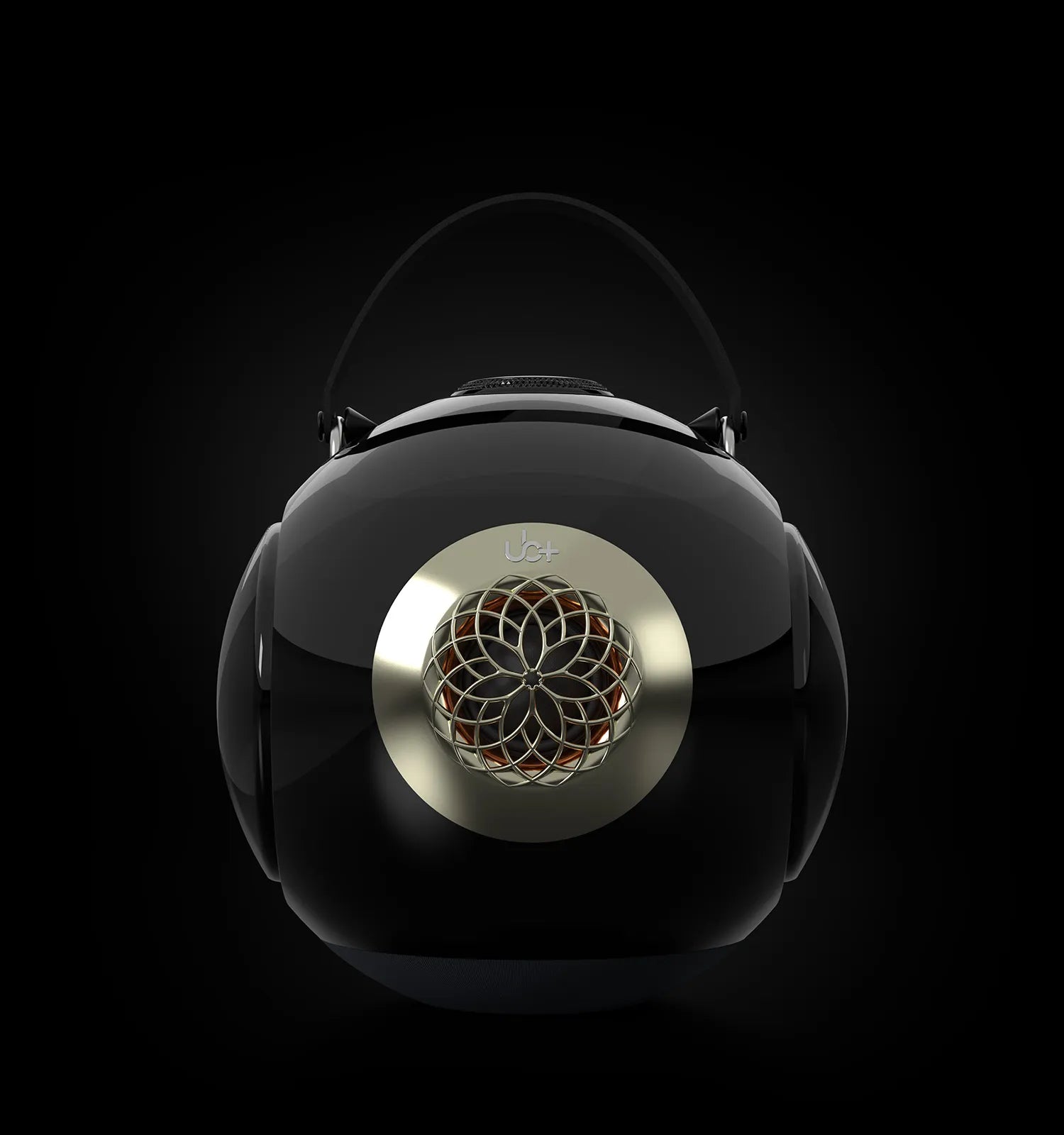
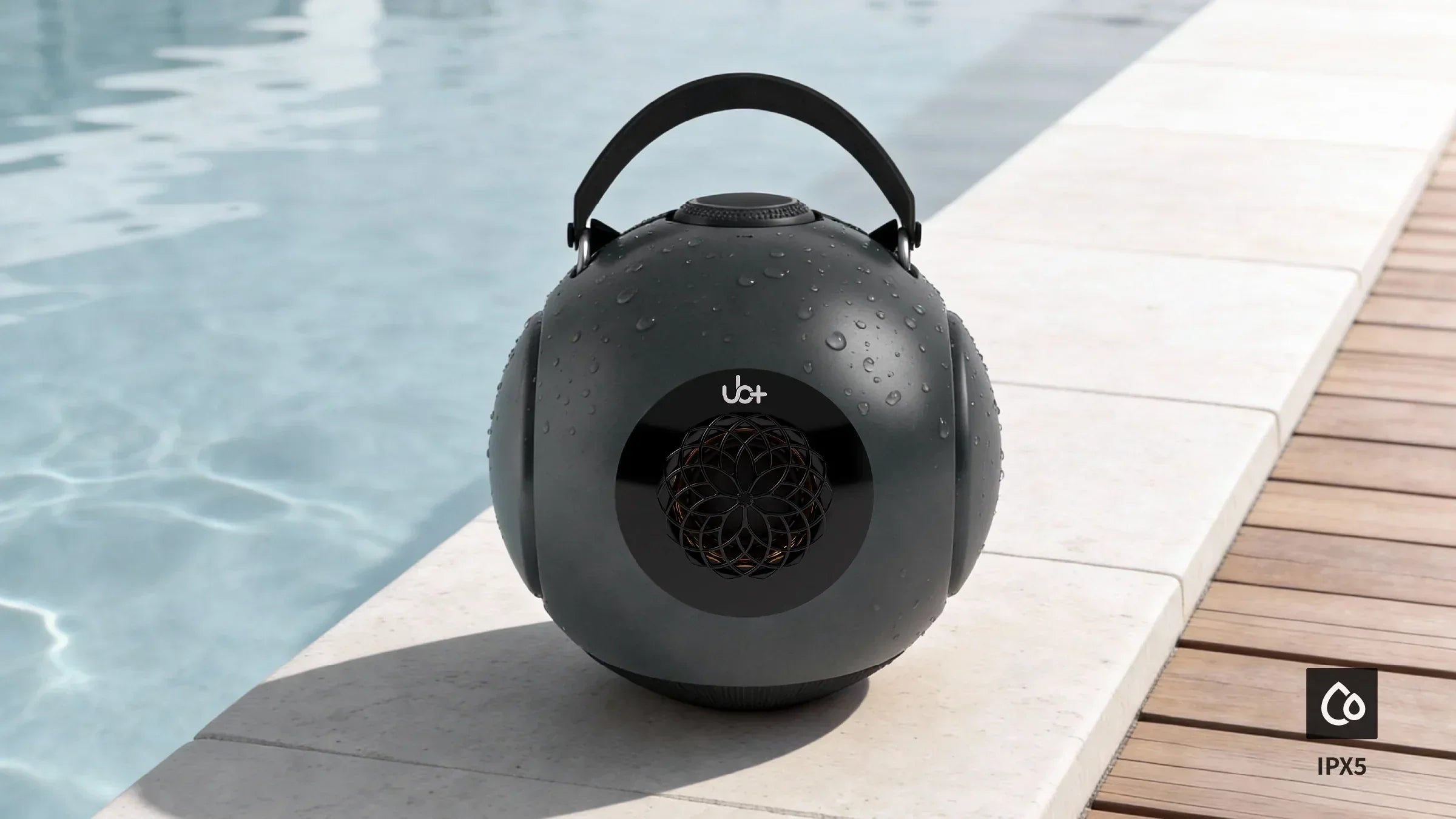
A round wireless speaker can do more than fill a room with music. In a modern interior, the right speaker can become part of the space itself combining sculptural design, compact proportions, wireless convenience, and carefully engineered acoustics. For homeowners, designers, and listeners who don't want traditional rectangular electronics dominating a room, spherical speaker design offers an alternative that feels more like an object of design than conventional equipment.
But appearance alone isn't enough.
A beautifully designed speaker still needs to sound good. It needs to manage internal resonance, reproduce bass without excessive distortion, provide stable wireless connectivity, and perform consistently whether it is placed on a shelf, desk, side table, or open living space.
That is why choosing among the best small bluetooth speakers requires looking beyond dimensions and aesthetics. The best compact speakers combine industrial design with acoustic engineering so that their physical shape contributes to performance rather than simply making the product look different.
The UB+ dB1 DoubleBass provides an interesting example of this approach. Its patented spherical acoustic chamber is inspired by the principles of a Helmholtz Resonator, using the geometry of a sphere to manage internal air pressure, reduce standing waves, minimize phase distortion, and support improved harmonic reproduction.
The result is a speaker designed to look at home in modern interiors while using its unusual shape as part of the acoustic system.
Why Round Speakers Work So Well in Modern Interiors

Modern interior design often emphasizes simplicity.
Clean lines, open spaces, natural materials, neutral surfaces, and uncluttered furniture have become defining characteristics of contemporary homes.
Traditional speakers can work against this aesthetic.
Large rectangular cabinets introduce strong horizontal and vertical lines. Visible cables can create additional visual clutter. Conventional audio equipment may also require dedicated furniture or shelving.
A spherical speaker takes a different approach.
The absence of prominent corners creates a softer visual profile. A round enclosure can sit comfortably alongside:
- Curved furniture
- Circular coffee tables
- Organic lighting
- Sculptural objects
- Minimalist desks
- Open shelving
- Modern sideboards
This makes a spherical speaker more than an audio device.
It can become part of the room's visual language.
But the most interesting aspect of spherical design isn't its appearance.
It is what happens acoustically inside the enclosure.
Is a Spherical Speaker Actually Better for Sound?
The answer depends on how the sphere is engineered.
Simply making a speaker round does not automatically make it better.
The benefits come from controlling the acoustic behavior that results from the geometry.
Traditional rectangular speaker cabinets commonly contain parallel internal surfaces. When sound energy travels inside these spaces, reflections can interact with one another and create standing waves.
These resonances can color the sound.
A carefully engineered spherical chamber changes this behavior.
Instead of relying on parallel internal walls, the curved enclosure allows internal air pressure to distribute more evenly.
The UB+ dB1 DoubleBass takes advantage of this principle through a patented spherical acoustic chamber inspired by Helmholtz Resonance.
The design is based on the physics of a Helmholtz Resonator, using the enclosure as an active part of the acoustic system.
This approach helps reduce unwanted standing waves and internal resonance while minimizing phase distortion.
The result can be improved harmonic reproduction and a more natural presentation of music.
A Speaker Cabinet Is Part of the Sound

One of the most common mistakes buyers make is treating the enclosure as nothing more than a container for the electronics.
It isn't.
The cabinet affects:
- Resonance
- Air pressure
- Bass response
- Internal reflections
- Vibration
- Sound dispersion
- Driver behavior
A poorly controlled enclosure can make even a good driver sound less accurate.
Conversely, sophisticated enclosure engineering can help a relatively compact driver perform far beyond what its physical dimensions might suggest.
This is particularly important when designing a small wireless speaker.
There simply isn't as much physical space available for large drivers or traditional acoustic systems.
The engineering has to be more efficient.
Compact Sphere Engineering

The challenge with compact speakers is straightforward:
How do you produce substantial sound from a small enclosure without simply making the speaker bigger?
The answer involves making better use of the available physical space.
The UB+ dB1 DoubleBass uses a spherical acoustic chamber combined with a specialized driver and passive radiator system.
At the center is a 4.5-inch long-throw mid-bass driver.
Rather than firing conventionally into the room, the driver fires downward into the spherical chamber.
This creates controlled internal air pressure.
That pressure activates two large passive radiators positioned symmetrically on opposite sides of the sphere.
This architecture transforms the enclosure into a mechanical acoustic system.
Why Dual Passive Radiators Matter
Passive radiators are particularly useful in compact speaker design because they allow an enclosure to generate low-frequency output without requiring a traditional port.
The dB1 takes this concept further by using two large passive radiators.
Their combined surface area is approximately 3.5× larger than the active woofer.
That large radiating area allows the system to move a substantial amount of air.
But there is another important benefit.
The passive radiators are arranged symmetrically.
When they move in opposite directions, their mechanical forces counteract one another.
This creates a self-cancelling vibration architecture.
Instead of allowing significant energy to be transferred into cabinet movement, opposing forces help cancel unwanted vibration.
More of the driver's energy can therefore be directed toward producing useful bass.
This is a major difference between simply choosing a spherical shape and engineering a spherical speaker as a complete acoustic system.
Mechanical Bass vs. Artificial Bass
Compact speakers face an obvious physical challenge.
Bass requires air movement.
A small enclosure doesn't have the same acoustic resources as a large floorstanding speaker.
One solution is to use DSP to increase perceived bass.
Digital Signal Processing can be extremely useful, but excessive bass boosting can create an unnatural presentation and increase distortion when the system is pushed hard.
The UB+ dB1 DoubleBass approaches low-frequency reproduction differently.
Its bass system relies primarily on mechanical bass amplification.
The 4.5-inch long-throw driver creates pressure inside the spherical chamber. That pressure activates the dual passive radiators, allowing the acoustic system to produce substantial low-frequency output through physical movement.
The onboard DSP continuously monitors the system and protects the drivers, but it does not artificially create the bass.
This distinction matters.
The goal isn't simply to make bass appear larger on a frequency graph.
The goal is to create controlled acoustic energy through mechanical design.
The Importance of Helmholtz Resonance
The Helmholtz Resonator is a classic example of how air itself can become part of an acoustic system.
A familiar example is the sound produced when you blow across the opening of an empty bottle.
The shape and volume of the cavity influence the resonant behavior.
Speaker designers have used Helmholtz principles for decades, particularly in ported enclosures.
The UB+ dB1 takes inspiration from this physical principle and translates it into a spherical acoustic chamber.
Rather than treating the sphere as a decorative shell, the design uses the chamber's internal air volume as part of the acoustic mechanism.
This helps explain why the speaker's unusual appearance isn't simply an aesthetic decision.
The geometry has an acoustic purpose.
Round Design and Placement Flexibility
Another advantage of a spherical speaker is placement versatility.
A traditional rectangular speaker often has an obvious front.
That means placement becomes more directional.
You may need to point the speaker toward the listening position.
A spherical design can offer greater flexibility because its geometry supports broader sound distribution.
This can be particularly useful in:
- Open-plan living rooms
- Dining areas
- Bedrooms
- Home offices
- Kitchens
- Reading corners
- Outdoor patios
- Creative studios
Instead of building the entire room around the speaker, the speaker can become a flexible part of the room.
Where Should You Place a Round Wireless Speaker?
Even an acoustically advanced speaker benefits from thoughtful placement.
Here are several practical options.
On a Side Table
A side table can provide an excellent location for a compact spherical speaker.
The speaker remains visible without becoming the central visual object.
This works especially well in living rooms and bedrooms.
On a Desk
A round speaker can create a cleaner desktop appearance than conventional rectangular audio equipment.
Its compact footprint leaves more room for a monitor, notebook, keyboard, or other work essentials.
On Open Shelving
Spherical designs work particularly well on floating shelves and open bookcases.
The absence of strong rectangular lines creates visual contrast against books and furniture.
In a Living Room
A centrally positioned speaker can provide music without requiring a large stereo setup.
This is particularly useful for casual listening and entertaining.
In an Open-Plan Space
A speaker with broad sound dispersion can be useful where listeners aren't always sitting directly in front of the audio system.
Why Modern Interiors Benefit From Sculptural Audio
Interior design is increasingly moving away from hiding every piece of technology.
Instead, designers often select technology that complements the space.
This creates a new category of product:
technology that can function as décor.
A spherical speaker fits naturally into this concept.
Its geometry can communicate:
- Simplicity
- Precision
- Modernity
- Softness
- Minimalism
- Technical sophistication
Rather than looking like another rectangular electronic box, a spherical speaker can resemble a sculpture.
This is especially attractive in spaces where visual clutter is carefully controlled.
Round Doesn't Mean Basic
A misconception about compact spherical speakers is that their unusual shape is primarily decorative.
In sophisticated designs, the opposite can be true.
The physical shape can determine how the speaker manages:
- Internal pressure
- Resonance
- Driver interaction
- Vibration
- Sound dispersion
The UB+ dB1 illustrates this relationship particularly well.
Its spherical enclosure is not an afterthought.
It is central to the acoustic design.
Premium Driver Components Inside a Compact Sphere
The acoustic chamber is only one part of the system.
The dB1 also uses carefully engineered driver components, including:
- 90 mm oversized neodymium magnet
- 35 mm long-stroke voice coil
- 20 mm piston movement
- 18 mm extra-wide surround
- Aluminum shorting ring
These components work together to maintain precise driver movement.
The long-stroke architecture helps the driver move significant air.
The oversized neodymium magnet provides a powerful motor structure.
The extra-wide surround supports controlled excursion.
The aluminum shorting ring helps improve motor behavior and reduce distortion.
Together, these elements contribute to the speaker's approximately 40 Hz–20 kHz frequency response and 93 dB SPL output.
This is an important lesson for anyone shopping for compact audio.
Small physical dimensions don't necessarily mean simple internal engineering.
Why Smaller Doesn't Have to Mean Weaker
Many consumers automatically associate speaker size with sound quality.
There is some truth behind that assumption.
Large speakers have physical advantages when producing very low frequencies and high output levels.
But modern acoustic engineering can dramatically improve what compact systems are capable of achieving.
The goal isn't to make a small speaker behave exactly like a massive floorstanding system.
Instead, the goal is to make the most efficient use of its available acoustic volume.
The dB1's spherical chamber, long-throw driver, and dual passive radiator architecture demonstrate this philosophy.
The speaker uses geometry, air pressure, mechanical movement, and vibration control together rather than depending on driver size alone.
Round Wireless Speaker vs. Traditional Box Speaker
|
Feature |
Traditional Box Speaker |
Spherical Wireless Speaker |
|
Visual Form |
Rectangular |
Sculptural / spherical |
|
Internal Geometry |
Parallel surfaces |
Curved chamber |
|
Standing Waves |
Can be significant |
Can be reduced through spherical geometry |
|
Placement |
Often directional |
More flexible |
|
Bass System |
Driver/port/passive radiator |
Can combine driver and dual passive radiators |
|
Cabinet Role |
Enclosure |
Active acoustic component |
|
Interior Style |
Traditional |
Modern/minimalist |
|
Cable Management |
Often required |
Wireless |
|
Compact Design |
Depends on model |
Naturally space-efficient |
|
Vibration Control |
Conventional |
Can use symmetrical mechanical architecture |
The key point is that spherical design isn't automatically superior.
Its advantages depend on how the acoustic system is engineered.
How to Choose the Best Small Bluetooth Speakers for a Modern Home
If you're comparing compact wireless speakers, don't make the decision based solely on appearance.
Consider these factors.
1. Acoustic Architecture
Does the enclosure have a specific acoustic purpose?
Look for thoughtful resonance management rather than a decorative shape alone.
2. Driver Quality
Examine magnet design, voice-coil construction, excursion, and suspension.
3. Bass Technology
Determine whether bass comes from physical acoustic engineering, DSP, or a combination of both.
4. Wireless Reliability
Modern Bluetooth technology should provide stable connections and efficient operation.
5. Placement Flexibility
Think about where the speaker will actually live.
6. Materials
Premium finishes should complement the room while providing adequate durability.
7. Battery Life
If you plan to move the speaker between rooms or take it outdoors, battery performance matters.
Bluetooth 5.3 and Modern Wireless Living
A modern interior benefits from fewer cables.
Wireless connectivity allows you to place the speaker where it looks and sounds best rather than where a cable happens to reach.
The UB+ dB1 uses Bluetooth 5.3, supporting modern wireless operation with improved efficiency and stable everyday connectivity.
This makes it practical for:
- Streaming music
- Podcasts
- Remote work
- Casual listening
- Entertaining
- Moving between rooms
The wireless connection becomes part of the minimalist design philosophy.
No additional audio cable is required to maintain a clean visual setup.
Indoor and Outdoor Flexibility
A speaker designed for interiors can also be useful outside the home.
The dB1's acoustic architecture is designed to maintain its character across different environments.
Indoors, walls and furniture influence sound through reflection and absorption.
Outdoors, there are fewer surfaces to reinforce low frequencies.
This means a speaker needs its own acoustic capability rather than relying entirely on the room.
The combination of the spherical chamber, mechanical bass amplification, and broad sound distribution helps make the speaker suitable for both indoor and outdoor listening.
When a Spherical Speaker Makes the Most Sense
A spherical wireless speaker can be particularly useful if you:
- Live in a modern or minimalist home
- Want to reduce visual clutter
- Move speakers between rooms
- Prefer sculptural industrial design
- Need flexible placement
- Listen casually throughout the day
- Want strong bass from a compact enclosure
- Prefer wireless connectivity
It may be less suitable if you need a professional stereo monitoring setup or extremely directional nearfield listening.
The best speaker always depends on the listening application.
Don't Choose a Speaker Only for Its Appearance
Beautiful design can attract attention, but it shouldn't be the final purchasing criterion.
A premium speaker should make sense from both perspectives:
How does it look?
and
How does it work?
The strongest designs answer both questions simultaneously.
The UB+ dB1 is an example of this philosophy.
Its spherical shape creates a distinctive visual identity, but the geometry also forms the basis of its acoustic chamber.
The passive radiators contribute to the visual symmetry while serving a mechanical acoustic function.
The speaker therefore doesn't separate design from engineering.
They work together.
Common Mistakes When Buying a Round Speaker
Choosing Based Only on Appearance
A beautiful speaker can still sound mediocre.
Always investigate the acoustic architecture.
Assuming Round Means 360-Degree Sound
Spherical geometry can support broad dispersion, but actual sound distribution depends on driver positioning and acoustic design.
Ignoring Bass Engineering
Compact speakers need an intelligent low-frequency strategy.
Focusing Only on Driver Diameter
Driver size alone doesn't indicate quality.
Ignoring Placement
Even a sophisticated speaker can perform poorly when placed in a problematic location.
Paying for Features You Don't Use
Choose the technology that supports your lifestyle instead of paying for unnecessary specifications.
The Smartest Approach to Modern Speaker Design
The most successful modern speakers don't simply shrink traditional audio systems.
They rethink how a speaker can occupy space.
A spherical design can reduce visual rigidity.
Wireless connectivity can eliminate cable clutter.
A compact enclosure can make placement easier.
Advanced acoustic engineering can make the physical cabinet part of the sound-producing system.
And mechanical bass architecture can help overcome some of the limitations normally associated with small speakers.
This is where product design and acoustic engineering begin to overlap.
A Quick Buying Checklist
Before purchasing a round wireless speaker, ask:
Design
- Does it complement your interior?
- Can it remain attractive when not playing music?
Acoustics
- Does the enclosure control resonance?
- Is the cabinet part of the acoustic system?
Bass
- Does the speaker use passive radiators?
- Is bass generated mechanically or primarily through DSP?
Drivers
- Does it use quality magnetic and voice-coil components?
- Does it provide adequate excursion?
Placement
- Can you position it where you want?
- Does the design support broad sound distribution?
Wireless
- Does it use modern Bluetooth technology?
- Is connectivity reliable?
Longevity
- Are the materials and components built for regular use?
- Does the design provide lasting value?
Frequently Asked Questions
Are round speakers better than rectangular speakers?
Not automatically. A round speaker can offer acoustic and placement advantages when its spherical enclosure is deliberately engineered to manage internal resonance and air pressure. The design quality matters more than the shape alone.
Why use a spherical speaker enclosure?
A spherical enclosure eliminates many parallel internal surfaces found in rectangular cabinets. This can help reduce standing waves and internal resonance while allowing air pressure to distribute more evenly.
Are spherical speakers good for modern interiors?
Yes. Their sculptural form works particularly well with minimalist, contemporary, and modern interiors. They can function as both audio equipment and decorative objects.
Can a small spherical speaker produce deep bass?
Yes, if the acoustic system is properly engineered. Long-throw drivers, large passive radiators, optimized air volume, and mechanical bass amplification can significantly improve low-frequency performance.
What makes the UB+ dB1 different?
The dB1 combines a patented spherical acoustic chamber inspired by Helmholtz Resonance with a 4.5-inch downward-firing mid-bass driver and dual symmetrical passive radiators. The passive radiators have a combined surface area approximately 3.5× larger than the active woofer.
Does the spherical chamber replace DSP?
No. The dB1 uses DSP for monitoring and system protection, while its primary bass performance comes from the physical acoustic architecture rather than artificially generating bass through DSP.
Is a round speaker suitable for a desk?
Yes. A compact spherical speaker can work particularly well on desks because its footprint and cable-free design can help maintain a clean workspace.
When Design and Engineering Meet
The appeal of a round wireless speaker goes beyond aesthetics.
For modern interiors, spherical design offers a way to integrate technology into the visual character of a room rather than allowing electronics to dominate it.
But the most compelling spherical speakers go further.
Their geometry becomes part of the acoustic solution.
The UB+ dB1 DoubleBass demonstrates this approach through its patented spherical chamber inspired by Helmholtz Resonance. The chamber helps manage internal air pressure, reduce standing waves, minimize phase distortion, and support improved harmonic reproduction.
Its 4.5-inch downward-firing long-throw driver works with dual symmetrical passive radiators, whose combined surface area is approximately 3.5× larger than the active woofer. Together, these components create mechanical bass amplification while the opposing radiators provide self-cancelling vibration behavior.
The result is a compact speaker designed around the idea that good industrial design and good acoustic engineering don't need to compete.
They can reinforce each other.
For buyers comparing the best small bluetooth speakers, that is an important distinction.
Don't simply ask whether a speaker is small.
Ask whether its size has been intelligently engineered.
Don't simply ask whether it looks beautiful.
Ask whether its design contributes to performance.
And don't simply ask how many features it has.
Ask which features you can actually hear and use.
A truly premium compact speaker should make sense from every angle visually, acoustically, mechanically, and practically.
Smarter Engineering Creates Better Sound
The UB+ dB1 DoubleBass is designed around the principle that a speaker's enclosure should do more than contain its components.
Its patented spherical acoustic chamber inspired by the Helmholtz Resonance principle uses the physics of a Helmholtz Resonator to distribute internal air pressure evenly, reduce standing waves, minimize phase distortion, and improve harmonic reproduction.
Inside the sphere, a 4.5-inch downward-firing long-throw mid-bass driver works with dual symmetrical passive radiators featuring a combined surface area approximately 3.5× larger than the active woofer.
This creates mechanical bass amplification, while the opposing passive radiators form a self-cancelling vibration architecture that helps redirect energy into useful acoustic output instead of unwanted cabinet movement.
The system is further supported by a 90 mm oversized neodymium magnet, 35 mm long-stroke voice coil, 20 mm piston movement, 18 mm extra-wide surround, and aluminum shorting ring. With approximately 40 Hz–20 kHz frequency response, 93 dB SPL, Bluetooth 5.3, and extended battery operation, the dB1 combines compact proportions with serious acoustic engineering.
Compare UB+'s speakers and find the right combination of size, design, portability, and acoustic performance for your space.
Explore premium finishes designed to complement contemporary interiors and showcase the dB1's sculptural form.
Explore the latest specifications, product details, pricing, and availability directly from UB+.
Because the best speaker isn't always the one you notice first.
It's the one designed to belong in your space and engineered to sound exceptional once the music starts.


Laisser un commentaire
Ce site est protégé par hCaptcha, et la Politique de confidentialité et les Conditions de service de hCaptcha s’appliquent.