
Why Choosing the Best Bluetooth Speaker Is More Important Than Ever
Finding the best bluetooth speaker in 2026 is no longer as simple as choosing the loudest model or the one with the biggest battery. Today's wireless speakers have evolved into sophisticated audio systems that combine premium acoustic engineering, intelligent wireless technology, industrial design, and long-lasting portability. Whether you're relaxing at home, working remotely, traveling, or entertaining outdoors, the right speaker should deliver an immersive listening experience without compromise.
The challenge is that the market is crowded with products claiming to offer deeper bass, louder output, and smarter features. Marketing often highlights wattage, oversized drivers, or exaggerated "extra bass" modes, but these specifications rarely reveal how a speaker actually performs during everyday listening. Truly exceptional sound is created through intelligent engineering—where every component, from the enclosure to the driver system, works together to reproduce music naturally and accurately.
If you're comparing premium wireless speakers, exploring compact models for travel, or looking for a speaker that delivers balanced sound across every genre, understanding the engineering behind modern speakers will help you make a far better purchasing decision than relying on specifications alone.
What Makes a Bluetooth Speaker Truly Exceptional?
The best speaker isn't necessarily the most expensive, nor is it always the largest.
Instead, it achieves an intelligent balance between multiple performance factors, including:
- Natural sound quality
- Deep yet controlled bass
- Clear vocals
- Wide sound dispersion
- Reliable wireless connectivity
- Long battery life
- Premium build quality
- Everyday portability
- Long-term durability
A premium speaker should perform consistently whether you're listening to acoustic music, podcasts, jazz, rock, electronic tracks, or movies. Instead of emphasizing one frequency range, it should reproduce the entire audio spectrum accurately and comfortably for extended listening sessions.
This balance is what separates a thoughtfully engineered speaker from one designed primarily around marketing claims.
Why Sound Quality Matters More Than Specifications
Many buyers compare speakers by looking only at:
- Driver size
- Wattage
- Maximum volume
- Battery capacity
While these figures provide useful information, they reveal very little about the actual listening experience.
A speaker should be evaluated by how naturally it reproduces music.
Characteristics of a premium speaker include:
- Accurate vocals
- Detailed midrange
- Smooth, controlled treble
- Tight and balanced bass
- Low distortion
- Excellent instrument separation
- A spacious soundstage
These qualities make music more enjoyable over long listening sessions while preserving the emotion intended by the original recording.
Instead of producing exaggerated bass that overwhelms vocals, a premium speaker delivers balance across the entire frequency range.
The Hidden Importance of Speaker Cabinet Design
One of the most overlooked aspects of speaker engineering is the enclosure itself.
Many people assume the cabinet simply holds the internal components, but in reality it plays a major role in determining how a speaker sounds.
Traditional rectangular speaker cabinets contain parallel internal walls.
These flat surfaces encourage standing waves, where reflected sound interferes with the original audio signal. This unwanted resonance can blur vocals, reduce clarity, and introduce coloration that changes the character of the music.
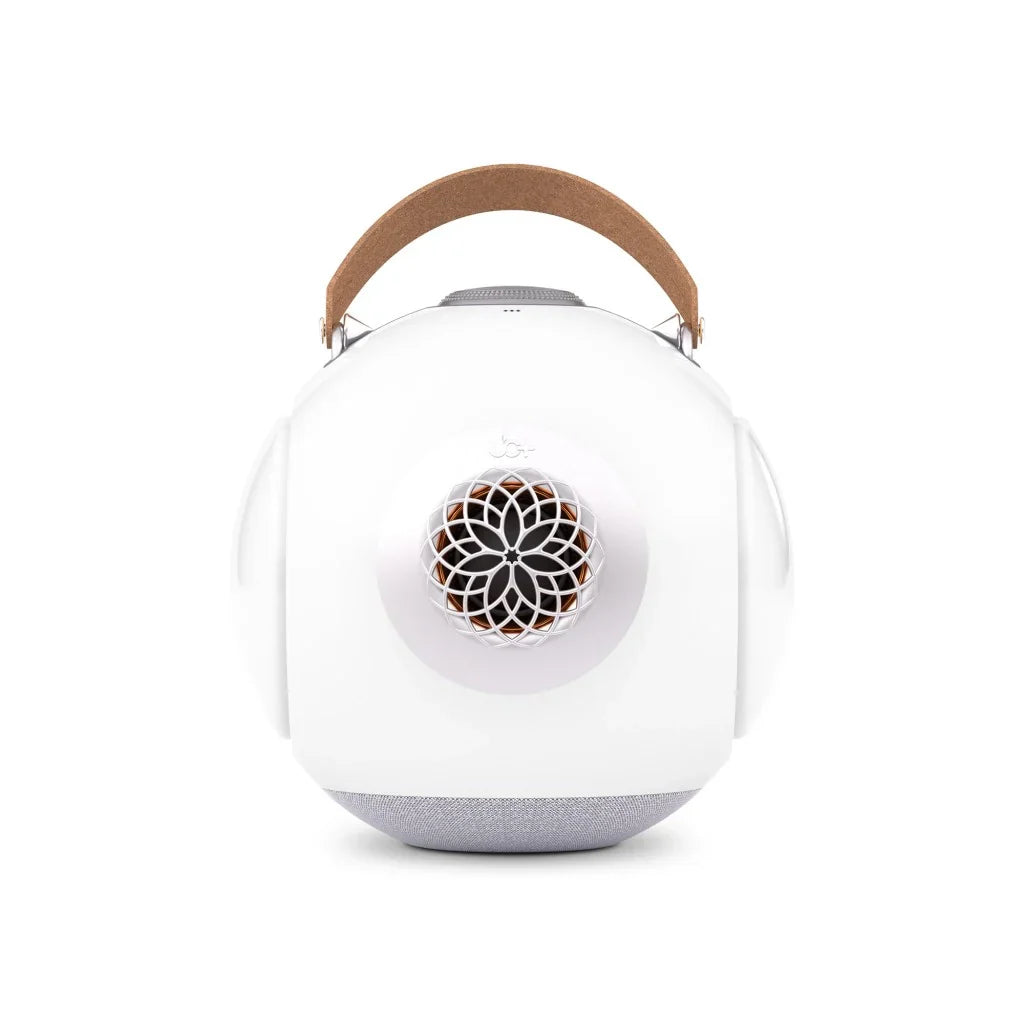
The UB+ dB1 DoubleBass approaches this challenge with a completely different philosophy.
Its patented spherical acoustic chamber inspired by the Helmholtz Resonance principle transforms the enclosure into an active acoustic component rather than a passive box.
Inspired by the physics of the Helmholtz Resonator, the spherical chamber distributes internal air pressure evenly throughout the enclosure while significantly reducing standing waves commonly found inside traditional speaker cabinets.
This advanced acoustic architecture helps:
- Reduce internal resonance
- Minimize phase distortion
- Improve harmonic reproduction
- Produce cleaner midrange
- Preserve instrument placement
- Deliver more natural overall sound
Instead of allowing the enclosure to interfere with the music, the spherical cabinet becomes part of the speaker's acoustic performance.
Why Mechanical Engineering Produces Better Bass
Reproducing convincing low frequencies from a compact speaker has always been one of audio engineering's greatest challenges.
Many manufacturers attempt to solve this problem using aggressive Digital Signal Processing (DSP) to electronically boost bass.
Although this creates an immediate impression of power, excessive DSP often introduces distortion while masking fine musical detail.
The UB+ dB1 follows a fundamentally different engineering approach.
At the center of its design is a 4.5-inch downward-firing long-throw mid-bass driver positioned inside the patented spherical chamber.
As the driver moves, air pressure builds evenly throughout the enclosure before activating dual symmetrical passive radiators mounted on opposite sides of the sphere.
Rather than depending on software, this patented system creates mechanical bass amplification, allowing acoustic physics to generate deeper, tighter, and more natural bass.
The result is low-frequency performance that remains controlled even during demanding musical passages, providing listeners with bass that complements the music instead of overwhelming it.
Intelligent Engineering Instead of Marketing Numbers
Today's premium Bluetooth speakers are no longer defined simply by power output.
Instead, they are engineered as complete acoustic systems where cabinet design, driver layout, resonance control, and airflow all work together.
Understanding these principles makes it much easier to identify speakers that deliver genuine long-term performance rather than short-lived excitement created by exaggerated specifications.
Bigger Bass Begins with Better Physics, Not Bigger Speakers
One of the biggest misconceptions in portable audio is that powerful bass requires a large cabinet or oversized driver. While larger speakers naturally move more air, modern acoustic engineering has proven that intelligently designed compact systems can also produce remarkably deep, controlled bass.
The challenge is that many manufacturers attempt to overcome the limitations of a small enclosure by relying heavily on Digital Signal Processing (DSP). Although software-based bass enhancement can create an impressive first impression, it often exaggerates low frequencies, masks musical detail, and introduces distortion at higher listening levels.
Premium speakers take a different approach by allowing physics—not software—to do most of the work.
The UB+ dB1 DoubleBass is an excellent example of this philosophy. Its 4.5-inch downward-firing long-throw mid-bass driver directs energy into the Helmholtz Resonance-inspired spherical acoustic chamber, where air pressure builds evenly before activating dual symmetrical passive radiators positioned on opposite sides of the enclosure.
Instead of artificially boosting bass, this patented architecture creates mechanical bass amplification, allowing the speaker to reproduce low frequencies naturally while maintaining excellent clarity throughout the rest of the audio spectrum.
The Advantage of a 3.5× Larger Passive Radiator Surface Area
Passive radiators have become common in modern Bluetooth speakers, but not all designs deliver the same performance.
The UB+ dB1 features a patented system in which the combined passive radiator surface area is approximately 3.5 times larger than the active woofer. This dramatically increases the amount of air the speaker can move without increasing the cabinet size.
More air movement allows the speaker to reproduce deeper bass while maintaining control and efficiency.
Instead of producing loose or exaggerated low frequencies, the larger passive radiator system creates bass that feels fuller, tighter, and more natural across a wide variety of music genres.
Whether you're listening to acoustic recordings, jazz, electronic music, orchestral performances, or podcasts, the bass remains balanced rather than overpowering the rest of the mix.
Self-Cancelling Vibration: A Smarter Acoustic Architecture
Another challenge facing compact speakers is cabinet vibration.
When a conventional speaker driver moves, it generates reactive forces that can cause the entire enclosure to vibrate. This movement wastes energy and may introduce unwanted coloration into the sound.
The UB+ dB1 minimizes this problem through its self-cancelling vibration architecture.
Because the dual symmetrical passive radiators move simultaneously in opposite directions, the opposing forces naturally balance one another. Instead of shaking the cabinet, more acoustic energy is converted directly into useful bass output.
This engineering provides several important advantages:
- Cleaner bass reproduction
- Reduced cabinet vibration
- Greater acoustic efficiency
- Improved stability at higher volumes
- More accurate overall sound
For listeners, this translates into music that feels tighter, more refined, and more controlled without unnecessary resonance.
Premium Driver Components Create Premium Sound
Innovative cabinet engineering alone cannot produce exceptional audio. Every internal component must work together with precision.
The UB+ dB1 incorporates a collection of carefully engineered technologies designed to improve both efficiency and sound quality.
These include:
- 90 mm oversized neodymium magnet
- 35 mm long-stroke voice coil
- 20 mm piston movement
- 18 mm extra-wide surround
- Aluminum shorting ring
The powerful 90 mm neodymium magnet provides excellent driver control, allowing the speaker cone to respond accurately to rapid musical changes.
The 35 mm long-stroke voice coil supports greater excursion while maintaining precision, making it possible to reproduce low frequencies with authority from a compact enclosure.
Meanwhile, the 20 mm piston movement and 18 mm extra-wide surround allow the driver to move substantial amounts of air without sacrificing stability or introducing excessive distortion.
Finally, the aluminum shorting ring helps reduce magnetic distortion and improves linearity, contributing to cleaner vocals, smoother midrange performance, and greater overall accuracy.
These components demonstrate that premium sound quality is the result of thoughtful engineering rather than marketing claims.
Intelligent DSP Supports the Engineering
Digital Signal Processing remains an important part of modern wireless speakers, but its role should be to support excellent engineering—not replace it.
Many Bluetooth speakers rely on DSP to create artificial bass enhancement.
The UB+ dB1 uses DSP differently.
Instead of generating exaggerated bass, the onboard processor continuously monitors driver movement, optimizes system performance, and protects the speaker during demanding playback.
Because the speaker's low-frequency performance comes primarily from its Helmholtz Resonance-inspired spherical chamber, mechanical bass amplification, and dual passive radiator architecture, the DSP can focus on maintaining accuracy rather than artificially coloring the sound.
This approach creates a more natural listening experience across all music genres.
Portability Without Sacrificing Performance
A premium Bluetooth speaker should perform equally well in a variety of listening environments.
Whether you're:
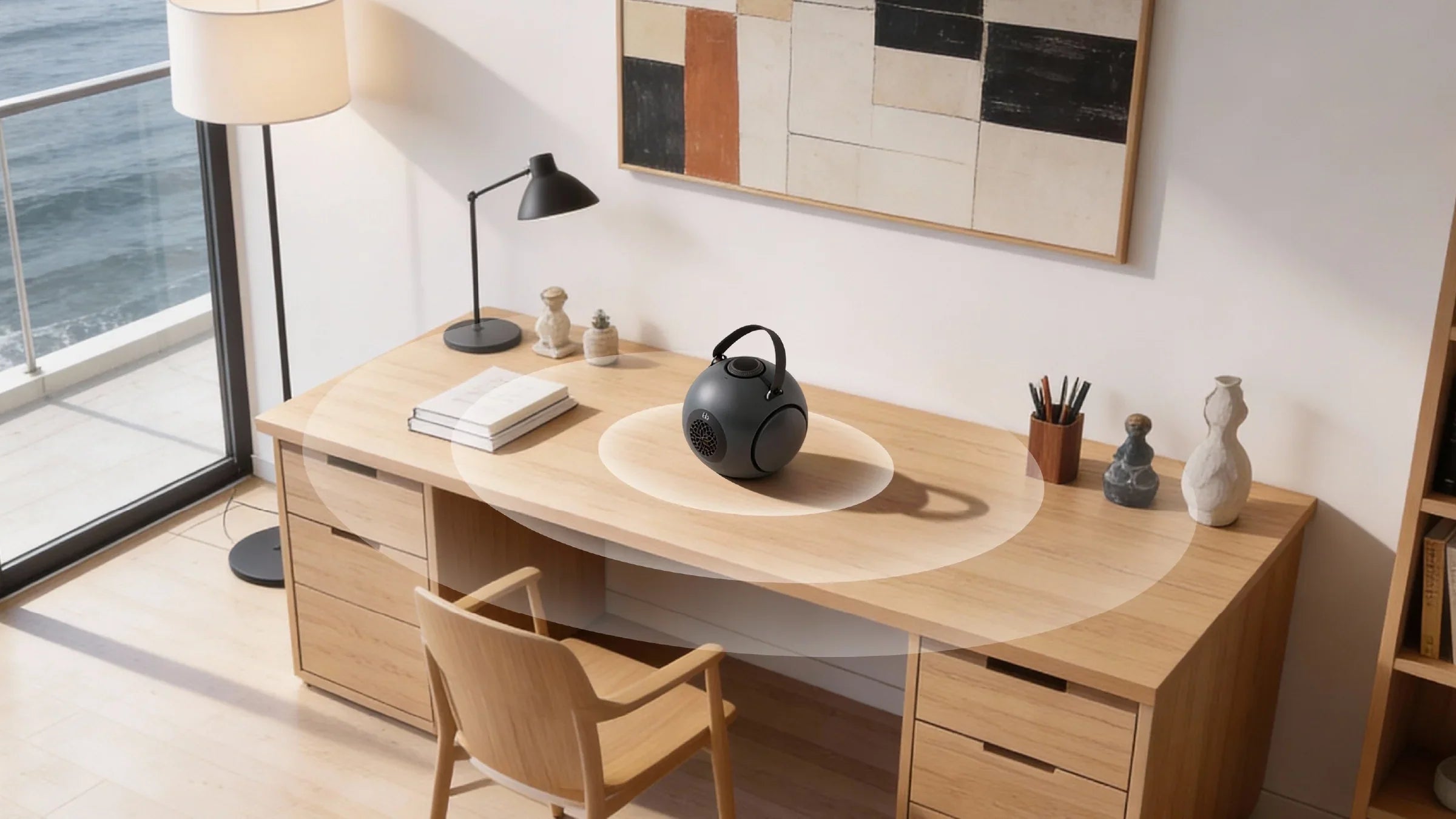
- Working from home
- Relaxing in the living room
- Traveling for business
- Camping outdoors
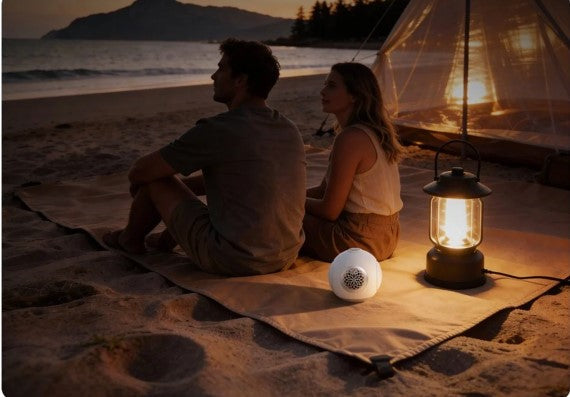
- Spending a day at the beach
- Hosting a backyard gathering
- Enjoying music in a hotel room
the speaker should deliver balanced sound without requiring constant adjustments.
This is why the best portable Bluetooth speaker isn't simply the lightest model—it's the one that combines intelligent acoustic engineering with practical portability.
The UB+ dB1 also supports Bluetooth 5.3, providing faster pairing, improved wireless stability, lower power consumption, and a more reliable connection than many older Bluetooth standards. Combined with up to 20 hours of battery life, it is designed to keep pace with everyday adventures and extended listening sessions alike.
Conventional Bluetooth Speaker vs. UB+ dB1 DoubleBass
|
Feature |
Conventional Bluetooth Speaker |
UB+ dB1 DoubleBass |
|
Cabinet Design |
Rectangular Plastic Enclosure |
Patented Helmholtz Resonance-Inspired Spherical Chamber |
|
Internal Resonance |
Higher Standing Waves |
Significantly Reduced Standing Waves |
|
Phase Distortion |
More Noticeable |
Minimized |
|
Harmonic Reproduction |
Standard |
Enhanced |
|
Bass Technology |
DSP Bass Boost |
Mechanical Bass Amplification |
|
Mid-Bass Driver |
Conventional Driver |
4.5-inch Downward-Firing Long-Throw Driver |
|
Passive Radiators |
Single or Small |
Dual Symmetrical Passive Radiators |
|
Radiator Surface Area |
Standard |
3.5× Larger Than Active Woofer |
|
Cabinet Movement |
Noticeable |
Self-Cancelling Vibration Architecture |
|
Magnet System |
Standard |
90 mm Oversized Neodymium Magnet |
|
Voice Coil |
Conventional |
35 mm Long-Stroke Voice Coil |
|
Shorting Ring |
Not Common |
Aluminum Shorting Ring |
|
Frequency Response |
Limited |
40 Hz–20 kHz |
|
Maximum Output |
Average |
93 dB SPL |
|
Bluetooth Version |
Older Standards |
Bluetooth 5.3 |
|
Battery Life |
Average |
Up to 20 Hours |
Finding the Best Bluetooth Speaker for Your Lifestyle
After understanding the engineering behind premium speakers, the next step is deciding which one fits your daily routine. The best bluetooth speaker isn't the same for everyone. A frequent traveler may prioritize portability and battery life, while someone who listens primarily at home may care more about soundstage, tonal balance, and room-filling performance.
Before making a purchase, consider questions such as:
- Will you mostly listen indoors or outdoors?
- Do you need a speaker for travel or home use?
- Will you listen to music, podcasts, movies, or all three?
- Do you value deep bass or balanced sound?
- Is portability more important than maximum volume?
Answering these questions helps narrow your choices and ensures you're investing in a speaker designed for your actual listening habits rather than simply following marketing trends.
Indoor Listening vs. Outdoor Listening
A premium Bluetooth speaker should perform consistently in different environments, but indoor and outdoor spaces present unique acoustic challenges.
Indoor Performance
Inside a room, walls, ceilings, floors, and furniture reflect sound waves. While some reflections can make music feel fuller, excessive resonance often reduces clarity and masks fine detail.
A well-engineered speaker should produce:
- Natural vocals
- Clear dialogue
- Balanced bass
- Smooth treble
- Excellent instrument separation
- Wide, immersive soundstage
Speakers that control internal resonance effectively maintain their tonal balance regardless of room size, creating a more enjoyable listening experience whether you're working, relaxing, or entertaining guests.
Outdoor Performance
Outdoor listening is completely different.
Unlike indoor environments, open spaces absorb sound instead of reflecting it. Without walls reinforcing low frequencies, poorly designed speakers often sound thin and weak.
The best portable bluetooth speaker should maintain:
- Accurate vocals
- Controlled bass
- Consistent detail
- Stable wireless performance
- Low distortion at higher volumes
Whether you're camping, relaxing at the beach, hiking, or enjoying a backyard gathering, thoughtful acoustic engineering matters far more than simply increasing volume.
Why Engineering Determines Long-Term Sound Quality
Many Bluetooth speakers rely heavily on aggressive Digital Signal Processing (DSP) to create the illusion of larger bass.
Although DSP plays an important role in system optimization, excessive digital enhancement often produces bloated low frequencies while masking the finer details that make music enjoyable.
The UB+ dB1 DoubleBass follows a fundamentally different philosophy.
Its patented spherical acoustic chamber inspired by the Helmholtz Resonance principle transforms the enclosure into an active acoustic component rather than a simple protective shell.
Inspired by the physics of the Helmholtz Resonator, the spherical chamber distributes internal air pressure evenly while reducing standing waves, minimizing phase distortion, and improving harmonic reproduction throughout the audible frequency range.
Rather than allowing the cabinet to interfere with the sound, the enclosure actively contributes to cleaner, more natural audio.
Mechanical Bass Instead of Artificial Bass Boost
One of the defining characteristics of the UB+ dB1 is its approach to low-frequency reproduction.
At the center of the speaker is a 4.5-inch downward-firing long-throw mid-bass driver that directs energy into the spherical chamber.
As the driver moves, evenly distributed air pressure activates dual symmetrical passive radiators mounted on opposite sides of the enclosure.
This patented configuration creates mechanical bass amplification, allowing acoustic physics to generate deep, controlled bass naturally.
The combined passive radiator surface area is approximately 3.5× larger than the active woofer, enabling substantially greater air movement than conventional compact speakers.
Because both passive radiators move simultaneously in opposite directions, they create a self-cancelling vibration architecture, reducing cabinet movement while improving efficiency and bass accuracy.
The onboard DSP continuously monitors driver performance and protects the system, but it does not artificially generate bass, preserving a more natural listening experience across every genre.
Premium Components That Support Premium Performance
Beyond its innovative cabinet design, the UB+ dB1 incorporates carefully engineered internal components that contribute directly to sound quality.
These include:
- 90 mm oversized neodymium magnet
- 35 mm long-stroke voice coil
- 20 mm piston movement
- 18 mm extra-wide surround
- Aluminum shorting ring
Working together, these components improve driver control, reduce distortion, and maintain precise cone movement even during demanding musical passages.
Combined with:
- 40 Hz–20 kHz frequency response
- 93 dB SPL
- Bluetooth 5.3
- Up to 20 hours of battery life
the result is a premium wireless speaker capable of delivering consistent performance both indoors and outdoors.
Common Buying Mistakes to Avoid
Choosing the right speaker becomes much easier when you avoid several common mistakes.
Buying Based Only on Maximum Volume
Louder doesn't always mean better. A balanced speaker with excellent clarity is often far more enjoyable than one that simply plays louder.
Ignoring Cabinet Design
The enclosure has a major influence on resonance, bass accuracy, and overall sound quality. Advanced cabinet engineering often matters more than raw power.
Focusing Only on Bass
Deep bass is important, but excessive low frequencies can overwhelm vocals and reduce musical detail. A balanced frequency response creates a more satisfying long-term listening experience.
Overlooking Battery Life
Long battery life becomes essential during travel, outdoor activities, and everyday portability.
Choosing Older Bluetooth Versions
Bluetooth 5.3 offers stronger wireless stability, improved efficiency, and better overall reliability compared to previous generations.
Buying Checklist
Before purchasing a premium Bluetooth speaker, ask yourself:
✔ Does the speaker use intelligent acoustic engineering?
✔ Is the cabinet designed to reduce standing waves and resonance?
✔ Does it generate bass mechanically rather than relying entirely on DSP?
✔ Are premium driver components used throughout the system?
✔ Does it support Bluetooth 5.3?
✔ Is the battery designed to support full-day listening?
✔ Will the speaker continue performing well years after purchase?
Answering "yes" to these questions usually indicates a product designed for long-term satisfaction rather than short-term marketing appeal.
Frequently Asked Questions
1. What makes the best Bluetooth speaker different from ordinary speakers?
Premium Bluetooth speakers combine intelligent cabinet engineering, high-quality drivers, advanced acoustic tuning, reliable wireless connectivity, and durable construction. Rather than focusing solely on volume, they deliver balanced sound that remains enjoyable across many different listening environments.
2. Can compact Bluetooth speakers produce deep bass?
Yes. Modern engineering techniques such as Helmholtz Resonance-inspired spherical acoustic chambers, long-throw drivers, and dual symmetrical passive radiators allow compact speakers to reproduce surprisingly deep and controlled bass without requiring oversized cabinets.
3. Why does cabinet design affect sound quality?
The enclosure directly influences standing waves, resonance, and phase distortion. A carefully engineered cabinet improves harmonic reproduction, preserves musical detail, and creates cleaner, more accurate sound.
4. Is Bluetooth 5.3 worth upgrading to?
Absolutely. Bluetooth 5.3 provides improved connection stability, faster pairing, greater energy efficiency, and more reliable wireless performance, making it ideal for both everyday listening and portable use.
5. Should I invest in a premium Bluetooth speaker?
If you value natural sound quality, long battery life, durable construction, and consistent performance, a premium speaker is often the better long-term investment. Better engineering generally results in a more enjoyable listening experience for many years.
Conclusion
Choosing the best bluetooth speaker in 2026 requires looking beyond marketing specifications and focusing on the engineering that truly shapes sound quality. Cabinet design, resonance control, driver technology, wireless stability, and intelligent acoustic architecture all play a significant role in creating an exceptional listening experience.
Whether you're searching for a premium travel companion, a versatile home speaker, or a compact model that delivers outstanding performance, prioritize products built around proven acoustic engineering rather than exaggerated specifications. A thoughtfully engineered speaker will continue delivering balanced, enjoyable sound long after the excitement of a new purchase has faded.
Smarter Engineering Creates Better Sound
The UB+ dB1 DoubleBass demonstrates how innovative engineering can redefine portable audio. At its core is a patented Helmholtz Resonance-inspired spherical acoustic chamber that transforms the enclosure into an active acoustic system. Inspired by the Helmholtz Resonator, this spherical design distributes air pressure evenly, reduces standing waves, minimizes phase distortion, and improves harmonic reproduction, producing cleaner, more natural sound before it even leaves the cabinet.
Its 4.5-inch downward-firing long-throw mid-bass driver works with dual symmetrical passive radiators featuring a combined surface area approximately 3.5× larger than the active woofer. Together they create mechanical bass amplification and a self-cancelling vibration architecture, converting energy into powerful, controlled bass instead of cabinet vibration. Supported by a 90 mm oversized neodymium magnet, 35 mm long-stroke voice coil, 20 mm piston movement, 18 mm extra-wide surround, aluminum shorting ring, 40 Hz–20 kHz frequency response, 93 dB SPL, Bluetooth 5.3, and up to 20 hours of battery life, the dB1 delivers premium performance wherever you listen.
Explore the differences in sound signature, portability, and features to find the UB+ speaker that best suits your listening style.
Discover premium finishes that combine award-winning industrial design with advanced acoustic engineering.
View the latest specifications, pricing, and availability directly from UB+.
Because the best speaker isn't always the biggest one.
It's the one designed to move sound naturally.


Commenta
Questo sito è protetto da hCaptcha e applica le Norme sulla privacy e i Termini di servizio di hCaptcha.