
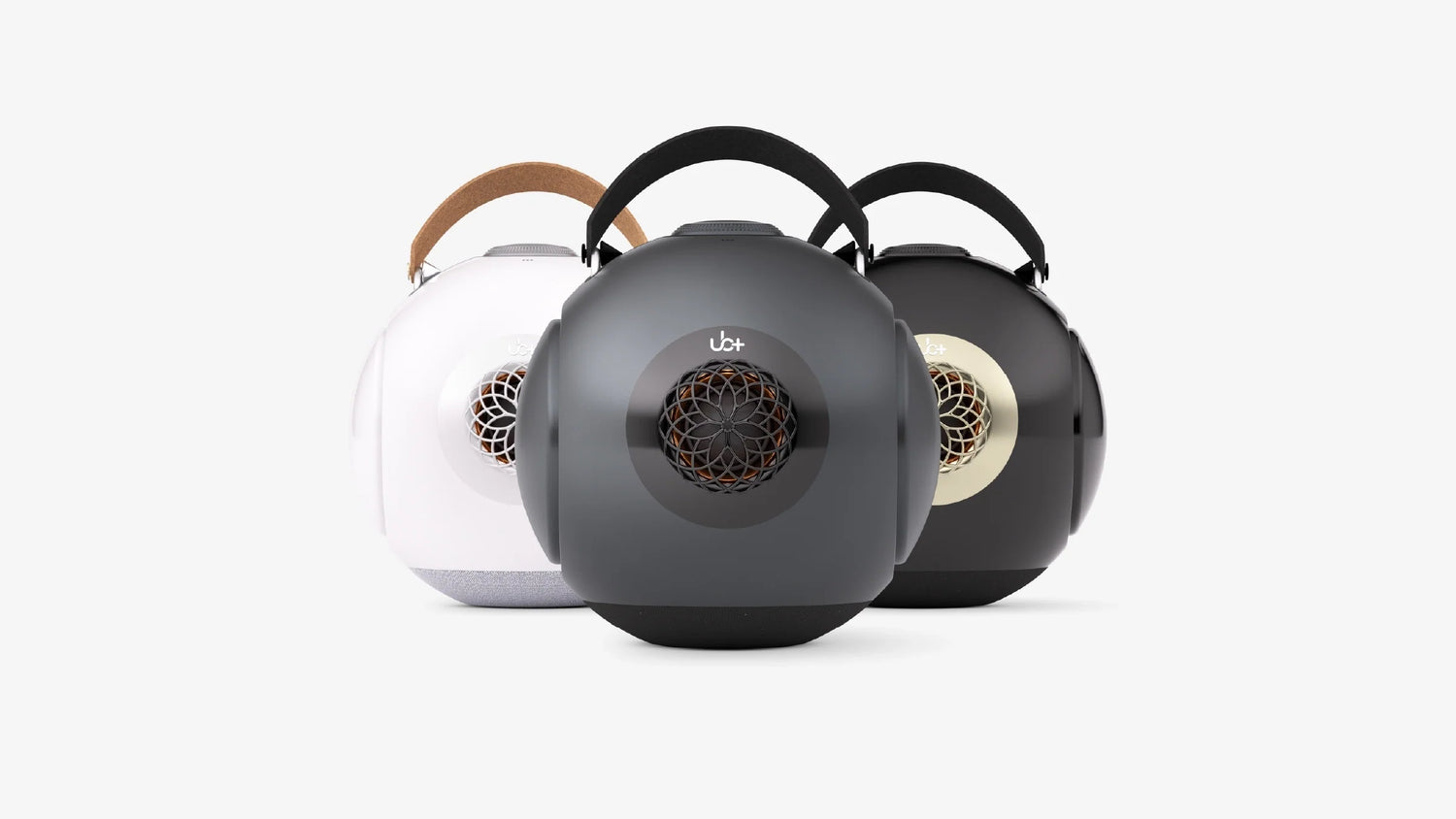
If you’ve ever compared a portable bluetooth speaker, researched the best sounding bluetooth speaker, or looked at specifications for a wireless bluetooth speaker, you’ve probably noticed one feature heavily promoted in marketing:
Driver size.
Many brands imply that larger drivers automatically produce better sound, deeper bass, and higher output. It sounds logical. Bigger drivers move more air, so bigger should always mean better… right?
Not exactly.
In modern speaker engineering, driver size is only one part of a much larger acoustic system. A poorly tuned large driver can sound muddy and uncontrolled, while a smaller, carefully engineered driver can produce cleaner bass, better balance, and a more immersive listening experience.
This is especially true in today’s compact audio market, where the best small bluetooth speakers often outperform larger competitors through smarter enclosure design, resonance management, and airflow engineering.
This guide explains how driver size really affects sound quality, why tuning matters more than diameter alone, and how advanced compact speaker engineering is changing the way we think about portable audio.
What Is a Speaker Driver?
A driver is the physical component inside a speaker that moves air to create sound.
It typically consists of:
- a cone or diaphragm
- a voice coil
- a magnet structure
- a suspension system
When electrical current passes through the voice coil, the diaphragm moves back and forth, creating sound waves.
Why Driver Size Became a Marketing Tool
Historically, larger drivers had real advantages.
Big speakers could:
- move more air
- produce deeper bass
- play louder with less strain
That’s why traditional home audio systems often used:
- 8-inch woofers
- 10-inch woofers
- even 15-inch drivers
In large rooms, this made sense.
But modern speaker engineering changed the equation.
Bigger Drivers Do Not Automatically Mean Better Sound
Today, sound quality depends on far more than cone diameter.
A large driver can still sound:
- muddy
- slow
- boomy
- distorted
if the system around it is poorly designed.
Meanwhile, compact drivers can sound remarkably refined when paired with:
- efficient acoustic chambers
- optimized airflow
- advanced resonance control
- properly tuned passive radiators
This is why many modern best portable bluetooth speaker designs no longer rely on oversized drivers alone.
The Real Relationship Between Driver Size and Sound
Driver size affects several characteristics:
|
Driver Size Trait |
Impact |
|
Larger surface area |
More air movement |
|
Lower frequency capability |
Better bass extension potential |
|
Increased efficiency |
Higher output potential |
|
Greater mass |
Slower transient response possible |
But these benefits only work when balanced correctly.
Why Bigger Drivers Sometimes Sound Worse
Large drivers face engineering challenges:
1. Slower Response Time
Heavier cones react more slowly.
2. Poor Midrange Clarity
Large drivers often struggle with vocal detail.
3. Cabinet Resonance
Large drivers create stronger internal pressure.
4. Distortion Risk
Poorly controlled movement causes unwanted vibration.
This is why simply increasing driver size rarely guarantees better sound.
Compact Speakers: The Engineering Revolution
Modern wireless bluetooth speaker design focuses on efficiency rather than size alone.
Compact speakers now use:
- high-excursion drivers
- optimized suspension systems
- stronger magnet structures
- passive radiator systems
- Helmholtz-inspired chambers
These allow smaller speakers to produce surprisingly deep, controlled bass.
The Myth of “More Bass = Better Speaker”
One reason consumers associate large drivers with quality is bass.
But bass quality matters more than bass quantity.
Poor bass sounds:
- bloated
- muddy
- overwhelming
Good bass sounds:
- tight
- controlled
- textured
- balanced with mids and highs
This balance depends more on tuning than driver diameter.
What Actually Determines Sound Quality?
Real sound quality comes from how the entire acoustic system works together.
Key factors include:
Enclosure Design
- Driver Tuning
- Resonance Control
- Airflow Management
- Cabinet Geometry
- Amplifier Matching
Why Enclosure Design Matters More Than Driver Size
The enclosure shapes how air moves around the driver.
Poor enclosure design causes:
- standing waves
- uneven bass response
- internal reflections
- distortion
This is why advanced speaker systems focus heavily on cabinet architecture.
Spherical Enclosures vs Traditional Box Designs
Traditional rectangular cabinets create:
- parallel internal surfaces
- uneven pressure zones
- resonance buildup
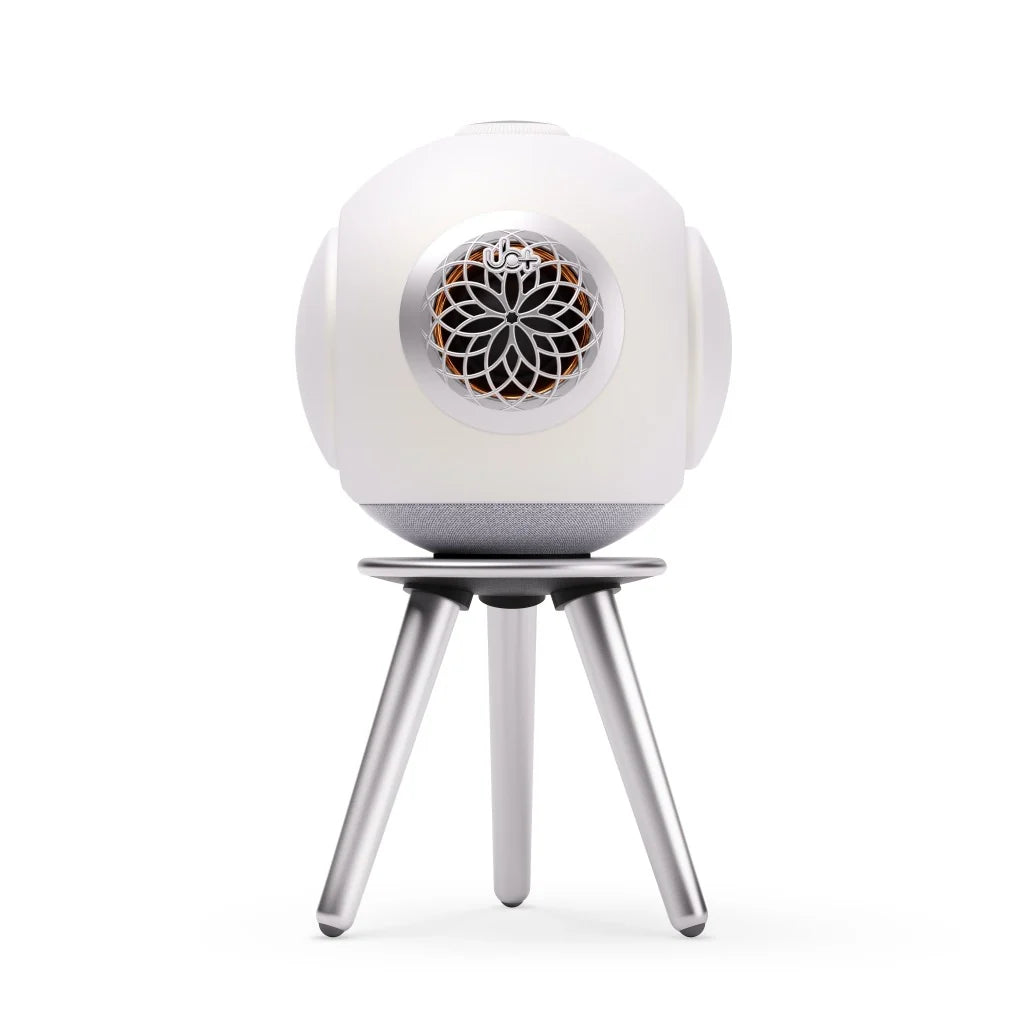
Spherical enclosures reduce these problems because they:
- distribute air pressure evenly
- reduce standing waves
- improve phase consistency
- create smoother dispersion
This helps smaller drivers perform beyond expectations.
Helmholtz Resonance: Smarter Bass from Smaller Drivers
One of the most important innovations in compact speaker design is Helmholtz-inspired acoustic engineering.
Instead of forcing bass through raw power, the system:
- controls internal air pressure
- tunes resonance naturally
- amplifies low frequencies mechanically
This allows compact systems to produce deeper bass without oversized drivers.
Passive Radiators: Expanding Bass Without Larger Woofers
Passive radiators help compact speakers move more air.
They work by:
- responding to internal pressure changes
- reinforcing low frequencies
- extending bass response naturally
Why Dual Passive Radiators Matter
Advanced systems use symmetrical radiators because they:
- cancel cabinet vibration
- stabilize airflow
- improve efficiency
- reduce distortion
This is one reason many best small bluetooth speakers sound much larger than expected.
Large Driver vs Engineered Compact System
|
Feature |
Large Driver Speaker |
Engineered Compact Speaker |
|
Bass Quantity |
High |
Controlled and deep |
|
Midrange Clarity |
Sometimes weaker |
Often cleaner |
|
Cabinet Size |
Large |
Compact |
|
Portability |
Low |
High |
|
Resonance Control |
Difficult |
Easier with optimized design |
|
Listening Fatigue |
Higher risk |
Lower risk |
|
Real-World Flexibility |
Limited |
Excellent |
The Importance of Driver Excursion
Modern compact speakers compensate for smaller size using:
High Excursion Drivers
Excursion = how far the driver moves.
A smaller driver with longer excursion can move significant air while maintaining compact dimensions.
Magnet Strength Matters Too
A strong magnet system improves:
- driver control
- transient response
- accuracy at high volume
Many advanced compact systems use oversized neodymium magnets for this reason.
Why Tuning Is More Important Than Size
Two speakers with identical drivers can sound completely different depending on tuning.
Tuning affects:
- tonal balance
- bass emphasis
- vocal clarity
- fatigue levels
This is why professional audio engineers spend enormous time refining frequency response.
The Problem with Over-Tuned Bass
Some best budget bluetooth speaker models artificially boost bass to create instant impact.
This often leads to:
- muddy vocals
- distorted lows
- listener fatigue
Initially impressive sound can become tiring over long listening sessions.
Why Audiophile Speakers Prioritize Balance
The best sounding bluetooth speaker designs focus on:
- tonal accuracy
- natural dynamics
- low distortion
- coherence across frequencies
Not exaggerated bass alone.
Small Speakers Are Smarter Than Ever
Modern compact systems benefit from:
- advanced DSP
- stronger materials
- improved driver suspension
- precision acoustic modeling
This is why many rechargeable bluetooth speaker systems now rival older large-format speakers.
What Actually Impacts Sound Quality
|
Factor |
Importance Level |
|
Driver Size |
Moderate |
|
Enclosure Design |
Very High |
|
Tuning |
Extremely High |
|
Resonance Control |
Very High |
|
Driver Excursion |
High |
|
Magnet Quality |
High |
|
Airflow Engineering |
Very High |
Why Portable Audio Changed Speaker Engineering
Consumers now want:
- portability
- strong bass
- clean sound
- smaller footprints
This forced engineers to innovate beyond simply increasing driver size.
The Rise of Compact Acoustic Systems
Modern portable bluetooth speaker systems now use:
- acoustic chambers
- passive radiator arrays
- airflow tuning
- controlled resonance systems
These technologies create fuller sound from smaller footprints.
Why Bigger Speakers Still Have Advantages
To be fair, larger drivers still offer benefits:
- greater effortless output
- deeper sub-bass potential
- larger room coverage
But these benefits matter most in:
- large listening spaces
- high-volume environments
- dedicated home audio systems
For everyday listening, compact engineering is often more practical.
Real-World Listening Matters More Than Specifications
Specifications alone rarely tell the full story.
Two speakers with identical driver sizes can sound completely different because:
- cabinet tuning differs
- internal airflow differs
- resonance behavior differs
This is why listening experience matters more than spec sheets.
Why Compact Speakers Are Ideal for Modern Spaces
Modern homes prioritize:
- minimalism
- flexibility
- wireless convenience
- compact design
Large speakers often feel impractical in:
- apartments
- bedrooms
- desk setups
- shared spaces
This is where compact acoustic engineering becomes valuable.
How to Evaluate a Speaker Properly
Instead of focusing only on driver size, evaluate:
- Tonal balance
- Bass control
- Clarity at higher volume
- Dispersion quality
- Listening comfort over time
The Future of Speaker Design
Speaker design is increasingly moving toward:
- smarter acoustic engineering
- resonance optimization
- compact efficiency
- airflow-based bass enhancement
not oversized drivers alone.
Final Thoughts: Bigger Isn’t Automatically Better
Driver size matters but far less than most marketing suggests.
A larger driver can produce powerful sound, but without proper tuning and acoustic control, it may sound less natural than a carefully engineered compact system.
Today’s best small bluetooth speakers prove that modern speaker performance depends on:
- enclosure architecture
- resonance management
- airflow efficiency
- tuning precision
- driver engineering
This is why many compact systems now compete directly with larger traditional speakers.
Because in modern audio, good sound is no longer about size alone.
It’s about how intelligently the entire system works together.
Smarter Engineering Creates Better Sound
→ Compare dB1 vs dB Mini
→ See color options
→ Check current price
Because the best speaker isn’t always the biggest one.
It’s the one designed to move sound naturally.


댓글 남기기
이 사이트는 hCaptcha에 의해 보호되며, hCaptcha의 개인 정보 보호 정책 과 서비스 약관 이 적용됩니다.