

Finding the best bluetooth speaker for kitchen use means choosing a speaker that can handle the practical demands of cooking while delivering clear, enjoyable music throughout the kitchen. Unlike a bedroom or dedicated listening room, a kitchen exposes audio equipment to occasional splashes, steam, cooking grease, changing temperatures, background noise, and limited counter space. The right speaker needs to fit naturally into this environment without making everyday cooking more complicated.
Sound quality matters, but it is only one part of the decision. A good kitchen Bluetooth speaker should offer convenient controls, reliable wireless connectivity, suitable water resistance, balanced sound at moderate volume, and a compact design that works around appliances and food-preparation areas.
The best option is not necessarily the loudest speaker or the one with the most exaggerated bass. It is the speaker that makes music, podcasts, radio, and cooking videos easy to enjoy while you prepare meals, clean up, or spend time with family.
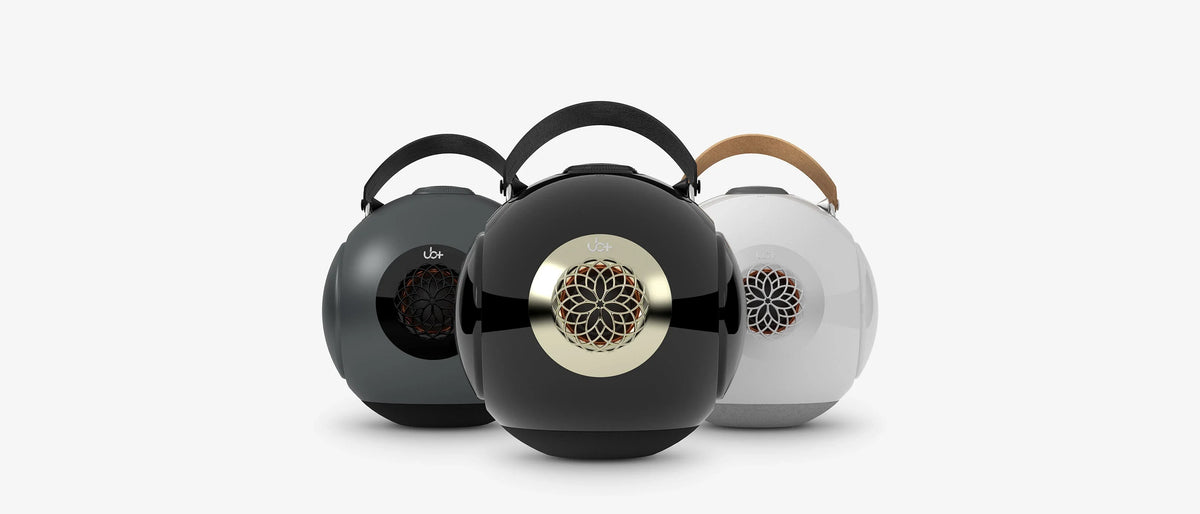
For buyers comparing a UB+ dB1 DoubleBass with the UB+ dB Mini, the key considerations include available counter space, desired bass performance, listening habits, and how easily the speaker can be positioned away from water, heat, and grease.
This guide explains what makes a speaker suitable for kitchen use, which features deserve your attention, how to choose between compact and fuller-sounding designs, and what to consider before buying.
What you will learn:
- Which features matter most in a Bluetooth speaker for cooking.
- Why splash resistance is important and what it does not protect against.
- How to choose a speaker with clear sound over normal kitchen noise.
- Why easy controls, reliable connectivity, and battery performance matter.
- How to compare compact speakers with models designed for fuller, room-filling sound.
- How the UB+ dB1 DoubleBass and dB Mini fit different kitchen setups.
What Makes a Bluetooth Speaker Good for Kitchen Use?

A kitchen speaker needs to do more than play music. It must work in an environment where people move between tasks, use their hands frequently, and may not be able to stop what they are doing to adjust the volume or reconnect a device.
A speaker that performs well in a quiet room may be less convenient in a kitchen if its controls are awkward, the sound becomes difficult to hear over ventilation noise, or the product is too large for the available surface.
Before comparing models, focus on the features that make everyday use easier.
|
Kitchen Requirement |
What to Look For |
Why It Matters |
|
Water resistance |
A clearly stated IP rating appropriate to your intended use |
Helps you evaluate protection against water exposure |
|
Easy controls |
Accessible physical buttons or straightforward controls |
Makes adjustments simpler while cooking |
|
Clear sound |
Intelligible vocals and balanced midrange |
Helps with podcasts, recipes, radio, and music |
|
Bass performance |
Controlled bass that does not overwhelm vocals |
Keeps music enjoyable at moderate volume |
|
Wireless connectivity |
Reliable Bluetooth connection with your usual device |
Reduces interruptions during cooking |
|
Compact design |
A footprint suitable for your counter, shelf, or kitchen island |
Preserves valuable work space |
|
Battery performance |
Playback suited to your routine, or a practical charging arrangement |
Reduces interruptions during longer cooking sessions |
|
Easy maintenance |
A surface that can be cleaned according to manufacturer instructions |
Helps with everyday kitchen dust and handling |
No single specification determines the best speaker for every kitchen. The right combination depends on the room layout, your typical listening volume, and where you can place the speaker safely.
Splash Resistance: The First Feature to Check

Kitchens contain water around sinks, moisture from cooking, and occasional splashes from washing produce or cleaning surfaces. Even if a speaker is positioned away from the sink, accidental exposure remains possible.
That makes water resistance an important buying consideration.
However, the terms splash-resistant, water-resistant, and waterproof should not be treated as interchangeable. A speaker's actual protection depends on its stated rating and the conditions for which it has been tested.
Understand the IP Rating Before Buying
An IP rating communicates protection against certain types of exposure to solid particles and water. The exact rating matters more than a broad marketing description.
For example, the UB+ dB1 DoubleBass has an IPX5 water-resistance rating. IPX5 indicates protection against water jets under specified test conditions. The “X” means that the rating does not specify a dust-protection level.
For kitchen use, this distinction is important:
- IPX5 is not a guarantee that a speaker can be submerged.
- Water resistance does not automatically mean resistance to cooking oil or grease.
- A water-resistance rating does not establish protection against high heat.
- Charging ports, covers, and connections should be handled according to the manufacturer's instructions.
A water-resistant speaker can offer useful protection against certain accidental water exposures, but sensible placement is still essential.
Where Should You Place a Kitchen Speaker?
Choose a stable position away from the main cooking and cleaning areas. The aim is to let sound reach you without exposing the device to unnecessary hazards.
Good placement practices include:
- Keep the speaker away from the sink and areas where water is frequently splashed.
- Avoid placing it beside stovetops, ovens, hot pans, or other heat sources.
- Keep it away from direct steam and cooking splatter.
- Do not place it on a narrow edge where it could be knocked onto the floor.
- Keep the speaker clear of food-preparation surfaces where ingredients or liquids may contact it.
- Follow the manufacturer's cleaning and charging instructions.
A speaker's water resistance should be treated as a useful layer of protection, not permission to expose it deliberately to water, steam, oil, or heat.
If water resistance is a major priority in your buying decision, UB+'s guide to choosing a waterproof Bluetooth speaker provides another useful perspective on product ratings and intended use.
Sound Quality: Clear Music Without Overwhelming the Kitchen

Kitchen listening is different from sitting in a quiet room with music playing through a carefully positioned stereo system. Refrigerators, ventilation fans, running water, cooking appliances, and conversation can compete with the speaker.
This makes tonal balance and vocal clarity especially valuable.
A speaker does not need exaggerated bass or extreme maximum volume to work well in a kitchen. Often, the most useful qualities are clear vocals, natural midrange, and enough output to remain comfortably audible without making the room unpleasantly loud.
Why Midrange Clarity Matters
The midrange carries much of the information that makes speech and vocals intelligible. If this region is poorly reproduced or overwhelmed by excessive bass, podcasts and spoken recipes can become more difficult to follow.
When evaluating a kitchen speaker, listen for:
- Clear vocals at low and moderate volume.
- Distinct instruments without excessive harshness.
- Balanced bass that supports music rather than dominating it.
- Consistent sound when you move around the kitchen.
- Enough output to suit your room without forcing the speaker to its limits.
For example, a speaker used mainly for recipe videos, podcasts, and talk radio may benefit more from clear speech than from powerful bass. Someone who listens to electronic music while cooking may place more emphasis on low-frequency extension, but bass should still remain controlled.
Why Moderate-Volume Performance Matters
Most kitchen speakers spend much of their time playing at low or moderate volume. You may want background music while preparing breakfast, listening to a podcast while washing dishes, or following spoken instructions without interrupting the cooking process.
A speaker that maintains a pleasing tonal balance at lower levels can be more useful than one that only sounds impressive when turned up.
If that is a priority, read UB+'s article on choosing a Bluetooth speaker that sounds good at low volume.
Easy Controls: A Small Feature That Makes a Big Difference

When cooking, your attention is usually divided between ingredients, utensils, appliances, and timing. You may also have wet or messy hands. A speaker that requires repeated adjustments through a phone can become inconvenient.
Easy-to-use controls make everyday listening simpler.
What Makes Speaker Controls Kitchen-Friendly?
Look for controls that allow you to complete common tasks quickly.
- Accessible volume adjustment: You should be able to lower or raise the sound without navigating multiple screens.
- Clear playback controls: Buttons for common playback functions help reduce reliance on your phone.
- Straightforward pairing: Connecting your usual device should not require repeated troubleshooting.
- Understandable feedback: Clear button functions and status indicators make operation easier.
- Convenient device access: Consider whether your phone can remain on a dry, safe surface while the speaker plays.
Physical controls can be particularly convenient when your phone is charging elsewhere or you do not want to handle it while preparing food.
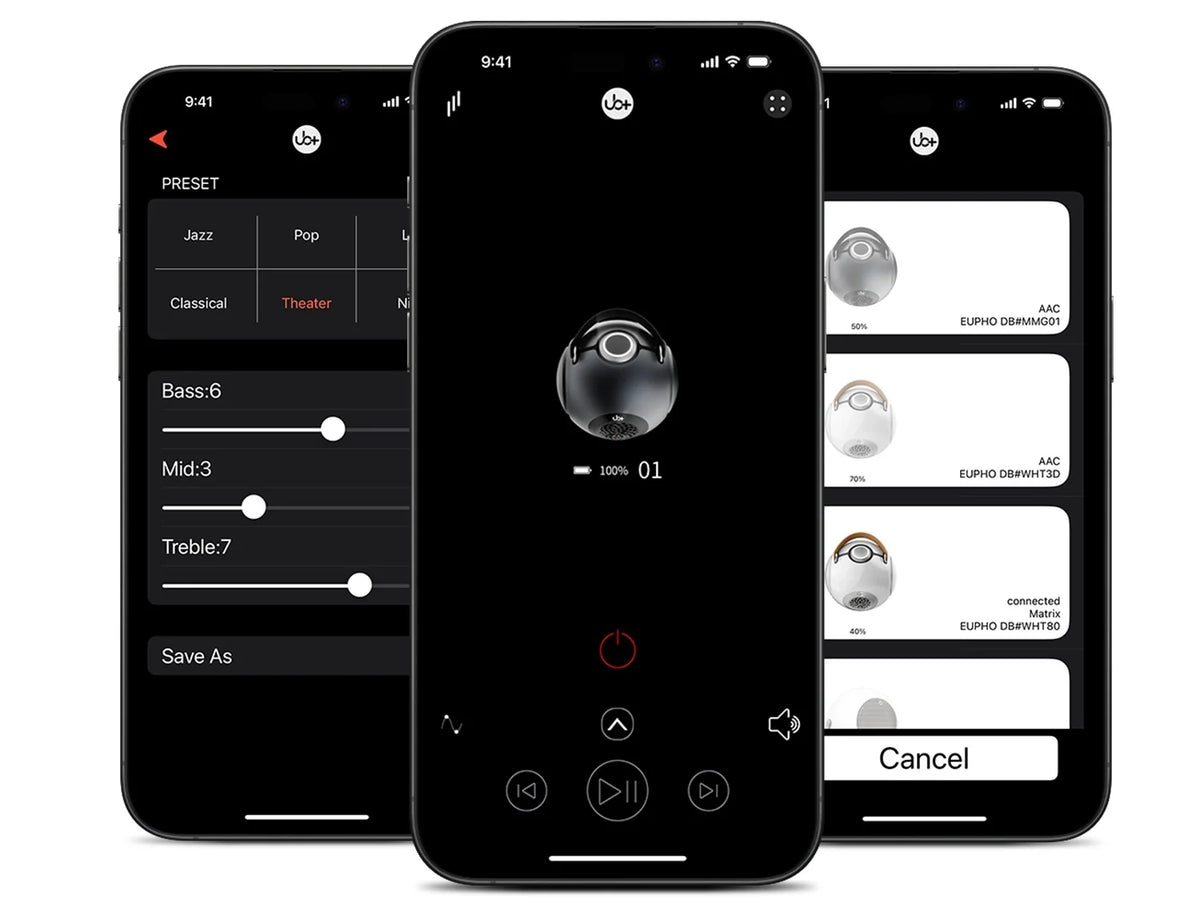
An app may still offer useful additional settings, but basic operation should be simple enough for daily use. Features vary between models, so check the actual controls before purchasing rather than assuming every Bluetooth speaker offers the same functionality.
Bluetooth Connectivity: Keep Your Cooking Playlist Playing

Reliable connectivity is another essential feature. Repeated disconnections interrupt music, podcasts, and audio instructions, making a speaker less useful in a busy kitchen.
Most modern Bluetooth speakers are designed for straightforward wireless playback, but the real experience still depends on the speaker, the source device, wireless conditions, and how the product is used.
What to Consider Before Buying
- Device compatibility: Check that the speaker works with the phone, tablet, or other device you regularly use.
- Pairing convenience: Consider how easily you can reconnect after moving the speaker or restarting playback.
- Signal reliability: Keep the source device within a practical range and avoid unnecessary obstacles.
- Control access: Decide whether you prefer managing playback from the speaker or your phone.
- Everyday stability: Read product information and reviews carefully if frequent disconnections are a concern.
A kitchen speaker should ideally require very little attention once it has been set up. When music is part of your daily cooking routine, dependable operation is often more valuable than a collection of features you rarely use.
You can also explore UB+'s Bluetooth speaker troubleshooting guide for common connectivity issues and potential solutions.
Choosing the Right Speaker Size for Your Kitchen
Kitchen size and layout influence how much output and sound coverage you need. A compact kitchen with a nearby counter may require much less output than a large open-plan kitchen connected to a dining and living area.
The speaker's intended position also matters. A unit placed close to you does not need the same output as one expected to serve a larger space from across the room.
Compact Kitchens and Small Apartments
Compact kitchens benefit from a speaker that fits into limited space without interfering with food preparation.
Consider a compact model if you:
- Have limited counter or shelf space.
- Usually listen from nearby.
- Prefer background music at moderate volume.
- Want a portable speaker that can move between rooms.
- Need a straightforward setup without extra equipment.
In a small kitchen, controlled sound can be more practical than excessive output. A speaker with strong bass may still work well, but placement matters because nearby walls and corners can change the perceived bass balance.
Medium Kitchens and Everyday Family Use
A medium-sized kitchen may benefit from broader coverage and enough output to remain audible as you move between a counter, sink, and dining area.
Prioritize:
- Clear vocals and balanced sound.
- Enough usable output for the intended listening area.
- A practical position away from water and cooking heat.
- Convenient volume and playback controls.
- A design that does not take up unnecessary room.
A compact speaker may still be sufficient, depending on the layout and your preferred volume.
Large or Open-Plan Kitchens
In an open-plan kitchen, sound must cover a larger space and may need to remain audible farther from the speaker.
Look for enough clean output and a dispersion pattern that suits the area. You may prefer a speaker that distributes sound broadly, especially if people regularly move between the kitchen and adjoining living area.
However, a single speaker may not provide identical sound levels throughout a large open-plan space. The kitchen's shape, furniture, distance, and background noise all affect the result.
|
Kitchen Setup |
Speaker Priorities |
Practical Consideration |
|
Small enclosed kitchen |
Compact size, clear sound, easy controls |
Preserve workspace and avoid excessive volume |
|
Medium family kitchen |
Balanced sound, convenient operation, suitable output |
Ensure music remains audible as you move |
|
Open-plan kitchen |
Adequate clean output and appropriate dispersion |
Consider the distance to adjoining areas |
|
Kitchen island |
Convenient controls and stable placement |
Keep the device away from food-preparation hazards |
|
Rental apartment |
Portable design and easy setup |
Avoid relying on permanent mounting or complex installation |
Bass Performance: How Much Do You Need in a Kitchen?
Bass can make music feel full and engaging, but excessive low-frequency output is not always useful in a kitchen.
Hard surfaces such as tile, stone, glass, and cabinetry can reflect sound. Depending on the room dimensions and speaker location, these reflections may reinforce some frequencies and make the bass seem louder or less even.
The best kitchen speaker provides enough bass to make music enjoyable without overwhelming vocals or becoming boomy.
How Acoustic Design Influences Bass
Low-frequency performance depends on several factors:
- Driver capabilities and excursion.
- Enclosure volume and tuning.
- Passive radiators or ports, where used.
- Amplifier output and signal processing.
- Placement relative to walls and corners.
The enclosure is not simply a protective shell. Its design influences the environment in which the driver operates.
The UB+ dB1 DoubleBass uses a spherical acoustic chamber inspired by Helmholtz resonance and two symmetrical passive radiators as part of its bass architecture. These elements are designed to work together to support low-frequency reproduction in a compact form.
That does not mean every kitchen requires this type of design. For casual spoken audio, a simpler compact speaker may be sufficient. If you enjoy bass-rich music and want a fuller listening experience, examining the acoustic architecture can help you make a more informed comparison.
How to Avoid Boomy Bass in a Kitchen
Before choosing a larger or more powerful speaker, consider where it will sit.
Useful adjustments include:
- Move the speaker away from corners if the bass sounds excessive.
- Avoid placing it directly against resonant objects or unstable surfaces.
- Test the sound from the positions where you normally cook.
- Use equalization only where available and adjust it carefully.
- Keep the volume at a level that allows clear listening without competing unnecessarily with appliances.
Small placement changes can alter bass perception significantly, even when the speaker itself remains unchanged.
Battery Life and Charging Convenience
Battery performance matters if you want to move your kitchen speaker between rooms, take it to a dining area, or use it away from a convenient power outlet.
However, advertised playback times are estimates based on particular testing conditions. Actual battery life can vary with volume, audio content, battery condition, and other operating factors.
When comparing models, consider how you will use the speaker rather than relying exclusively on the largest advertised hours.
Ask yourself:
- Will the speaker stay in the kitchen most of the time?
- Do you want to move it around the home?
- Do you listen for short meal-preparation sessions or several hours at a time?
- Is charging access convenient where you plan to store it?
- Will you regularly use it at high volume?
A speaker intended to remain in one place may have different practical requirements from one that moves between the kitchen, bedroom, patio, and home office.
For further guidance, see UB+'s article explaining Bluetooth speaker battery life.
Cleaning and Maintenance in a Cooking Environment
Kitchens contain airborne grease, food particles, dust, and moisture. Over time, these may collect on a speaker's exterior, particularly if the device is placed near cooking areas.
Water resistance should not be confused with resistance to every type of contamination. A rating for water exposure does not automatically mean the product can withstand oil, cleaning chemicals, high heat, or direct steam.
Simple Kitchen Speaker Care
- Position the speaker away from cooking splatter and heavy grease.
- Follow the manufacturer's instructions for cleaning the exterior.
- Do not spray cleaning products directly onto the speaker.
- Avoid allowing moisture to enter ports, controls, or charging connections.
- Make sure the speaker is handled and charged according to its stated conditions.
- Do not use abrasive materials or unapproved solvents on the exterior.
A sensible position often makes more difference than frequent cleaning. Place the speaker where it can provide good sound while remaining outside the busiest cooking and washing zones.
UB+ dB1 DoubleBass vs. dB Mini: Which Is Better for Your Kitchen?
The right choice between the UB+ dB1 DoubleBass and the UB+ dB Mini depends on the way you use your kitchen and the listening experience you prefer.
Rather than assuming that one model is better for every household, consider the practical priorities of your setup.
|
Kitchen Priority |
UB+ dB1 DoubleBass |
UB+ dB Mini |
|
Acoustic design |
Spherical chamber inspired by Helmholtz resonance with dual symmetrical passive radiators |
Consider its product information and intended use when comparing |
|
Bass-focused listening |
A relevant option to consider if low-frequency performance is a priority |
Compare its documented acoustic characteristics with your needs |
|
Water-resistance information |
IPX5 water-resistance rating; not submersible |
Check the current product specifications for its stated rating |
|
Small-counter placement |
Assess its actual dimensions and available counter space |
Consider it if a compact footprint is a priority |
|
Everyday cooking audio |
Worth evaluating for music and general listening |
Worth evaluating for a compact everyday listening setup |
|
Best buying approach |
Match its features to your room, listening preferences, and safe placement |
Compare its size, controls, and stated specifications with your requirements |
The table highlights practical decision factors rather than assuming unverified differences in battery performance, size, or water resistance.
When to Consider the UB+ dB1 DoubleBass
The dB1 may be worth considering when you want a speaker whose acoustic architecture is designed around a spherical chamber and dual passive radiators.
Its IPX5 rating is relevant if accidental exposure to water jets is a concern, but it should still be kept away from sinks, hot appliances, grease, and direct steam. It is not designed to be submerged.
Explore the UB+ dB1 DoubleBass to review its current product details and determine whether it fits your kitchen's available space and listening requirements.
When to Consider the UB+ dB Mini
The dB Mini is another option for buyers comparing portable UB+ speakers for everyday use. Evaluate its current product specifications, controls, dimensions, and stated resistance rating against your kitchen's requirements.
If counter space is limited, dimensions and placement may be more important than maximum output. If you want to move your speaker around the house, convenience and ease of use may become the deciding factors.
Review the UB+ dB Mini before deciding which model better suits your routine.
For a more detailed product comparison, see UB+ dB1 vs. dB Mini.
Common Mistakes When Buying a Kitchen Bluetooth Speaker
A speaker may look impressive on a product page but still be inconvenient in the kitchen. Avoid these common mistakes when comparing options.
Choosing by Loudness Alone
A speaker does not need to overpower the room to be useful. Clear vocals, balanced sound, and sufficient output for your space usually matter more than maximum loudness.
Assuming Water Resistance Means Waterproof
Always check the actual rating. A water-resistant speaker should not automatically be treated as suitable for submersion, direct steam, grease, or high heat.
Ignoring the Controls
If you regularly adjust playback while cooking, inconvenient controls can quickly become frustrating. Consider whether the speaker can be operated easily without repeatedly handling your phone.
Buying a Speaker That Takes Up Too Much Space
Counter space has practical value, especially in smaller kitchens. Measure the intended location and confirm the speaker will not interfere with food preparation or access to appliances.
Focusing Only on Bass
Strong bass may be enjoyable, but a kitchen speaker also needs clear voices and a balanced midrange. This is particularly important if you listen to recipes, podcasts, and talk radio.
Placing the Speaker Near Heat or Grease
A water-resistance rating does not guarantee protection against cooking hazards. Position the speaker away from stovetops, ovens, steam, and areas where oil or food can splatter.
How to Choose the Best Bluetooth Speaker for Your Kitchen
Before buying, narrow your choices according to the way you listen and the environment in which the speaker will operate.
Choose a compact speaker if:
- You have limited counter or shelf space.
- You listen mostly at low or moderate volume.
- You want a convenient speaker for everyday cooking.
- You may move it between rooms.
Prioritize water resistance if:
- The speaker will be used near areas where accidental splashes are possible.
- You want additional protection for everyday use.
- You understand the limitations of its stated rating.
Prioritize balanced sound if:
- You listen to podcasts, radio, or spoken recipes.
- You need voices to remain clear over ordinary kitchen noise.
- You prefer comfortable background music instead of maximum loudness.
Consider a speaker with stronger bass capabilities if:
- Music is a central part of your cooking routine.
- You enjoy bass-rich genres.
- You want a fuller sound from a compact system.
- The room and placement can accommodate the speaker's output.
The best purchase balances sound quality, convenience, safe placement, and the features you actually use.
Frequently Asked Questions
What is the best Bluetooth speaker for kitchen use?
The best option combines suitable water resistance, clear sound, convenient controls, reliable Bluetooth connectivity, and a size that fits your kitchen. Your ideal choice also depends on whether you mainly listen to speech, background music, or bass-heavy playlists.
Should a kitchen Bluetooth speaker be waterproof?
It should have a water-resistance rating appropriate to your intended use, but not every kitchen requires the same level of protection. Check the actual IP rating and understand its limitations. Even a water-resistant speaker should be kept away from high heat, direct steam, grease, and unnecessary water exposure.
Is IPX5 suitable for a kitchen speaker?
IPX5 indicates protection against water jets under specified test conditions. It may be useful when accidental water exposure is a concern, but it does not mean the speaker can be submerged. It also does not establish protection against dust, cooking grease, high heat, or direct steam.
Where should I place a Bluetooth speaker in the kitchen?
Choose a stable position where the speaker can be heard without sitting near the sink, stovetop, oven, or areas exposed to grease and steam. Keep it away from food-preparation surfaces where liquids or ingredients could contact it, and follow the manufacturer's placement and care instructions.
Is bass important in a kitchen speaker?
Bass can make music sound fuller, but balanced sound is usually more practical than exaggerated low frequencies. Clear vocals and controlled bass are especially useful if you listen to podcasts, radio, recipes, or music at moderate volume.
Make Cooking More Enjoyable With the Right Speaker
Choosing the best bluetooth speaker for kitchen use is about finding a practical balance between sound quality, easy controls, suitable water resistance, portability, and convenient placement.
For everyday cooking, clear vocals and balanced sound can be more useful than excessive bass or maximum loudness. A compact speaker may be ideal for a small kitchen, while a larger or more capable design may suit an open-plan space where music needs to reach farther.
Water resistance is worth considering, but placement matters just as much. Keep the speaker away from sinks, stovetops, ovens, direct steam, and grease. Check the product's actual IP rating and follow its cleaning and charging instructions.
The UB+ dB1 DoubleBass offers a spherical acoustic chamber inspired by Helmholtz resonance, dual symmetrical passive radiators, and an IPX5 water-resistance rating. The UB+ dB Mini is another option to evaluate against your space, sound preferences, and everyday listening requirements.
Explore the UB+
- UB+ dB1 DoubleBass,
- view the UB+ dB Mini,
- compare the two speakers,
- check available UB+ speaker options and current prices.
A good kitchen speaker should fit naturally into your routine: easy to operate, well suited to your space, and enjoyable to listen to while you cook, clean, and spend time at home.


댓글 남기기
이 사이트는 hCaptcha에 의해 보호되며, hCaptcha의 개인 정보 보호 정책 과 서비스 약관 이 적용됩니다.