
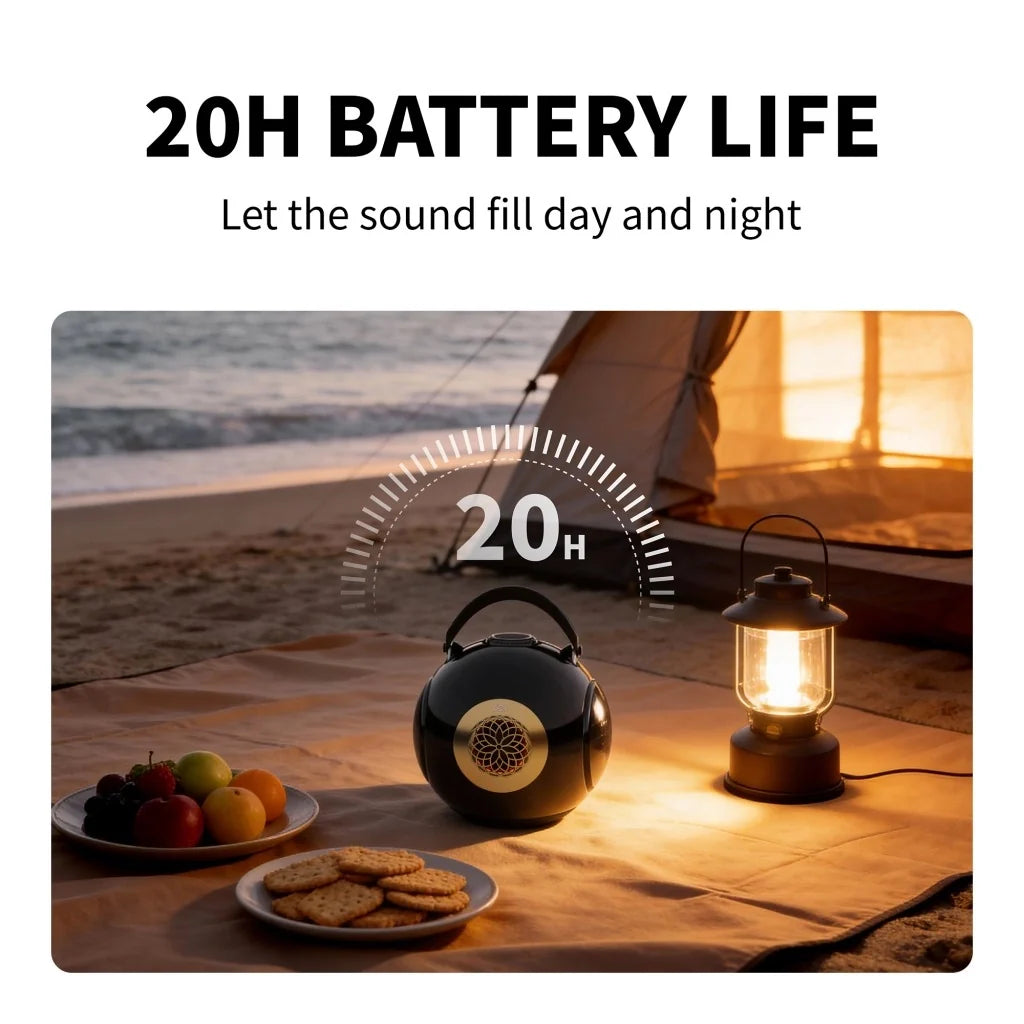
When comparing portable speakers, battery life can appear straightforward: one product advertises 10 hours of playback, another claims 15 hours, and a third promises 20 hours or more. Yet these numbers do not always reflect how long the speaker will play in everyday use. Understanding Bluetooth speaker battery life explained in practical terms means looking beyond the largest number on a product page and examining the conditions under which that rating was measured.
A speaker's advertised playtime is usually a result of testing under particular conditions, including volume level, audio content, wireless connection, and enabled features. Change those conditions, and the actual runtime can change significantly. A speaker that lasts through an entire afternoon at moderate volume may need recharging much sooner when playing bass-heavy music loudly outdoors.
For buyers comparing long battery life Bluetooth speakers, the goal is not simply to find the highest advertised figure. It is to understand whether that figure is relevant to their listening habits, how consistently the battery performs, and what other compromises may affect the overall experience.
Why Advertised Bluetooth Speaker Battery Life Can Be Misleading

Manufacturers need a consistent way to communicate battery performance, but a single playtime number cannot represent every listening situation. The advertised figure should be treated as a reference point rather than a guarantee that applies regardless of volume, music, or environment.
A speaker's battery powers more than the wireless connection. It supplies energy to the amplification system and supporting electronics, while the amount of power required changes with playback conditions. Louder output and demanding musical passages can increase energy consumption, although the exact effect varies by speaker design and how its amplifier and DSP operate.
This explains why two people can purchase the same speaker and experience different battery life. One may listen to podcasts at a moderate volume in a bedroom; another may play electronic music outdoors at high volume. Their results can differ even when both devices are fully charged and functioning normally.
Battery specifications become more useful when buyers understand the relationship between the advertised rating and the conditions of actual use.
What a Manufacturer's Playtime Rating Actually Means

A published battery rating generally represents playback under a specified or manufacturer-selected test condition. However, testing methods and disclosure levels vary between brands, so advertised figures are not always directly comparable.
Before comparing two speakers, look for information about:
- Volume level: Was playback measured at low, moderate, or high volume?
- Audio content: Was the test based on a particular test signal, speech, or music?
- Wireless connection: Was Bluetooth the only active playback method?
- Extra features: Were lighting, enhanced bass settings, or other power-consuming functions enabled?
- Battery condition: Was the speaker tested with a new battery under controlled conditions?
- Automatic behavior: Were power-saving features or automatic shutoff settings involved?
Not every manufacturer publishes all these details. If the testing conditions are missing, treat the playtime number as a useful estimate, not a fully standardized comparison.
A claim of 20 hours does not necessarily mean a speaker will outperform a competitor rated at 15 hours under your preferred listening conditions. The two figures may have been measured differently, and the products may behave differently when their volume and processing settings change.
When the test method is unclear, compare several factors together: battery capacity if disclosed, product dimensions, charging specifications, independent runtime tests when available, and the intended use of the speaker.
How Volume Changes Real-World Battery Runtime

Volume is one of the most important variables in everyday battery performance. Raising the output level generally requires the amplifier and driver system to deliver more power, although the precise relationship is not linear and varies between products.
A speaker playing quietly in a bedroom may use substantially less energy than the same model playing loud music at an outdoor gathering. As the output demand increases, the available battery energy may be consumed more quickly.
Low-volume listening
Quiet listening often allows a speaker to operate with relatively modest power demand. Podcasts, spoken-word content, and background music at comfortable levels can therefore produce longer runtimes than demanding high-volume playback.
This is one reason a speaker's advertised maximum playtime may be achievable for some users, even if others experience shorter sessions.
Moderate-volume listening
Moderate volume is often a more useful reference for daily home use. Music remains clear and audible without requiring the speaker to operate near its maximum output.
For buyers who use a speaker while working, cooking, relaxing, or listening in a bedroom, this level may provide a more realistic basis for estimating runtime than either whisper-quiet playback or maximum-volume testing.
High-volume listening
High-volume playback places greater demands on the audio system. Bass-heavy music can add to those demands because low-frequency reproduction may require substantial driver movement and amplifier output.
However, battery consumption depends on the complete design, not simply on whether a track contains bass. Amplifier efficiency, power management, driver sensitivity, DSP, and volume-limiting behavior all influence the result.
A manufacturer that advertises long runtime without explaining its test volume leaves an important question unanswered: how closely does that rating match the way you intend to listen?
For help evaluating output level alongside other technical specifications, see the speaker specifications guide.
Why Bass-Heavy Music Can Affect Battery Life

Bass reproduction is another consideration when evaluating Bluetooth speaker battery performance. Low-frequency sound can require substantial movement from the driver, particularly when a compact speaker is expected to deliver strong output at higher volumes.
The relationship between bass and battery consumption is not identical across all speakers. A well-engineered system may produce useful bass without consuming as much energy as a less efficient design operating under comparable conditions. Digital signal processing can also influence how the system manages demanding frequencies.
Some speakers use passive radiators to support low-frequency output. A passive radiator moves in response to pressure generated inside the enclosure, helping the system produce additional output around its tuning range without requiring a conventional open bass port. It does not generate energy independently; the active driver and amplifier still supply the energy that drives the system.
The practical lesson is that buyers should evaluate bass performance and battery life together. A speaker that sounds full and controlled at normal listening levels may be more useful than one that promises powerful bass but becomes limited or requires frequent charging during louder playback.
The guide to how passive radiators work in Bluetooth speakers explains the acoustic mechanism behind this design.
Battery Capacity vs. Advertised Playtime
Battery capacity can help buyers understand a speaker's power supply, but it should not be interpreted in isolation.
Capacity is commonly expressed in milliamp-hours (mAh) or watt-hours (Wh). These measurements are related, but they are not interchangeable without considering voltage.
Watt-hours describe the amount of energy a battery can store more directly. Milliamp-hours measure electrical charge, so two batteries with the same mAh rating can store different amounts of energy if their nominal voltages differ.
Even when capacity is disclosed in watt-hours, it does not determine runtime by itself. The speaker's average power consumption matters too.
This is a conceptual estimate, not a substitute for a real playback test. Actual performance also depends on conversion losses, battery-management limits, changing output demand, and other operating conditions.
For example, a speaker that consumes more power to achieve a particular listening level may run for less time than a more efficient model with a similar battery energy rating. Conversely, a speaker with a larger battery may still deliver disappointing runtime if its power consumption is high.
|
Specification |
What it tells you |
What it does not tell you |
|
Advertised playtime |
Manufacturer's stated runtime under its test conditions |
Guaranteed runtime at every volume |
|
Battery capacity in mAh |
Electrical charge capacity at a specified voltage |
Direct energy comparison across different voltages |
|
Battery energy in Wh |
Stored electrical energy, useful for comparisons |
Exact runtime without power-consumption data |
|
Charging time |
Approximate time required to recharge under specified conditions |
How long each charge will last |
|
Bluetooth version |
Information about wireless technology and capabilities |
A guaranteed number of playback hours |
|
Maximum output |
Information about the speaker's output capability when properly specified |
Battery life at that output level |
For commercial comparisons, battery capacity is most helpful when manufacturers provide enough supporting information to interpret it correctly.
How to Compare Bluetooth Speaker Battery Life Fairly
A meaningful comparison requires more than placing the advertised runtime figures side by side. Buyers should look for products tested under similar conditions and consider whether the published information addresses their primary use case.
Compare equivalent listening conditions
If one manufacturer reports runtime at 50% volume and another does not disclose volume at all, the ratings should not be treated as directly equivalent.
Independent reviews that describe their test conditions can provide additional context. The most useful comparisons state the playback volume, music or test content, connection method, and whether special audio settings were enabled.
When such tests are unavailable, avoid assuming that the higher advertised number automatically represents better real-world performance.
Match runtime to your normal routine
Think about how long a speaker needs to operate between charging opportunities.
|
Typical use |
What to prioritize |
|
Bedroom and casual home listening |
Reliable runtime at comfortable volume |
|
Home office and work sessions |
Enough playtime for a typical work block, with convenient charging |
|
Day trips and outdoor activities |
Runtime at the volume needed in open spaces |
|
Parties and group gatherings |
Performance at higher volume and realistic expectations for charging |
|
Frequent travel |
Battery life, charging convenience, portability, and durability |
|
Occasional listening |
Consistent performance and sensible battery care rather than the highest claim alone |
This approach keeps the buying decision grounded in actual needs. Someone who listens for an hour each evening may have little practical reason to pay a premium for an extreme runtime rating. A frequent traveler who spends long periods away from power may place much greater value on it.
For outdoor listening, consider the combined requirements of output, portability, and durability. The outdoor and travel speaker guide provides further context for evaluating these trade-offs.
Check charging convenience, not just runtime
Battery life describes the time available between charges, but charging behavior determines how easy it is to restore that time.
Check the manufacturer's stated charging duration, supported charging method, and any information about playback while charging. These details can matter more than a small difference in advertised runtime.
A speaker with slightly shorter playback time but convenient charging may fit your routine better than a model that takes considerably longer to recharge. Avoid assuming that every speaker supports the same charging speeds or can safely operate at full output while connected to power.
What Can Reduce Battery Life Over Time?
A new speaker and a speaker that has been used regularly for several years may not deliver the same runtime. Rechargeable batteries gradually lose capacity through normal aging and use.
The rate of change depends on battery chemistry, temperature, charging behavior, storage conditions, and the number and nature of charge cycles. A gradual reduction in playtime is not necessarily evidence of a faulty speaker.
Several factors are worth understanding.
Battery aging
Rechargeable batteries gradually lose some of their ability to store and deliver energy. As usable capacity declines, the speaker may need to be recharged more frequently even when listening habits remain similar.
A battery that once supported long sessions may eventually provide noticeably less runtime. The amount of decline varies, so there is no universal timetable that applies to every product.
Heat and storage conditions
Excessive heat can accelerate battery degradation. Leaving a speaker in a hot vehicle, placing it near a strong heat source, or storing it in unsuitable conditions can affect long-term battery health.
Follow the manufacturer's instructions for charging, storage, and operating temperatures. If the speaker will remain unused for an extended period, consult its guidance for the recommended storage charge level and maintenance routine.
Charging accessories and usage habits
Use a charging adapter and cable compatible with the manufacturer's specifications. Incompatible accessories, damaged cables, or faulty power supplies can lead to charging problems.
Frequent high-volume playback can also shorten the time between charges, even if the battery itself is healthy. When investigating a sudden runtime change, compare the current volume, audio settings, connection method, and playback habits with those used previously.
If battery life declines dramatically, the speaker becomes unusually hot, or the battery appears swollen, stop using it and follow the manufacturer's support guidance. Do not attempt to puncture or repair a damaged lithium-ion battery yourself.
Does Bluetooth Version Determine Battery Life?
Bluetooth version can influence wireless capabilities, but it does not provide a reliable standalone prediction of speaker runtime.
The actual power consumption of a Bluetooth speaker depends on its radio implementation, connection behavior, audio processing, amplifier, drivers, and power-management system. The Bluetooth version alone cannot tell you how many hours a product will play.
This distinction matters because buyers may assume a newer Bluetooth specification automatically means a much longer battery life. In practice, a newer wireless implementation does not guarantee lower total system power consumption, especially when the amplifier and drivers account for a significant part of the speaker's energy demand.
For a more detailed explanation of wireless generations and their differences, read Bluetooth 4.2 vs. 5.0 vs. 5.3.
When battery life is a major buying priority, give more weight to transparent runtime testing and product-specific specifications than to Bluetooth version alone.
How UB+ Approaches Battery Life and Everyday Listening
A useful speaker comparison considers battery performance alongside acoustic design, connectivity, portability, and build quality. Runtime is important, but it is only one part of the overall listening experience.
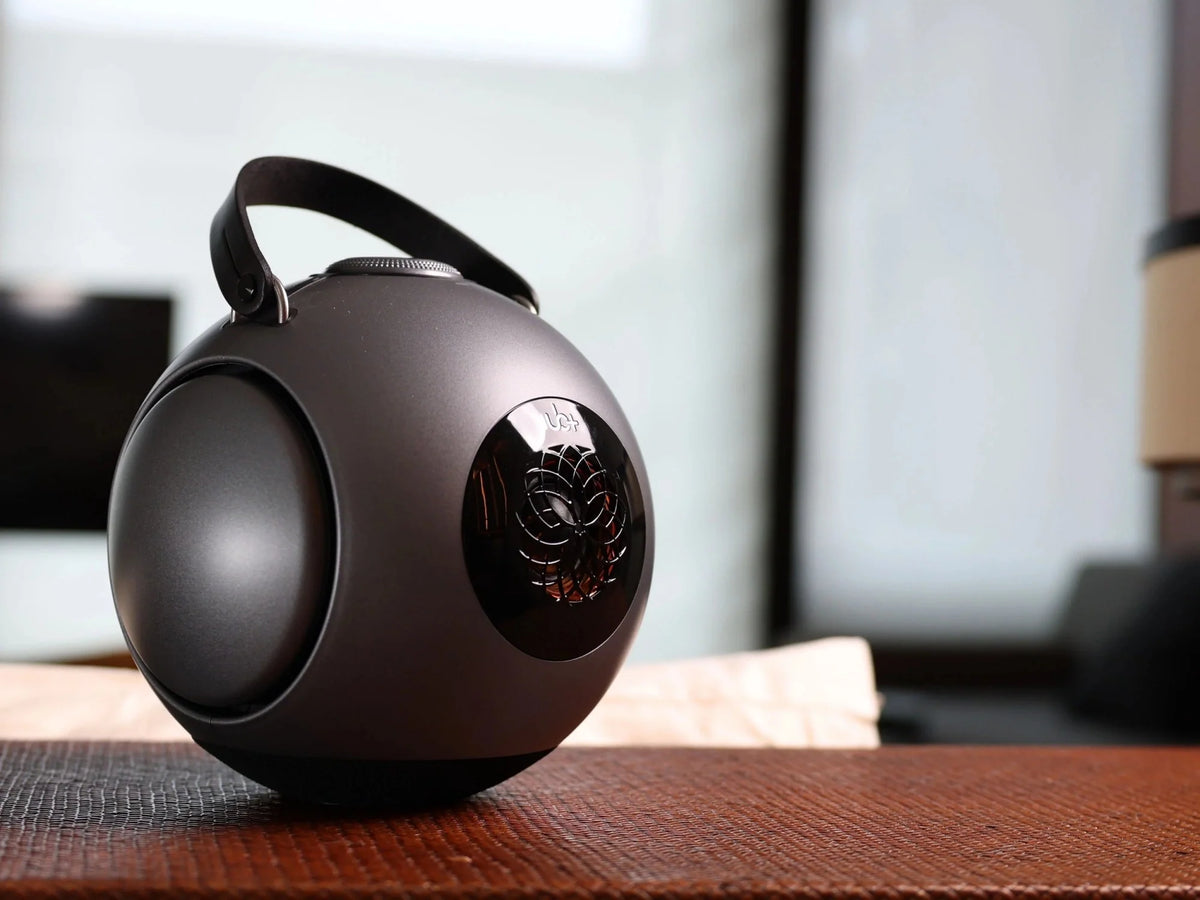
The UB+ dB1 DoubleBass combines a spherical acoustic chamber with a dual-passive-radiator bass architecture. Its design focuses on managing acoustic pressure and supporting low-frequency output through the interaction of the driver, enclosure, and radiators. This is relevant when evaluating how a compact speaker balances bass performance with practical everyday use.
Its stated technical features include Bluetooth 5.3 connectivity and an IPX5 rating for resistance to water jets. IPX5 does not mean the speaker is submersible, so buyers should distinguish water resistance from full waterproofing when choosing a product for outdoor use.
Battery expectations should still be based on the current product specifications and the listening conditions that matter to the buyer. Strong acoustic engineering does not, by itself, establish a specific number of playback hours. Likewise, an advertised runtime should not be interpreted as proof of superior sound quality.
If you are comparing models, review the UB+ dB1 vs. dB Mini comparison alongside the current product information. Consider how each speaker fits your listening habits, room, portability needs, and charging routine rather than choosing based on a single specification.
Red Flags to Watch for in Battery Life Claims
Battery specifications are most useful when manufacturers provide enough information to interpret them. Buyers should be cautious when a product listing emphasizes a large runtime number but offers little supporting detail.
Look more closely when:
- The advertised playtime is presented without any test conditions.
- A product promises exceptionally long runtime without providing useful battery or charging information.
- Different product pages give inconsistent battery figures.
- The stated runtime is not supported by independent tests or clearly explained testing methods.
- The product's battery claims are difficult to distinguish from a general marketing statement.
- The listing fails to explain whether additional features or high-volume playback affect runtime.
None of these signs alone proves that a product is misleading. They indicate that more information is needed before making a confident comparison.
A trustworthy buying decision is based on evidence, realistic expectations, and a clear understanding of what the product's specifications do and do not establish.
Frequently Asked Questions
How many hours should a good Bluetooth speaker battery last?
There is no single runtime that defines a good speaker. The appropriate figure depends on how often you listen, your typical volume, the speaker's power consumption, and how frequently you can recharge it. Compare verified runtime under relevant conditions rather than choosing a universal target.
Why does my Bluetooth speaker battery drain faster at high volume?
Higher output generally requires more power from the amplifier and driver system. Bass-heavy music and demanding playback can also increase energy consumption, depending on the speaker's design. As a result, maximum-volume listening may deliver significantly less runtime than moderate-volume use.
Is a higher mAh rating always better?
No. Milliamp-hours measure electrical charge, not energy independently of voltage. To compare batteries more meaningfully, consider watt-hours when available, along with the speaker's power consumption and measured runtime.
Does Bluetooth 5.3 guarantee longer battery life?
No. Bluetooth version alone cannot predict total speaker runtime. Wireless implementation matters, but amplifier efficiency, driver output, audio processing, battery capacity, and power management also influence battery life.
Should I trust a speaker advertised with 20 hours of playtime?
Treat the figure as a manufacturer claim tied to its testing conditions. Look for the specified volume, playback method, and independent test results where available. The advertised number may be achievable in particular conditions but should not be assumed to represent every listening scenario.
How can I make my Bluetooth speaker battery last longer?
Use a comfortable volume, avoid unnecessary high-power features when they are not needed, protect the speaker from excessive heat, and follow the manufacturer's charging and storage instructions. These steps can help reduce energy consumption during use and support long-term battery health.
Explore UB+ Options
When comparing Bluetooth speakers, prioritize the runtime you can realistically expect, the charging experience, and the sound quality you want not just the largest number on the box.
- → Explore the UB+ dB1 DoubleBass
- → Compare the dB1 DoubleBass with the UB+ dB Mini
- → Explore UB+ speakers
- → Check current product options and prices
The most useful battery rating is not necessarily the longest one. It is the rating you can interpret, compare fairly, and apply to the way you actually listen.


Laat een reactie achter
Deze site wordt beschermd door hCaptcha en het privacybeleid en de servicevoorwaarden van hCaptcha zijn van toepassing.