
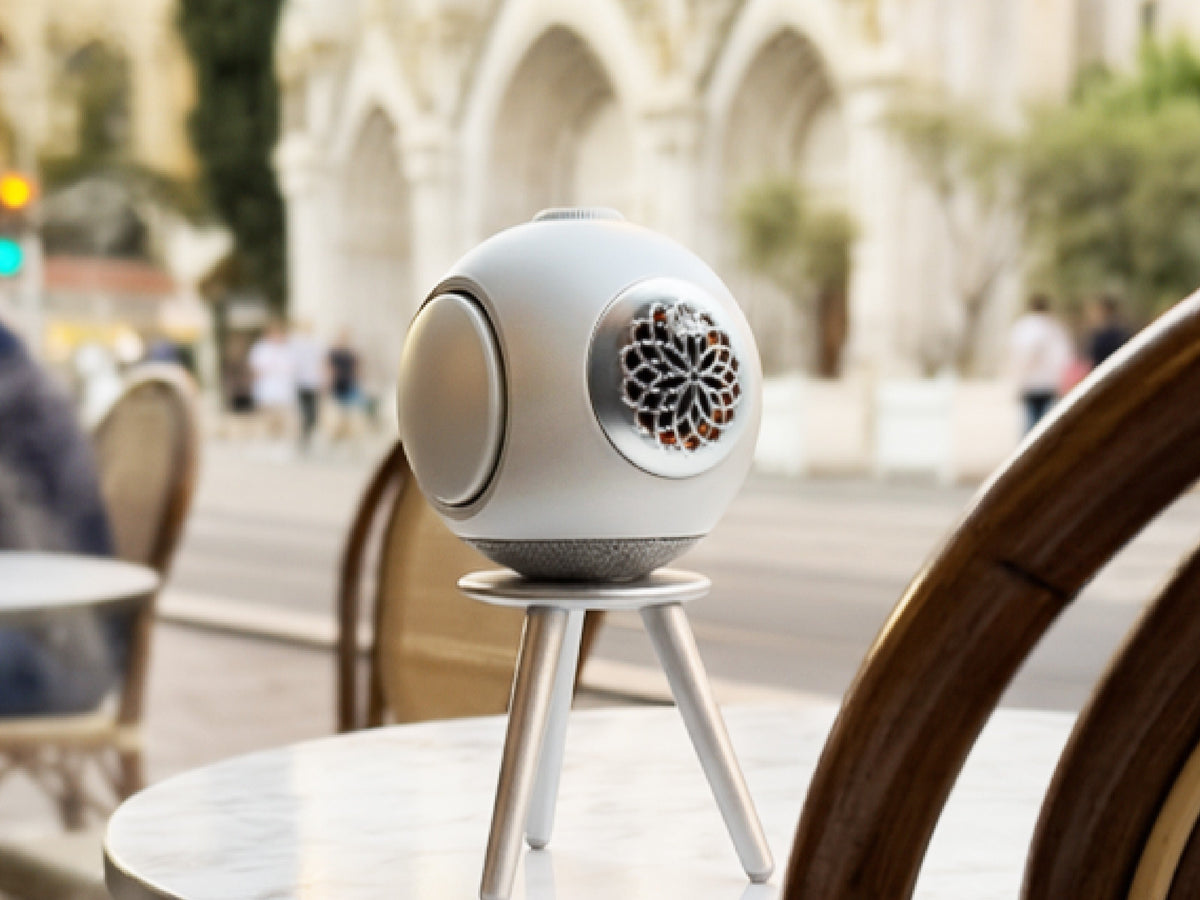
Choosing a compact Bluetooth speaker involves more than comparing physical dimensions or checking maximum battery life. A smaller speaker still needs to deliver a satisfying listening experience, fit naturally into its environment, and provide enough playback time for everyday use. The relationship between enclosure design, driver performance, acoustic tuning, amplifier efficiency, and portability can make two compact speakers feel very different in practice.
The UB+ dB Mini and UB+ S1 Circle offer two distinct approaches to compact portable audio. Both are designed for listeners who want convenient wireless sound without committing to a larger speaker system, but they have different design identities and maximum playback times. The dB Mini offers up to 20 hours of playback, while the S1 Circle provides up to 16 hours.
This comparison examines dBmini vs s1 circle from a practical and technical perspective, including acoustic design, battery endurance, portability, enclosure geometry, sound dispersion, and everyday listening requirements. It also explains important audio engineering concepts that help buyers evaluate compact speakers more intelligently. Rather than treating one model as universally better, the goal is to identify which speaker makes more sense for your listening habits and priorities.
UB+ dB Mini vs S1 Circle: Quick Comparison

Before examining the design differences in detail, it helps to understand the main distinctions between these two UB+ speakers.
|
Comparison Factor |
UB+ dB Mini |
UB+ S1 Circle |
|
Maximum playback time |
Up to 20 hours |
Up to 16 hours |
|
Design category |
Compact portable speaker |
Spherical portable speaker |
|
Main design consideration |
Compact everyday convenience |
Distinctive spherical design |
|
Battery advantage |
4 additional hours of maximum stated playback |
Shorter maximum runtime |
|
Listening applications |
Personal listening, desks, and everyday use |
Home listening and portable everyday use |
|
Design preference |
Compact format |
Spherical form |
|
Best suited for |
Users prioritizing compact convenience and battery endurance |
Users attracted to spherical speaker design |
Playback times represent maximum stated figures. Actual battery life depends on volume, audio content, wireless connection, and operating conditions.
Both speakers belong in the compact portable category, but their differences become more meaningful when you consider how each fits into a daily listening routine. Battery endurance is one measurable distinction, while enclosure design, physical placement, and personal preferences influence the overall buying decision.
A useful comparison should also consider the acoustic principles behind compact speaker performance. Driver behavior, frequency response, amplifier efficiency, distortion, and sound dispersion are all relevant when evaluating a portable audio product. These factors help explain why two speakers with similar intended applications can offer different design experiences.
Understanding the UB+ dB Mini: Compact Audio for Everyday Portability

The UB+ dB Mini is designed around compact portability. Its appeal is straightforward: a smaller speaker format that can fit into everyday listening environments without requiring the space associated with larger audio systems.
Portability is particularly important for people who do not keep their speakers in one permanent location. A compact speaker can move between a desk, bedroom, living area, or other personal spaces as listening needs change.
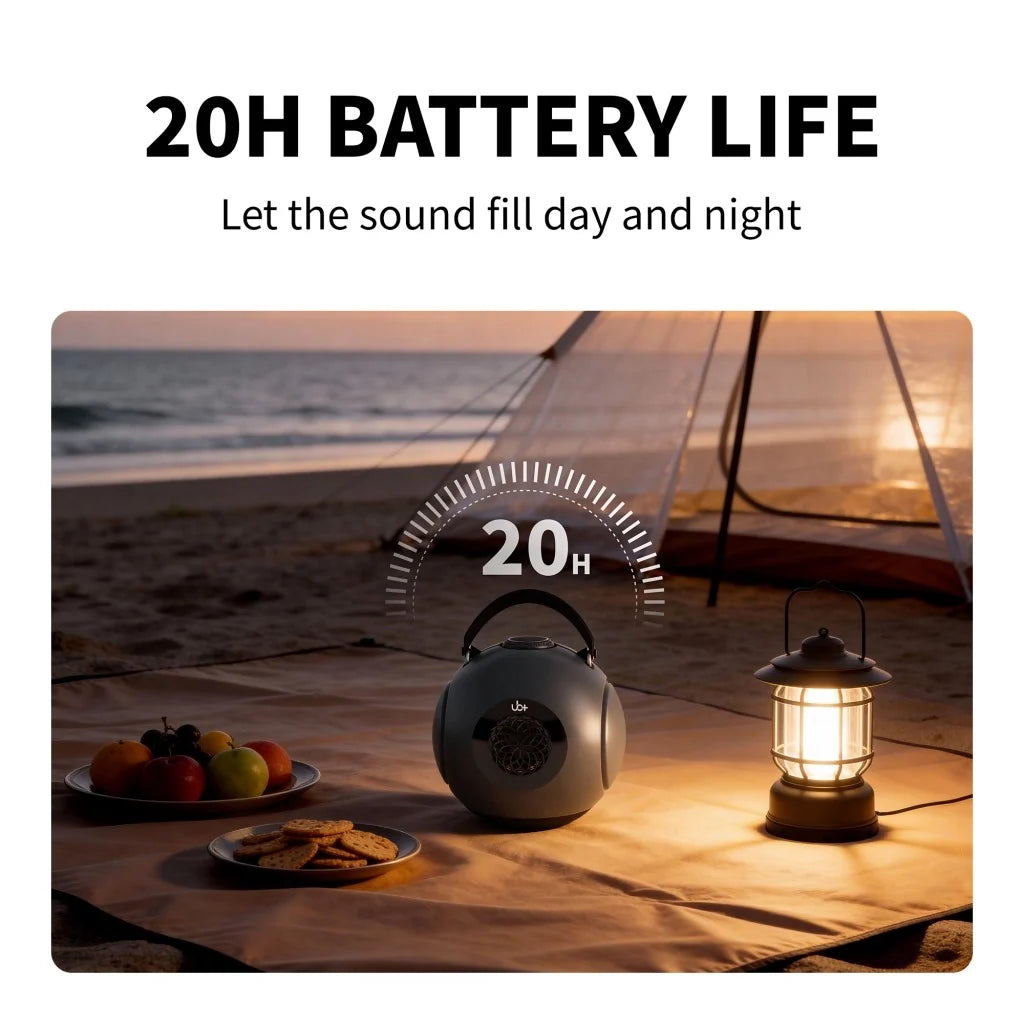
The dB Mini also offers up to 20 hours of maximum playback, giving it a four-hour advantage over the S1 Circle in maximum stated battery endurance.
Compact Design and Practical Placement
A compact speaker has to work within physical limitations. Its enclosure volume, driver arrangement, and acoustic tuning influence how it reproduces sound. Smaller dimensions can make placement easier, but they also mean that the internal acoustic system must be designed carefully.
The dB Mini is worth considering for users who want:
- A compact speaker for personal listening.
- A portable option for home and office environments.
- Convenient placement on a desk, shelf, or other available surface.
- A speaker that can move between different listening spaces.
- Up to 20 hours of maximum stated playback.
- A compact alternative to a larger speaker setup.
Its compact format is especially relevant when available space is limited. Someone working at a desk may prefer a speaker that does not dominate the workspace. Similarly, someone using a speaker in a bedroom may value a smaller footprint that can be accommodated without rearranging furniture.
Understanding Compact Speaker Acoustics

A compact enclosure creates specific acoustic engineering challenges. The internal air volume, driver diameter, diaphragm movement, suspension characteristics, and amplifier output all influence how effectively a speaker reproduces different frequencies.
Low-frequency reproduction is particularly demanding. Bass requires sufficient air displacement, and a smaller enclosure has less internal space available for managing that movement. Designers must therefore consider several interacting elements:
- Driver excursion: The distance a diaphragm moves forward and backward during operation.
- Motor strength: The magnetic motor system's ability to control driver movement.
- Enclosure volume: The internal air space that interacts with the driver.
- Frequency response: The range of frequencies a speaker reproduces and how evenly it reproduces them.
- Amplifier efficiency: How effectively electrical power is converted into the signal that drives the speaker.
- DSP (Digital Signal Processing): Electronic processing that can support frequency-response shaping, tonal balance, and driver protection.
These are important concepts when evaluating compact audio products. However, they should not be confused with confirmed specifications for a particular model. The dB Mini's exact driver dimensions, DSP configuration, frequency-response range, and internal acoustic architecture should be taken from its official technical documentation rather than assumed from another UB+ speaker.
Why 20 Hours of Playback Matters

Battery endurance affects how frequently a portable speaker needs to be connected to a charger. The dB Mini's maximum playback time of 20 hours gives users more flexibility across multiple listening sessions.
Consider a typical daily routine:
- Listening to music while working.
- Playing background audio during household activities.
- Using the speaker during relaxation or personal time.
- Moving the speaker between rooms.
- Enjoying music during longer periods away from a charging point.
A 20-hour maximum runtime can make these activities easier to manage without treating charging as a constant concern.
Battery performance also depends on how the speaker is used. Higher playback volume generally requires more amplifier power, while wireless connectivity and the audio signal itself contribute to total energy consumption. A speaker used continuously at high output may not achieve the same runtime as one used at moderate volume.
For this reason, maximum playback figures are best treated as comparison benchmarks rather than guaranteed operating times.
Driver Performance, Frequency Response, and Distortion

When evaluating a compact speaker, it is useful to understand the relationship between driver performance and frequency response.
The driver converts an electrical audio signal into mechanical movement, producing sound waves through diaphragm motion. Its behavior influences bass extension, midrange clarity, high-frequency reproduction, and overall output capability.
Three technical considerations are particularly useful:
Frequency response: This describes how a speaker reproduces different frequencies. A published range is useful, but measurement tolerance is important. A frequency range without a stated tolerance does not explain how evenly the speaker reproduces the frequencies within it.
Total harmonic distortion (THD): Distortion occurs when the reproduced signal contains additional harmonic components that were not present in the original signal. Distortion can become more noticeable when a small speaker is pushed toward its output limits.
Dynamic range: This relates to the difference between quieter and louder portions of an audio signal. A speaker's ability to reproduce changing musical dynamics depends on its driver, amplifier, and overall system design.
These terms provide a better framework for evaluating compact audio than relying on driver size or marketing descriptions alone.
Who Should Choose the dB Mini?
The dB Mini is a strong candidate for listeners who prioritize compact convenience and longer maximum playback.
It makes particular sense when:
- You want a portable speaker for everyday listening.
- Your desk, bedroom, or workspace has limited room.
- You frequently move your speaker between locations.
- You prefer up to 20 hours of maximum stated playback.
- You want a compact audio option rather than a larger speaker setup.
- You value fewer charging interruptions during regular use.
The most important consideration is whether its compact format fits your listening habits. If portability and battery endurance are your main priorities, the dB Mini deserves serious consideration.
Understanding the UB+ S1 Circle: A Distinctive Spherical Speaker Design

The UB+ S1 Circle offers a different design direction within the UB+ compact speaker lineup. Its spherical form gives it a distinctive visual identity and provides an alternative to more conventional speaker shapes.
For many buyers, a speaker is not simply an audio device. It also becomes part of a room's everyday environment. Its size, shape, placement, and overall appearance can influence whether it feels appropriate for a particular space.
The S1 Circle is worth considering for listeners who prefer a spherical speaker format and want a portable option with up to 16 hours of maximum playback.
Why Speaker Shape Matters

The enclosure is an important part of an acoustic system. It houses the driver, provides structural support, and influences the way sound behaves inside the speaker.
A spherical enclosure differs from a conventional rectangular cabinet because it does not have the same arrangement of parallel interior walls. This changes the pattern of internal reflections and resonance behavior.
In rectangular enclosures, parallel surfaces can contribute to internal standing-wave patterns at certain frequencies. A spherical geometry changes the distribution of internal reflections, although it does not eliminate every resonance or acoustic irregularity.
The final result still depends on several interacting factors:
- Driver characteristics and positioning.
- Internal enclosure volume.
- Acoustic tuning.
- Structural rigidity.
- Signal processing.
- Sound dispersion and listening position.
A well-designed speaker must integrate these elements rather than rely on an unusual shape as a substitute for acoustic engineering.
The S1 Circle and Everyday Listening

The S1 Circle offers up to 16 hours of maximum playback. Although this is four hours less than the dB Mini's stated runtime, it can still accommodate substantial everyday listening.
For users who listen in shorter sessions throughout the day, 16 hours may provide enough operating time between charges. The more important question is whether the speaker's design and practical use match the environment where it will be placed.
Potential applications include:
- Personal listening at home.
- Music in a bedroom or living area.
- Background audio during everyday activities.
- Listening in a personal workspace.
- Portable use between different areas.
- Casual music playback during social occasions.
Its spherical appearance also provides a different visual option for buyers who do not want a conventional rectangular speaker design.
Spherical Design and Sound Dispersion

Sound dispersion describes how audio energy spreads into the surrounding environment. It influences how a speaker sounds when listeners move away from its direct listening axis.
The enclosure shape, driver orientation, and acoustic design all contribute to dispersion. A spherical exterior does not automatically guarantee perfectly uniform 360-degree sound, but spherical speaker designs can offer a different approach to managing the relationship between the speaker and its surroundings.
Several technical concepts are useful when considering this:
- Directivity: How strongly a speaker sends sound in particular directions.
- Off-axis response: How the frequency response changes when the listener moves away from the main listening direction.
- Reflections: Sound waves that bounce from nearby walls, floors, ceilings, and furniture.
- Room interaction: The combined effect of speaker placement and the acoustic characteristics of the surrounding space.
- Soundstage: The perceived spatial presentation of instruments and voices.
These factors help explain why a speaker may sound different depending on where it is positioned. A product's enclosure geometry is only one part of its overall acoustic behavior.
Placement remains important. Nearby walls, shelves, furniture, and other reflective surfaces can influence perceived tonal balance and bass response. Even a well-designed portable speaker may sound different when moved from an open surface to a corner or enclosed shelf.
The article What Is Soundstage in a Speaker System? explains how speaker positioning and sound presentation influence the listening experience.
Who Should Choose the S1 Circle?
The S1 Circle is worth considering for listeners who prefer its distinctive spherical design and want a portable speaker for everyday use.
It may be the more appealing choice when:
- You prefer a spherical speaker appearance.
- Design and placement are important buying considerations.
- You want a portable speaker for home listening.
- Your usual listening sessions do not require the longest available runtime.
- You want an alternative to conventional compact speaker shapes.
- The speaker's visual form is an important part of your home or workspace setup.
The S1 Circle is not automatically a secondary choice because its battery figure is lower. Its suitability depends on whether its design and playback capabilities match your priorities.
dB Mini vs S1 Circle: The Main Differences Explained
The most useful way to compare these models is to examine their practical differences rather than assume that one specification determines the entire buying decision.
Battery Life: 20 Hours vs. 16 Hours
Battery endurance is the clearest measurable difference between the two models.
|
Battery Comparison |
UB+ dB Mini |
UB+ S1 Circle |
|
Maximum playback time |
20 hours |
16 hours |
|
Difference |
4 additional hours |
4 fewer hours |
|
Relative advantage |
Longer maximum stated runtime |
Shorter maximum stated runtime |
The dB Mini provides four additional hours of maximum stated playback. This can be useful for listeners who use their speaker throughout the day or prefer fewer charging interruptions.
For example, someone who regularly plays music during work and continues listening in the evening may appreciate the additional runtime. The difference can also be relevant when traveling or using a speaker in a location where charging access is inconvenient.
The S1 Circle's 16-hour maximum playback time may still be sufficient for many everyday routines. If the speaker is used for a few hours at a time, the difference may have little practical impact.
The right question is not simply which number is higher. It is how many hours you realistically need between charges.
Design: Compact Convenience vs. Spherical Identity
The dB Mini and S1 Circle also differ in their design priorities.
The dB Mini is the compact-format option for users who value everyday portability and convenient placement. Its smaller portable approach can be useful in spaces where equipment needs to remain unobtrusive.
The S1 Circle provides a distinctive spherical design. This can be more appealing to people who consider the speaker's visual presence part of their buying decision.
|
Design Consideration |
dB Mini |
S1 Circle |
|
Main design identity |
Compact portable format |
Spherical speaker form |
|
Placement priority |
Convenient everyday positioning |
Design-led placement |
|
Visual preference |
Compact appearance |
Distinctive rounded appearance |
|
Main buying consideration |
Portability |
Spherical design preference |
Neither approach is inherently better. The decision depends on the available space, preferred appearance, and how you expect to use the speaker.
Portability: Which One Fits Your Routine?
Portability involves more than whether a speaker can be carried from one location to another. It also includes how easily it fits into your daily environment.
Think about where you normally listen:
- Desk or workstation: A compact format may be more convenient when space is limited.
- Bedroom: Both models can be considered according to available placement space and design preference.
- Living area: The S1 Circle may appeal to listeners who prefer a spherical design that complements their surroundings.
- Multiple rooms: Either model may suit users who want portable audio without a permanent installation.
- Travel and everyday movement: Battery endurance and physical convenience become important considerations.
The dB Mini has a clear advantage in maximum stated playback time, while the S1 Circle offers a different design identity. Your normal listening environment should help determine which distinction matters more.
Acoustic Performance: Why Design and Tuning Matter
A compact speaker's sound quality cannot be judged by its exterior shape or battery figure alone.
Acoustic performance depends on the complete system, including the driver, enclosure, amplifier, signal processing, and tuning. These components must work together to produce balanced output.
When evaluating the dB Mini and S1 Circle, avoid assuming that one will necessarily produce deeper bass, louder sound, or clearer highs unless comparable measurement data supports that conclusion.
Instead, consider the characteristics that can be evaluated reliably:
- Enclosure design and physical format.
- Published technical specifications.
- Intended listening environment.
- Driver and acoustic-system integration.
- Practical placement requirements.
- Personal preference for sound presentation.
- Frequency response and distortion measurements, when available.
- Maximum sound pressure level under comparable test conditions.
Sound pressure level (SPL) describes the measured intensity of sound, usually expressed in decibels. However, a maximum SPL figure is only meaningful when its measurement distance, distortion threshold, and test conditions are understood.
Similarly, a frequency-response graph can reveal more about tonal consistency than a simple frequency-range statement. Buyers comparing technical specifications should look for comparable measurement methods rather than relying on isolated figures.
Room acoustics also influence the final experience. Hard surfaces can reflect sound, while furniture, curtains, and other materials can affect how audio is perceived.
For more information, explore Room Acoustics Basics: Why Speakers Sound Different in Different Rooms.
Battery Efficiency and Audio Engineering: What Buyers Should Understand
Battery runtime is not determined by battery capacity alone. It is also influenced by how efficiently a speaker uses electrical energy during playback.
A portable speaker combines a battery, amplifier, driver, wireless electronics, and sometimes digital signal processing. Each component contributes to the overall power requirement.
Amplifier Efficiency and Power Demand
The amplifier supplies the electrical signal that drives the speaker. Its efficiency influences how much stored battery energy is converted into useful output versus lost as heat.
When listening at higher volume, the amplifier generally needs to deliver more power. This can increase battery consumption, particularly when the audio contains sustained low-frequency content or demanding dynamic peaks.
DSP and Driver Protection
Digital Signal Processing can help manage frequency response, tonal balance, and output limitations. In compact speaker systems, DSP may also help prevent excessive driver movement or reduce the risk of operating the system beyond its intended limits.
However, DSP should not be treated as a substitute for good acoustic design. The driver, enclosure, amplifier, and signal processing need to operate as an integrated system.
For the dB Mini and S1 Circle, buyers should refer to confirmed model-specific specifications rather than assume that either uses a particular DSP configuration or driver architecture.
Passive Radiators and Bass Reproduction
Passive radiators are another important concept in compact speaker engineering. They are unpowered acoustic elements that respond to pressure changes inside an enclosure, helping a tuned system produce additional low-frequency output.
Their performance depends on factors such as:
- Radiator mass.
- Suspension compliance.
- Enclosure volume.
- Tuning frequency.
- Active driver characteristics.
- Available excursion.
A passive radiator is not automatically superior to a ported enclosure or another acoustic arrangement. Its effectiveness depends on the design and integration of the complete system.
This distinction matters when comparing portable speakers because a technology used in one model should never be assumed to exist in another without confirmation. The dB Mini and S1 Circle should each be evaluated using their own documented specifications.
Which UB+ Speaker Offers Better Value?
Value is not determined by battery life alone. A speaker offers good value when its design, functionality, and performance align with what the buyer actually needs.
The dB Mini and S1 Circle should therefore be compared according to their most relevant advantages.
When the dB Mini Offers Better Practical Value
The dB Mini may provide better practical value for buyers who prioritize:
- Up to 20 hours of maximum playback.
- A compact portable format.
- Everyday desk and home use.
- Reduced charging frequency.
- Convenient movement between listening spaces.
- A straightforward compact-speaker option.
Its four-hour maximum playback advantage is especially relevant for people who use their speakers frequently. If battery endurance is a major part of your buying decision, this difference gives the dB Mini a clear measurable advantage.
When the S1 Circle Offers Better Personal Value
The S1 Circle may provide better personal value for buyers who prioritize:
- A distinctive spherical speaker design.
- A different visual identity from conventional compact speakers.
- Portable home listening.
- Design compatibility with their surroundings.
- Up to 16 hours of maximum playback.
- A speaker that complements a particular room or workspace aesthetic.
For someone who values the spherical form and does not need the dB Mini's additional four hours of maximum playback, the S1 Circle can remain an attractive option.
A Simple Buying Decision
|
Your Priority |
Recommended Model |
Why |
|
Longer maximum playback |
UB+ dB Mini |
Offers up to 20 hours |
|
Compact everyday portability |
UB+ dB Mini |
Designed around a compact portable format |
|
Spherical design |
UB+ S1 Circle |
Offers a distinctive spherical form |
|
Fewer charging interruptions |
UB+ dB Mini |
Provides four additional hours of maximum stated playback |
|
Design-led home placement |
UB+ S1 Circle |
Alternative visual identity |
|
Everyday listening |
Either model |
Choose according to design preference and runtime needs |
The best purchase is the one that meets your actual requirements rather than the one that wins the most comparison categories.
What to Check Before Buying a Compact Bluetooth Speaker
Even when two speakers appear similar in size or intended use, several technical and practical factors can influence long-term satisfaction.
Battery Runtime Under Real Listening Conditions
Always distinguish between maximum stated playback time and expected everyday performance.
A speaker's battery may last longer at moderate volume than during continuous high-output playback. If you usually listen loudly, leave additional room in your battery expectations.
Acoustic Specifications
Look beyond a single frequency-response number. Frequency range, distortion, sensitivity, maximum output, and acoustic tuning all contribute to the listening experience.
The measurement conditions also matter. Specifications are most useful when they provide enough information to understand how the results were obtained.
Placement and Listening Distance
A compact speaker used close to the listener may create a different experience from one positioned across a room.
Consider:
- The distance between the speaker and your usual listening position.
- Whether the speaker will sit near a wall.
- The amount of available desk or shelf space.
- Whether you move around while listening.
- How many people normally listen at the same time.
- Whether the surrounding room has hard reflective surfaces.
Connectivity and Daily Convenience
Check the playback options and connectivity features listed on each product's official page before purchasing. Bluetooth version, supported playback methods, pairing functions, and device compatibility can all affect everyday convenience.
Bluetooth version alone does not establish audio quality. The final wireless experience also depends on the supported audio codecs, source device, connection conditions, and speaker electronics. Avoid assuming that a newer Bluetooth version automatically means higher-resolution audio or better sound.
Build and Environmental Requirements
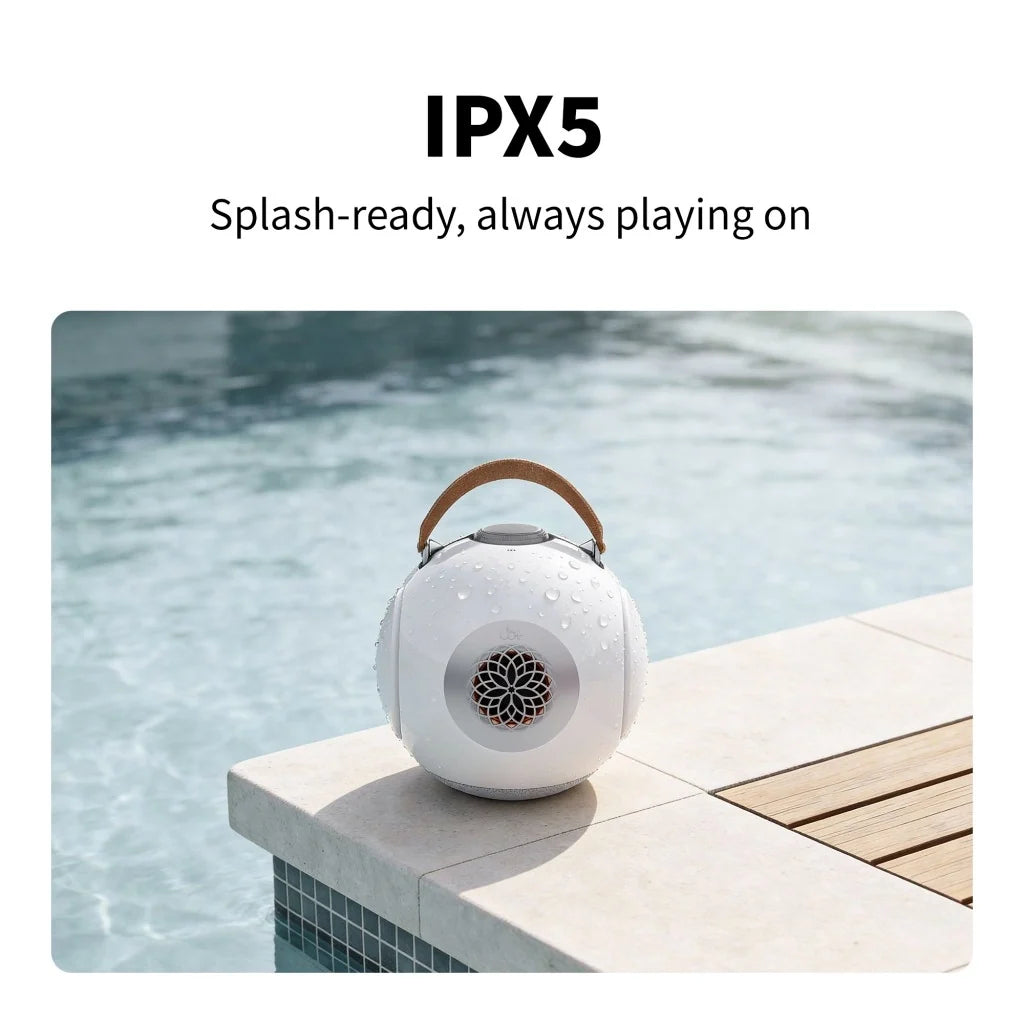
If you intend to use a speaker outdoors or around moisture, verify its stated protection rating. Water-resistance ratings have specific testing conditions and should not be interpreted as complete protection against every form of water exposure.
Should You Choose the dB Mini or S1 Circle?
The UB+ dB Mini and S1 Circle are two compact speaker options with different design priorities. The dB Mini provides up to 20 hours of maximum playback, giving it a measurable battery advantage. The S1 Circle offers up to 16 hours and a distinctive spherical design for listeners who prefer that form.
For buyers who prioritize battery endurance and compact everyday convenience, the dB Mini is the more straightforward choice. Its additional four hours of maximum stated playback can be useful during extended listening sessions and reduce the frequency of charging.
The S1 Circle makes more sense when its spherical appearance and design identity are important considerations. If your listening sessions are generally shorter, its 16-hour maximum playback may be sufficient for your routine.
From an audio engineering perspective, both models should be evaluated as complete speaker systems. Enclosure geometry, driver performance, frequency response, distortion, amplifier efficiency, DSP, and sound dispersion are useful technical considerations, but model-specific claims should always be supported by confirmed specifications.
Ultimately, dBmini vs s1 circle is a comparison between two different approaches to compact portable audio, not simply a contest between battery specifications. Consider where you listen, how long you use your speaker, and which design fits your environment.
Explore the UB+ dB Mini and UB+ S1 Circle product pages to review the available details and decide which model better matches your listening preferences.
Frequently Asked Questions
1. What is the main difference between the UB+ dB Mini and S1 Circle?
The main differences are their design priorities and maximum playback times. The dB Mini offers a compact portable format with up to 20 hours of playback, while the S1 Circle features a spherical design with up to 16 hours.
2. Which UB+ speaker has better battery life?
The UB+ dB Mini has the longer maximum stated playback time. It offers up to 20 hours, compared with up to 16 hours for the S1 Circle. This gives the dB Mini a four-hour advantage under maximum stated playback conditions.
3. Is the dB Mini better for everyday portable listening?
The dB Mini is worth considering if compact convenience and longer maximum playback are your main priorities. Its 20-hour runtime can be useful for extended listening across different daily activities.
4. Why should someone choose the S1 Circle?
The S1 Circle is an option for listeners who prefer its distinctive spherical design. Its maximum playback time of 16 hours can still support substantial everyday listening, depending on volume and usage conditions.
5. Does a spherical speaker design automatically provide better sound?
No. Enclosure shape influences acoustic behavior, but it does not independently determine sound quality. Driver characteristics, internal volume, tuning, signal processing, and sound dispersion also contribute to the final result.


Оставить комментарий
Этот веб-сайт защищается hCaptcha. Применяются Политика конфиденциальности и Условия использования hCaptcha.