
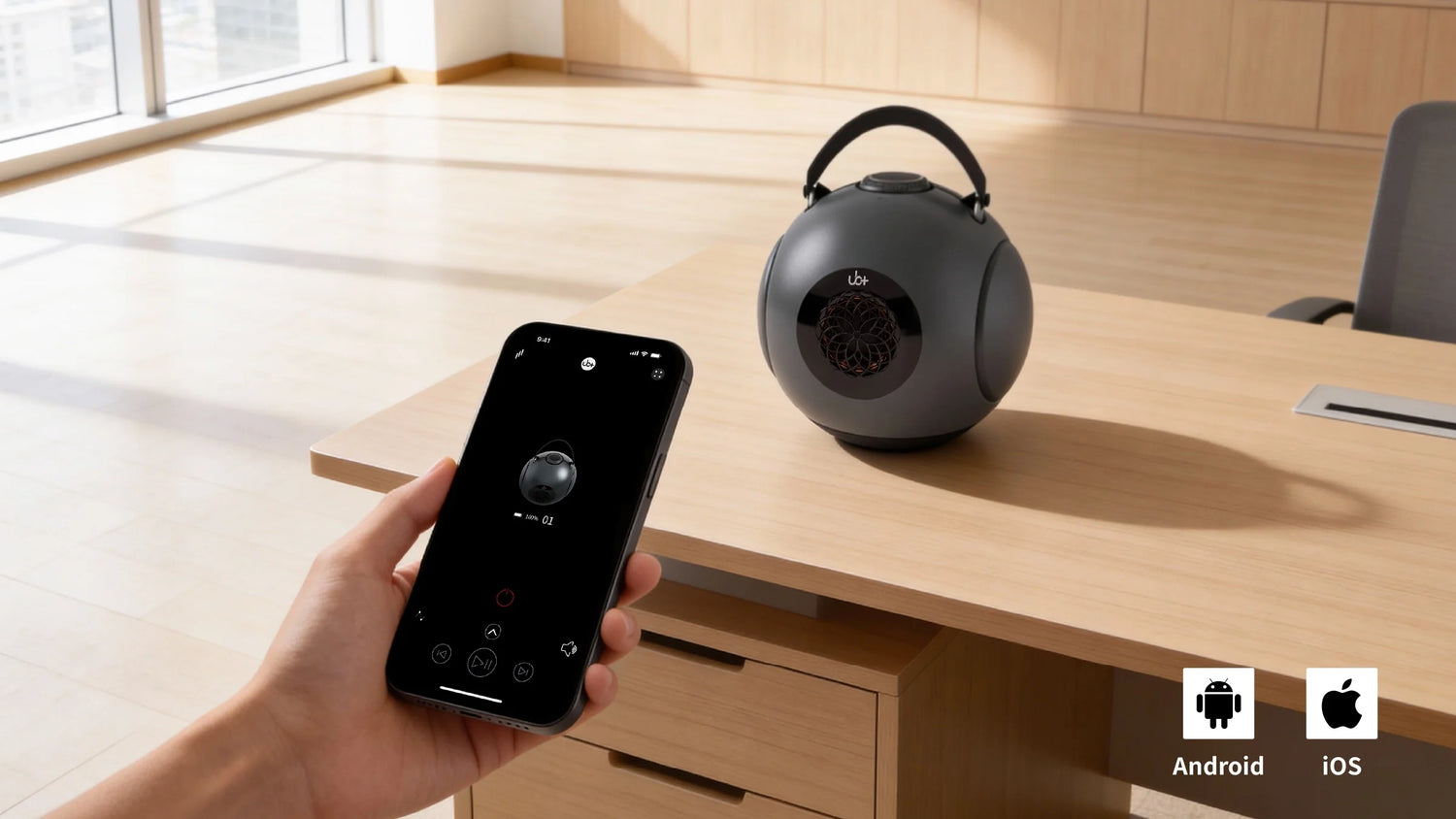
A bluetooth speaker is expected to deliver simple, powerful, room-filling sound.
But in real life, many users experience something different:
- sound feels thin
- bass is weak or missing
- vocals sound distant
- volume increases but clarity decreases
- music does not “fill the room”
This happens even with a portable bluetooth speaker, a wireless bluetooth speaker, or even products advertised as a best portable bluetooth speaker.
So the immediate assumption is usually:
“My speaker is not powerful enough.”
But in most real-world cases, that assumption is incorrect.
A speaker rarely becomes weak on its own. Instead, its performance is shaped by three invisible systems:
- placement
- source quality
- room acoustics
Even a best sounding bluetooth speaker, best small bluetooth speakers, or best budget bluetooth speaker can sound disappointing if these three factors are not aligned correctly.
This guide explains exactly why your speaker sounds weak and how to fix it using real acoustic logic not random settings or guesswork.
1. What “Weak Sound” Actually Means (Real Acoustic Meaning)
Weak sound is not just about volume.
In audio engineering terms, it usually refers to a breakdown in energy distribution and frequency balance.
A properly performing wireless bluetooth speaker should provide:
- stable bass pressure
- clear midrange separation
- controlled highs
- spatial room presence
When something is wrong, you hear:
- bass collapse
- vocal masking
- lack of depth
- flat soundstage
- reduced perceived loudness
This is especially noticeable in compact systems like a compact bluetooth speaker, where room interaction plays a major role.
2. The #1 Reason Speakers Sound Weak: Poor Placement
Placement is the most underestimated factor in audio performance.
Even the most expensive portable bluetooth speaker will sound weak if placed incorrectly.
2.1 Why placement matters acoustically
Sound travels in waves. These waves:
- reflect off walls
- absorb into materials
- interfere with each other
- cancel or reinforce frequencies
This means placement directly affects:
- bass strength
- clarity
- stereo perception
- perceived loudness
2.2 Common placement mistakes
❌ 1. Soft surface placement
Beds, cushions, and carpets absorb low frequencies.
Result:
- weak bass
- dull tone
- reduced energy
❌ 2. Corner misuse
Corners can amplify bass—but also distort it.
Result:
- boomy low end
- muddy mids
- loss of detail
❌ 3. Obstructed sound path
Placing objects in front of speaker blocks dispersion.
Result:
- narrow sound field
- weak immersion
2.3 Correct placement strategy
To maximize any best portable bluetooth speaker:
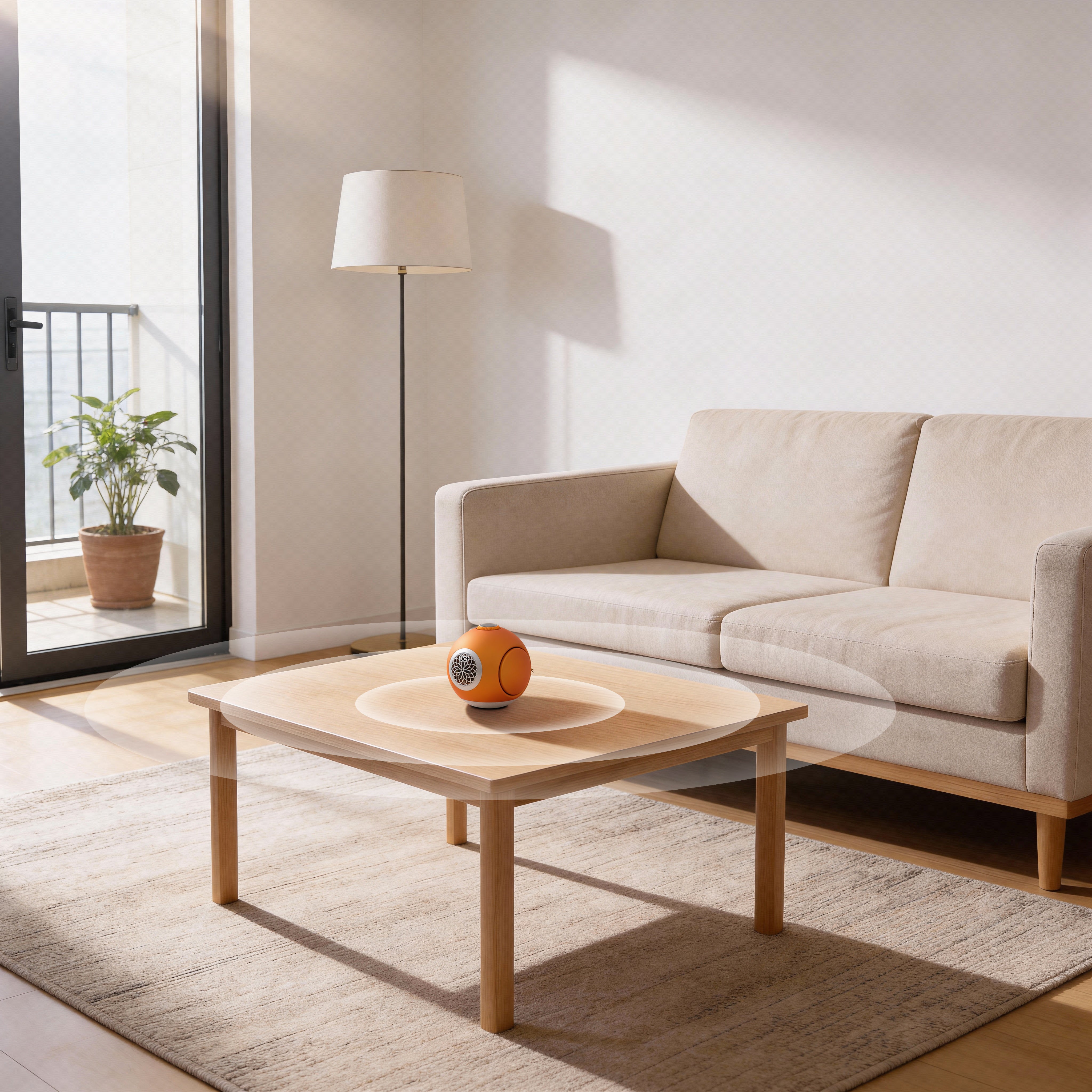
- place on a hard surface (wood, desk, table)
- keep 20–50 cm clearance from walls
- avoid full corner placement
- maintain direct line of sound flow
This alone can increase perceived loudness by 20–40% without changing volume.
3. Room Acoustics: The Invisible Sound Engine
Your room is part of the speaker system.
A bluetooth speaker does not operate in isolation—it interacts with the environment.
3.1 How rooms affect sound
Sound waves:
- reflect
- scatter
- absorb
- cancel
This changes:
- bass response
- vocal clarity
- stereo width
- loudness perception
3.2 Why small rooms can sound worse
In compact rooms:
- reflections arrive too quickly
- bass builds unevenly
- frequencies overlap
Even a best small bluetooth speakers system can sound:
- boxy
- compressed
- unclear
3.3 Simple fixes for room acoustics
You do NOT need professional treatment.
Try:
- adding curtains or soft furniture
- avoiding empty reflective walls
- placing rugs on hard floors
- breaking symmetry in the room layout
These changes dramatically improve sound clarity.
4. Source Quality: The Hidden Problem Most Users Ignore
Even the best speaker cannot fix poor audio input.
A wireless bluetooth speaker only reproduces what it receives.
4.1 Causes of weak source audio
- low bitrate streaming
- compressed MP3 files
- poor equalization in apps
- unstable Bluetooth transmission
4.2 What bad source sounds like
- thin bass
- weak vocals
- flat dynamics
- reduced clarity
Users often misinterpret this as speaker failure.
4.3 How to fix it
- use high-quality streaming (320kbps or lossless when available)
- avoid heavily compressed downloads
- stay close to speaker (reduce Bluetooth loss)
- use stable apps with better encoding
5. Volume Misunderstanding: Why Louder Doesn’t Mean Better
Turning volume to maximum does NOT fix weak sound.
In fact:
- distortion increases
- bass becomes unstable
- clarity drops
A compact bluetooth speaker has physical limits.
5.1 Best listening range
Most speakers perform best at:
- 60% to 80% volume
Above this:
- audio compression increases
- driver strain begins
- soundstage collapses
6. Bluetooth Stability Problems
A bluetooth speaker relies on stable wireless transmission.
6.1 Causes of instability
- long distance
- walls or obstacles
- WiFi interference
- multiple connected devices
6.2 Effects
- dropouts
- compression artifacts
- reduced bass presence
6.3 Fix
- stay within 5–10 meters
- reduce obstacles
- reconnect device
- minimize wireless interference
7. Speaker Design Limitations (Important Reality)
Even perfect setup has physical boundaries.
A portable bluetooth speaker must balance:
- size
- battery
- power output
- heat control
7.1 Why small speakers struggle
- limited air displacement
- small drivers
- reduced bass extension
7.2 Modern engineering solutions
Advanced systems use:
- passive radiators
- tuned acoustic chambers
- airflow optimization
- resonance control systems
Some advanced designs (like spherical acoustic systems inspired by Helmholtz resonance principles) improve:
- internal pressure distribution
- bass efficiency
- vibration cancellation
This allows compact speakers to sound larger than expected.
8. EQ Settings: Hidden Cause of Weak Sound
Incorrect EQ is a major issue.
8.1 Common mistakes
- excessive bass boost
- aggressive treble boost
- random presets
8.2 Result
- distortion
- fatigue
- loss of detail
8.3 Better approach
- keep EQ balanced
- adjust gradually
- prioritize clarity over loudness
9. Battery Level Impact
A rechargeable bluetooth speaker can change performance based on battery level.
Low battery causes:
- reduced output power
- weaker bass
- compressed dynamics
Fix:
- always charge fully before listening
10. Weak Sound Causes vs Real Fixes
|
Problem |
Cause |
Fix |
|
Weak bass |
Soft surface placement |
Use hard surface |
|
Muddy sound |
Room reflections |
Add soft materials |
|
Flat audio |
Low-quality source |
Improve streaming quality |
|
Distortion |
Excess volume |
Reduce volume |
|
Dropouts |
Bluetooth interference |
Reduce distance |
|
Weak performance |
Low battery |
Charge fully |
11. Why “Best Budget Bluetooth Speaker” Still Sounds Weak Sometimes
Even a best budget bluetooth speaker can perform poorly due to environment.
Common reasons:
- bad placement
- poor room acoustics
- low-quality streaming
Not hardware limitations.
12. Why Store Sound vs Home Sound Is Different
Retail stores optimize:
- placement
- acoustics
- source quality
Homes do not.
That is why a speaker sounds better in-store.
13. The Real Secret: Sound Is a System, Not a Device
A bluetooth speaker is only one part of a system.
Real performance depends on:
- speaker hardware
- room acoustics
- placement
- source quality
- user behavior
When these align, even a wireless bluetooth speaker can sound dramatically more powerful.
Final Thoughts
A weak-sounding speaker is almost never “broken.”
In most cases, the issue is:
- incorrect placement
- poor source quality
- room interaction
- Bluetooth instability
- user expectations
Once these are corrected, even a portable bluetooth speaker, wireless bluetooth speaker, or compact bluetooth speaker can sound significantly stronger, clearer, and more immersive.
Sound quality is not only about hardware.
It is about how sound behaves in your environment.
Frequently Asked Questions
1. Why does my bluetooth speaker sound weak?
Because of placement, source quality, or room acoustics—not necessarily hardware failure.
2. How do I improve portable bluetooth speaker sound?
Use hard surfaces, improve audio source quality, and reduce distortion volume levels.
3. Why does wireless bluetooth speaker sound different in rooms?
Room reflections and size change how sound behaves.
4. Does battery level affect sound quality?
Yes. Low battery reduces output and bass performance.
5. Can small speakers sound powerful?
Yes, with correct placement and proper acoustic engineering.
Explore More
If you want stronger bass, clearer vocals, and more immersive room-filling sound:
👉 Compare dB1 vs dB Mini
👉 Explore color options
👉 Check current price
Designed with controlled resonance behavior, balanced airflow, and room-optimized acoustic engineering.



Leave a comment
เว็บไซต์นี้ได้รับการคุ้มครองโดย hCaptcha และมีการนำนโยบายความเป็นส่วนตัวของ hCaptcha และข้อกำหนดในการใช้บริการมาใช้