
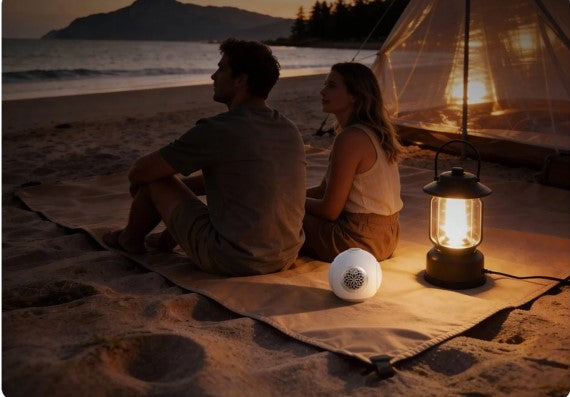
Outdoor listening feels simple until you actually try it.
A speaker that sounds powerful indoors can suddenly feel weak on a balcony. Bass that felt rich in your living room can disappear into open air. Even a high-quality portable bluetooth speaker may struggle when there are no walls to reflect sound.
This is where most people get confused when choosing a wireless bluetooth speaker for outdoor use.
Because outdoor sound behaves differently. There are no boundaries to contain it, no surfaces to reinforce it, and no corners to amplify bass naturally. Everything depends on how efficiently a speaker can project sound into open space.
If you’re trying to find the best portable bluetooth speaker, or comparing options for balcony evenings, patio gatherings, or outdoor dinners, this guide breaks down exactly what matters and what doesn’t.
We’ll also explore why some of the best small bluetooth speakers outperform larger systems outside, and why design matters more than raw power when sound leaves the room.
Why Outdoor Audio Feels Different
Sound behaves very differently outdoors compared to indoors.
Inside a room:
- walls reflect sound
- bass is reinforced naturally
- sound waves bounce and amplify
Outside:
- sound disperses freely
- bass has no reinforcement
- volume drops quickly with distance
This is why even powerful systems often struggle outdoors.
A speaker that sounds “big” indoors may feel average on a balcony.
The Biggest Outdoor Audio Challenge: Bass Loss
Bass is the first thing to disappear outdoors.
Why?
Because low frequencies require:
- air pressure buildup
- boundary reflection
- enclosed space support
Without walls or ceilings, bass energy spreads out and weakens.
That’s why many users think:
“My speaker has no bass outside.”
In reality, the bass is still there it just isn’t reinforced by the environment.
What Actually Matters in Outdoor Speakers
When choosing a rechargeable bluetooth speaker for outdoor use, forget marketing numbers for a moment.
What matters is:
- Sound dispersion
- Efficiency
- Bass control
- Battery stability
- Placement flexibility
Let’s break these down.
1. Sound Dispersion: The Most Important Factor Outdoors
Dispersion determines how sound spreads in space.
Directional Speakers (Front-Firing)
These:
- project sound in one direction
- rely on listener positioning
- create uneven coverage outdoors
They work well if:
- you are sitting directly in front
- the space is small and controlled
But outdoors:
- sound fades quickly
- group listening becomes uneven
360° Speakers
These:
- distribute sound evenly in all directions
- reduce placement dependency
- cover wider areas
This makes them ideal for:
- balconies
- patios
- outdoor gatherings
Because everyone hears the same sound regardless of position.
2. Bass Outdoors: Why Design Matters More Than Power
Many people assume outdoor bass depends on wattage.
But in reality, bass outdoors depends on:
- air movement efficiency
- enclosure design
- driver control
Why Small Speakers Struggle Outdoors
Even the best small bluetooth speakers face a challenge:
- limited air displacement
- no room reinforcement
- reduced pressure buildup
To compensate, better designs use:
- passive radiators
- tuned resonance chambers
- optimized enclosure geometry
The Role of Acoustic Design
Advanced speakers use:
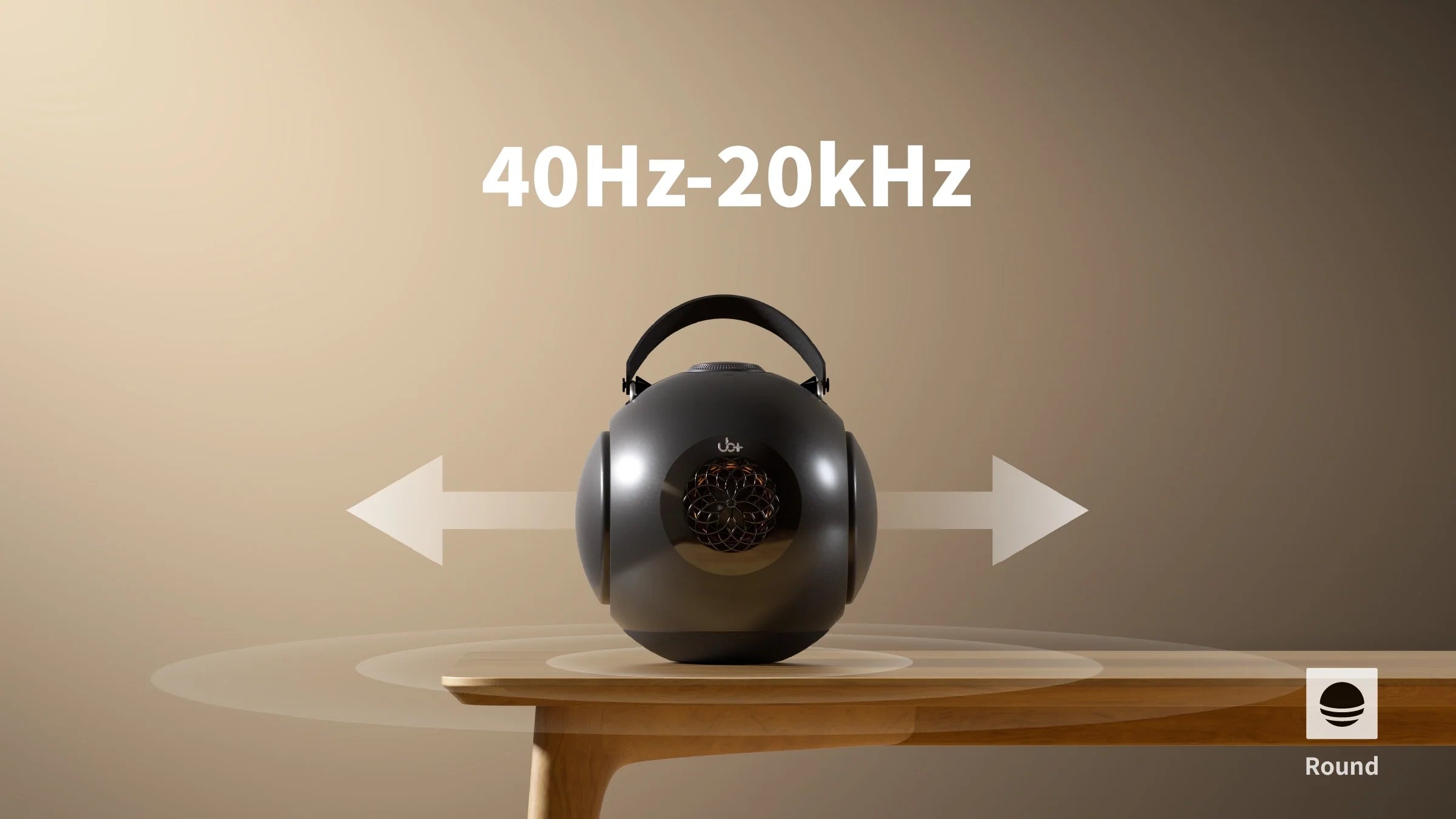
- spherical enclosures
- Helmholtz-inspired chambers
- dual passive radiator systems
These help maintain bass presence even in open air.
3. Battery Life: The Outdoor Lifeline
A speaker is only useful outdoors if it lasts.
When evaluating a wireless bluetooth speaker, consider:
- real playback time (not marketing numbers)
- volume-dependent battery drain
- consistency over long sessions
Why Battery Performance Drops Outdoors
Outdoor listening usually requires:
- higher volume levels
- longer playback duration
- sustained output
This increases power consumption significantly.
4. Portability: Movement Defines Outdoor Use
A portable bluetooth speaker should be:
- lightweight
- durable
- easy to carry
- quick to set up
But portability is not just size.
It also includes:
- grip design
- shock resistance
- weather tolerance
5. Weather Resistance: Outdoor Reality
Outdoor environments introduce:
- humidity
- dust
- accidental splashes
- temperature changes
This is why many outdoor speakers include water resistance ratings like IPX.
Indoor vs Outdoor Speaker Requirements
|
Feature |
Indoor Speakers |
Outdoor Speakers |
|
Bass Reinforcement |
Strong (walls help) |
Weak (no reflection) |
|
Sound Dispersion |
Narrow acceptable |
Must be wide (360° ideal) |
|
Volume Needs |
Moderate |
Higher required |
|
Placement Sensitivity |
High |
Low |
|
Battery Importance |
Optional |
Critical |
|
Environmental Protection |
Not needed |
Essential |
Why Some Speakers Perform Better Outdoors
Outdoor performance depends on how efficiently a speaker uses energy.
Better speakers:
- convert power into sound more efficiently
- reduce internal energy loss
- maintain clarity at higher volume
Helmholtz-Inspired Design in Outdoor Audio
Some advanced speakers use Helmholtz resonance principles.
This means:
- air inside the enclosure is controlled
- bass frequencies are naturally reinforced
- energy is used more efficiently
This is especially useful outdoors where bass naturally weakens.
Passive Radiators: Outdoor Bass Enhancement
Passive radiators help maintain bass presence by:
- moving air passively
- responding to internal pressure changes
- reinforcing low frequencies
Why Dual Radiators Work Better
When placed symmetrically:
- vibration cancels out
- bass becomes more controlled
- energy loss is reduced
This improves outdoor listening significantly.
Speaker Types for Outdoor Use
|
Feature |
Basic Portable Speaker |
Advanced Acoustic Speaker |
|
Sound Coverage |
Directional |
360° dispersion |
|
Bass Outdoors |
Weak |
Controlled and present |
|
Battery Efficiency |
Average |
Optimized |
|
Distortion at High Volume |
High |
Low |
|
Placement Flexibility |
Limited |
High |
|
Listening Experience |
Uneven |
Balanced |
Why Loudness Alone Doesn’t Work Outdoors
A common mistake is choosing the best budget bluetooth speaker based on wattage or loudness claims.
But outdoors:
- loudness without clarity becomes noise
- distortion increases at higher volume
- bass disappears without structure
What matters is clarity at distance, not raw output.
Balcony Listening: The Most Challenging Environment
Balconies combine:
- partial enclosure
- open-air dispersion
- reflective surfaces (walls)
This creates uneven sound behavior.
Best Speaker Type for Balcony Use
- 360° speakers work best
- stable bass response is important
- moderate volume with clarity is ideal
Patio Listening: Social Sound Environment
Patios often involve:
- multiple listeners
- wider seating area
- ambient noise
So you need:
- even sound distribution
- stable midrange clarity
- consistent bass presence
Outdoor Evenings: Long Listening Sessions
Outdoor evenings require:
- long battery life
- comfortable sound signature
- non-fatiguing audio
This is where best sounding bluetooth speaker designs stand out.
Because they prioritize:
- tonal balance
- reduced distortion
- smooth frequency response
Why Design Matters More Outdoors
Indoor speakers can rely on walls.
Outdoor speakers must rely on:
- acoustic engineering
- enclosure design
- driver efficiency
This is why shape and internal architecture matter so much.
Spherical Design Advantage
A spherical enclosure:
- distributes sound evenly
- reduces internal resonance
- improves bass consistency
This helps maintain performance in open spaces.
Real-World Outdoor Listening Behavior
Outdoor listening is dynamic:
- people move
- distance changes
- environment shifts
So the speaker must adapt acoustically.
What Makes a Great Outdoor Speaker
A strong outdoor speaker combines:
- efficient power usage
- stable acoustic design
- wide sound dispersion
- durable construction
Not just volume.
Final Buying Guide: What to Look For
When choosing your next wireless bluetooth speaker for outdoor use, focus on:
- Dispersion pattern (360° preferred)
- Real bass performance (not boosted specs)
- Battery consistency at high volume
- Portability and durability
- Distortion control
Final Thoughts: Outdoor Sound Is About Space, Not Power
The biggest misconception in outdoor audio is that you need a louder speaker.
In reality, you need a smarter speaker.
Because outdoors:
- sound has no boundaries
- bass needs reinforcement
- dispersion matters more than wattage
This is why modern designs focus on:
- acoustic efficiency
- controlled resonance
- spherical sound distribution
- passive radiator systems
Not just raw power.
The best portable bluetooth speaker for outdoor evenings is not the one that claims the highest numbers it’s the one that maintains clarity, balance, and presence when the environment works against it.
Experience Better Outdoor Sound
→ Compare dB1 vs dB Mini
→ See color options
→ Check current price
Because great outdoor sound isn’t about turning it up.
It’s about filling space naturally, evenly, and effortlessly.


发表评论
此站点受 hCaptcha 保护,并且 hCaptcha 隐私政策和服务条款适用。