
Most speaker buying guides focus on power, bass, or Bluetooth features. Very few talk about something that directly affects everyday listening comfort: how everyday comfort, room-friendly sound, and immersive listening interact with real human behavior.
For shorter listeners, this matters more than most people realize. That is why more users are now searching for the best speaker for short people instead of only comparing loudness or wattage.
Most people searching for the best speaker for short people are not looking for complicated audio equipment. They want a speaker that feels comfortable in real life.
That usually means:
- a speaker that fits naturally into smaller rooms
- balanced sound that does not feel overwhelming
- deep bass without massive floor-standing systems
- compact placement flexibility
- immersive sound even in close listening environments
- clean modern design that works in apartments, bedrooms, and desk setups
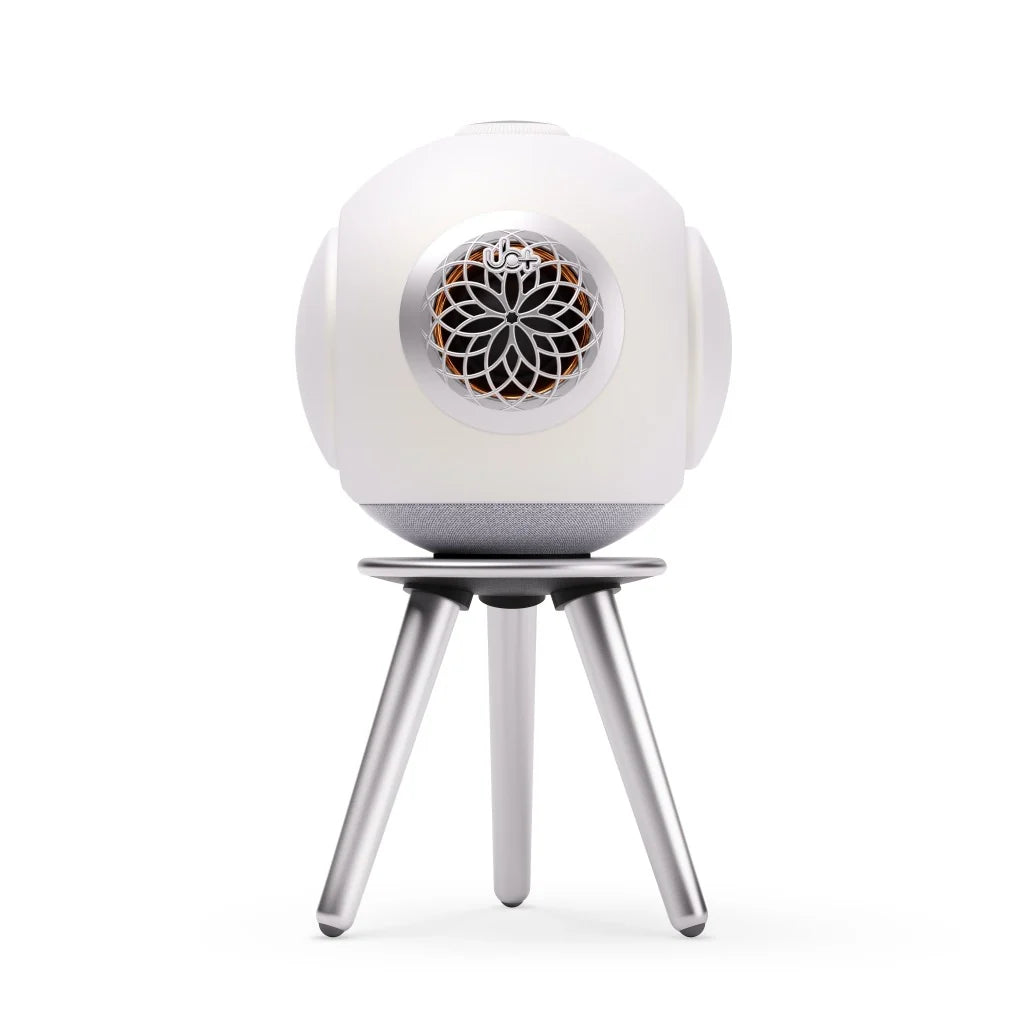
This is exactly why the UB+ dB1 DOUBLEBASS stands out as one of the best speaker options for short people and why many listeners consider it the best speaker for short people for modern lifestyles.
Unlike traditional front-firing box speakers that project sound in a narrow direction, the dB1 uses a spherical acoustic chamber inspired by the Helmholtz resonator principle. Its curved enclosure distributes sound more evenly throughout the room, reducing the dependence on exact ear-level positioning.
For anyone searching for the best speaker for short people, the dB1 creates several real-world advantages:
- vocals remain clear even when seated lower than the speaker axis
- bass feels balanced instead of overwhelming
- sound spreads naturally across the room
- listening remains immersive without constantly adjusting placement
The dB1’s design is not spherical for aesthetics alone.
Its acoustic architecture includes:
- a true spherical enclosure
- dual symmetrical passive radiators
- a centrally positioned downward-firing mid-bass driver
- evenly distributed internal air pressure
This engineering allows the speaker to create broad, room-filling sound without harsh directional behavior.
Most traditional speakers push sound forward aggressively. The dB1 allows sound to breathe naturally through controlled air movement.
That difference matters because the best speaker for short people should feel immersive and natural in everyday environments instead of requiring perfect setup conditions.
The dB1’s broad sound dispersion means music feels consistent whether you are sitting at a desk, relaxing on a low sofa, working from a bed setup, or moving around a small apartment. This is one reason the UB+ dB1 is increasingly viewed as the best speaker for short people who want immersive sound without constantly adjusting placement.
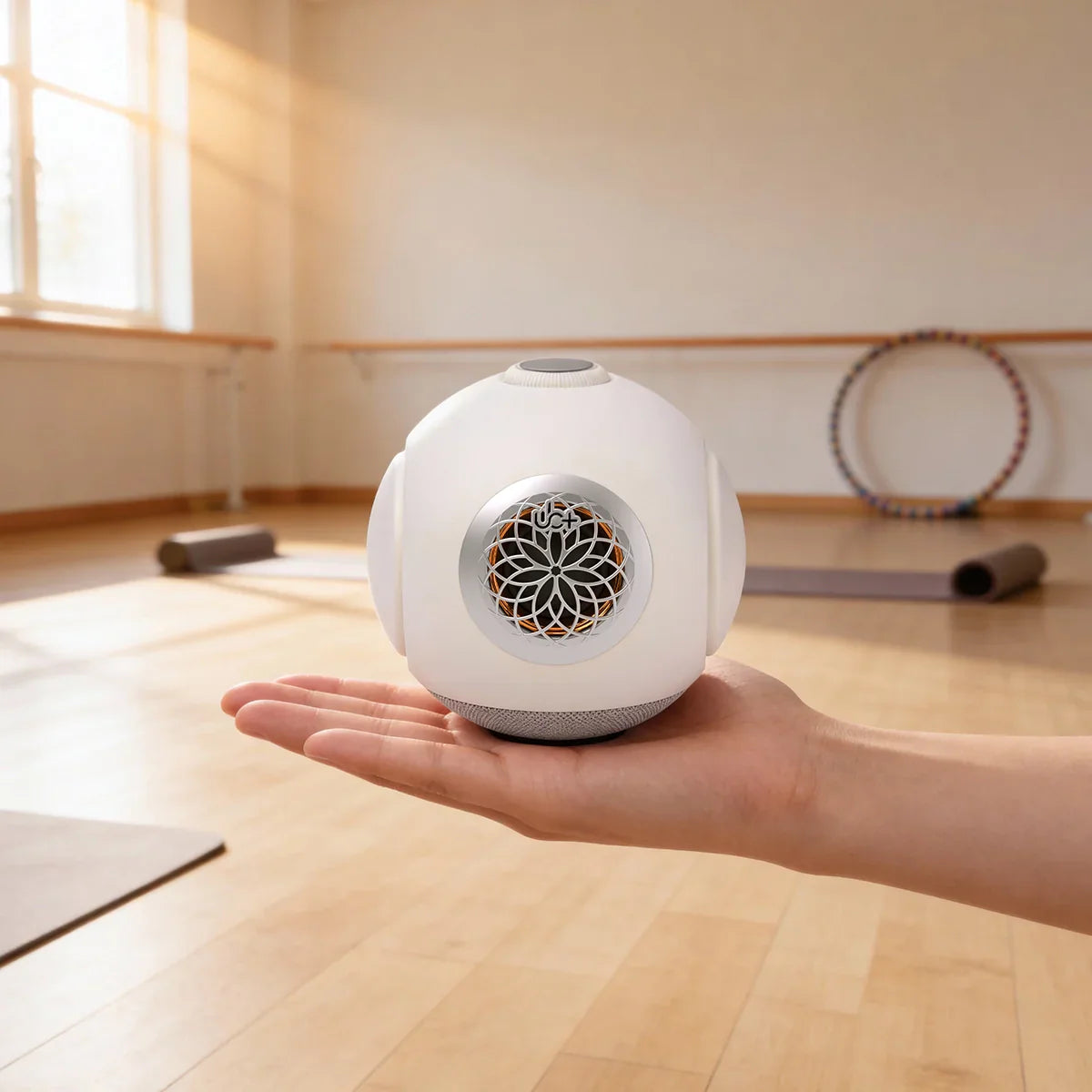
Its compact form also makes placement easier. Instead of requiring tall stands or carefully aligned tweeter positioning, the dB1 adapts naturally to:
- bedrooms
- apartments
- compact workspaces
- lounge environments
- minimalist interiors
At the same time, its acoustic performance goes far beyond typical compact speakers.
The dB1 DOUBLEBASS uses:
- dual passive radiator plates with 3.5× larger surface area than the woofer
- self-canceling symmetrical vibration control
- mechanical bass amplification instead of exaggerated digital boosting
- a high-end 4.5” woofer with oversized 90mm neodymium magnet
- 35mm long-stroke voice coil
- 20mm piston movement
- aluminum shorting ring to reduce distortion
The result is bass that feels deep and physical without becoming muddy or tiring.
For modern listeners living in apartments, bedrooms, or compact spaces, this balance matters far more than raw loudness. The best speaker for short people should deliver deep, controlled sound without dominating the room physically or acoustically.
The dB1 creates immersive sound that feels comfortable, spacious, and natural regardless of seating height.
That is why the UB+ dB1 is not simply a stylish speaker.
It is thoughtfully engineered for real-world listening comfort.
Best Speaker for Short People: Why the UB+ dB1 Is Perfect for Compact, Comfortable Listening
When people search for the best speaker, most buying guides focus on power, bass, Bluetooth versions, or portability. Very few talk about something surprisingly important in everyday listening: how speaker size, height, and sound dispersion interact with human positioning.
For shorter listeners, speaker design can affect the listening experience more than many realize.
A speaker placed too high can make vocals sound disconnected. A front-firing system aimed above ear level may reduce clarity. Large floor-standing systems can overwhelm smaller rooms and create uncomfortable listening angles. Even desk setups often prioritize visual aesthetics over ergonomic sound positioning.
This is why choosing the best speaker for short people is not really about height alone. It is about finding a speaker that creates balanced, immersive sound regardless of seating position, room layout, or listener height.
Modern speaker engineering especially spherical and 360° acoustic designs is changing how sound fills a room. Instead of projecting audio in one narrow direction, newer systems distribute sound more evenly, making the listening experience more natural for everyone in the space.
This guide explores how speaker shape, placement, sound dispersion, and enclosure design influence comfort and sound quality for shorter listeners, while also explaining why compact spherical systems are becoming increasingly popular in modern homes.
Why Speaker Height Actually Matters
Many traditional speakers are designed around fixed listening assumptions.
Engineers often expect listeners to sit:
- directly in front of the speaker
- at tweeter height
- several feet away
- within a narrow “sweet spot”
But real-world listening rarely works that way.
People move around rooms. They sit on couches, beds, floor cushions, desk chairs, and dining chairs all at different heights.
For shorter listeners, this creates a common issue:
The speaker may physically aim over the listener’s head.
This affects:
- vocal clarity
- stereo imaging
- perceived detail
- overall immersion
A system that sounds balanced for one person may sound harsh, distant, or muddy for another depending on vertical listening angle.
The Problem with Directional Speakers
Traditional box speakers often use front-firing drivers with narrow directional output.
This creates a focused sweet spot where sound is optimized.
Outside that zone:
- highs may disappear
- vocals lose presence
- stereo balance shifts
- clarity decreases
This becomes especially noticeable when the listener sits below the speaker’s intended axis.
For shorter people, this means some speaker systems may consistently sound less natural unless carefully repositioned.
Why Modern Compact Speakers Are Different
Modern wireless speaker engineering increasingly focuses on broader sound dispersion.
Instead of forcing listeners into one perfect position, newer designs aim to fill spaces more evenly.
This benefits:
- shared listening spaces
- apartments
- bedrooms
- desk setups
- lounge areas
And importantly, it improves listening comfort regardless of height.
The Rise of Spherical Acoustic Design
One reason spherical speakers have gained attention is because curved enclosures naturally improve sound distribution.
Unlike traditional rectangular cabinets, spherical designs reduce:
- parallel internal reflections
- standing waves
- uneven resonance buildup
This allows sound to disperse more naturally throughout the room.
For shorter listeners, broader dispersion means:
- less dependence on exact ear-level positioning
- more consistent clarity
- smoother tonal balance
- improved off-axis listening
This is one reason modern spherical systems are increasingly viewed as more comfortable for everyday listening.
Why Speaker Placement Is More Important Than Size
Many people assume larger speakers automatically sound better.
But placement often matters more.
A compact speaker placed correctly can outperform a large speaker positioned poorly.
For shorter listeners, speaker height relative to seating position becomes critical.
Ideally:
- drivers should align near ear level
- sound should disperse evenly vertically
- bass should integrate naturally into the room
Oversized floor-standing systems sometimes create elevated sound staging that feels disconnected in smaller living environments.
Compact modern systems often create more intimate, balanced listening.
Understanding Vertical Dispersion
Most speaker discussions focus on left-right soundstage.
But vertical dispersion is equally important.
Vertical dispersion determines how well sound reaches listeners sitting above or below the speaker axis.
Poor vertical dispersion can cause:
- recessed vocals
- inconsistent treble
- uneven detail retrieval
- listening fatigue
Good vertical dispersion creates:
- smoother room coverage
- consistent clarity
- better shared listening
This matters significantly when users vary in height.
Traditional Directional Speakers vs Broad Dispersion Designs
|
Feature |
Traditional Box Speaker |
Modern Broad-Dispersion Speaker |
|
Listening Sweet Spot |
Narrow |
Wider |
|
Vertical Listening Comfort |
Limited |
Improved |
|
Off-Axis Clarity |
Reduced |
More consistent |
|
Placement Flexibility |
Moderate |
High |
|
Room Coverage |
Directional |
More even |
|
Everyday Listening Comfort |
Position dependent |
More natural |
Why Smaller Rooms Change Everything
Most people today listen in:
- apartments
- bedrooms
- home offices
- compact living rooms
Large traditional speakers were originally designed for bigger listening spaces.
In smaller environments:
- reflections occur faster
- bass buildup becomes stronger
- directional output feels more obvious
This is why compact acoustic systems often feel more balanced in modern homes.
The Relationship Between Speaker Shape and Comfort
Comfort in audio is not only about volume.
It also involves:
- tonal balance
- listening fatigue
- sound pressure distribution
- spatial consistency
Some speakers sound impressive initially but become tiring over time.
This often happens because:
- bass is overboosted
- highs are too directional
- resonance is poorly controlled
Well-engineered compact systems focus on smoother long-term listening.
Why Bass Quality Matters More Than Bass Quantity
Many people shopping for speakers focus heavily on bass output.
But uncontrolled bass creates problems in small rooms.
Boomy bass can:
- overpower vocals
- create pressure hotspots
- cause fatigue
- make placement difficult
Modern compact systems increasingly use advanced acoustic engineering to create controlled low frequencies without requiring oversized cabinets.
Helmholtz-Inspired Acoustic Chambers
One important modern approach involves Helmholtz-inspired enclosure engineering.
This concept uses controlled internal air pressure to reinforce low frequencies naturally.
Instead of forcing bass using excessive amplification, the enclosure itself becomes part of the acoustic system.
Benefits include:
- smoother bass extension
- cleaner midrange
- reduced distortion
- more efficient airflow behavior
This creates bass that feels deeper without overwhelming smaller spaces.
Why Spherical Chambers Sound Different
A spherical acoustic chamber distributes air pressure evenly.
Unlike rectangular boxes, spheres reduce:
- standing waves
- phase distortion
- uneven resonance patterns
This leads to:
- cleaner harmonic reproduction
- more natural bass integration
- smoother room interaction
For listeners seated at varying heights, this contributes to more consistent sound.
The Importance of Passive Radiators
Modern compact speakers often use passive radiators to improve bass performance.
Passive radiators respond to internal air pressure changes instead of direct electrical signals.
This allows:
- deeper bass
- lower distortion
- compact cabinet design
- improved efficiency
Advanced systems use symmetrical dual passive radiators positioned opposite each other.
This creates self-canceling vibration behavior.
Instead of cabinet shake, energy converts into controlled acoustic movement.
Why Controlled Resonance Feels More Comfortable
Poorly controlled resonance creates:
- rattling
- harshness
- bloated bass
- listener fatigue
Controlled resonance produces:
- tighter bass
- smoother vocals
- cleaner imaging
- relaxed listening
This becomes especially noticeable during long listening sessions.
Poorly Controlled Bass vs Engineered Bass Systems
|
Feature |
Typical Portable Speaker |
Engineered Acoustic System |
|
Bass Strategy |
Digital boost |
Mechanical airflow tuning |
|
Cabinet Vibration |
Noticeable |
Self-balanced |
|
Listening Fatigue |
Higher |
Lower |
|
Bass Clarity |
Often muddy |
Controlled |
|
Small Room Performance |
Can overwhelm |
Balanced |
|
Comfort for Long Sessions |
Moderate |
Excellent |
Why Speaker Height Affects Dialogue Clarity
Human hearing is especially sensitive to vocal frequencies.
When a speaker fires above ear level:
- dialogue may sound distant
- vocals lose intimacy
- detail becomes less precise
Broad-dispersion systems help maintain vocal clarity even when listeners sit lower than the speaker axis.
This creates a more natural experience for shorter listeners.
Desk Setups and Listening Angles
Modern desk setups often place speakers:
- beside monitors
- on shelves
- above ear level
- near walls
A directional speaker may sound inconsistent depending on chair height.
Compact rounded speakers with broader dispersion adapt more naturally to changing positions.
This is one reason minimalist spherical speakers are increasingly popular for desk audio.
Why Compact Speakers Often Work Better in Apartments
Large speakers can overwhelm smaller rooms.
Problems include:
- excessive bass buildup
- strong reflections
- difficult placement
- visually dominant systems
Compact modern speakers focus on:
- efficient acoustic engineering
- balanced bass response
- space-friendly placement
- aesthetic integration
This creates a more comfortable everyday experience.
The Psychological Side of Listening Comfort
Sound affects how spaces feel emotionally.
Harsh or uneven systems create subconscious tension.
Balanced systems feel:
- calmer
- more immersive
- less fatiguing
- easier to live with daily
This matters more than raw loudness for most listeners.
Why Modern Buyers Want Lifestyle Integration
Today’s listeners expect speakers to blend naturally into:
- furniture
- interior design
- workspaces
- lifestyle environments
A speaker is no longer just audio equipment.
It is also:
- an object
- a design element
- part of the room’s atmosphere
This shift has influenced both industrial design and acoustic engineering.
Why Portability Matters
Portable systems allow users to adjust placement based on:
- seating position
- room acoustics
- social gatherings
- changing environments
This flexibility is particularly useful for optimizing listening comfort.
A movable speaker adapts more easily to listener height than fixed installations.
The Importance of 360° Sound Distribution
Traditional speakers often project sound narrowly forward.
360° and broad-dispersion systems distribute audio more evenly.
Benefits include:
- smoother room coverage
- less directional harshness
- better shared listening
- reduced placement sensitivity
For shorter listeners, this often creates a more immersive experience regardless of position.
How Modern Engineering Solves Old Problems
Speaker design has evolved significantly.
Instead of simply increasing:
- wattage
- driver size
- amplifier power
modern engineering increasingly focuses on:
- airflow management
- resonance control
- enclosure geometry
- acoustic balance
This produces better real-world sound without requiring massive cabinets.
Why “Best Speaker” Means Different Things for Different People
The best speaker for one user may not work for another.
Factors include:
- room size
- seating position
- listening distance
- aesthetic preferences
- portability needs
- listener height
This is why practical comfort matters as much as technical specifications.
What to Look for in the Best Speaker for Short People
Finding the best speaker for short people involves choosing a system that feels comfortable to live with every day. The right speaker should combine immersive sound, flexible placement, balanced bass, modern aesthetics, and room-friendly acoustics without requiring oversized equipment or complicated positioning.
When choosing a speaker, prioritize:
Broad Sound Dispersion
Wider dispersion improves consistency across different seating heights.
Compact Placement Flexibility
Smaller speakers allow easier positioning near ear level.
Balanced Bass
Controlled bass performs better in smaller spaces.
Reduced Directionality
Curved or spherical designs often create smoother room coverage.
Long-Term Listening Comfort
Avoid systems with exaggerated highs or bloated bass.
Why Speaker Engineering Matters More Than Marketing
Many speakers advertise:
- huge wattage
- “extreme bass”
- oversized drivers
But real-world listening depends more on:
- tuning
- enclosure behavior
- airflow efficiency
- resonance management
This is why thoughtfully engineered compact systems often outperform larger competitors in everyday use.
Final Thoughts: Comfort Is Part of Sound Quality
The best speaker experience is not only about loudness or specifications.
It is about how naturally sound fits into daily life.
For shorter listeners, speaker height, dispersion, and enclosure design can dramatically influence:
- clarity
- immersion
- listening fatigue
- room interaction
Modern speaker engineering increasingly recognizes this.
Broad-dispersion acoustic systems, spherical chambers, controlled resonance behavior, and compact placement flexibility all contribute to a more inclusive listening experience.
The result is sound that feels balanced regardless of where you sit.
Because great audio should adapt to people not force people to adapt to the speaker.
Explore Smarter Speaker Design
→ Compare dB1 vs dB Mini
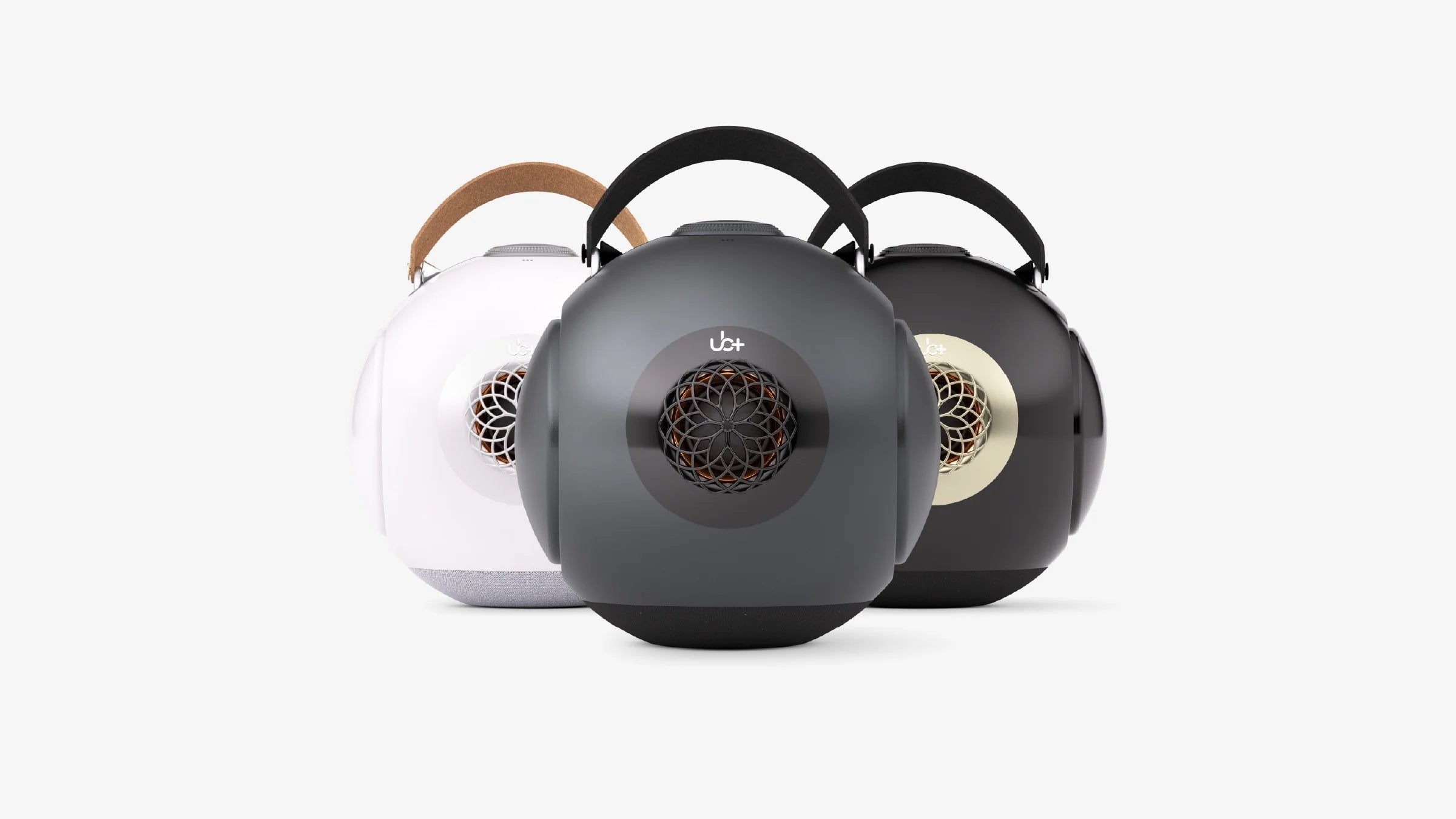
→ See color options
→ Check current price
Designed for modern spaces. Engineered for natural listening comfort.


发表评论
此站点受 hCaptcha 保护,并且 hCaptcha 隐私政策和服务条款适用。