
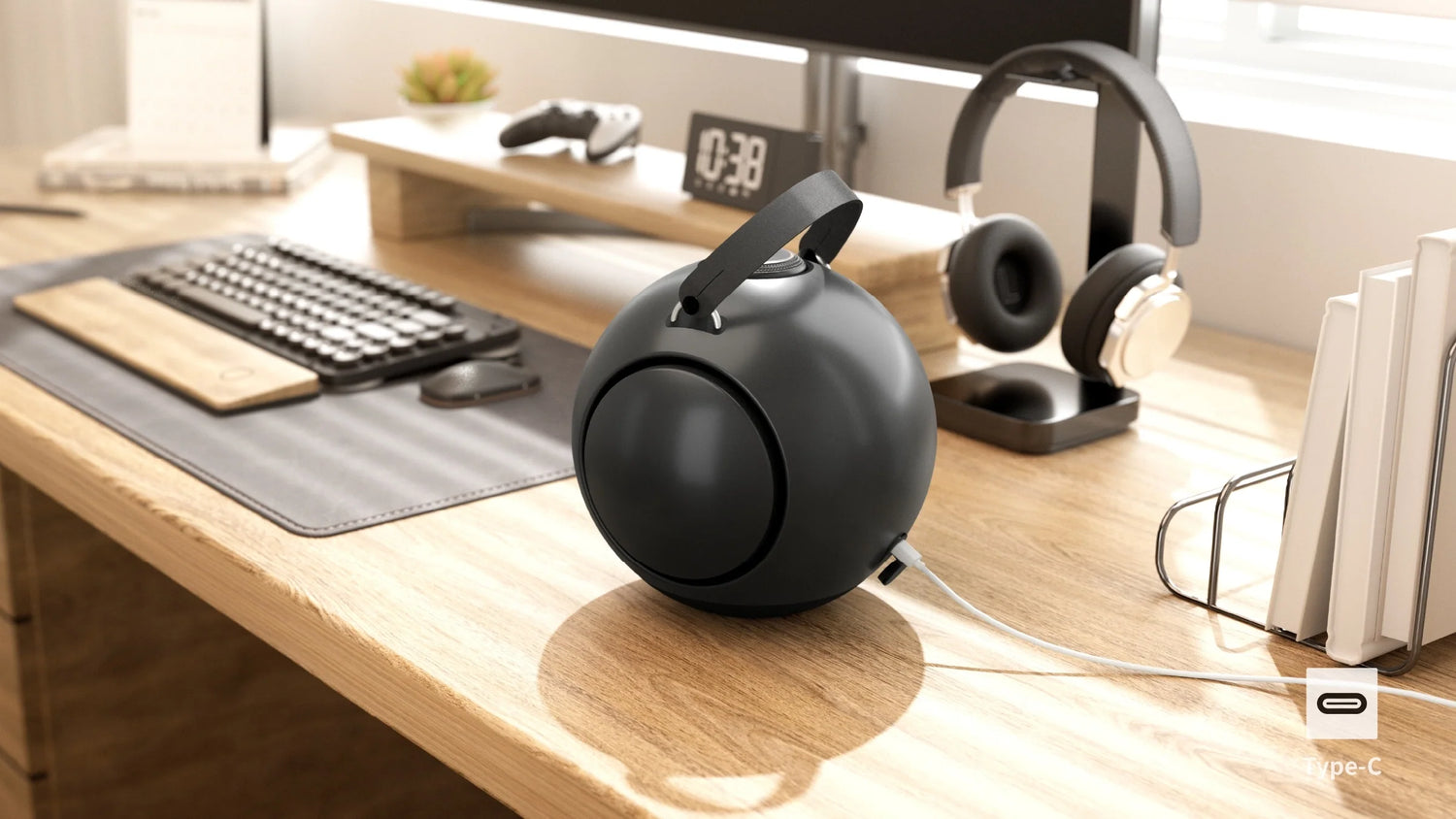
Choosing a speaker should be straightforward. Bigger room, bigger speaker right?
Not exactly.
Many people assume that the best way to get great sound is to buy the most powerful system they can afford. But in real homes especially apartments, bedrooms, and multipurpose living spaces more power often creates more problems than it solves.
Boomy bass, uneven sound, listening fatigue, and unnecessary clutter are all signs of a system that doesn’t match the space.
So the real question isn’t:
“What’s the most powerful speaker I can buy?”
It’s:
“What size speaker do I actually need for my room?”
This guide breaks that down in a practical, technical way helping you match speaker size, output, and design to your environment. Whether you’re looking for a portable bluetooth speaker, a rechargeable bluetooth speaker, or one of the best small bluetooth speakers, understanding these fundamentals will help you make a smarter decision.
Why Speaker Size Is Often Misunderstood
Most buying decisions are influenced by visible specs:
- wattage
- driver size
- advertised loudness
- frequency range
But these numbers don’t tell the full story.
A speaker’s real performance depends on:
- how efficiently it moves air
- how its enclosure manages pressure
- how sound interacts with your room
This is why two speakers with similar specs can sound completely different.
The Relationship Between Room Size and Sound
Your room is part of your audio system.
Sound doesn’t exist in isolation it reflects, absorbs, and builds within the space.
Key Factors That Affect Sound:
- room dimensions
- wall materials
- furniture and soft surfaces
- speaker placement
Understanding these helps you choose the best sounding bluetooth speaker for your needs not just the most powerful one.
Small Rooms: Why Less Power Often Works Better
Examples of small rooms:
- bedrooms
- dorm rooms
- home offices
Typical size: under 150 sq ft
What Happens in Small Spaces:
- sound reflects quickly off walls
- bass builds up easily
- high power becomes overwhelming
Ideal Speaker Type:
- compact or portable bluetooth speaker
- controlled bass output
- even sound dispersion
Common Mistake:
Buying a large, high-powered system that:
- overwhelms the room
- creates muddy bass
- reduces clarity
Medium Rooms: The Balance Zone
Examples:
- living rooms
- studio apartments
- open-plan spaces
Typical size: 150–350 sq ft
What You Need:
- moderate output
- balanced frequency response
- good dispersion
This is where many modern wireless bluetooth speakers perform best.
Large Rooms: When Power Matters
Examples:
- large living areas
- open lofts
- shared spaces
Typical size: 350+ sq ft
Requirements:
- higher output capability
- greater air movement
- consistent sound across distance
In these environments, speaker efficiency becomes critical.
Why Wattage Doesn’t Tell the Whole Story
Wattage is one of the most misleading specs.
Higher wattage does not automatically mean:
- better sound
- deeper bass
- clearer audio
It simply indicates potential power consumption.
What matters more is:
- how efficiently that power is used
- how the speaker converts energy into sound
Loudness vs Usable Volume
A speaker may be able to get very loud but can it stay clean at that level?
Poorly Designed Speakers:
- distort at higher volume
- compress dynamics
- become tiring to listen to
Well-Designed Speakers:
- maintain clarity
- keep balance across frequencies
- feel effortless even at higher output
This is a key difference between best budget bluetooth speakers and truly refined systems.
Why Small Speakers Can Still Fill a Room
This is one of the biggest misconceptions:
“Small speaker = small sound.”
In reality, modern engineering allows compact speakers to:
- move more air efficiently
- control resonance better
- distribute sound more evenly
The Role of Enclosure Design
The enclosure (the body of the speaker) plays a major role in how sound behaves.
Traditional Box Speakers:
- have parallel internal walls
- create standing waves
- produce uneven bass
Advanced Designs:
- reduce internal interference
- improve pressure distribution
- enhance efficiency
Helmholtz-Inspired Acoustic Chambers
Some modern speakers use a Helmholtz-inspired chamber design.
This approach:
- traps air inside the enclosure
- controls how it moves
- reinforces low frequencies naturally
Instead of forcing bass with power, it uses physics to:
- amplify sound efficiently
- maintain clarity
- reduce distortion
Why Spherical Design Improves Performance
Spherical enclosures take this concept further.
Because they have:
- no parallel surfaces
- evenly distributed internal pressure
They offer:
- smoother bass response
- reduced resonance issues
- more natural sound
This is why some compact speakers outperform larger box designs.
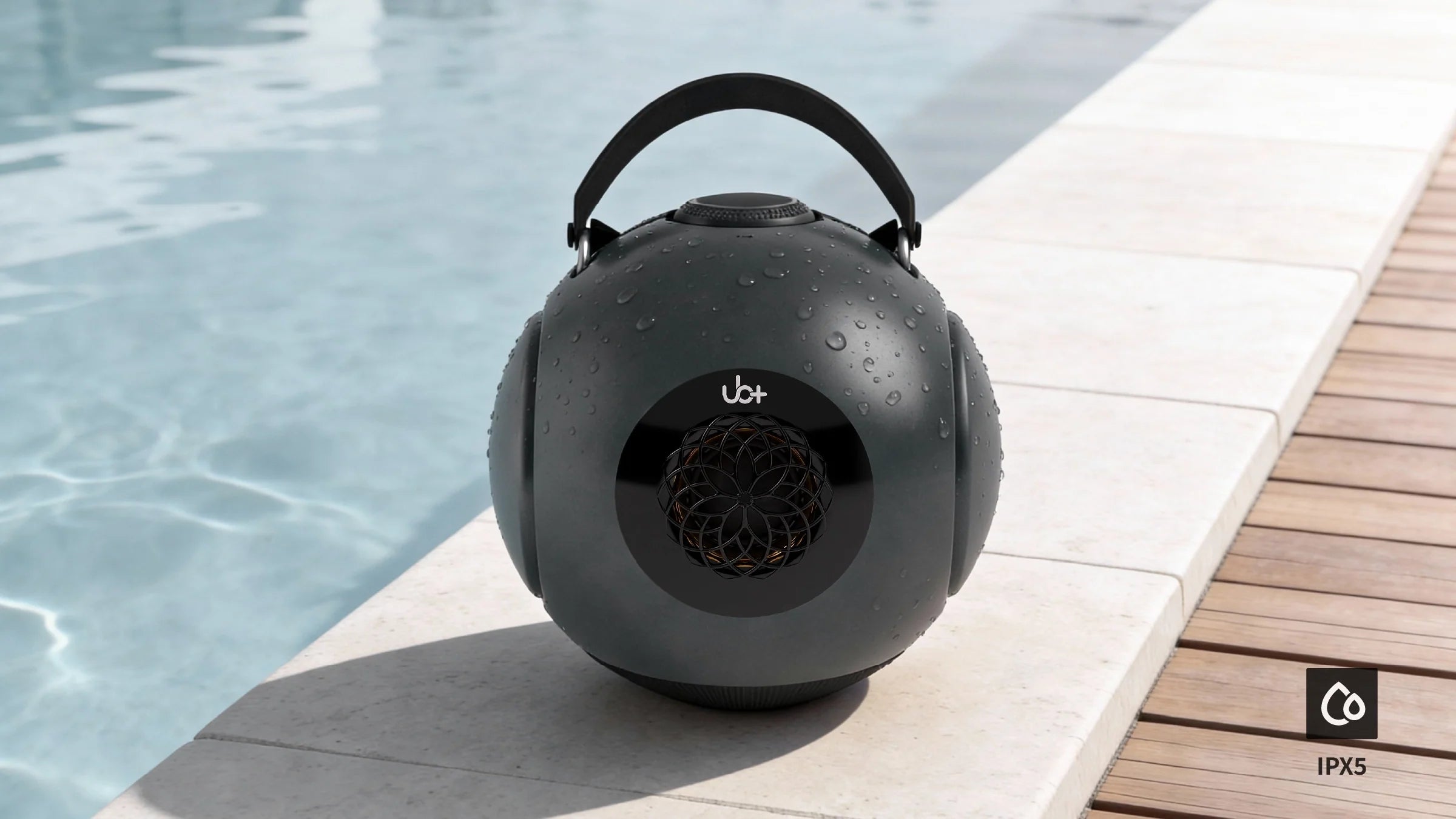
Dual Passive Radiators: More Bass Without More Size
Many advanced rechargeable bluetooth speakers use passive radiators.
These components:
- move in response to internal air pressure
- extend low-frequency output
- reduce strain on the main driver
Symmetrical Design Advantage:
- radiators placed on opposite sides
- move in equal and opposite directions
- cancel vibration
This results in:
- stable sound
- cleaner bass
- efficient energy use
3.5× Air Movement: Efficiency Over Size
One of the biggest breakthroughs in compact speakers is increasing effective air movement.
By using larger radiator surfaces:
- more air is displaced
- bass becomes stronger
- distortion is reduced
This allows smaller speakers to perform like larger systems.
Downward-Firing Drivers: Filling the Room Naturally
Instead of projecting sound directly forward, some speakers use downward-firing drivers.
This approach:
- energizes internal air
- distributes sound evenly
- reduces harshness
It’s especially effective in small to medium rooms where sound needs to spread naturally.
Room Size vs Speaker Needs
|
Room Size |
Typical Space |
Recommended Speaker Type |
Key Focus |
|
Small (<150 sq ft) |
Bedroom, office |
Compact / portable bluetooth speaker |
Controlled bass, even dispersion |
|
Medium (150–350 sq ft) |
Living room |
Wireless bluetooth speaker |
Balance of power and clarity |
|
Large (350+ sq ft) |
Open space |
High-efficiency speaker |
Output + air movement |
Small vs Large Speaker Performance
|
Feature |
Small Speaker (Advanced Design) |
Large Traditional Speaker |
|
Space Efficiency |
Excellent |
Poor |
|
Bass Control |
Balanced |
Can be overwhelming |
|
Clarity in Small Rooms |
High |
Reduced |
|
Portability |
High |
None |
|
Power Usage |
Efficient |
Higher |
|
Listening Comfort |
Long sessions |
Fatigue risk |
Avoiding Overpowered Systems
Buying a speaker that’s too powerful for your room leads to:
- boomy bass
- uneven sound
- difficulty controlling volume
Instead of enjoying music, you end up constantly adjusting it.
Choosing Based on Lifestyle
Ask yourself:
- Do you move your speaker often?
- Do you listen at low or moderate volume?
- Do you share your space?
If yes, a portable bluetooth speaker with efficient design is often the better choice.
Why One Good Speaker Beats Multiple Average Ones
Instead of using:
- multiple small speakers
- complicated setups
A single well-designed unit can:
- fill the room
- maintain consistency
- simplify your setup
The Myth of “Best Budget Speaker”
Many best budget bluetooth speakers focus on:
- loudness
- exaggerated bass
- flashy specs
But often lack:
- acoustic refinement
- long-term listening comfort
True value comes from:
- design efficiency
- balanced sound
- durability
What You Should Listen For
When testing a speaker, focus on:
- clarity at low volume
- balance between bass and mids
- consistency across the room
Not just how loud it gets.
Real-World Example: Matching Speaker to Room
Bedroom Setup:
- compact speaker
- placed near a wall
- moderate volume
Living Room Setup:
- mid-size speaker
- central placement
- balanced output
Open Space:
- high-efficiency design
- strong dispersion
- stable bass
Final Thoughts: Size Isn’t Everything
Choosing the right speaker is not about buying the biggest or most powerful option.
It’s about:
- matching the speaker to your room
- understanding how sound behaves
- choosing efficient design over raw power
Modern speakers using:
- Helmholtz-inspired chambers
- dual passive radiators
- 3.5× air movement systems
- self-cancelling vibration
prove that compact designs can deliver powerful, room-filling sound without overwhelming your space.
Find the Right Fit for Your Room
→ Compare dB1 vs dB Mini
→ See color options
→ Check current price
Because the best speaker isn’t the biggest one.
It’s the one that fits your space and makes it sound effortless.



发表评论
此站点受 hCaptcha 保护,并且 hCaptcha 隐私政策和服务条款适用。