
Finding budget audiophile speakers that genuinely deliver high-end sound is one of the biggest challenges for value-conscious listeners. The market is filled with products promising powerful bass, premium components, studio-quality sound, and sophisticated wireless features, but price alone doesn't reveal how well a speaker is actually engineered. The smarter approach is to understand where manufacturers save money, which compromises are audible, and which technologies genuinely improve the listening experience.
A lower price doesn't automatically mean poor sound. In fact, modern manufacturing has made it possible to build remarkably capable speakers at prices that would have been difficult to achieve years ago. The challenge is identifying the difference between a product that delivers genuine value and one that simply looks impressive on a specification sheet.
For buyers searching for the best value bluetooth speaker, the goal should not be finding the cheapest possible option. Instead, it's finding the product that allocates its engineering budget toward the parts that have the greatest effect on sound quality, reliability, and long-term ownership.
This guide explores where budget speakers typically compromise, which engineering shortcuts actually matter, how premium acoustic design can change the equation, and how to make smart trade-offs without paying for features that don't meaningfully improve your listening experience.
What Does "Audiophile" Really Mean?

The word "audiophile" is frequently used in speaker marketing, but it doesn't have a universally defined technical standard.
An audiophile-oriented speaker generally prioritizes accurate and enjoyable sound reproduction rather than simply maximizing volume or creating an exaggerated bass response.
Important characteristics include:
- Low distortion
- Controlled bass
- Natural midrange
- Smooth high frequencies
- Accurate driver behavior
- Good tonal balance
- Strong imaging and soundstage
- Consistent performance at different volume levels
An audiophile listener typically wants to hear more of the recording and less of the speaker itself.
That makes engineering quality particularly important.
A speaker doesn't necessarily need to be expensive to sound good. But it does need to spend its manufacturing budget intelligently.
Where Budget Speakers Usually Save Money

Manufacturing a speaker involves much more than installing a driver inside a cabinet.
Costs can be reduced through choices involving:
- Cabinet materials
- Driver magnets
- Voice coils
- Suspension systems
- Amplification
- Acoustic chambers
- Passive radiators
- Electronics
- Wireless components
- Quality control
Some of these savings are relatively harmless.
Others can have a major effect on sound.
Understanding the difference is the key to finding genuine value.
1. Cabinet Materials Can Affect More Than Appearance

One of the first places manufacturers often reduce costs is the enclosure.
A basic speaker may use thin plastic with relatively simple internal construction. This keeps the product inexpensive and lightweight, but the enclosure can become more susceptible to unwanted vibration and resonance.
The cabinet isn't simply a container for the electronics.
It is part of the acoustic system.
When the enclosure vibrates unnecessarily, some of the energy that should become sound is converted into mechanical movement. Internal reflections can also create resonances that color the original recording.
Premium speakers generally invest more heavily in cabinet engineering because controlling these behaviors can significantly improve clarity.
Why Spherical Acoustic Design Is Different
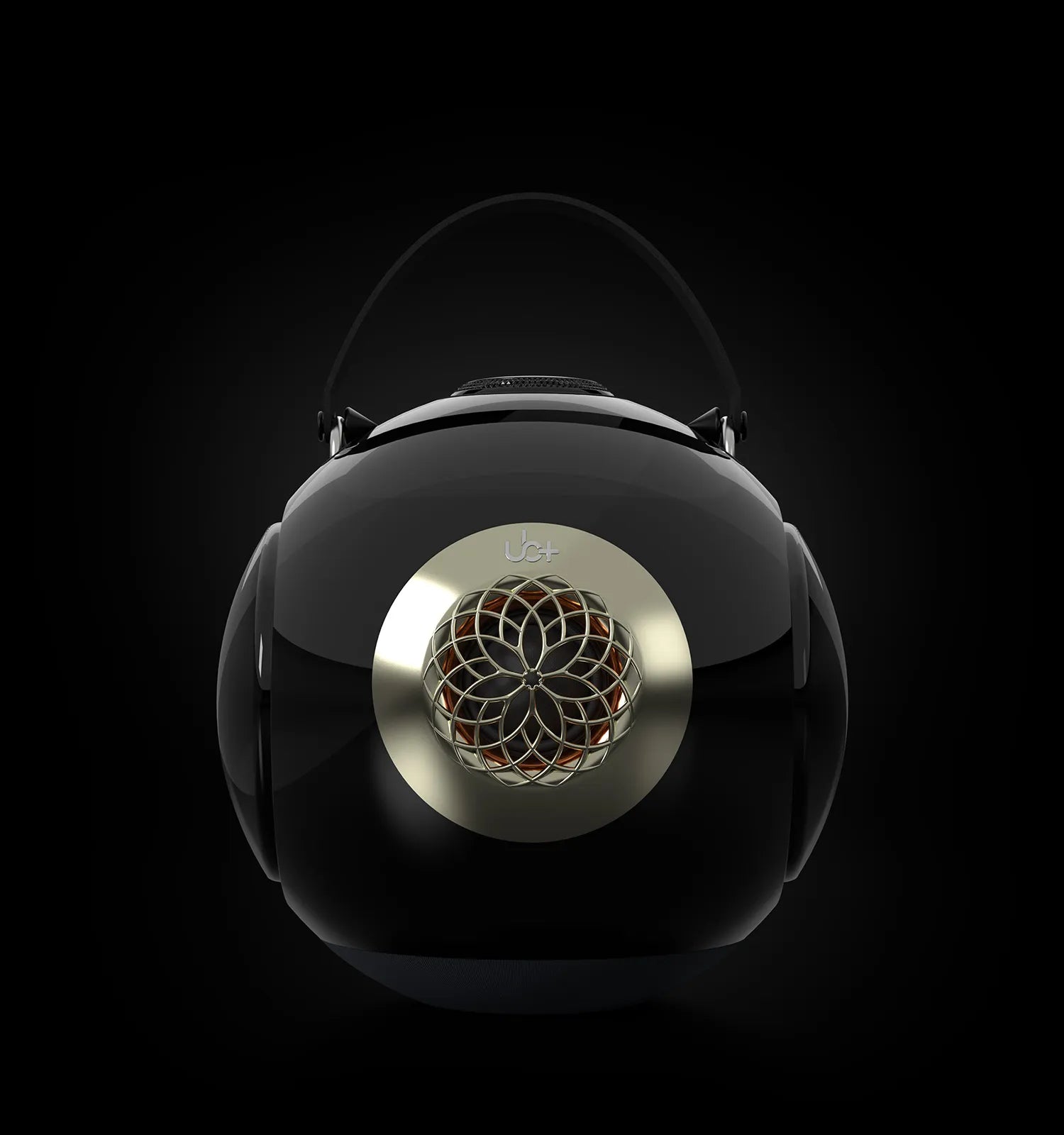
The UB+ dB1 DoubleBass approaches cabinet design from a fundamentally different direction.
Its patented spherical acoustic chamber is inspired by the Helmholtz Resonance principle, using the physics of a Helmholtz Resonator to manage internal air pressure.
Traditional rectangular cabinets contain parallel internal walls. These surfaces can encourage standing waves and unwanted internal reflections.
A spherical enclosure changes that geometry.
Instead of relying on parallel surfaces, the curved interior distributes air pressure more evenly throughout the chamber.
This helps reduce:
- Standing waves
- Internal resonance
- Phase distortion
It also contributes to improved harmonic reproduction, helping preserve the natural character of vocals and instruments.
This is an example of an engineering decision that can provide meaningful acoustic benefits rather than simply adding another marketing feature.
2. Driver Quality Is More Important Than Driver Size
A common budget-speaker marketing strategy is to emphasize driver diameter.
A larger driver sounds impressive on a specification sheet, but size alone doesn't determine performance.
Two drivers with the same diameter can perform very differently depending on:
- Magnet strength
- Voice-coil design
- Suspension
- Cone material
- Excursion capability
- Motor linearity
- Thermal management
A well-engineered smaller driver can outperform a larger but poorly controlled driver.
This is particularly important in compact speakers where every component must work efficiently.
What Premium Driver Engineering Looks Like
The UB+ dB1 incorporates a number of carefully engineered driver components:
- 90 mm oversized neodymium magnet
- 35 mm long-stroke voice coil
- 20 mm piston movement
- 18 mm extra-wide surround
- Aluminum shorting ring
Each element contributes to overall driver control.
The oversized neodymium magnet provides a strong magnetic motor.
The long-stroke voice coil supports significant controlled movement.
The extra-wide surround helps maintain the driver's mechanical stability during larger excursions.
The aluminum shorting ring helps improve motor behavior and reduce unwanted distortion.
The result is a driver system designed around controlled movement rather than simply maximizing physical size.
3. Bass Is Where Budget Shortcuts Become Obvious
Bass reproduction is one of the hardest challenges for compact speakers.
Low frequencies require significant air movement.
A small enclosure with a small driver naturally has physical limitations.
Budget manufacturers often address this with aggressive DSP.
The speaker detects low-frequency content and electronically boosts it to create the impression of deeper bass.
This approach isn't inherently bad.
DSP can be extremely useful.
But relying on DSP to compensate for fundamental acoustic limitations can create problems.
At high volumes, excessive bass enhancement can lead to:
- Distortion
- Reduced clarity
- Compressed dynamics
- Less natural vocals
- Masked musical detail
This is where mechanical acoustic engineering can provide a meaningful advantage.
Mechanical Bass Amplification vs. Artificial Bass Boost
The UB+ dB1 DoubleBass uses a patented acoustic architecture designed to generate bass mechanically.
At its center is a 4.5-inch downward-firing long-throw mid-bass driver.
The driver fires into the spherical chamber rather than directly outward.
As it moves, it creates air pressure inside the enclosure.
That pressure activates two large passive radiators positioned symmetrically on opposite sides of the sphere.
The combined passive radiator surface area is approximately 3.5× larger than the active woofer.
This large radiating area allows the system to move substantial amounts of air.
Instead of relying primarily on electronic bass enhancement, the design uses acoustic physics to amplify low-frequency output.
This is mechanical bass amplification.
Why the Dual Passive Radiators Matter
The passive radiators aren't simply there to make the speaker look different.
Their symmetrical placement serves an important mechanical purpose.
As one radiator moves in one direction, the opposing radiator moves in the opposite direction.
This produces a self-cancelling vibration architecture.
Rather than allowing the cabinet to shake significantly, opposing mechanical forces help cancel unwanted movement.
That means more of the driver's energy can be directed toward producing useful acoustic output.
This is a good example of a design choice where engineering can matter more than marketing specifications.
4. DSP Isn't the Enemy Poor Implementation Is
It's important not to misunderstand the role of DSP.
Digital Signal Processing is valuable in modern speakers.
It can monitor:
- Driver excursion
- Temperature
- Amplifier behavior
- Output levels
- System protection
It can also help optimize a speaker for its enclosure.
The difference is whether DSP is being used as a refinement tool or as a substitute for physical acoustic design.
The UB+ dB1's DSP continuously monitors system performance and protects the speaker, but it does not artificially create the bass.
The physical acoustic system remains the primary source of low-frequency performance.
That distinction is important when evaluating supposedly "audiophile" portable speakers.
5. Wireless Technology Can Also Reveal Budget Compromises
A speaker may have excellent drivers but poor wireless electronics.
Connection interruptions, slow pairing, and inefficient power management can quickly ruin an otherwise good listening experience.
Modern Bluetooth hardware helps address these problems.
The UB+ dB1 uses Bluetooth 5.3, providing modern wireless connectivity with improved efficiency and reliable everyday performance.
For most listeners, stable wireless operation is more valuable than having an enormous list of codecs that their devices don't actually support.
Codec Support: What Should Budget Buyers Care About?
Bluetooth codecs can become confusing quickly.
Common formats include:
- SBC
- AAC
- aptX
- aptX HD
- LDAC
Higher-bandwidth codecs can preserve more information under suitable conditions.
However, codec support isn't the only factor determining sound quality.
The source device must support the codec.
The speaker must support it.
The connection must remain stable.
And the speaker's acoustic system still has to reproduce the signal accurately.
A premium codec cannot fix a poorly engineered driver or resonant cabinet.
This is why codec support should be considered alongside, rather than above, physical speaker engineering.
Where Budget Compromises Are Actually Acceptable
Not every premium feature is necessary for every buyer.
This is where smart trade-offs become important.
For example, you may not need:
- Extremely high maximum volume
- Professional studio connectivity
- Multiple advanced wireless protocols
- Elaborate app features
- Exotic materials
- Huge battery capacity
If you primarily listen at moderate volume in a bedroom or office, spending extra for extreme output may provide very little practical benefit.
A smart buyer should spend money on the features that directly improve their listening experience.
False Savings: When Cheap Becomes Expensive
The lowest-priced speaker isn't necessarily the best financial decision.
Imagine buying a very inexpensive speaker that has:
- Weak bass
- Harsh treble
- Poor battery life
- Unstable Bluetooth
- Fragile construction
If you replace it after a year, the original saving may disappear.
A slightly more expensive speaker with better engineering could provide years of enjoyable use.
This is the difference between low price and good value.
Value considers the entire ownership period.
The Real Price-to-Performance Question
When comparing speakers, think about what you're paying for.
A useful framework is:
Value = Sound Quality + Engineering + Durability + Usability + Longevity ÷ Total Cost
This doesn't need to be calculated literally.
It's a way of thinking.
Ask:
What improves sound?
Prioritize driver quality, enclosure design, resonance control, and bass engineering.
What improves usability?
Consider Bluetooth reliability, battery life, controls, and portability.
What improves longevity?
Look for quality materials, robust components, and strong engineering.
What is mostly marketing?
Be cautious about specifications that don't translate into an audible or practical benefit.
Budget vs. Premium Speaker Engineering
|
Feature |
Typical Budget Speaker |
Better-Engineered Speaker |
|
Cabinet |
Basic plastic enclosure |
Advanced acoustic enclosure |
|
Internal Resonance |
Less controlled |
Carefully controlled |
|
Driver |
Entry-level |
Premium motor and suspension |
|
Bass |
Often DSP-heavy |
Mechanical + controlled DSP |
|
Passive Radiators |
Small/single |
Dual symmetrical design |
|
Bass Surface Area |
Limited |
3.5× larger radiator area than woofer |
|
Vibration Control |
Basic |
Self-cancelling architecture |
|
Wireless |
Basic Bluetooth |
Bluetooth 5.3 |
|
Frequency Response |
Often limited |
Approximately 40 Hz–20 kHz |
|
Output |
Moderate |
Approximately 93 dB SPL |
|
Long-Term Value |
Depends on construction |
Designed for extended use |
What Should You Actually Pay For?
If your goal is audiophile-quality sound without spending unnecessarily, prioritize these characteristics.
1. Driver Quality
A properly engineered driver is fundamental to accurate sound.
2. Acoustic Architecture
A carefully designed enclosure can reduce resonance and improve clarity.
3. Bass Engineering
Look for physical solutions rather than relying entirely on digital bass enhancement.
4. Balanced Tuning
The best speaker should make vocals, instruments, bass, and treble work together.
5. Build Quality
A speaker that sounds great but fails quickly isn't good value.
6. Wireless Reliability
Stable Bluetooth connectivity is essential for modern everyday listening.
7. Realistic Battery Life
Don't pay extra for a huge battery if you rarely listen for extended periods.
How to Identify Marketing Filler
Some specifications are useful. Others are mainly designed to attract attention.
Be cautious when a product focuses heavily on:
- Huge wattage claims without context
- Extreme bass percentages
- Unusually large driver numbers
- Artificially enhanced frequency claims
- Battery figures measured at extremely low volume
- Codec support without explaining compatibility
Specifications should provide context rather than replace it.
The best buying decision comes from understanding how the components work together.
Where the UB+ dB1 Fits
The UB+ dB1 DoubleBass is an example of how a speaker can pursue premium performance through physical acoustic engineering rather than simply increasing electronics.
Its spherical enclosure, inspired by Helmholtz Resonance, addresses internal acoustic behavior.
Its 4.5-inch downward-firing driver provides the primary acoustic energy.
Its dual symmetrical passive radiators provide approximately 3.5× the active woofer's surface area.
Its opposing radiator movement creates a self-cancelling vibration architecture.
Its premium driver components improve control and efficiency.
And its DSP monitors and protects the system without artificially generating the bass.
This approach illustrates an important principle for value-conscious buyers: the smartest speaker isn't necessarily the one with the longest specification list. It's the one where the specifications represent meaningful engineering.
A Practical Buying Checklist
Before choosing your next speaker, ask:
Sound
- Is the frequency response reasonably balanced?
- Are vocals clear?
- Is bass controlled rather than exaggerated?
- Are high frequencies smooth?
Engineering
- Is the driver properly engineered?
- Does the enclosure control resonance?
- Is bass generated mechanically or primarily through DSP?
Wireless
- Is Bluetooth technology modern?
- Is the connection stable?
- Does the speaker support the codecs your devices actually use?
Durability
- Are the materials appropriate for your lifestyle?
- Is the speaker built for regular use?
- Does the manufacturer provide meaningful support?
Value
- Are you paying for audible improvements?
- Are expensive features actually useful to you?
- Would a slightly higher initial price reduce replacement costs?
Frequently Asked Questions
Are budget audiophile speakers actually possible?
Yes. Modern manufacturing and acoustic engineering have made high-quality sound available at increasingly accessible prices. The key is understanding where compromises occur and choosing products that prioritize important components.
What is the most important component in a speaker?
There isn't one single component. Driver quality, cabinet design, amplifier performance, acoustic tuning, and resonance control all interact. A weakness in one area can limit the performance of the entire system.
Does a bigger driver always mean better bass?
No. Driver size is only one factor. Magnet strength, excursion, voice-coil design, cabinet volume, passive radiator area, and acoustic tuning all influence bass performance.
Is DSP bad for audiophile listening?
No. DSP can be extremely useful for protection, monitoring, and optimization. The concern is excessive processing used to compensate for weak physical acoustic design.
Can a Bluetooth speaker really provide high-end sound?
Yes. A well-engineered wireless speaker can provide excellent clarity, controlled bass, wide frequency response, and low distortion. The quality of the complete acoustic system matters more than whether the speaker is wireless.
Is a more expensive speaker always better?
No. Price doesn't guarantee performance. A premium price is worthwhile only when it represents meaningful improvements in engineering, materials, acoustic performance, durability, or usability.
Spend Smarter, Not Simply More
The search for budget audiophile speakers shouldn't be about finding the cheapest product that claims to sound premium. It's about understanding where manufacturers make compromises and deciding which compromises you can accept.
A budget speaker can deliver excellent value when it prioritizes the fundamentals: competent drivers, balanced tuning, reasonable enclosure design, stable wireless connectivity, and dependable construction.
At the same time, a premium speaker can justify its price when the additional investment goes toward genuine engineering improvements rather than cosmetic features or inflated specifications.
For buyers searching for the best value bluetooth speaker, the smartest approach is to evaluate the entire system.
Look beyond wattage.
Look beyond driver size.
Look beyond marketing language.
Instead, examine how the speaker creates sound.
The enclosure, driver, passive radiator system, vibration control, wireless electronics, and acoustic tuning all work together to determine the final listening experience.
And that's where the most meaningful differences between inexpensive and premium speakers become clear.
Smarter Engineering Creates Better Sound
The UB+ dB1 DoubleBass demonstrates how meaningful acoustic engineering can create premium performance without relying solely on electronic enhancement. Its patented spherical acoustic chamber inspired by the Helmholtz Resonance principle uses the physics of a Helmholtz Resonator to distribute internal air pressure evenly, reduce standing waves, minimize phase distortion, and improve harmonic reproduction.
At the center, a 4.5-inch downward-firing long-throw mid-bass driver works with dual symmetrical passive radiators whose combined surface area is approximately 3.5× larger than the active woofer. This architecture creates mechanical bass amplification, while the opposing radiators provide a self-cancelling vibration architecture that reduces unnecessary cabinet movement.
The system is supported by a 90 mm oversized neodymium magnet, 35 mm long-stroke voice coil, 20 mm piston movement, 18 mm extra-wide surround, and aluminum shorting ring. With approximately 40 Hz–20 kHz frequency response, 93 dB SPL, Bluetooth 5.3, and up to 20 hours of playback, the dB1 demonstrates how intelligent physical engineering can matter more than simply adding features.
Compare the UB+ lineup to find the speaker that best matches your listening habits, space, and performance expectations.
Explore premium finishes designed to complement modern spaces while showcasing the speaker's distinctive acoustic architecture.
Explore the latest product specifications, pricing, and availability directly from UB+.
Because getting high-end sound for less isn't about buying the cheapest speaker.
It's about paying for the engineering you can actually hear.



发表评论
此站点受 hCaptcha 保护,并且 hCaptcha 隐私政策和服务条款适用。