

Deep, satisfying bass is often what separates a “good” listening experience from a truly immersive one. It’s the weight behind a kick drum, the warmth under a piano note, the physical presence that makes music feel alive.
But here’s the common frustration:
You already own a speaker and it doesn’t quite deliver the bass you expected.
The typical advice?
“Buy a subwoofer.”
That works, but it also adds:
- extra cost
- more cables
- more space requirements
- more complexity
For many people especially those in apartments, bedrooms, or minimalist setups—that’s not a practical solution.
The better approach is to understand something most guides ignore:
Bass isn’t just about power. It’s about how sound interacts with space, air, and design.
This guide shows you how to get deeper, cleaner bass from your existing setup without adding a subwoofer using a mix of:
- placement strategies
- room acoustics
- speaker positioning
- and understanding how modern speaker design affects bass
If you’re searching for wireless speakers with good bass, or trying to get more from a smallest bass speaker, this is where real improvement begins.
Why Your Speaker Might Lack Bass (Even If It’s “Good”)
Before fixing the problem, it’s important to understand why bass feels weak.
Most people assume:
- “My speaker isn’t powerful enough.”
But the real reasons are often:
1. Poor Placement
2. Room Acoustics
3. Surface Interaction
4. Speaker Design Limitations
Even the best audiophile bluetooth speakers can sound thin if these factors are ignored.
Step 1: Use Walls to Your Advantage
Bass frequencies behave differently than high frequencies.
They:
- travel longer distances
- reflect more easily
- build up near boundaries
What to Do:
Place your speaker closer to a wall.
- 6–12 inches from the wall is a good starting point
- avoid placing it in the center of the room
Why It Works:
Walls reflect low frequencies, reinforcing bass.
This can make a noticeable difference even with a budget audiophile speaker.
Step 2: Corner Placement (But Use It Carefully)
Placing a speaker in a corner amplifies bass even more.
Benefits:
- maximum bass reinforcement
- stronger low-end presence
Risks:
- boomy or muddy sound
- loss of clarity
Best Approach:
- place near a corner, but not directly inside it
- leave a small gap from both walls
Step 3: Elevation Changes Everything
Many people place speakers directly on soft surfaces like beds or couches.
This absorbs bass energy.
Better Options:
- solid desks
- wooden shelves
- stable cabinets
Why It Works:
Hard surfaces reflect sound, improving bass response and clarity.
Step 4: Avoid Surface Vibration
If your speaker vibrates the surface it sits on:
- energy is lost
- bass becomes less efficient
Fix:
- use rubber feet or isolation pads
- place on stable surfaces
Advanced designs with self-cancelling vibration systems solve this internally, but external stability still matters.
Step 5: Adjust Listening Position
Sometimes the problem isn’t the speaker it’s where you are.
Bass can:
- cancel out in certain spots
- build up in others
Try This:
- move slightly forward or backward
- avoid sitting directly against a wall
Even small adjustments can dramatically change perceived bass.
Step 6: Understand Speaker Orientation
Traditional speakers are directional.
If they are not aimed correctly:
- bass and mids may feel weak
- sound loses impact
Solution:
- aim the speaker toward your listening area
- experiment with angles
Spherical speakers reduce this issue by offering more even dispersion.
Step 7: Optimize Room Acoustics
Your room is part of your sound system.
Soft Materials (Absorb Sound):
- carpets
- curtains
- bedding
Hard Materials (Reflect Sound):
- walls
- floors
- furniture
Balance Is Key:
Too much absorption = weak bass
Too much reflection = boomy bass
Common Bass Problems and Fixes
|
Problem |
Cause |
Solution |
|
Weak bass |
Speaker too far from walls |
Move closer to wall |
|
Boomy bass |
Corner overload |
Adjust distance from corner |
|
Thin sound |
Soft surface placement |
Use hard surface |
|
Rattling noise |
Surface vibration |
Stabilize base |
|
Inconsistent bass |
Listening position |
Adjust seating |
|
Directional loss |
Poor speaker angle |
Reposition speaker |
Why Small Speakers Struggle with Bass
If you’re using a compact or smallest bass speaker, physics becomes a limitation.
Bass requires:
- air movement
- enclosure volume
- controlled resonance
Small speakers often lack:
- internal space
- driver size
- air displacement capacity
This is why many rely on:
- digital bass boosting
- DSP enhancement
But this can lead to:
- distortion
- fatigue
- artificial sound
The Better Approach: Mechanical Bass Design
Instead of forcing bass digitally, better speakers use:
- air pressure
- enclosure design
- passive systems
This is how some best audiophile speakers achieve deeper bass without increasing size.
Helmholtz-Inspired Acoustic Chambers
One of the most effective approaches is based on the Helmholtz resonator principle.
This involves:
- trapping air in a chamber
- controlling how it moves
- reinforcing low frequencies naturally
In modern speakers:
- this is applied through enclosure design
- especially in spherical systems
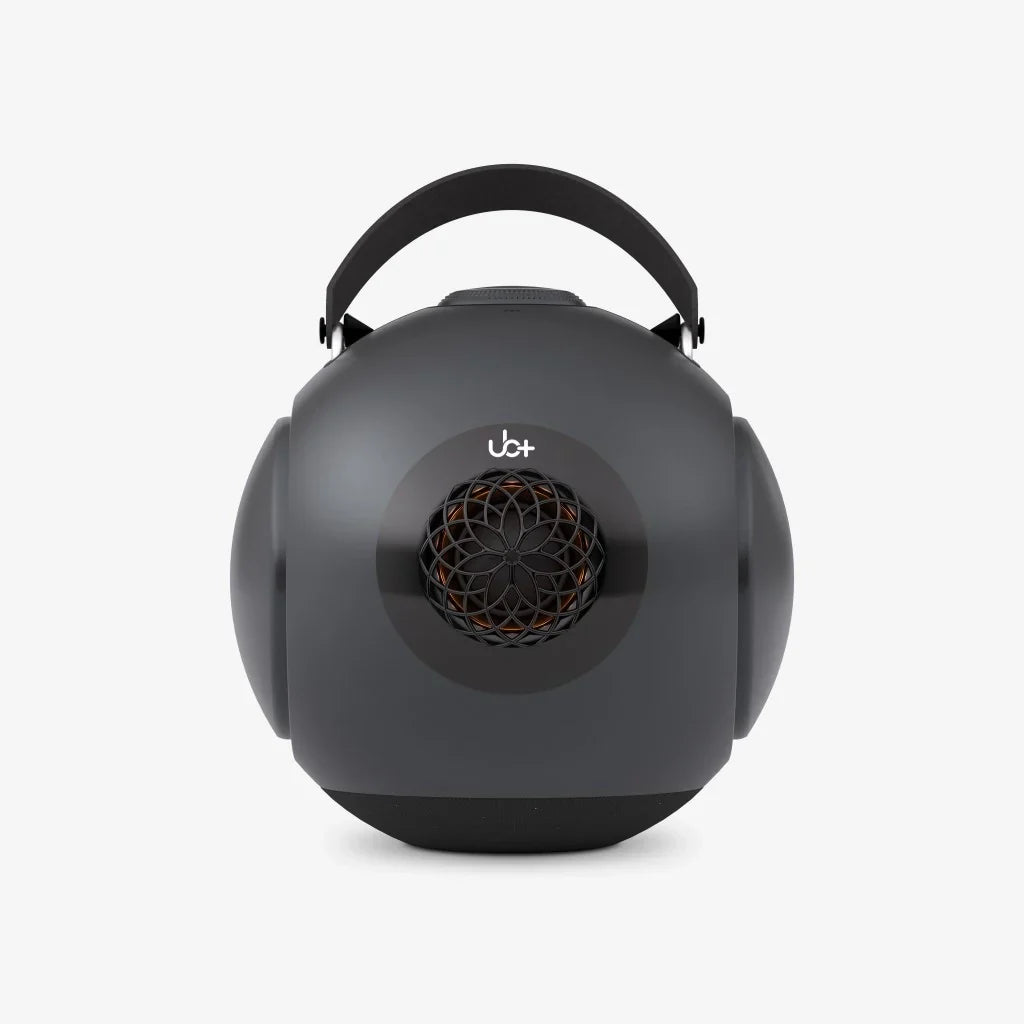
Why Spherical Enclosures Improve Bass
Unlike box speakers, spherical designs:
- eliminate parallel walls
- distribute pressure evenly
- reduce internal distortion
This creates:
- smoother bass
- cleaner mids
- more natural sound
Dual Passive Radiators: Bass Without Extra Power
Passive radiators are a key part of modern bass performance.
They:
- respond to internal air pressure
- extend low frequencies
- reduce strain on the main driver
Advanced Systems Use:
- dual symmetrical radiators
- opposite placement
This results in:
- vibration cancellation
- stable output
- efficient energy use
3.5× Air Movement: Why It Matters
Some advanced speakers increase effective air movement by:
- using larger radiator surfaces
- optimizing internal pressure
This allows:
- deeper bass
- better efficiency
- less distortion
Without needing:
- larger drivers
- more power
Downward-Firing Drivers: Letting Bass Expand Naturally
Another innovation is the downward-firing driver.
Instead of pushing sound outward:
- it energizes internal air
- pressure builds evenly
- sound expands naturally
This creates:
- fuller bass
- smoother dispersion
- less harshness
Traditional vs Advanced Bass Design
|
Feature |
Traditional Speaker |
Advanced Acoustic Design |
|
Bass Method |
DSP boost |
Mechanical resonance |
|
Air Movement |
Limited |
Enhanced (3.5× surface) |
|
Enclosure |
Rectangular |
Spherical |
|
Internal Pressure |
Uneven |
Even |
|
Vibration |
Noticeable |
Self-cancelling |
|
Sound Quality |
Artificial at high levels |
Natural and controlled |
When You Actually Need a Better Speaker
Let’s be clear:
Not every speaker can be “fixed” with placement alone.
If your speaker:
- lacks physical air movement
- relies heavily on DSP
- distorts at moderate volume
then upgrading may be necessary.
But the goal is not just “more power.”
It’s better design.
Choosing the Right Speaker for Bass
If you’re considering an upgrade, look for:
1. Efficient Air Movement
2. Controlled Resonance
3. Stable Enclosure
4. Balanced Tuning
These matter more than:
- wattage
- exaggerated specs
- marketing claims
Why “More Bass” Isn’t Always Better
Over-boosted bass leads to:
- fatigue
- loss of detail
- imbalance
The goal is not just louder bass it’s better bass.
That means:
- depth
- texture
- control
Real-World Listening: What You Should Notice
After applying these techniques, you should hear:
- fuller low frequencies
- clearer midrange
- more immersive sound
Bass should feel:
- present, not overwhelming
- supportive, not dominant
Final Thoughts: Let Physics Do the Work
Deep bass doesn’t come from forcing your speaker harder.
It comes from:
- smart placement
- understanding your room
- efficient acoustic design
Whether you’re using a compact setup or exploring best audiophile bluetooth speakers, the principles remain the same:
- move air efficiently
- control resonance
- avoid distortion
Modern speaker engineering from Helmholtz-inspired chambers to dual passive radiators and spherical enclosures shows that powerful bass doesn’t require bulky systems.
Improve Your Sound Today
→ Compare dB1 vs dB Mini
→ See color options
→ Check current price
Because better bass isn’t about adding more equipment.
It’s about making your existing system work smarter and choosing designs that let sound move naturally.


发表评论
此站点受 hCaptcha 保护,并且 hCaptcha 隐私政策和服务条款适用。