
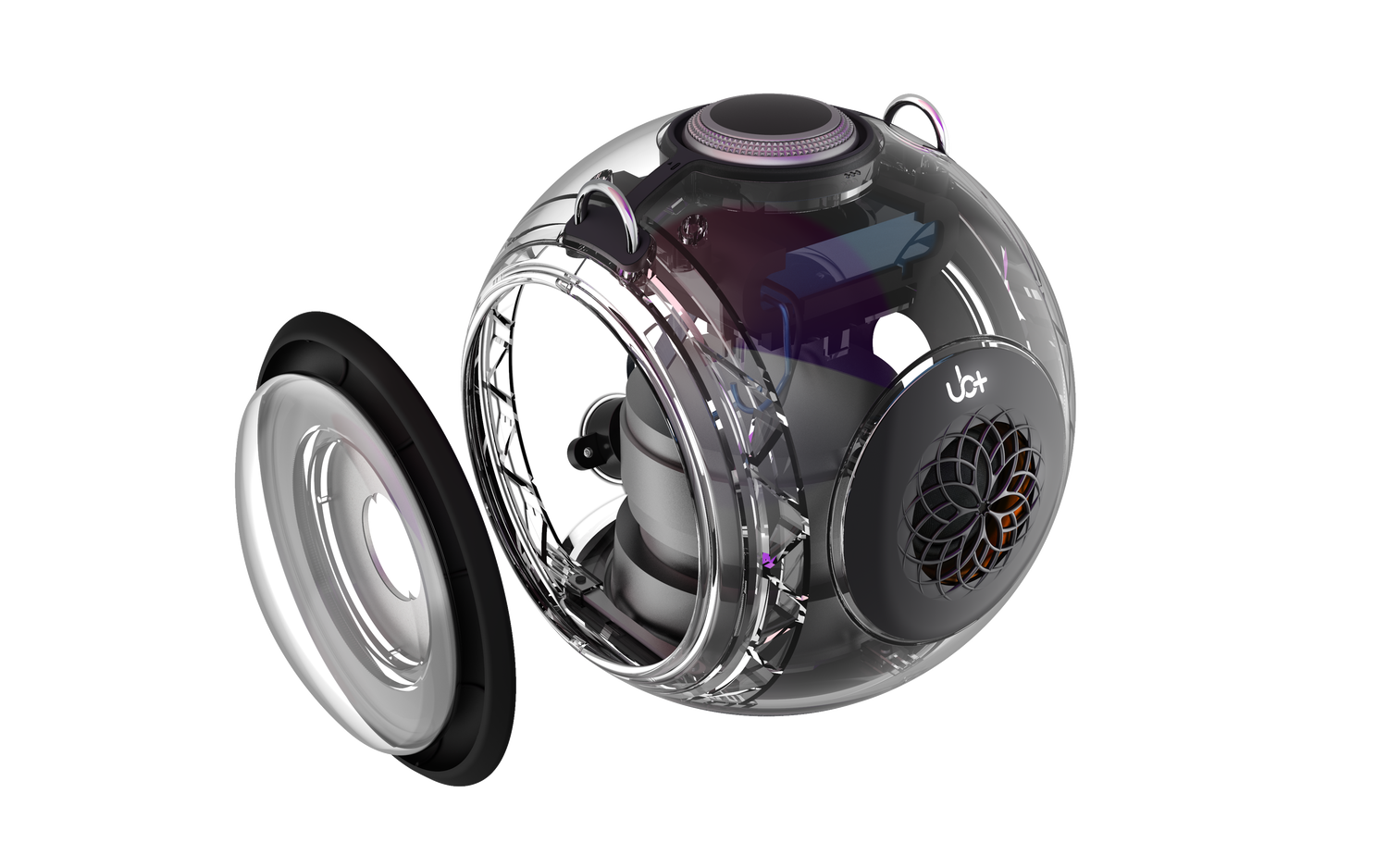
When people evaluate a speaker, they usually start with the obvious things: how loud it gets, how deep the bass feels, or how “clear” the vocals sound at first listen. But there is a layer beneath all of that which quietly determines everything you hear.
That layer is industrial design.
Not just how a speaker looks but how it is structurally built, how materials behave under vibration, how internal air moves, and how shape controls sound energy before it even reaches your ears.
If you’re searching for wireless speakers with good bass, comparing the best audiophile speakers, or even looking for a smallest bass speaker that still feels powerful, you’re already evaluating design without realizing it.
Because in modern audio engineering, sound quality is not only created by electronics.
It is shaped by design decisions made long before the first note plays.
Industrial Design: More Than Aesthetic Language
Most people think industrial design is about:
- style
- color
- minimalism
- branding
But in speaker engineering, industrial design is closer to acoustic architecture.
It determines:
- how air moves inside the enclosure
- how vibrations behave
- how frequencies reflect or cancel
- how efficiently energy becomes sound
A speaker is not just a product housing sound components.
It is an acoustic system.
And design defines how that system behaves.
Why Shape Is a Sound Engineering Tool
Shape is not decoration it is physics.
Every enclosure shape influences:
- resonance patterns
- internal reflections
- pressure distribution
- bass efficiency
Box Shapes: Predictable but Limited
Most traditional speakers use rectangular designs because they are:
- easy to manufacture
- stackable
- cost-efficient
But acoustically, they introduce problems:
- parallel walls create standing waves
- sound reflects unevenly
- internal pressure builds in corners
This often leads to:
- uneven bass response
- coloration of midrange
- distortion at higher volume
Even some budget audiophile speakers struggle with these limitations because of enclosure geometry alone.
Curved and Spherical Shapes: Controlled Energy
Curved designs especially spherical enclosures change everything.
A sphere:
- has no parallel surfaces
- distributes pressure evenly
- eliminates sharp reflection points
This leads to:
- smoother bass response
- more natural dispersion
- reduced internal resonance buildup
This is why many advanced bluetooth speaker bass sound designs now move toward rounded or spherical forms.
Materials: The Hidden Voice of a Speaker
Materials in speaker design are not passive they actively influence sound.
Every material has:
- density
- rigidity
- damping characteristics
Plastic Enclosures
Common in entry-level wireless speakers with good bass:
- lightweight
- inexpensive
- easy to mold
But they can:
- vibrate easily
- introduce resonance
- color sound at high volume
Metal and Composite Structures
Used in higher-end best audiophile bluetooth speakers:
- reduce unwanted vibration
- improve structural rigidity
- control resonance more effectively
But they must be carefully tuned too rigid, and sound becomes overly sharp.
Hybrid Acoustic Materials
Modern premium designs often combine:
- rigid outer shells
- damped internal structures
- engineered acoustic chambers
This balance allows:
- controlled resonance
- stable bass response
- cleaner sound reproduction
Internal Structure: Where Real Sound Quality Is Decided
What happens inside the speaker matters more than what you see outside.
Inside every speaker is a system of:
- air chambers
- drivers
- passive radiators
- structural supports
Industrial design determines how these elements interact.
Poor Internal Design
Leads to:
- air turbulence
- uneven pressure zones
- internal reflection chaos
Result:
- muddy bass
- unclear mids
- inconsistent output
Advanced Acoustic Architecture
Well-designed systems focus on:
- controlled airflow paths
- isolated vibration zones
- symmetrical pressure distribution
This creates:
- cleaner bass
- more accurate sound staging
- reduced distortion
Helmholtz Resonance and Design Integration
One of the most important acoustic principles in modern speaker design is the Helmholtz resonator effect.
This principle uses:
- enclosed air volume
- controlled openings or movement
- tuned resonance behavior
When integrated into industrial design, it allows:
- natural bass reinforcement
- improved efficiency in compact spaces
- reduced need for digital enhancement
This is especially important in the smallest bass speaker category, where physical size limits driver movement.
Passive Radiators: Design Meets Physics
Passive radiators are a perfect example of industrial design influencing sound.
They rely on:
- enclosure pressure
- mechanical motion
- structural tuning
But their effectiveness depends heavily on:
- placement symmetry
- enclosure rigidity
- internal airflow design
Symmetrical Design Advantage
When passive radiators are placed symmetrically:
- vibration cancels out
- energy is distributed evenly
- enclosure remains stable
This improves:
- bass clarity
- overall sound balance
- listening comfort
Design Impact on Sound Quality
|
Design Factor |
Poor Industrial Design |
Advanced Industrial Design |
|
Enclosure Shape |
Boxy, reflective |
Curved or spherical |
|
Material Behavior |
Resonant plastic |
Controlled composite |
|
Internal Airflow |
Chaotic |
Structured |
|
Bass Output |
Boosted but muddy |
Clean and controlled |
|
Distortion Level |
High at volume |
Low and stable |
|
Listening Experience |
Fatiguing |
Smooth and immersive |
Why Shape Directly Impacts Bass Quality
Bass is the most physically demanding frequency range.
It requires:
- large air movement
- controlled enclosure pressure
- structural stability
If industrial design fails:
- bass becomes bloated
- vibration increases
- clarity disappears
This is why shape matters more in wireless speakers with good bass than in almost any other audio category.
Why Some Small Speakers Sound Bigger Than They Are
The illusion of “big sound” from a small device comes from:
- efficient air displacement
- controlled resonance
- optimized internal structure
Not raw power.
Key Design Tricks:
- spherical or rounded enclosures
- dual passive radiator systems
- downward-firing driver layouts
- pressure-balanced chambers
These allow even compact systems to perform like larger ones.
This is how the smallest bass speaker designs can still feel powerful.
Industrial Design vs Audio Engineering: They Are the Same Thing
In modern premium audio, there is no separation between:
- industrial design
- acoustic engineering
They are the same system viewed from different angles.
Design controls:
- how sound is generated
- how it travels inside the speaker
- how it exits into the room
Engineering ensures:
- accuracy
- efficiency
- consistency
Why Audiophile Speakers Depend on Design
The best audiophile speakers are not defined only by components.
They are defined by:
- how those components are integrated
- how the enclosure behaves
- how resonance is managed
A well-designed enclosure can elevate average components.
A poor design can ruin excellent ones.
Budget vs Premium Design Philosophy
Budget Audiophile Speakers
Often prioritize:
- cost efficiency
- basic box structures
- simplified internal layout
Result:
- decent sound
- limited control at high volume
High-End Design Philosophy
Focuses on:
- acoustic precision
- structural engineering
- material science integration
Result:
- cleaner bass
- lower distortion
- more natural soundstage
The Role of Vibration Control
One of the most overlooked aspects of industrial design is vibration management.
Uncontrolled vibration leads to:
- sound coloration
- energy loss
- structural noise
Advanced designs use:
- symmetrical force cancellation
- reinforced enclosures
- isolated driver mounting
This ensures energy becomes sound not vibration.
Why Design Matters More in Wireless Speakers
Wireless speakers face additional challenges:
- compact size constraints
- battery integration
- heat management
This makes industrial design even more critical.
Because every limitation must be solved structurally not just electronically.
Listening Experience: The Final Output of Design
At the end of the chain, industrial design determines:
- how comfortable the sound feels
- how long you can listen without fatigue
- how naturally music fills a space
Good design disappears.
Bad design reminds you it exists through distortion and imbalance.
Final Thoughts: Sound Begins Before You Hear It
When people compare bluetooth speaker bass sound, they often focus on output.
But output is only the result.
The real source of sound quality is:
- shape
- structure
- material
- internal acoustic design
Industrial design is not decoration.
It is the foundation of performance.
And in modern audio systems especially in wireless speakers with good bass and compact designs the difference between average and exceptional sound is almost always decided long before the first note plays.
Explore Better-Designed Sound
→ Compare dB1 vs dB Mini
→ See color options
→ Check current price
Because great sound doesn’t start with volume.
It starts with design.



发表评论
此站点受 hCaptcha 保护,并且 hCaptcha 隐私政策和服务条款适用。