
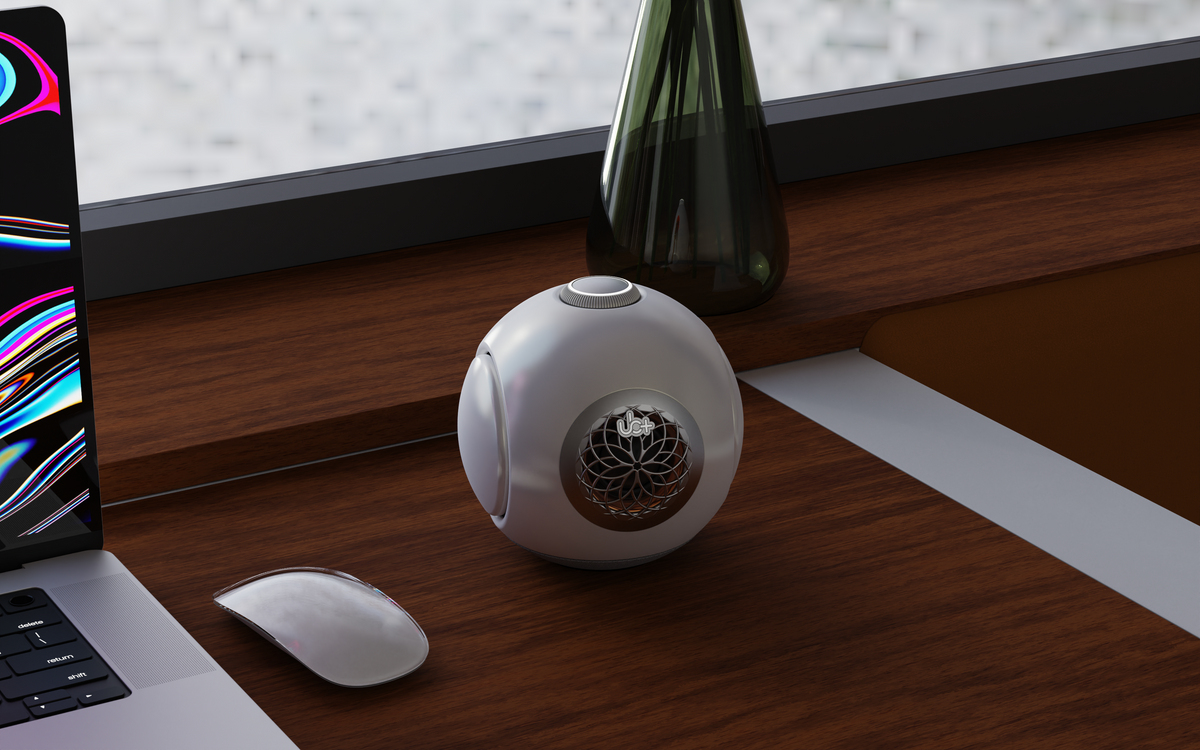
Finding the right speaker under $200 requires more than choosing a familiar brand or looking at the largest specifications on a product page. At this price level, buyers want a speaker that delivers satisfying bass, dependable battery performance, durable construction, and sound quality that works across different listening situations. The challenge is finding a product that balances these qualities instead of prioritizing one while compromising the others.
For UB+, the focus in this price category is the UB+ dB Mini. It provides a specific option for buyers who want to explore the brand without moving into its higher-priced models. Rather than comparing products that sit outside the budget, this guide examines the UB+ dB Mini against the practical expectations of the under-$200 Bluetooth speaker category.
This best bluetooth speaker under $200 guide looks closely at three important buying factors: bass performance, battery life, and build quality. It also covers room placement, everyday usability, connectivity, and the specifications worth checking before making a purchase.
What Should You Expect From a Bluetooth Speaker Under $200?

The $200 price category includes a wide range of portable and compact wireless speakers. Some prioritize portability, while others focus on stronger bass, longer playback, improved construction, or features designed for more demanding everyday use.
The challenge is that a speaker can perform well in one area without being equally strong in another. A compact model might be convenient to carry but have limited low-frequency output. Another speaker might produce a fuller sound but offer fewer portability advantages.
A sensible purchase begins by identifying which qualities matter most.
Bass Performance

Bass is one of the first things listeners notice when comparing speakers. It provides weight to music, supports rhythm, and contributes to the overall feeling of fullness.
However, bass quality should not be judged only by how much low-frequency energy a speaker produces. Excessive bass emphasis can make music sound muddy, while insufficient low-frequency response can leave tracks feeling thin.
Look for a speaker that balances:
- Low-frequency extension: How effectively it reproduces the lower notes in music.
- Bass control: Whether bass remains reasonably defined instead of becoming boomy.
- Midrange balance: Whether vocals, guitars, keyboards, and other central musical elements remain clear.
- Playback consistency: Whether the overall sound remains balanced as the volume changes.
- Genre flexibility: Whether it works with acoustic music, electronic tracks, hip-hop, rock, and other styles.
A good portable speaker should make music enjoyable without requiring listeners to compensate for an overly emphasized or weak frequency range.
Battery Life

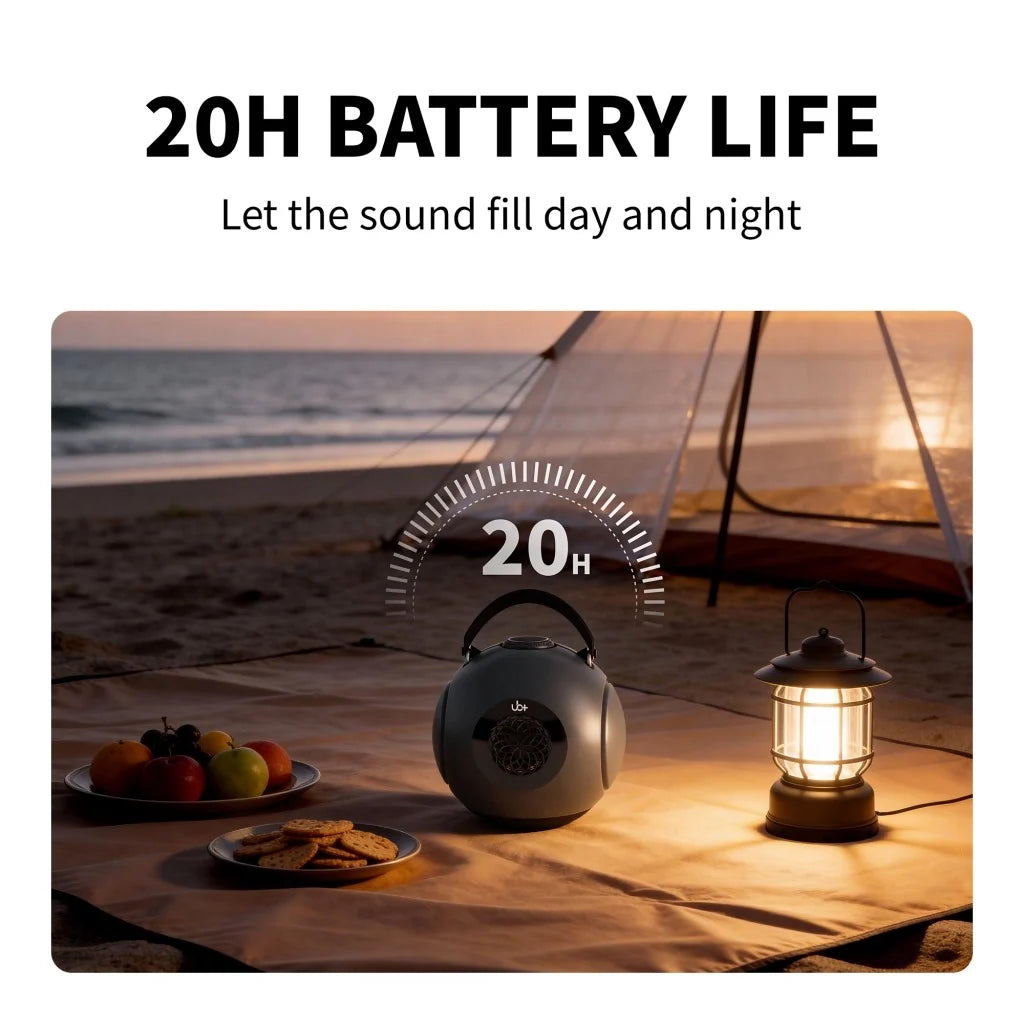
Battery performance directly affects how useful a portable speaker becomes. A model that needs frequent charging may be inconvenient for someone who regularly moves between rooms, travels, or listens throughout the day.
However, advertised playback time needs to be interpreted carefully. Manufacturers generally measure battery life under specific test conditions, and real-world performance can change with volume, content, wireless settings, and battery age.
Before buying, examine:
- The manufacturer's stated maximum playback time.
- Whether the stated figure is based on a particular volume level.
- Charging time and supported charging connections.
- Whether playback performance changes significantly at higher volume.
- Whether the speaker is intended mainly for occasional use or extended listening sessions.
Battery specifications should be treated as a practical guide rather than a guarantee that every user will achieve the same playback duration.
Build Quality
A portable speaker should be designed for regular use. Its exterior, controls, connections, and overall construction influence how well it fits into daily life.
A durable-feeling product should be comfortable to handle, stable when placed on a surface, and practical to operate. Buyers should also distinguish between an attractive exterior finish and documented protection against environmental exposure.
Important construction details include:
- The materials used for the enclosure.
- The quality and accessibility of buttons and controls.
- The protection provided around charging and connection ports.
- The stability of the speaker when positioned on a desk or shelf.
- Any officially documented water-resistance or dust-protection rating.
These details become especially important when a speaker will be carried between locations rather than kept permanently on one table.
UB+ dB Mini: A Focused Option for the Under-$200 Category

The UB+ dB Mini is the model to examine when looking at UB+ within this price tier. Instead of creating an artificial comparison between products at different price levels, it makes more sense to consider how this model fits the requirements of someone shopping below $200.
The buying decision should focus on what the product actually offers and whether those features match your listening habits.
For example, someone choosing a speaker for a bedroom or desktop setup may prioritize balanced sound, manageable dimensions, and straightforward connectivity. Someone who plans to use a speaker in several locations may care more about battery performance, handling, and overall construction.
When evaluating the UB+ dB Mini, consider these areas:
- Sound character: Review the available product information and, where possible, listen to different genres before deciding whether its sound suits your preferences.
- Bass expectations: Evaluate whether its documented performance matches the type of low-frequency response you enjoy.
- Everyday usability: Consider whether its controls and supported connections work with your regular devices.
- Portability: Check the official dimensions and weight to understand how easily it can fit into your intended setup.
- Power and battery: Review its published charging and playback information before relying on it for extended use.
- Exterior construction: Examine the available product images and material information to assess whether its design suits your environment.
The official UB+ dB Mini product page should be the reference point for current specifications, available finishes, and product details.
Bass Performance: What Makes a Compact Speaker Sound Full?

Bass reproduction is one of the most challenging aspects of compact speaker design. Low-frequency sound requires air movement, and the amount of air a speaker can move is influenced by its driver, enclosure, excursion capability, tuning, and available amplification.
This is why a compact speaker cannot be judged by its physical size alone. Two speakers with similar exterior dimensions can produce different results because their internal acoustic designs and electronic tuning may differ.
Why Small Speakers Can Struggle With Low Frequencies
Lower frequencies have longer wavelengths than higher frequencies. Reproducing them at useful listening levels requires an acoustic system capable of moving sufficient air while maintaining reasonable control.
A compact enclosure places physical constraints on the available internal volume. Designers must balance the driver, enclosure, amplification, and tuning to achieve the intended sound.
Several factors influence the result:
- Driver area: A driver's effective radiating area affects how much air it can move.
- Excursion: The driver's ability to move back and forth influences its potential output at lower frequencies.
- Enclosure volume: The internal space affects the acoustic behavior of the system.
- Tuning: The relationship between the driver, enclosure, and any additional acoustic components influences bass response.
- DSP: Digital signal processing can help shape frequency response and manage driver behavior, although it cannot remove the physical limitations of a small speaker.
The important distinction is between bass that sounds prominent and bass that remains controlled. A speaker may emphasize certain low frequencies to create an impression of greater impact, but that does not necessarily mean it reproduces the entire low-frequency range accurately.
For a deeper explanation, explore our guide to bass extension and speaker frequency response.
How to Evaluate Bass on the UB+ dB Mini

When assessing the UB+ dB Mini, use music that contains different types of low-frequency information.
A single electronic track is not enough to establish whether a speaker has balanced bass. Different recordings reveal different strengths and limitations.
Try listening to:
- Electronic music: Helps you assess sustained low-frequency energy and rhythmic impact.
- Hip-hop: Provides useful material for evaluating kick drums and bass lines.
- Rock: Helps determine whether bass instruments remain distinct from drums and guitars.
- Jazz: Allows you to hear whether acoustic bass retains natural definition.
- Acoustic recordings: Helps reveal whether lower notes remain integrated with vocals and other instruments.
Also compare the sound at several volume levels. A speaker that sounds impressive at moderate volume may behave differently when pushed harder.
Pay attention to whether bass remains controlled, whether vocals become masked, and whether the overall balance changes noticeably as the volume increases.
Bass Quantity Versus Bass Quality
A common mistake when shopping for a compact Bluetooth speaker is to treat strong bass as the only indicator of sound quality.
A more useful evaluation separates three characteristics:
|
Bass characteristic |
What it means |
What to listen for |
|
Bass extension |
How low the speaker can reproduce sound |
Whether lower musical notes are audible and meaningful |
|
Bass impact |
The perceived weight of low-frequency sounds |
Whether kick drums and bass notes have satisfying presence |
|
Bass control |
How clearly the low frequencies are reproduced |
Whether bass remains defined instead of becoming muddy |
These characteristics work together. A speaker with strong perceived impact may still lack deep extension, while a model with a more restrained presentation may provide better definition.
For the UB+ dB Mini, the most useful approach is to evaluate its actual sound rather than assume that its compact form or product positioning guarantees a particular bass profile.
Battery Life: How Much Playback Do You Really Need?
Battery life can determine whether a portable speaker becomes an everyday companion or remains an occasional-use device.
Someone who mainly listens to music at a desk may be comfortable charging a speaker frequently. A person who carries it around the home, uses it during long work sessions, or takes it outdoors may need a different level of battery convenience.
The right battery performance depends on how you use the product, not simply on the largest number shown in an advertisement.
Understanding Advertised Playback Time
Published playback figures are usually based on controlled conditions. Actual results may vary because several factors influence power consumption.
Volume level: Higher playback levels generally require more power from the amplifier and speaker system. Listening near maximum volume can reduce battery life compared with quieter use.
Music content: Different recordings place different demands on the audio system. Tracks with sustained bass and high average playback levels may affect power consumption differently from quieter material.
Wireless operation: The connected device, wireless connection, and other active functions may contribute to overall energy use.
Battery condition: Rechargeable batteries gradually lose capacity through normal use and aging. A speaker that has been used regularly for a long period may not deliver the same playback duration as a new unit.
When reviewing the UB+ dB Mini, look at the official battery information and understand the conditions attached to the published figure.
Battery Features Worth Checking
Before purchasing, consider the following:
- Rated playback time: Check the manufacturer's stated duration and testing conditions.
- Charging method: Confirm the supported charging connection and whether it works with your existing accessories.
- Charging duration: A longer charging time can become inconvenient if you regularly use the speaker throughout the day.
- Battery accessibility: Review the manufacturer's information about battery servicing or replacement, where applicable.
- Usage pattern: Estimate how many hours you normally listen between charging opportunities.
These considerations help turn battery specifications into a practical purchasing decision.
Battery Life for Different Listening Environments
|
Listening environment |
Important battery consideration |
|
Bedroom |
Convenient charging and enough playback for regular daily listening |
|
Home office |
Consistent operation across working sessions |
|
Living room |
Sufficient playback for evening entertainment and everyday music |
|
Travel |
Battery capacity, portability, and charging convenience |
|
Outdoor use |
Verified playback performance and any relevant environmental protection |
The UB+ dB Mini should be evaluated against the way you intend to use it. A published battery figure is useful, but the best purchase is one that fits your actual listening schedule.
Build Quality: What Should a Speaker Under $200 Offer?
Build quality is easy to overlook when buyers focus heavily on sound and battery specifications. However, a portable speaker is handled, moved, charged, and placed on different surfaces. Its construction affects everyday convenience and long-term ownership.
A product does not need to be extremely heavy or covered in metal to feel well made. Good construction is about how the materials, enclosure, controls, and connections work together.
Enclosure Materials and Structural Quality
The enclosure plays both a practical and an acoustic role. It houses the internal components, provides structural support, and forms part of the speaker's overall acoustic system.
When comparing products in this price category, consider:
- Whether the exterior feels stable and well assembled.
- Whether seams and joints appear consistently finished.
- Whether the speaker sits securely on common surfaces.
- Whether the material is appropriate for regular handling.
- Whether the enclosure shows signs of unnecessary movement or rattling during ordinary playback.
Material choice alone does not determine sound quality. The enclosure's design, construction, stiffness, and interaction with the internal components are also relevant.
Our article on what makes speaker materials important for sound explains why material selection should be considered alongside acoustic engineering.
Controls and Connectivity
Physical controls become important when you use a speaker frequently. Poorly positioned buttons, unclear indicators, or inconvenient connections can make everyday operation more frustrating than expected.
Before choosing the UB+ dB Mini, review its product information for the supported controls and connections.
Check whether you can:
- Adjust volume conveniently.
- Control playback without repeatedly reaching for your phone.
- Connect it to the devices you use regularly.
- Identify charging status easily.
- Access the charging port without awkward positioning.
These details may appear minor when comparing product photographs, but they can influence the overall experience after months of regular use.
Water Resistance and Everyday Protection
Not every portable speaker is designed for the same environments. A model intended for ordinary indoor listening may have different protection from one designed for outdoor or moisture-prone use.
If water resistance is important, check the manufacturer's officially stated IP rating.
Remember that different ratings indicate different levels of protection. For example, an IP water-resistance rating should not be interpreted as proof that a speaker can safely be submerged. Dust protection is also a separate consideration from water protection.
Do not assume that a product is waterproof simply because it is portable or intended for everyday use. Review the UB+ dB Mini product page for the protection information officially provided.
How the UB+ dB Mini Compares With Typical Under-$200 Speaker Priorities
Rather than comparing the UB+ dB Mini with UB+ models priced above this category, it is more useful to compare its role against the expectations buyers commonly bring to an under-$200 purchase.
The following table outlines what shoppers should evaluate when deciding whether a compact speaker meets their requirements.
|
Buying priority |
What buyers often want |
What to evaluate on the UB+ dB Mini |
|
Bass performance |
Full sound without excessive boominess |
Published acoustic information and real listening impressions |
|
Battery life |
Convenient playback between charges |
Official battery rating and stated test conditions |
|
Build quality |
Reliable construction for regular use |
Enclosure, controls, connections, and finish |
|
Portability |
A practical size for different locations |
Actual dimensions and product weight |
|
Connectivity |
Compatibility with everyday devices |
Supported wireless and wired connections |
|
Overall value |
A balanced combination of useful features |
How its verified features match your personal priorities |
This comparison is important because value is not determined by price alone. A speaker can be affordable but unsuitable for someone's needs, while a slightly different product configuration may offer more relevant features for a particular listener.
Who Should Consider This Model?
The UB+ dB Mini is worth evaluating if you are shopping within this budget and want to explore a UB+ option without moving into the brand's higher-priced models.
It may be a relevant consideration for buyers who:
- Want to compare compact wireless audio products below $200.
- Prefer evaluating a speaker's design and practical usability alongside its sound.
- Need a speaker for everyday music rather than a dedicated large-room audio system.
- Want to compare bass, battery performance, and construction before purchasing.
- Prefer reviewing an individual product's specifications instead of choosing based on general category claims.
The right decision still depends on the published specifications and whether the product meets your particular listening expectations.
Getting Better Sound From a Compact Bluetooth Speaker
Even a well-designed speaker can sound different depending on where it is positioned. Room acoustics, nearby walls, supporting surfaces, and listening distance influence the sound reaching your ears.
This means buyers should consider placement as part of the purchase decision rather than treating it as an afterthought.
Avoid Hiding the Speaker Behind Objects
Furniture, books, decorative pieces, and other objects can obstruct sound output. Place the speaker where its acoustic components have a clear path into the room.
A speaker positioned behind a computer monitor or inside a crowded shelf may not deliver the same listening experience as one placed in a more open location.
Experiment With Wall Distance
Low frequencies interact with nearby boundaries. Moving a speaker closer to a wall can change the perceived bass level, while placing it in a corner may create additional low-frequency reinforcement.
That reinforcement can sometimes make bass sound stronger but less balanced. Try different positions and listen for the placement that provides the clearest overall presentation.
Keep the Speaker Stable
A stable surface is important for everyday operation. Avoid placing the speaker near an edge, on an unstable stack of objects, or somewhere it could easily be knocked over.
If a surface vibrates noticeably, try a more stable location and assess whether the problem improves.
Match Placement With Your Listening Position
For desk listening, place the speaker where sound can reach your normal sitting position without obstruction. For a living room, consider the distance between the speaker and the main seating area.
Our guide to Bluetooth speaker placement for better bass and clarity offers additional practical advice for optimizing a home audio setup.
How to Decide Whether the UB+ dB Mini Is Worth Your Budget
The value of a speaker depends on how well it satisfies the needs that matter most to the buyer. A product with a long feature list is not necessarily the best purchase if its key characteristics do not match the intended use.
For an under-$200 decision, assess the UB+ dB Mini using three primary questions.
Does the Sound Suit Your Music?
Listen to a variety of recordings rather than relying on one demonstration track. Pay attention to bass definition, vocal clarity, instrument separation, and how the sound changes at different volume levels.
Consider whether the speaker's presentation suits your preferred genres and normal listening environment.
Does the Battery Support Your Routine?
Compare the advertised playback time with your expected listening schedule. Think about how frequently you can charge the speaker and whether you need it for long sessions away from a power outlet.
A battery specification is only valuable when it supports the way you actually use the product.
Does the Construction Match Your Expectations?
Review the product's materials, dimensions, weight, controls, charging connections, and official protection information.
A speaker that looks attractive should also be practical to handle and operate. Check the details that will affect your daily use, not just the features that look impressive in a product description.
A Simple Purchase Evaluation
|
Your priority |
What should influence the decision |
|
Music with noticeable bass |
Bass extension, impact, and control |
|
Long listening sessions |
Published playback time and charging convenience |
|
Frequent movement |
Product weight, dimensions, and handling |
|
Everyday home use |
Connectivity, controls, and placement flexibility |
|
Long-term ownership |
Construction, product support, and documented protection |
A careful review of these factors makes the buying process more objective. It also reduces the risk of choosing a speaker based on a single attractive specification.
Is the UB+ dB Mini a Good Option Under $200?
The under-$200 speaker category is about finding a practical balance between sound quality, battery performance, construction, and everyday convenience. Buyers should not expect one specification to determine the entire value of a product.
For UB+, the UB+ dB Mini is the model to consider in this price category. The brand's other models sit above the budget addressed in this guide, so comparing them here would make the buying decision less useful.
The final choice should come down to how well the product's verified features match your expectations.
- For bass: Review the available acoustic specifications and listen for controlled low-frequency performance rather than simply maximum bass emphasis.
- For battery: Compare the manufacturer's playback information with your normal listening schedule.
- For build: Examine the enclosure, controls, connections, and any officially documented protection rating.
- For everyday use: Consider whether the dimensions, connectivity, and placement options suit your environment.
- For value: Decide whether the combination of features justifies the price for the way you intend to use the speaker.
The most useful best bluetooth speaker under $200 buying decision is not necessarily the product with the longest specification list. It is the one that delivers the right balance for your listening habits, budget, and everyday environment.
Explore the UB+ dB Mini product page for its current pricing, specifications, and available details before purchasing.
Frequently Asked Questions
Is the UB+ dB Mini suitable for buyers with a $200 budget?
The UB+ dB Mini is the UB+ model to consider for this price category. Check its current listed price in your market before purchasing, as prices, taxes, shipping, and promotions can vary.
What should I prioritize when buying a Bluetooth speaker under $200?
Start with the qualities that directly affect your listening experience: bass performance, battery life, build quality, and connectivity. Also consider dimensions, weight, charging convenience, and any environmental protection rating that matters for your intended use.
Does stronger bass always mean better sound quality?
No. Strong bass can make music feel more powerful, but excessive emphasis may reduce clarity and mask vocals or instruments. Good bass should have an appropriate balance of extension, impact, and control.
How should I compare advertised battery life?
Look beyond the maximum playback figure. Check the manufacturer's testing conditions and consider how volume level, music content, wireless operation, and battery age can affect real-world performance.
What makes a compact Bluetooth speaker worth its price?
A compact speaker offers good value when its sound, construction, battery performance, connectivity, and usability match the buyer's requirements. The most expensive specification is not necessarily the most useful one; the overall balance matters more.



Hinterlasse einen Kommentar
Diese Website ist durch hCaptcha geschützt und es gelten die allgemeinen Geschäftsbedingungen und Datenschutzbestimmungen von hCaptcha.