
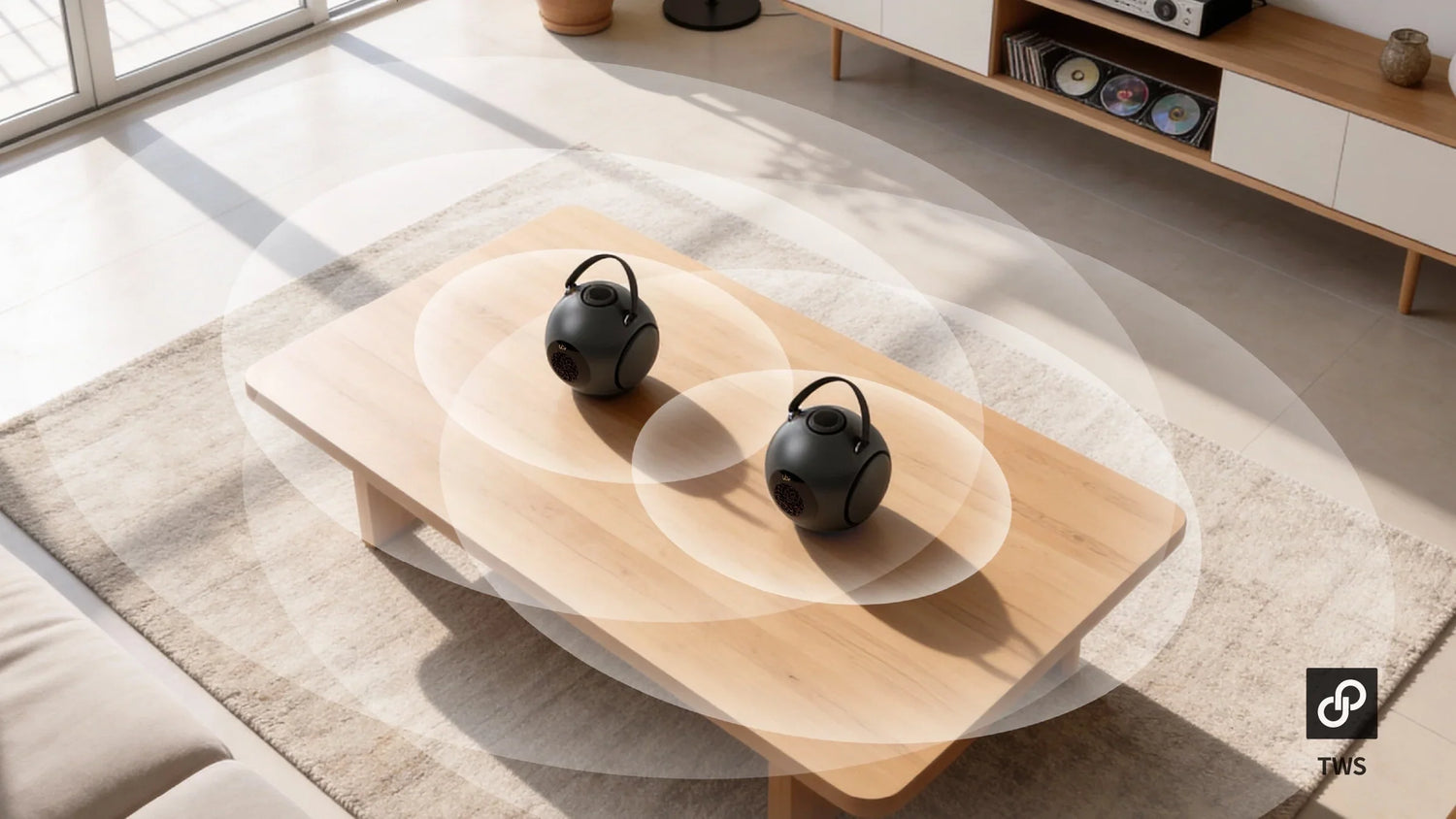
Has Wireless Audio Finally Caught Up With Wired Speakers?
For years, choosing between a wireless bluetooth speaker and a wired speaker seemed straightforward: wireless offered convenience, while wired audio offered better sound quality. That distinction is no longer as simple as it once was. Bluetooth technology, codecs, driver engineering, amplifier design, and acoustic architecture have all improved significantly, allowing modern wireless speakers to deliver remarkably detailed sound without a physical cable.
That doesn't mean wired and wireless systems are technically identical. Wired connections can still provide advantages in bandwidth, latency, and signal consistency, particularly in specialized high-resolution audio systems. But for everyday listening, the gap has become much smaller than many buyers assume.
If you're comparing a modern bluetooth speaker with a traditional wired system, the most important question is not simply which connection is "better." Instead, you should consider how the signal is transmitted, how much compression is involved, how the speaker itself is engineered, and whether the difference is actually noticeable in your listening environment.
Wired vs. Wireless: What Actually Changes?
The biggest difference between wired and Bluetooth audio happens before the signal reaches the speaker driver.
With a traditional wired connection, an analog or digital audio signal travels directly through a physical cable to the appropriate electronics.
Bluetooth works differently.
Your phone, tablet, or computer sends audio wirelessly to the speaker. The audio is encoded, transmitted, received, decoded, and then converted into a signal that the speaker's amplifier and drivers can reproduce.
This additional transmission process is why Bluetooth audio has historically involved compression and latency.
However, modern Bluetooth technology has become considerably more sophisticated.
Codec Compression Explained Simply
The word "codec" can make wireless audio seem unnecessarily complicated.
A codec is essentially a method for encoding and decoding digital audio so that it can be transmitted efficiently.
Bluetooth has limited wireless bandwidth compared with some wired digital connections. Compression allows the audio data to fit within that available bandwidth.
Common Bluetooth codecs include:
- SBC
- AAC
- aptX
- aptX HD
- LDAC
Different devices support different codecs, and the actual connection normally uses a codec supported by both the source device and the speaker.
Does Compression Mean Bad Sound?
Not necessarily.
Compression can remove or reduce some audio information, but modern codecs can preserve a surprisingly large amount of audible detail.
For casual listening, streaming music, podcasts, movies, and everyday entertainment, the difference between a good Bluetooth implementation and a wired connection may be difficult to notice.
The quality of the speaker itself can have a much larger effect on what you hear.
The Speaker Matters More Than the Connection
It's easy to become obsessed with codecs while overlooking the physical speaker.
A poorly engineered speaker connected through a perfect wired signal can still sound worse than a well-designed wireless speaker.
Why?
Because the final sound depends on much more than the transmission method.
Important factors include:
- Driver quality
- Amplifier design
- Cabinet construction
- Resonance control
- Bass system
- Frequency response
- Distortion
- Acoustic dispersion
This is where advanced speaker engineering becomes particularly important.
Why Cabinet Engineering Can Matter More Than Bluetooth
The enclosure surrounding a driver directly influences how that driver behaves.
Conventional rectangular cabinets contain parallel internal surfaces. These surfaces can create standing waves and unwanted resonances that interfere with accurate reproduction.
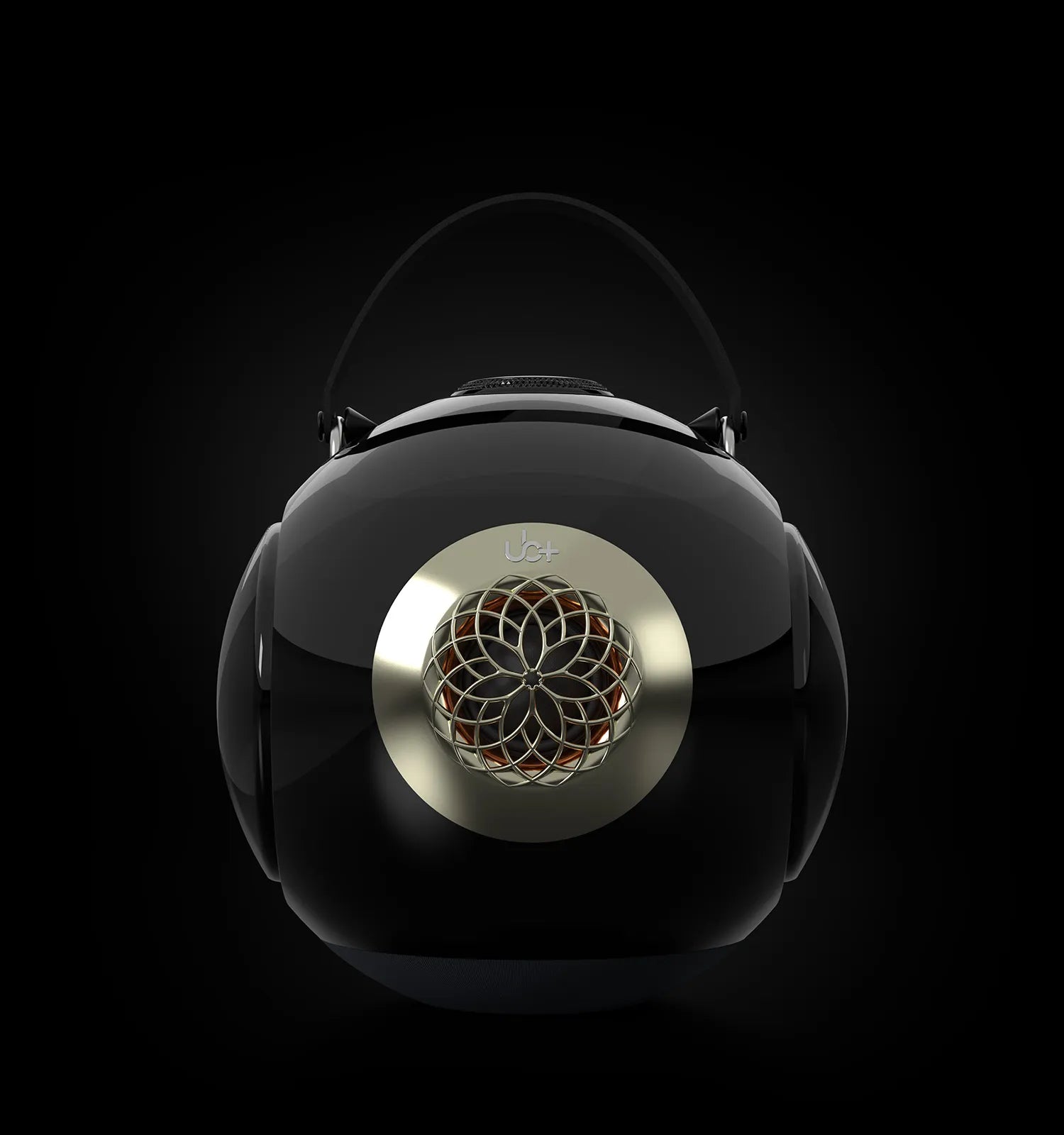
The UB+ dB1 DoubleBass approaches this problem with a patented spherical acoustic chamber inspired by the Helmholtz Resonance principle.
Inspired by the physics of the Helmholtz Resonator, the spherical enclosure distributes internal air pressure evenly while reducing standing waves inside the cabinet.
This helps minimize:
- Unwanted resonance
- Phase distortion
- Internal reflections
It also supports improved harmonic reproduction, helping vocals and instruments retain greater natural detail.
In other words, wireless transmission is only one part of the listening chain. The speaker's physical acoustic design can have a much greater influence on the final result.
Why the UB+ dB1 Takes a Different Approach to Bass
Bass reproduction is another area where the physical design of a speaker can be more important than the wireless connection.
Many compact Bluetooth speakers use DSP to create the impression of deeper bass.
Digital Signal Processing can be useful for monitoring and protecting a speaker, but aggressive electronic bass enhancement can introduce distortion or reduce musical detail.
The UB+ dB1 DoubleBass instead uses mechanical bass amplification.
At its center is a 4.5-inch downward-firing long-throw mid-bass driver that fires into the spherical acoustic chamber.
As the driver moves, air pressure builds evenly inside the sphere. This pressure activates two large symmetrical passive radiators positioned on opposite sides.
The combined passive radiator surface area is approximately 3.5× larger than the active woofer, allowing the system to move substantial amounts of air.
Because the passive radiators move in opposite directions, they also create a self-cancelling vibration architecture.
Rather than allowing significant energy to become cabinet vibration, the design directs more of that energy toward bass reproduction.
The onboard DSP continuously monitors system performance and protects the drivers, but it does not artificially generate the bass.
This is an important distinction when comparing wireless speakers: acoustic engineering can determine sound quality just as much as, and sometimes more than, the wireless transmission method.
Latency: The Real-World Difference
Another important difference between wired and wireless audio is latency.
Latency refers to the delay between an audio signal being generated and you hearing it.
With music playback, a small delay usually doesn't matter.
If you press play and the song starts a fraction of a second later, you probably won't notice.
But latency becomes more important for:
- Gaming
- Video editing
- Musical instrument monitoring
- Live performance
- Real-time recording
A wired connection generally has lower and more predictable latency.
Bluetooth technology has improved significantly, but wireless audio can still introduce additional processing and transmission delay.
For ordinary music listening, however, this difference is usually insignificant.
When Bluetooth Latency Actually Matters
Imagine watching a movie where dialogue appears slightly before the corresponding voice reaches your speaker.
That's an example of a synchronization problem.
Modern smartphones, computers, operating systems, apps, and wireless speakers can compensate for latency in many situations. Video platforms can buffer content and synchronize the audio and image.
Gaming is more demanding.
When you press a controller button and expect an immediate sound effect, even a small delay can become noticeable.
For competitive gaming or professional audio production, wired remains the safer choice.
For music, podcasts, streaming video, and general listening, wireless is usually much more convenient without creating a meaningful problem.
Bluetooth 5.3: Why Modern Wireless Speakers Are Different
Today's wireless speakers benefit from improvements in Bluetooth technology.
The UB+ dB1 uses Bluetooth 5.3, providing modern wireless connectivity designed for reliable everyday use.
Bluetooth 5.3 can contribute to:
- Stable connections
- Improved energy efficiency
- Faster device interaction
- Reliable everyday streaming
However, Bluetooth version alone doesn't guarantee excellent sound.
A speaker still needs a well-designed antenna, amplifier, drivers, enclosure, and acoustic system.
That's why it's better to evaluate the complete product rather than choosing based on one specification.
How Much Has Wireless Closed the Gap?
For everyday listening, wireless audio has closed the gap considerably.
A modern Bluetooth speaker can deliver:
- Clear vocals
- Detailed midrange
- Controlled bass
- Smooth treble
- Wide sound dispersion
- Consistent wireless playback
The remaining difference becomes more important as the listening application becomes more demanding.
Wired Still Has an Advantage When:
- You need extremely low latency.
- You work with professional audio.
- You require uncompressed or lossless transmission through a specific digital path.
- You use high-resolution studio equipment.
- You need a predictable physical connection.
Wireless Is Extremely Practical When:
- You listen to music casually.
- You move around your home.
- You travel frequently.
- You listen outdoors.
- You stream from smartphones and tablets.
- You value convenience and minimal cables.
The right choice therefore depends on how you listen rather than on a simple "wired is better" or "wireless is better" argument.
Wired vs. Wireless: Quick Comparison
|
Feature |
Wired Speaker |
Wireless Bluetooth Speaker |
|
Physical Connection |
Required |
Not required |
|
Convenience |
Lower |
High |
|
Mobility |
Limited |
Excellent |
|
Compression |
Can be avoided depending on connection |
Codec-dependent |
|
Latency |
Very low |
Generally higher |
|
Music Listening |
Excellent |
Excellent on well-engineered systems |
|
Gaming |
Excellent |
Depends on latency |
|
Professional Audio |
Preferred |
Usually less suitable |
|
Outdoor Use |
Less convenient |
Excellent |
|
Cable Management |
Required |
Minimal |
The important takeaway is that wireless technology is no longer automatically synonymous with poor sound quality.
What to Look for in a High-Quality Wireless Speaker
When comparing a wireless bluetooth speaker, don't judge it solely by codec support.
Look for the complete acoustic system.
1. Quality Drivers
Premium drivers provide better control and lower distortion.
The UB+ dB1 uses a 90 mm oversized neodymium magnet, 35 mm long-stroke voice coil, 20 mm piston movement, 18 mm extra-wide surround, and aluminum shorting ring.
2. Intelligent Enclosure Design
The cabinet should control resonance rather than introduce additional coloration.
A spherical acoustic chamber inspired by Helmholtz Resonance can reduce standing waves and support cleaner reproduction.
3. Controlled Bass
Powerful bass is valuable, but it should remain controlled.
Mechanical bass amplification through passive radiators can provide a more physical solution than simply increasing bass through DSP.
4. Modern Wireless Connectivity
Bluetooth 5.3 provides a strong foundation for reliable everyday wireless playback.
5. Balanced Sound
A speaker should reproduce the entire frequency range naturally rather than making one part of the spectrum dominate.
Can You Actually Hear the Difference Between Wired and Wireless?
The technical differences between wired and wireless audio are real, but technical superiority doesn't always translate into an obvious difference during everyday listening.
A wired connection can provide a direct signal path with extremely low latency and, depending on the source and connection type, support lossless or high-resolution audio without Bluetooth transmission compression.
A wireless bluetooth speaker, however, adds convenience without necessarily sacrificing the qualities most listeners care about: clarity, balanced sound, controlled bass, and enjoyable long-term listening.
For most people, the quality of the speaker's acoustic engineering matters more than whether the signal arrives through a cable.
Codec Support: What Really Matters?
Bluetooth codecs can sound complicated, but the basic concept is simple.
A codec compresses audio data so it can travel efficiently over a wireless connection. The receiving speaker then decodes that information before sending it through the amplifier and drivers.
Different codecs use different approaches to compression and transmission.
Common examples include:
- SBC
- AAC
- aptX
- aptX HD
- LDAC
Higher-performance codecs can transmit more audio information under suitable conditions, but codec support alone doesn't guarantee better sound.
Your source device and speaker must support the same codec, and the actual connection may depend on the capabilities of both devices.
More importantly, the acoustic performance of the speaker itself remains critical.
A premium driver system and carefully engineered enclosure can make a much larger audible difference than moving from one competent codec to another.
Does Lossy Bluetooth Always Sound Worse?
Not necessarily.
Lossy compression means that some information is removed from the original audio signal to reduce the amount of data being transmitted.
However, modern codecs are designed to remove information strategically, aiming to minimize audible differences.
For ordinary listening through a portable or home Bluetooth speaker, the theoretical loss of information may be much less important than:
- Speaker distortion
- Room acoustics
- Listening distance
- Background noise
- Driver quality
- Frequency response
If you're listening outdoors, for example, environmental noise may have a much greater effect on what you hear than subtle codec differences.
This is why choosing a well-engineered speaker is often more valuable than obsessing over codec specifications.
Latency: When Wired Still Wins
Latency remains one of the clearest technical advantages of wired audio.
A wired connection can deliver audio with extremely little delay.
Bluetooth requires additional stages:
Source → Encoding → Wireless Transmission → Decoding → Amplification → Driver
Each stage can contribute some delay.
For music playback, this is rarely a concern.
For other applications, it can matter considerably.
Gaming
Competitive gamers may notice delayed sound effects when using Bluetooth.
Music Production
Musicians monitoring their own performance need extremely low latency.
Live Performance
Performers cannot tolerate noticeable delays between playing an instrument and hearing the resulting audio.
Video
Bluetooth latency can potentially create synchronization problems, although many modern devices and applications compensate automatically.
For these applications, wired remains the safer option.
Wireless for Everyday Music Listening
For ordinary listening, the advantages of wireless are difficult to ignore.
A bluetooth speaker allows you to move freely without worrying about cable length.
You can:
- Move from room to room
- Take music outdoors
- Travel with your speaker
- Connect from a smartphone
- Stream from a tablet
- Work from different locations
This convenience changes how people actually use their audio systems.
A theoretically superior wired system isn't particularly useful if you don't want to use it because of cables and setup complexity.
Acoustic Engineering Can Matter More Than the Connection
One of the most important lessons when comparing wired and wireless speakers is that signal transmission is only one part of the audio chain.
The physical speaker ultimately converts an electrical signal into sound.
That means the driver and enclosure have enormous influence over the final result.
The UB+ dB1 DoubleBass uses a patented spherical acoustic chamber inspired by the Helmholtz Resonance principle.
Inspired by the physics of a Helmholtz Resonator, the spherical enclosure distributes internal air pressure evenly and reduces the standing waves commonly associated with traditional rectangular cabinets.
This helps minimize:
- Internal resonance
- Phase distortion
- Unwanted coloration
It also supports improved harmonic reproduction, helping preserve natural detail across the audible frequency range.
This approach demonstrates why acoustic engineering remains essential regardless of whether the audio signal arrives through a cable or Bluetooth.
Mechanical Bass Instead of Artificial Bass
Low-frequency performance is another area where speaker design can have a greater influence than connection type.
Many compact wireless speakers use DSP to boost bass electronically.
The UB+ dB1 DoubleBass uses a physical acoustic approach instead.
Its 4.5-inch downward-firing long-throw mid-bass driver fires into the spherical chamber.
As the driver moves, air pressure builds evenly inside the enclosure. This pressure activates dual symmetrical passive radiators positioned on opposite sides.
The combined passive radiator surface area is approximately 3.5× larger than the active woofer.
This architecture allows the speaker to move more air and create mechanical bass amplification without depending on artificial DSP-generated bass.
The passive radiators also move in opposite directions, creating a self-cancelling vibration architecture that reduces unwanted cabinet movement.
The onboard DSP monitors system performance and protects the drivers, but it does not artificially create the bass.
Why Premium Components Matter
A wireless connection cannot compensate for poor driver engineering.
The UB+ dB1 incorporates:
- 90 mm oversized neodymium magnet
- 35 mm long-stroke voice coil
- 20 mm piston movement
- 18 mm extra-wide surround
- Aluminum shorting ring
These components are designed to maintain precise driver movement and reduce distortion.
The result is approximately:
- 40 Hz–20 kHz frequency response
- 93 dB SPL
- Bluetooth 5.3 connectivity
- Up to 20 hours of battery life
This combination illustrates an important principle: wireless convenience doesn't have to mean compromising acoustic performance.
Wired vs. Wireless in Different Listening Situations
|
Listening Situation |
Wired |
Wireless |
|
Casual Music |
Excellent |
Excellent |
|
Outdoor Listening |
Less Convenient |
Excellent |
|
Travel |
Less Practical |
Excellent |
|
Home Background Music |
Excellent |
Excellent |
|
Gaming |
Excellent |
Good, depending on latency |
|
Professional Recording |
Excellent |
Less Suitable |
|
Live Performance |
Excellent |
Usually Not Preferred |
|
Remote Work |
Excellent |
Excellent |
|
Podcasts |
Excellent |
Excellent |
|
High-End Critical Listening |
Excellent |
Excellent on well-engineered systems |
The right choice depends on your priorities.
When Should You Choose Wired?
A wired speaker or audio system makes the most sense when you prioritize technical performance above convenience.
Choose wired when:
- Ultra-low latency is essential.
- You're working with professional audio.
- You need a fixed listening setup.
- You require a specific lossless digital connection.
- You regularly perform critical listening.
For studio monitoring and professional production, wired remains the standard for good reason.
When Should You Choose Wireless?
Wireless makes more sense when flexibility is part of your listening experience.
Choose a wireless speaker when:
- You want a clean, cable-free setup.
- You move your speaker frequently.
- You travel.
- You listen outdoors.
- You primarily stream from mobile devices.
- You want simple everyday operation.
For most home listeners, travelers, and casual audiophiles, the convenience of wireless can outweigh the relatively small technical limitations.
Don't Ignore the Entire Signal Chain
One important point is often overlooked: the weakest component in an audio system can limit the overall experience.
Your listening chain may look like:
Streaming Service → Smartphone → Bluetooth Codec → Wireless Connection → Speaker Electronics → Driver → Acoustic Chamber → Room
Every stage contributes to the final sound.
A premium Bluetooth speaker cannot turn a poor recording into an excellent one.
Likewise, an expensive wired connection cannot fix a poorly designed speaker cabinet.
This is why buyers should evaluate the complete system rather than focusing on one specification.
A Practical Wireless Speaker Buying Checklist
Before purchasing a wireless bluetooth speaker, consider these factors:
1. Sound Balance
Look for controlled bass, natural vocals, clear mids, and smooth treble.
2. Driver Engineering
Premium magnets, long-throw voice coils, and accurate suspension systems can significantly improve performance.
3. Cabinet Architecture
Look for designs that control resonance and standing waves rather than simply focusing on appearance.
4. Bass Technology
Mechanical acoustic solutions can provide controlled low frequencies without excessive DSP enhancement.
5. Bluetooth Technology
Modern Bluetooth hardware helps provide reliable everyday connections.
6. Battery Life
Choose realistic battery performance that matches how you actually use the speaker.
7. Latency
If you're primarily listening to music, latency is rarely important. If you're gaming or producing music, it becomes much more significant.
8. Long-Term Engineering
Premium materials and carefully designed components can provide greater value over years of ownership.
Frequently Asked Questions
Is wired audio still better than Bluetooth?
Technically, wired connections can offer lower latency and avoid Bluetooth transmission compression. However, a well-engineered Bluetooth speaker can deliver excellent real-world sound quality for everyday music listening.
Can Bluetooth speakers produce audiophile-quality sound?
Yes. Modern drivers, acoustic chambers, amplifiers, and wireless technology allow premium Bluetooth speakers to deliver highly detailed and balanced audio.
Does LDAC automatically sound better than SBC?
Not automatically. Codec performance depends on the source device, speaker implementation, connection conditions, and the quality of the speaker itself.
Is Bluetooth latency noticeable when listening to music?
Usually not. Latency becomes much more important for gaming, music production, live monitoring, and applications requiring precise audio synchronization.
Why does cabinet design matter for a wireless speaker?
The enclosure affects resonance, standing waves, bass response, phase behavior, and harmonic reproduction. Good acoustic architecture can therefore have a major effect on perceived sound quality.
Conclusion
The sound-quality gap between wired and wireless audio hasn't completely disappeared, but it has become far less important for everyday listening.
Wired systems still have clear technical advantages for professional applications, ultra-low-latency situations, and specialized high-resolution setups. But for music, podcasts, travel, home listening, and outdoor entertainment, a modern bluetooth speaker can deliver excellent sound while providing the freedom that cables cannot.
The most important lesson is simple: don't judge a speaker by its connection method alone.
Look at the drivers, acoustic architecture, bass system, wireless implementation, and overall engineering. A well-designed wireless speaker can outperform a poorly designed wired speaker because the physical system producing the sound matters enormously.
Smarter Engineering Creates Better Sound
The UB+ dB1 DoubleBass demonstrates why advanced acoustic engineering remains important even in a wireless world. Its patented Helmholtz Resonance-inspired spherical acoustic chamber, based on the principles of the Helmholtz Resonator, distributes internal air pressure evenly to reduce standing waves, minimize phase distortion, and improve harmonic reproduction.
Its 4.5-inch downward-firing mid-bass driver works with dual symmetrical passive radiators whose combined surface area is approximately 3.5× larger than the active woofer. This patented architecture creates mechanical bass amplification while the opposing radiators provide a self-cancelling vibration architecture, directing energy toward controlled bass rather than unnecessary cabinet movement.
The system is supported by a 90 mm oversized neodymium magnet, 35 mm long-stroke voice coil, 20 mm piston movement, 18 mm extra-wide surround, and aluminum shorting ring, along with approximately 40 Hz–20 kHz frequency response, 93 dB SPL, Bluetooth 5.3, and up to 20 hours of battery life.
Compare UB+'s speakers to find the right balance of portability, acoustic performance, and everyday usability.
Explore premium finishes that combine distinctive industrial design with advanced acoustic engineering.
Explore current specifications, pricing, and availability directly from UB+.
Because wireless doesn't have to mean compromised.
The right speaker combines freedom from cables with engineering designed to move sound naturally.


Hinterlasse einen Kommentar
Diese Website ist durch hCaptcha geschützt und es gelten die allgemeinen Geschäftsbedingungen und Datenschutzbestimmungen von hCaptcha.