
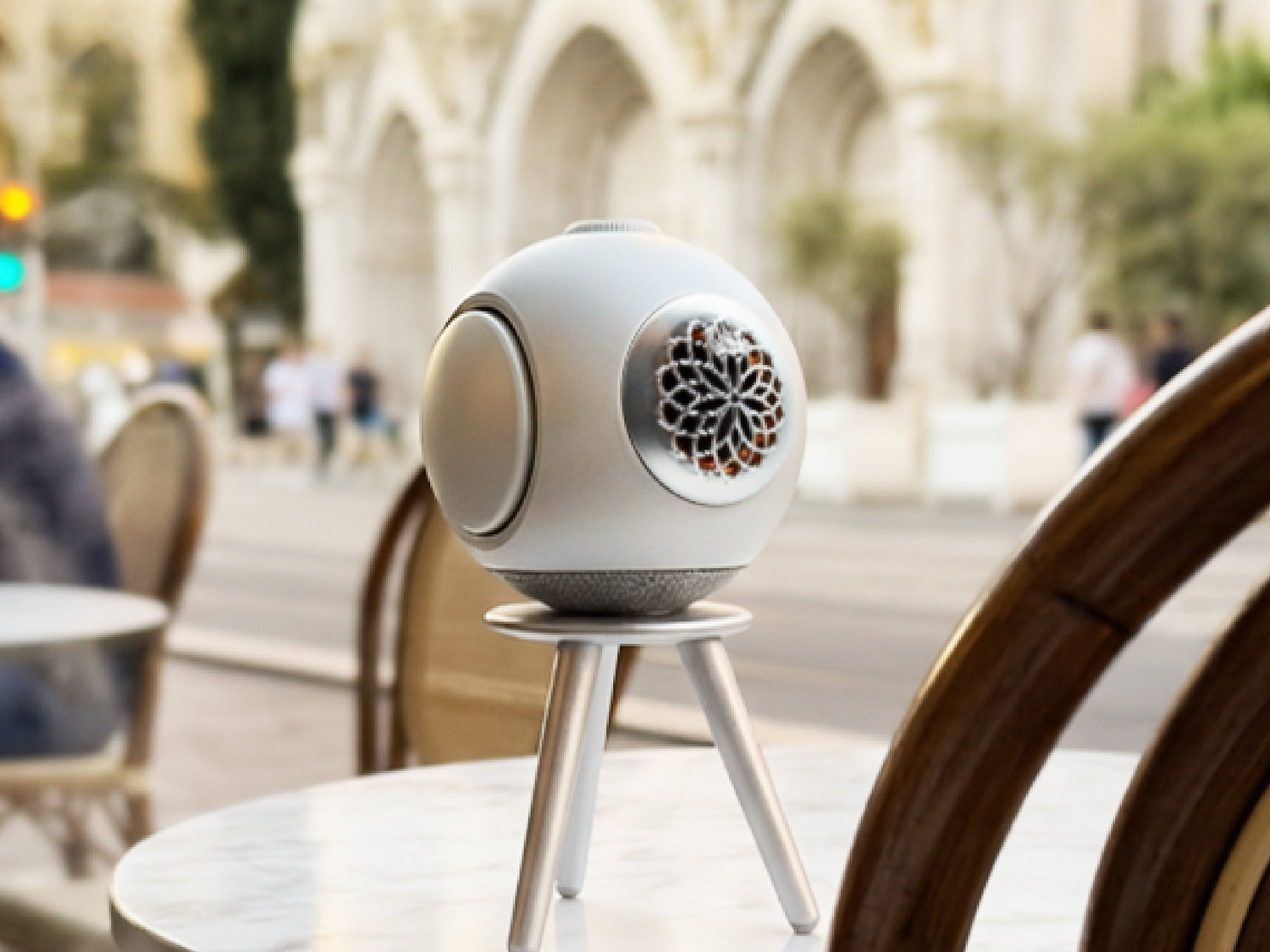
A bluetooth speaker with 2 year warranty gives buyers more than an extended return window; it provides a measurable indication of how confidently a manufacturer stands behind the product after purchase. For a speaker expected to handle repeated charging, wireless use, driver movement, vibration, transport, and changing listening environments, warranty coverage deserves the same attention as battery life, acoustic performance, and connectivity.
A warranty does not automatically prove that a speaker is better engineered. The useful question is what the warranty covers, what exclusions apply, who provides the support, and whether the product's construction justifies long-term ownership.
What a Two-Year Warranty Actually Tells You
A two-year warranty creates a defined period during which the manufacturer accepts responsibility for eligible manufacturing defects under its warranty terms.
For a Bluetooth speaker, that matters because several components experience repeated mechanical and electrical stress:
- Speaker drivers move continuously during playback.
- Passive radiators undergo repeated excursion.
- Batteries experience charging and discharge cycles.
- Amplifier electronics generate heat during operation.
- Bluetooth and control electronics operate whenever the speaker is in use.
- Physical enclosures experience handling, transport, and vibration.
A longer warranty therefore gives the buyer additional protection against qualifying failures that may emerge after the initial ownership period.
It is not proof that every component will last exactly two years. It is a contractual commitment subject to the manufacturer's terms.
Warranty Length vs Build Quality
Warranty duration and build quality are related, but they are not interchangeable.
A manufacturer can offer a long warranty on a poorly engineered product, while a well-built product can have a shorter warranty because of business policy, regional regulations, or distribution arrangements.
For buyers, warranty length becomes more meaningful when it aligns with evidence of engineering quality.
Look at:
|
Quality indicator |
What to examine |
|
Enclosure construction |
Material quality, structural rigidity and assembly |
|
Driver engineering |
Motor strength, excursion capability and thermal control |
|
Battery system |
Capacity, charging design and protection circuitry |
|
Electronics |
Amplifier and DSP implementation |
|
Acoustic design |
Enclosure geometry, resonance control and airflow |
|
Connectivity |
Bluetooth generation and firmware support |
|
Warranty |
Duration, exclusions and claim procedure |
|
Support |
Availability of replacement or repair assistance |
A warranty is therefore one part of a larger ownership assessment.
Why Speaker Construction Matters Over Time

Portable audio equipment experiences considerably more mechanical activity than many consumers realize.
A driver does not simply produce sound; its diaphragm repeatedly moves in response to the electrical signal. At higher playback levels, excursion increases. Bass-heavy material can demand particularly significant mechanical movement.
This makes driver design important for long-term reliability.
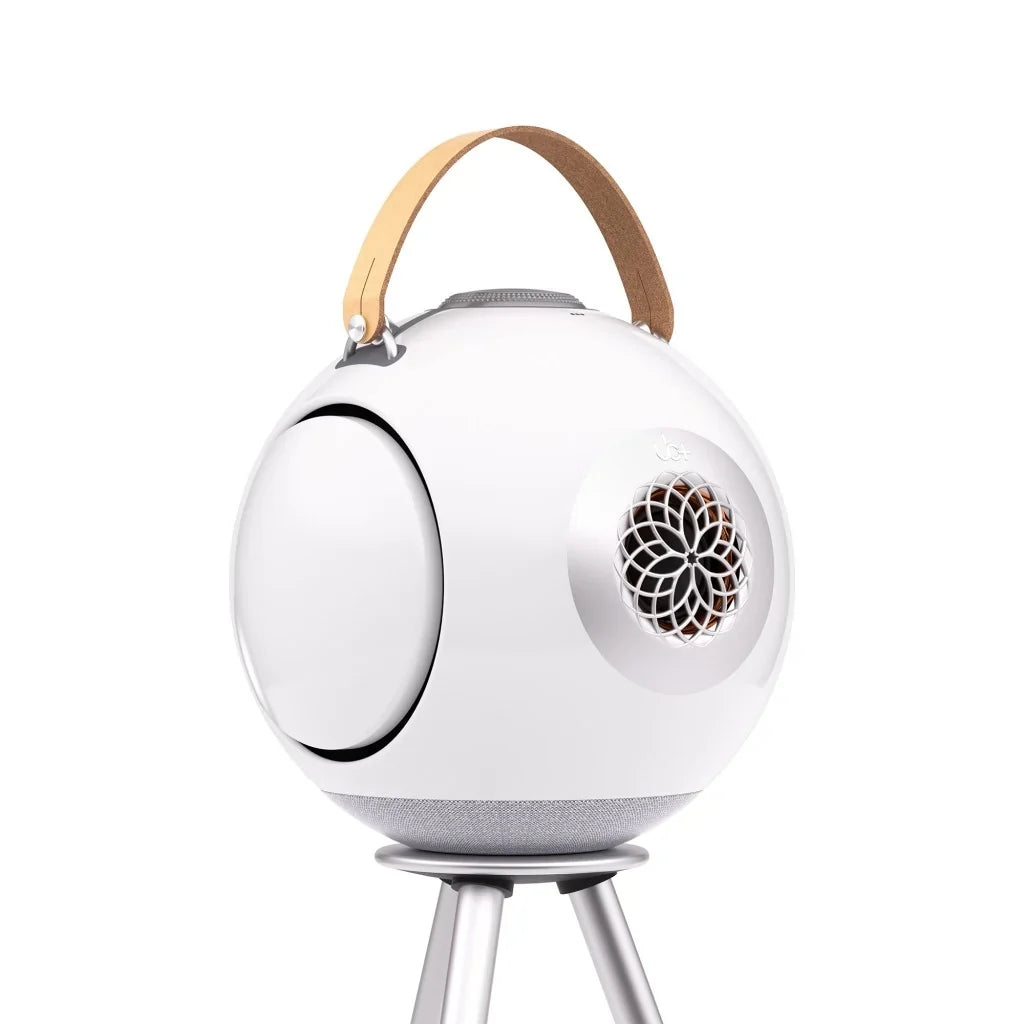
The UB+ dB1 DoubleBass uses a 90 mm oversized neodymium magnet, 35 mm long-stroke voice coil, 20 mm piston movement, 18 mm extra-wide surround, and aluminum shorting ring as part of its driver architecture.
These components are designed to maintain controlled movement and reduce unwanted distortion during demanding playback.
The significance for warranty-conscious buyers is straightforward: a warranty protects against eligible manufacturing defects, while engineering determines how the product is designed to operate during normal use.
Both matter.
The Acoustic System Is Also a Reliability Consideration

Speaker reliability should not be evaluated only by looking at the exterior.
The internal acoustic architecture determines how much mechanical stress different components experience.
The UB+ dB1 uses a patented spherical acoustic chamber inspired by Helmholtz Resonance. Its internal geometry distributes air pressure through the enclosure rather than relying on a conventional rectangular cabinet structure.
The system combines the central driver with dual symmetrical passive radiators whose combined surface area is approximately 3.5× larger than the active woofer.
The opposing radiator movement creates a self-cancelling vibration architecture, reducing the amount of opposing mechanical energy transferred into cabinet movement.
This is relevant to long-term ownership because mechanical efficiency is not simply about producing more bass. It concerns how acoustic energy is generated and where mechanical forces are directed.
The architecture is designed to convert energy into acoustic output rather than unnecessarily moving the enclosure itself.
What a Warranty Does and Does Not Cover
Before buying a Bluetooth speaker based on warranty length, read the actual warranty conditions.
A typical manufacturer's warranty may cover defects in materials or workmanship while excluding certain forms of damage.
Potential exclusions can include:
- Accidental damage
- Misuse
- Unauthorized modification
- Normal cosmetic wear
- Damage caused by incorrect power sources
- Certain battery degradation
- Liquid exposure outside the stated protection rating
- Damage caused by improper maintenance
The exact conditions vary by manufacturer and region.
This is particularly important for portable speakers because buyers often assume that "water resistant" means every type of water exposure is covered.
It does not.
Water Resistance and Warranty Are Separate Questions
An IP rating describes resistance to specified forms of dust or water exposure under defined testing conditions.
It does not automatically mean that liquid damage is covered by the warranty.
For example, if a speaker has a splash- or water-jet-resistance rating, that does not necessarily make it suitable for submersion.
Buyers should therefore consider three separate questions:
- What is the speaker's official IP rating?
- What conditions does that rating cover?
- Does the warranty cover liquid-related failures?
Never assume the third answer from the first two.
Why Two Years Can Matter More Than a Short Warranty
A one-year warranty can expire relatively quickly from a consumer's perspective.
Consider a speaker purchased for frequent use. During the first year, the owner may primarily notice obvious manufacturing problems. After extended use, other issues can become more apparent:
- Charging problems
- Connection instability
- Button failures
- Battery-related issues
- Driver abnormalities
- Amplifier faults
- Intermittent electronic behavior
A two-year warranty extends the manufacturer's responsibility for qualifying defects beyond that first year.
That can be particularly valuable when purchasing a premium speaker whose initial price is higher than a basic portable model.
Warranty as a Risk-Reduction Tool
Warranty coverage can be viewed as part of the product's total value.
Suppose two speakers have similar purchase prices.
One provides limited warranty protection and minimal manufacturer support.
The other provides two years of coverage with clearly documented terms and accessible customer service.
The second product may represent lower ownership risk even if the initial specifications appear similar.
This is why warranty should be included in a price-to-performance comparison.
A speaker is not just its hardware.
The purchase also includes:
- Manufacturer support
- Warranty protection
- Software support
- Replacement options
- Documentation
- Service accessibility
These factors become increasingly important as the purchase price rises.
Battery Life vs Battery Longevity
Battery specifications require careful interpretation.
A manufacturer may advertise a maximum playback duration under specific testing conditions. Actual battery life depends on:
- Playback volume
- Content type
- Wireless connection
- Environmental conditions
- Battery age
- System configuration
Playback duration and battery lifespan are also different measurements.
Playback duration describes how long the speaker operates on a charge.
Battery lifespan describes how the battery's usable capacity changes over repeated charging cycles and time.
A warranty does not necessarily guarantee a battery will maintain its original capacity throughout the entire warranty period.
Read the battery-specific provisions rather than assuming full-capacity replacement is guaranteed.
Bluetooth Speakers With 2-Year Warranty: What to Compare
When comparing products, avoid using warranty length as the only selection criterion.
A useful comparison framework is:
|
Category |
Questions to ask |
|
Warranty |
How long is coverage provided? |
|
Coverage |
What defects are actually covered? |
|
Exclusions |
What conditions void or limit coverage? |
|
Support |
How easy is it to contact the manufacturer? |
|
Acoustic system |
Is the speaker mechanically well engineered? |
|
Driver |
Does the driver use quality components? |
|
Battery |
What are the stated operating and warranty conditions? |
|
Connectivity |
Is the wireless system current and stable? |
|
Firmware |
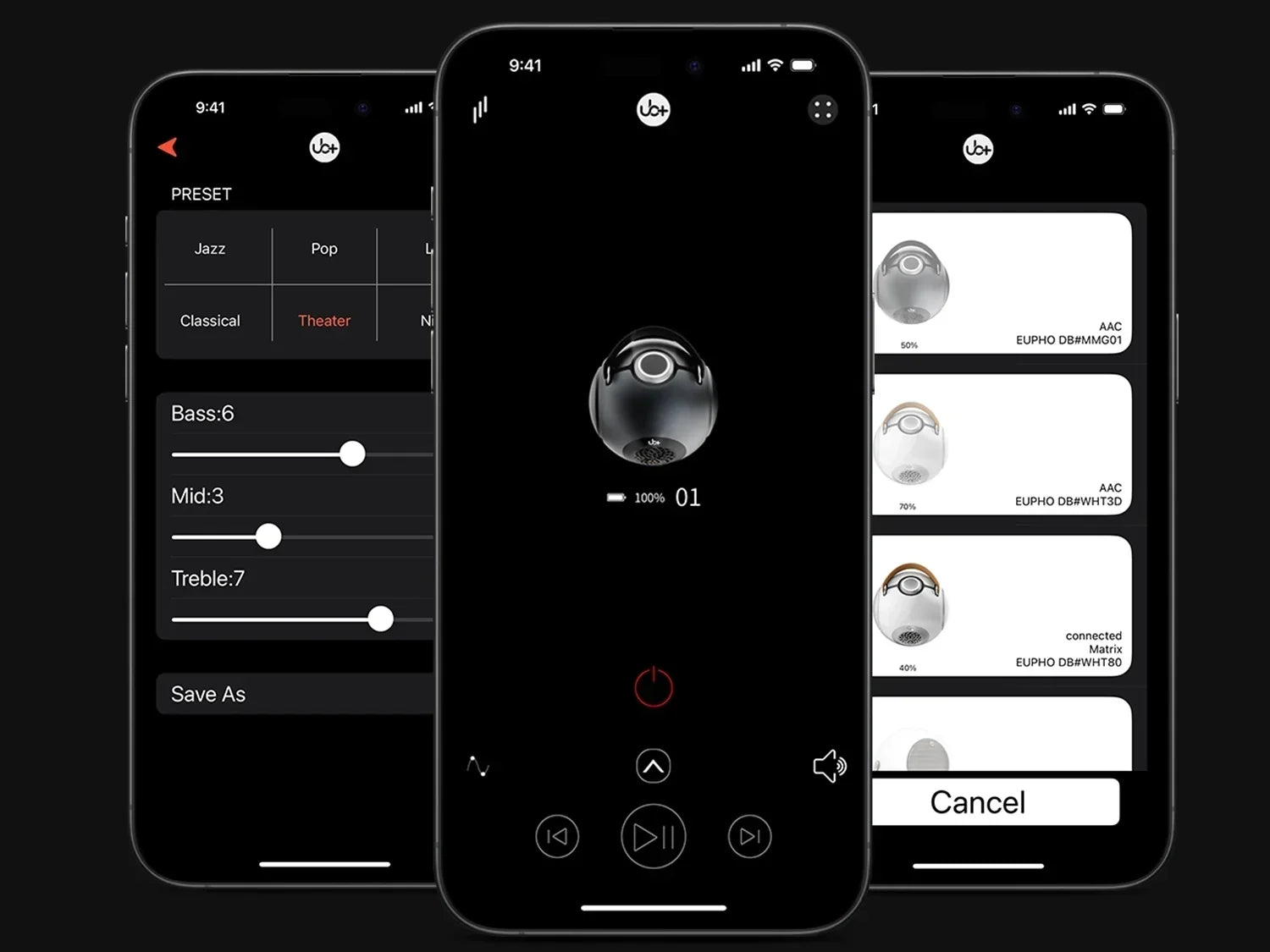
Does the manufacturer provide ongoing software support? |
|
Repair |
Is repair or replacement clearly explained? |
This approach separates a genuine ownership advantage from a marketing headline.
Why Manufacturer Support Matters
A two-year warranty is only as useful as the process for making a valid claim.
Before purchasing, check whether the manufacturer clearly provides:
- Warranty documentation
- Support contact information
- Purchase verification requirements
- Regional warranty information
- Claim instructions
- Repair or replacement procedures
A clear warranty policy reduces uncertainty.
Vague wording should prompt further investigation before purchase.
UB+ Warranty and Long-Term Ownership
For buyers considering UB+, warranty coverage should be evaluated alongside the company's published product specifications and current warranty terms.
The dB1 DoubleBass is engineered as a complete acoustic system rather than a conventional small enclosure with software-based bass enhancement.
Its mechanical bass architecture, spherical chamber, driver system, passive radiator arrangement, and vibration management are relevant when assessing the product as a long-term audio investment.
The warranty then provides an additional layer of protection for eligible manufacturing issues during the covered period.
These are complementary rather than interchangeable benefits.
Engineering addresses how the product is built.
Warranty addresses the manufacturer's responsibility when qualifying defects occur.
Does a Longer Warranty Mean Better Sound?
No.
Warranty duration has no direct relationship with frequency response, distortion, soundstage, bass extension, or tonal balance.
A speaker with a five-year warranty does not automatically sound better than one with a two-year warranty.
Sound quality depends on the acoustic and electronic system.
For example, the dB1's published specifications include approximately 40 Hz–20 kHz frequency response and 93 dB SPL, while Bluetooth 5.3 handles its wireless connection.
Those specifications should be evaluated independently from warranty coverage.
The correct purchasing process is therefore:
Sound quality → engineering → usability → durability → warranty → support
not:
Longer warranty → automatically better speaker.
What Makes a Warranty More Valuable?
Not all two-year warranties provide the same practical value.
Look for:
Clear Coverage
The manufacturer should explain what constitutes a covered defect.
Simple Claim Process
The customer should not need to navigate an unnecessarily complicated process.
Regional Availability
Warranty conditions may differ between countries.
Manufacturer Support
Accessible support can significantly reduce ownership frustration.
Defined Remedy
The warranty should explain whether eligible products are repaired, replaced, or otherwise resolved.
Purchase Documentation
Understand what proof of purchase is required before you buy.
Questions to Ask Before Buying
If you're comparing a bluetooth speaker with 2 year warranty, ask these questions:
- What exactly does the warranty cover?
- Does coverage begin from the purchase date?
- Is the warranty transferable?
- Are batteries covered under the same terms?
- What types of liquid damage are excluded?
- Does accidental damage count?
- Who pays shipping during a warranty claim?
- Is international warranty support available?
- Is repair or replacement the standard remedy?
- Is customer support available in my region?
These questions can reveal more about the practical value of a warranty than the duration printed on a product page.
Warranty vs Return Period
A return policy and warranty serve different purposes.
A return period generally allows a buyer to return a product within a specified window according to the seller's conditions.
A warranty typically addresses eligible defects during a longer defined period.
For example:
|
Protection |
Primary purpose |
|
Return period |
Change-of-mind or initial purchase issues |
|
Warranty |
Covered defects during the warranty term |
|
Consumer law |
Statutory rights that may apply depending on location |
|
Manufacturer support |
Assistance with setup, troubleshooting and claims |
Understanding the distinction prevents buyers from assuming that a return period provides the same protection as a warranty.
Five Signs of a Strong Long-Term Purchase
A warranty becomes more meaningful when supported by strong fundamentals.
1. Well-Controlled Mechanical Components
Drivers and passive elements should be engineered for controlled movement.
2. Proper Thermal Management
Amplification and charging systems need to operate within appropriate thermal limits.
3. Stable Electronics
Wireless, amplifier, DSP, and power-management components should work as an integrated system.
4. Appropriate Environmental Protection
The speaker should be used within its published environmental specifications.
5. Transparent Manufacturer Support
Clear warranty documentation and accessible support reduce ownership uncertainty.
FAQ
Is a 2-year warranty good for a Bluetooth speaker?
Yes. Two years provides meaningful protection against eligible manufacturing defects beyond a typical short initial coverage period. However, the actual value depends on the warranty terms and exclusions.
Does a 2-year warranty mean the speaker will last two years?
No. A warranty is not a guaranteed lifespan. It defines the manufacturer's responsibility for specified defects during a particular period.
Does warranty length prove build quality?
Not by itself. Warranty length should be considered alongside driver engineering, enclosure construction, battery design, environmental protection, support, and product specifications.
Are batteries normally covered for the full warranty period?
Battery terms can differ from the main product warranty. Buyers should read the manufacturer's specific battery provisions rather than assuming full coverage.
Is a waterproof rating automatically covered by warranty?
No. An IP rating and warranty coverage are separate matters. Always check the manufacturer's liquid-damage exclusions and the product's specific environmental rating.
Final Verdict: Is a 2-Year Warranty Worth Paying Attention To?
A bluetooth speaker with 2 year warranty deserves consideration because warranty coverage reduces ownership risk, particularly when buying a premium speaker intended for frequent use.
But warranty length should never be treated as a substitute for engineering.
The stronger buying decision combines transparent warranty terms with evidence of sound acoustic design, controlled driver movement, durable construction, reliable electronics, appropriate environmental protection, and manufacturer support.
For a premium speaker such as the UB+ dB1 DoubleBass, the warranty is one component of the ownership proposition. Its acoustic system is built around physical engineering—including the spherical chamber, mechanical bass architecture, dual passive-radiator system, and vibration management—while the warranty provides protection against qualifying manufacturing defects under its stated terms.
Before purchasing, check the current official UB+ warranty terms for your market, especially coverage exclusions, battery provisions, water-related conditions, and the claim procedure.
→ Explore UB+ Speakers
Review the current range and compare models based on acoustic architecture, portability, and intended use.
→ Compare dB1 vs dB Mini
Evaluate the two UB+ designs according to your listening environment and priorities.
→ Check Current Price
Visit UB+ for current product information, specifications, pricing, and availability.


Hinterlasse einen Kommentar
Diese Website ist durch hCaptcha geschützt und es gelten die allgemeinen Geschäftsbedingungen und Datenschutzbestimmungen von hCaptcha.