
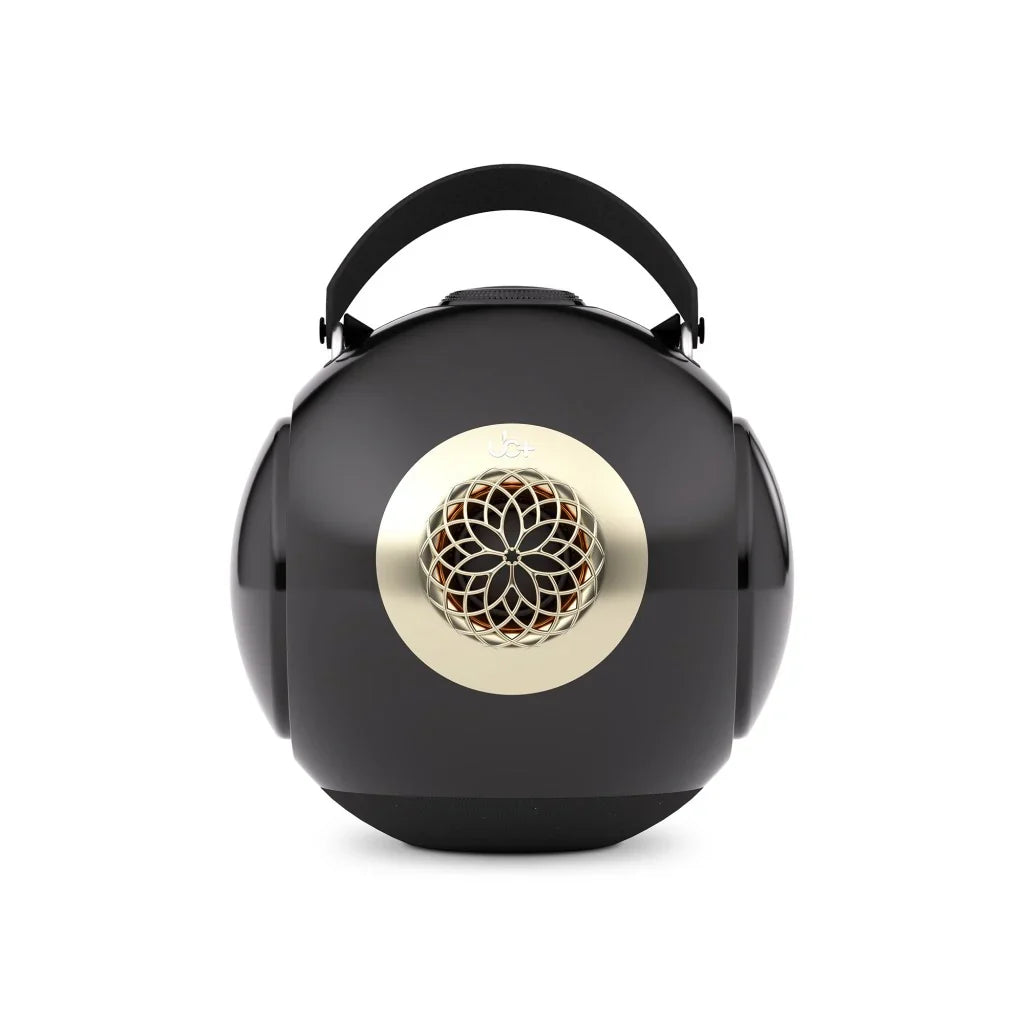
When shopping for a bluetooth speaker, many buyers assume the decision is simple: bigger speaker equals bigger sound, and therefore bigger value. At first glance, that logic seems reasonable. Large party speakers often feature oversized cabinets, multiple drivers, flashing lights, and marketing claims focused on power and volume. Meanwhile, a compact bluetooth speaker appears smaller, lighter, and less intimidating.
However, real-world listening is far more complex than comparing sizes.
Today, advances in acoustic engineering allow many compact speakers to deliver impressive bass, room-filling sound, and excellent clarity without requiring the bulk of a traditional party speaker. For many listeners, the question is no longer whether a large speaker can play louder. The real question is:
Which speaker type actually fits your lifestyle, listening habits, living space, and long-term needs?
If you're comparing a portable bluetooth speaker, a large party system, or even considering a wireless surround sound system, this guide will help you understand the differences that truly matter.
Rather than focusing only on wattage and loudness, we'll examine:
- Portability vs power
- Room-filling performance
- Bass quality vs bass quantity
- Placement flexibility
- Everyday usability
- Long-term listening comfort
- Modern acoustic engineering
We'll also explore how advanced designs such as the UB+ dB1 DoubleBass challenge traditional assumptions about what a compact speaker can achieve.
Why Bigger Is Not Always Better
For decades, speaker buyers were taught a simple rule:
Bigger cabinet = bigger sound.
Historically, that was largely true.
Larger speakers offered:
- Larger woofers
- Greater air movement
- Higher output capability
- Deeper bass extension
But speaker technology has evolved significantly.
Today, a premium wireless bluetooth speaker can leverage sophisticated enclosure design, passive radiator systems, resonance management, and advanced driver engineering to achieve results that once required much larger cabinets.
As a result, speaker size alone tells only part of the story.
The more important questions are:
- How efficiently does the speaker use air movement?
- How well does it manage vibration?
- How effectively does it convert amplifier power into usable sound?
- How adaptable is it to different rooms and listening situations?
These factors often matter more than raw dimensions.
Understanding the Purpose of Each Speaker Type
Before comparing performance, it's important to understand what each category is designed to accomplish.
Compact Speakers
A compact bluetooth speaker is designed for flexibility.
Typical use cases include:
- Living rooms
- Bedrooms
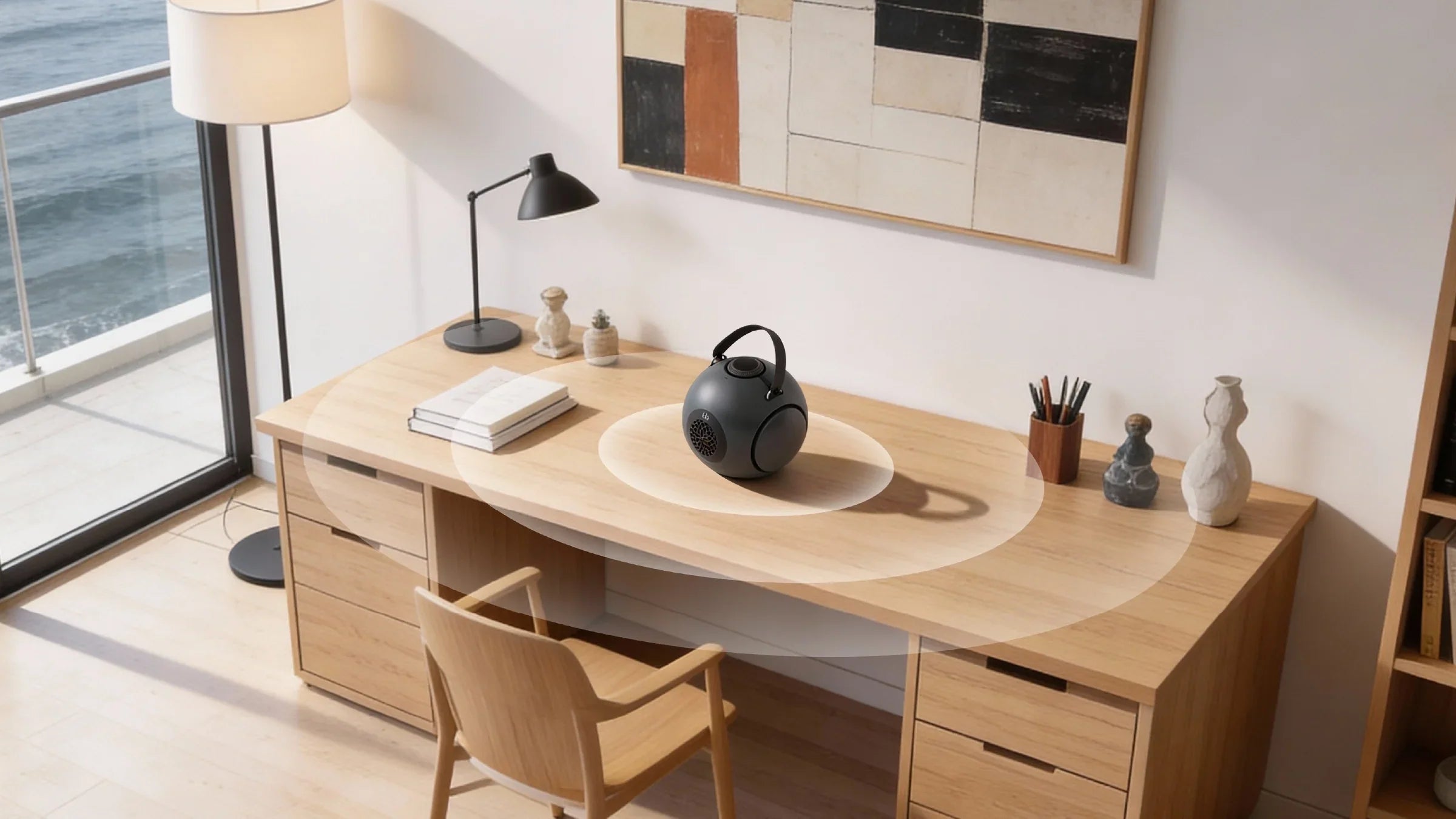
- Home offices
- Apartments
- Casual gatherings
- Travel
- Outdoor relaxation
Priorities include:
- Portability
- Ease of placement
- Balanced sound
- Everyday convenience
- Aesthetic integration
The goal is not maximum volume.
The goal is delivering enjoyable sound in a wide variety of situations.
Large Party Speakers
Party speakers are optimized for different objectives.
Typical use cases include:
- Large gatherings
- Outdoor events
- Backyard parties
- Celebrations
- High-volume playback
Their priorities include:
- Maximum output
- Strong bass emphasis
- Crowd coverage
- Long-distance projection
In these situations, sheer volume can be valuable.
However, those same characteristics are not always ideal for daily listening.
The Real Difference: Use Case Matters More Than Size
One of the biggest mistakes buyers make is choosing a speaker based on specifications rather than actual use.
Consider these examples.
Scenario 1: Apartment Living
You live in a modern apartment.
You primarily:
- Stream music
- Watch movies
- Listen while working
- Host small gatherings
In this environment, a large party speaker may actually create problems.
You may experience:
- Excessive bass
- Neighbor complaints
- Placement challenges
- Visual clutter
A premium portable bluetooth speaker is often the better choice.
Scenario 2: Outdoor Events
You regularly host:
- Backyard parties
- Large gatherings
- Outdoor celebrations
Now the equation changes.
A party speaker's greater output becomes valuable because sound disperses more quickly outdoors.
This is one situation where larger systems retain a clear advantage.
Portability: The Hidden Advantage Most Buyers Underestimate
Many consumers focus heavily on sound specifications while ignoring portability.
Yet portability influences how often a speaker is actually used.
A rechargeable bluetooth speaker offers tremendous flexibility.
You can move it from:
- Living room
- Bedroom
- Kitchen
- Patio
- Home office
within seconds.
This adaptability creates a significantly better ownership experience.
Large party speakers typically remain in one location because moving them frequently becomes inconvenient.
Over time, that convenience gap becomes increasingly important.
Why Placement Is Critical
Speaker placement affects sound quality far more than many buyers realize.
Even the best sounding bluetooth speaker can sound disappointing if placed incorrectly.
Large party speakers often require:
- Dedicated floor space
- Distance from walls
- Strategic positioning
A compact speaker offers far greater flexibility.
You can experiment with placement and quickly find the position that produces the best balance of:
- Bass
- Clarity
- Room coverage
This flexibility often leads to better real-world performance.
Understanding Room-Filling Sound
Many buyers believe room-filling sound requires a large speaker.
That isn't necessarily true.
Room-filling sound depends on:
- Dispersion
- Frequency balance
- Acoustic interaction
- Enclosure design
A well-designed compact speaker can create a surprisingly immersive listening experience.
This is especially true when the speaker is engineered to distribute sound efficiently rather than simply maximizing volume.
The Bass Question: Quantity vs Quality
Bass is often the deciding factor when comparing speaker types.
But buyers frequently focus on quantity rather than quality.
Large Party Speaker Bass
Most party speakers generate bass through:
- Large woofers
- Ported cabinets
- DSP enhancement
- High amplifier output
Advantages:
- High impact
- Strong physical presence
- Excellent event performance
Disadvantages:
- Increased distortion
- Cabinet vibration
- Listening fatigue
- Reduced accuracy
Compact Speaker Bass
Premium compact speakers increasingly rely on acoustic efficiency rather than brute force.
They use:
- Passive radiators
- Optimized enclosure geometry
- Resonance control
- Airflow management
This often results in bass that feels cleaner and more controlled.
Why UB+ Takes a Different Approach
Most Bluetooth speakers follow a conventional formula:
- Box-shaped cabinet
- Single bass port
- Digital bass enhancement
UB+ approached the challenge differently.
The dB1 DoubleBass was engineered around a Helmholtz-inspired spherical acoustic chamber.
This design philosophy starts with a simple idea:
Allow air pressure to work naturally rather than forcing bass through digital processing.
Understanding the Helmholtz-Inspired Spherical Chamber
Traditional box speakers contain flat surfaces.
Flat surfaces create:
- Standing waves
- Internal reflections
- Resonance irregularities
The dB1's spherical enclosure minimizes these issues.
Benefits include:
- More even pressure distribution
- Reduced internal resonance
- Cleaner bass behavior
- Improved efficiency
Because the enclosure behaves differently from conventional box speakers, the speaker can use internal volume more effectively.
This is one reason many listeners describe the dB1 as sounding larger than expected.
Dual Symmetrical Passive Radiators: A Different Bass Strategy
Most speakers use:
- One bass port
- Or one passive radiator
The dB1 uses:
- Two large passive radiators
- Mounted on opposite sides
- Operating in symmetrical motion
When music plays:
- Air pressure builds inside the spherical chamber
- Pressure drives both radiators simultaneously
- Both sides move outward together
This creates a balanced bass system.
Self-Cancelling Vibration Technology
One of the most important engineering advantages of the dB1 is its self-cancelling behavior.
In traditional speakers:
- Cabinet vibration wastes energy
- Surfaces shake
- Bass becomes less controlled
In the dB1:
- Opposing passive radiators balance each other
- Vibration is minimized
- More energy becomes usable sound
This improves both clarity and bass precision.
Mechanical Bass Amplification vs Digital Bass Boost
Most modern speakers rely heavily on DSP.
Digital processing boosts bass electronically.
While effective, this approach can sometimes create:
- Artificial bass
- Distortion
- Listening fatigue
The dB1 takes a different approach.
Its design uses:
- Internal pressure
- Radiator movement
- Acoustic physics
to enhance bass mechanically.
This is why UB+ often describes the concept as:
Not boosted bass. Engineered bass.
Advanced Driver Engineering
The enclosure is only part of the story.
The dB1 also incorporates high-end driver technology rarely seen in conventional Bluetooth products.
Features include:
Oversized 90mm Neodymium Magnet
Provides:
- Strong magnetic control
- Improved efficiency
- Better driver stability
35mm Long-Stroke Voice Coil
Allows:
- Greater excursion
- Increased low-frequency performance
- Better control at higher output levels
20mm Piston Movement
Enables substantial air movement despite the compact cabinet.
This contributes to deeper bass reproduction.
Aluminum Shorting Ring
This advanced component helps:
- Reduce distortion
- Improve linearity
- Increase clarity
Many budget speakers omit this feature entirely.
Extra-Wide 18mm Surround
The surround helps maintain:
- Stable cone movement
- Controlled excursion
- Reduced distortion
Even during demanding bass passages.
Technical Comparison Table
|
Feature |
Compact Speaker (Basic) |
Large Party Speaker |
UB+ dB1 DoubleBass |
|
Design Philosophy |
Convenience |
Maximum Volume |
Physics-Driven Sound |
|
Enclosure Shape |
Box |
Large Box |
Helmholtz-Inspired Sphere |
|
Bass Method |
DSP Boost |
Large Woofer + Port |
Mechanical Bass Amplification |
|
Passive Radiators |
Usually One |
Rare |
Dual Symmetrical |
|
Vibration Control |
Limited |
Moderate |
Self-Cancelling |
|
Placement Flexibility |
High |
Low |
High |
|
Everyday Usability |
Excellent |
Limited |
Excellent |
|
Listening Fatigue |
Moderate |
Higher |
Lower |
Sound Quality vs Loudness
One of the most important buying lessons is understanding that loudness and quality are not the same thing.
Many party speakers prioritize:
- SPL
- Impact
- Excitement
But everyday listening benefits from:
- Detail
- Balance
- Control
A speaker that remains clean at moderate volume often sounds better than one that simply plays louder.
Which Speaker Works Better for Movies?
Movies require:
- Dialogue clarity
- Bass extension
- Dynamic range
Large speakers excel in action scenes.
However, compact premium speakers often provide better balance for everyday movie watching.
A properly designed wireless bluetooth speaker can create impressive immersion without overwhelming the room.
Which Speaker Is Better for Music?
The answer depends on listening style.
Casual Listening
Compact speakers generally win.
Critical Listening
High-quality compact systems and audiophile wireless speakers often outperform party speakers.
Large Events
Party speakers remain stronger.
Long-Term Ownership Experience
Buying a speaker is not only about the first week.
It's about:
- Daily usability
- Flexibility
- Comfort
Many people discover that a speaker used every day provides greater value than one used occasionally at maximum volume.
Real-World Buying Comparison Table
|
Factor |
Compact Speaker |
Large Party Speaker |
|
Apartment Friendly |
Excellent |
Poor |
|
Travel Friendly |
Excellent |
Poor |
|
Casual Gatherings |
Excellent |
Good |
|
Outdoor Parties |
Good |
Excellent |
|
Design Integration |
Excellent |
Average |
|
Flexibility |
Excellent |
Limited |
|
Bass Quality |
Excellent |
Good |
|
Bass Quantity |
Good |
Excellent |
|
Convenience |
Excellent |
Limited |
|
Everyday Use |
Excellent |
Average |
Final Verdict: Which Should You Buy?
If your priority is:
- Outdoor events
- Large parties
- Maximum volume
a party speaker may be the right choice.
But if your priorities include:
- Daily listening
- Better aesthetics
- Flexible placement
- Room-friendly sound
- Balanced bass
- Long-term usability
a premium compact speaker is often the smarter investment.
Modern acoustic engineering has changed what compact speakers can achieve.
Designs such as the UB+ dB1 demonstrate that thoughtful engineering can deliver deep, controlled bass and room-filling sound without relying on oversized cabinets.
Instead of simply making speakers bigger, manufacturers are increasingly focusing on physics, airflow, resonance management, and acoustic efficiency.
The result is a new generation of compact speakers that challenge traditional assumptions about size and performance.
Frequently Asked Questions
Is a compact bluetooth speaker powerful enough for a living room?
Yes, many premium compact speakers are designed specifically for modern living spaces. Through advanced driver engineering, passive radiator systems, and optimized enclosure design, they can produce room-filling sound without requiring the size of a traditional party speaker. For apartments, bedrooms, offices, and most living rooms, a quality compact speaker is often more practical than a large party system.
Do large party speakers always have better bass than compact speakers?
Large party speakers usually produce more bass output because they have larger cabinets and drivers. However, bass quantity and bass quality are not the same thing. A well-engineered compact speaker can deliver deeper, cleaner, and more controlled bass through advanced acoustic technologies, resulting in a more enjoyable listening experience for everyday music and movies.
What makes the UB+ dB1 different from traditional Bluetooth speakers?
The UB+ dB1 uses a Helmholtz-inspired spherical acoustic chamber, dual symmetrical passive radiators, and a centrally positioned driver to manage air pressure differently from conventional box speakers. This design helps reduce unwanted vibration, improve bass efficiency, and create a more natural listening experience. Instead of relying heavily on digital bass boosting, it uses acoustic physics to generate powerful low-frequency performance.
Why is portability important when choosing a speaker?
Portability affects how often and where you can use a speaker. A rechargeable bluetooth speaker can move easily between rooms, travel with you, or adapt to different listening situations. This flexibility often provides greater long-term value than a large speaker that remains permanently in one location.
Are compact speakers replacing large party speakers?
Not entirely, because both serve different purposes. Large party speakers still excel in outdoor events and high-volume situations. However, improvements in acoustic engineering mean that compact speakers now satisfy the needs of many listeners who prioritize sound quality, convenience, design, and everyday usability over maximum loudness.
Discover Whether a Compact Speaker Can Replace Your Larger System
Looking for a speaker that combines deep bass, premium design, room-friendly performance, and modern acoustic engineering?
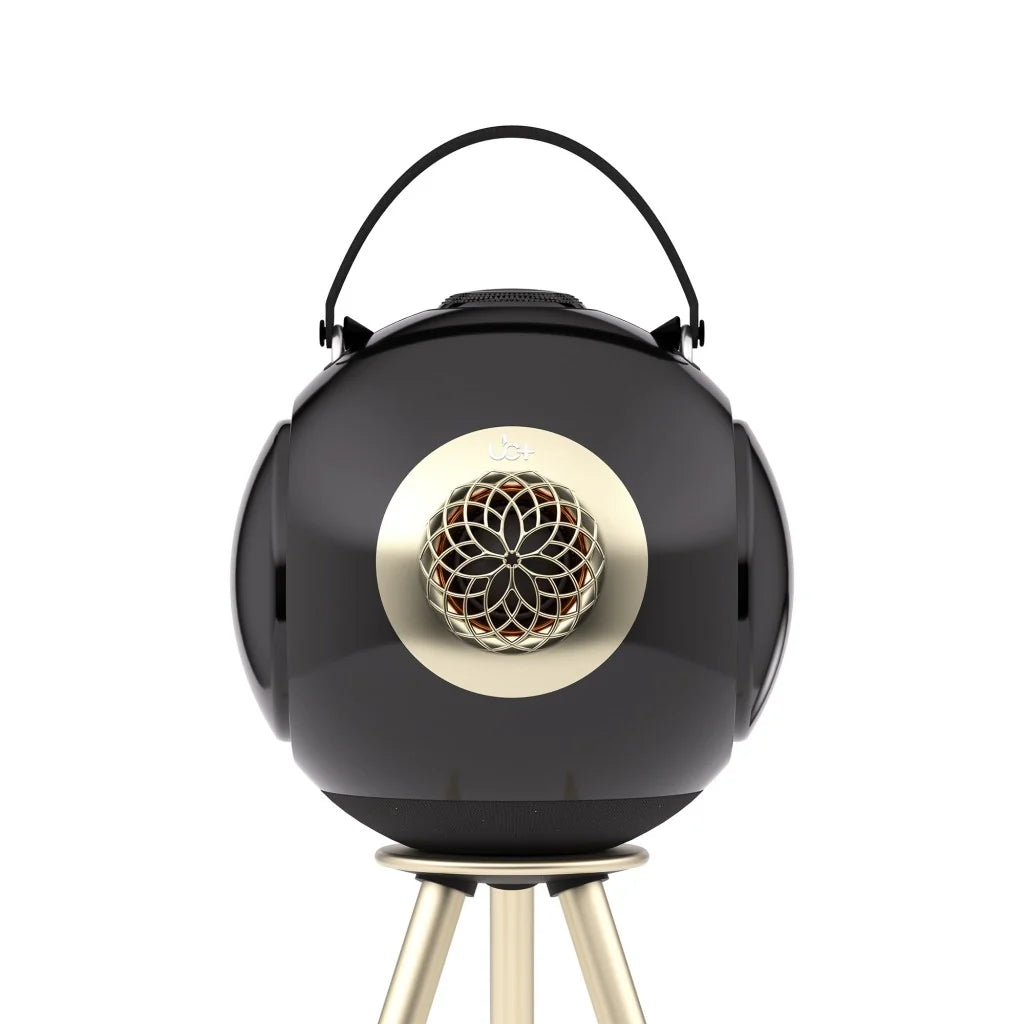
Explore the UB+ dB1 DoubleBass and experience how a Helmholtz-inspired spherical chamber, dual passive radiators, self-cancelling vibration architecture, and physics-driven sound design create a listening experience that feels far bigger than its footprint.


Hinterlasse einen Kommentar
Diese Website ist durch hCaptcha geschützt und es gelten die allgemeinen Geschäftsbedingungen und Datenschutzbestimmungen von hCaptcha.