
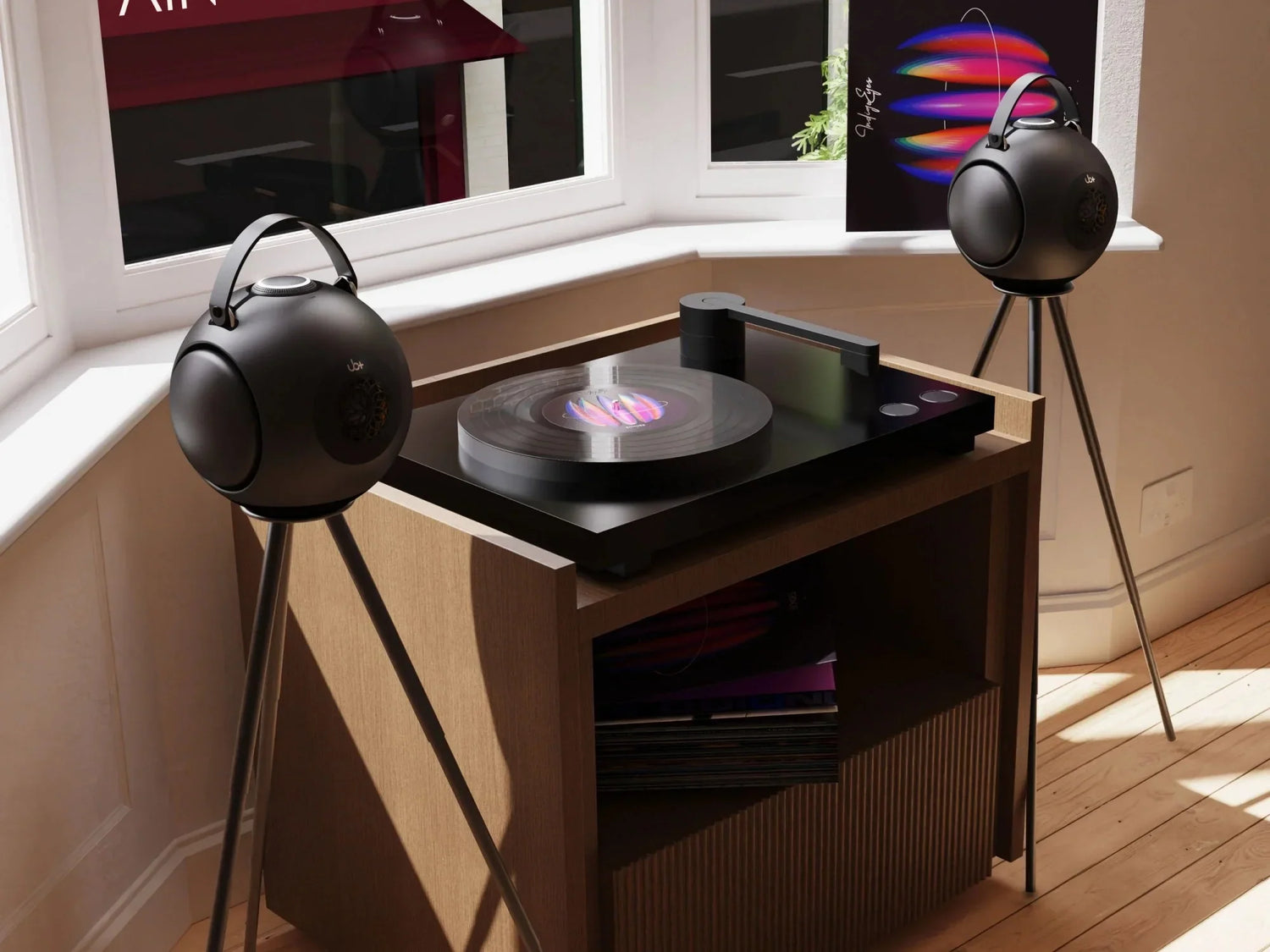
The Bluetooth speaker market has never offered more choices. A quick search reveals hundreds of options ranging from ultra-budget models costing less than a dinner out to premium audio products positioned as long-term investments. At first glance, many of these speakers appear surprisingly similar. They all promise wireless connectivity, powerful bass, long battery life, and room-filling sound.
This creates an important question for buyers:
What do you actually get when you spend more on a premium portable speaker?
Is a higher-priced speaker simply a luxury purchase, or are there meaningful differences in sound quality, engineering, build quality, and long-term ownership experience?
For shoppers researching the best portable bluetooth speaker, best sounding bluetooth speaker, high end bluetooth speaker, or even premium audiophile wireless speakers, understanding these differences can prevent costly mistakes and help ensure long-term satisfaction.
The truth is that premium and budget speakers often differ in ways that aren't immediately obvious during a quick store demonstration. Some of the most important distinctions become apparent only after weeks, months, or years of ownership.
In this guide, we'll examine the real-world differences between premium and budget speakers, focusing on sound quality, cabinet engineering, longevity, build materials, listening comfort, and long-term value.
Why Budget Speakers Are So Popular
Before comparing the categories, it's important to understand why budget speakers continue to dominate sales.
Most buyers prioritize:
- Affordability
- Convenience
- Basic functionality
Budget speakers can often provide:
- Bluetooth connectivity
- Portable design
- Rechargeable batteries
- Acceptable sound quality
For casual listening, these features may be enough.
Many consumers only realize the limitations after extended use.
The Hidden Cost of Chasing Low Prices
A low purchase price does not always equal good value.
Budget products frequently achieve aggressive pricing through compromises such as:
- Less sophisticated drivers
- Basic cabinet construction
- Lower-grade materials
- Reduced quality control
- Simplified acoustic engineering
While these decisions reduce manufacturing costs, they can also affect performance and durability.
This becomes especially noticeable when comparing a budget product to a carefully engineered premium speaker.
What Defines a Premium Portable Speaker?
A premium speaker is not simply a more expensive version of a budget speaker.
Instead, premium products typically invest heavily in:
- Acoustic research
- Cabinet engineering
- Driver development
- Material quality
- Mechanical design
- Long-term reliability
The goal is not merely louder sound.
The goal is better sound.
Sound Quality: The Biggest Difference
Most buyers begin with sound quality.
After all, regardless of features, a speaker ultimately exists to reproduce music.
This is where premium products often create their greatest advantage.
Why Budget Speakers Often Sound Impressive at First
Many budget speakers are intentionally tuned to create a strong first impression.
Common strategies include:
- Elevated bass
- Aggressive treble
- DSP enhancement
- Artificial loudness
These approaches can sound exciting during short demonstrations.
However, over time they may reveal limitations.
Listeners often report:
- Fatigue
- Harshness
- Muddy bass
- Reduced clarity
How Premium Speakers Approach Sound Differently
Premium speakers typically pursue balance rather than immediate impact.
Their goals include:
- Natural bass
- Accurate midrange
- Detailed highs
- Reduced distortion
- Long-term listening comfort
The difference may seem subtle initially.
Over extended listening sessions, it becomes much more obvious.
Why Frequency Balance Matters
Rich sound requires more than strong bass.
A premium speaker maintains balance across:
Bass
Provides warmth and foundation.
Midrange
Handles vocals and instruments.
Treble
Adds detail and air.
When all three regions work together, music feels more realistic and engaging.
This is one reason premium products often appeal to serious listeners searching for audiophile wireless speakers.
Cabinet Engineering: The Feature Most Buyers Overlook
Many consumers focus on:
- Wattage
- Battery life
- Driver size
Yet cabinet design often has a greater impact on overall sound quality.
The enclosure affects:
- Resonance behavior
- Bass efficiency
- Internal reflections
- Distortion levels
Premium manufacturers invest substantial resources into enclosure design because they understand its importance.
The Problem with Traditional Budget Speaker Cabinets
Most affordable speakers use simple rectangular enclosures.
This approach is inexpensive and easy to manufacture.
However, flat internal surfaces create acoustic challenges.
These include:
- Standing waves
- Uneven pressure distribution
- Internal reflections
The result can be less natural sound reproduction.
Why Spherical Speaker Design Changes the Equation
Some premium manufacturers take a completely different approach.
Rather than relying on traditional box construction, they redesign the enclosure from the ground up.
One example is the UB+ dB1 DoubleBass.
The dB1 utilizes a Helmholtz-inspired spherical acoustic chamber designed to improve internal pressure management and reduce acoustic compromises associated with rectangular cabinets.
Understanding the Helmholtz-Inspired Spherical Acoustic Chamber
The spherical enclosure provides several benefits.
Because it lacks parallel walls:
- Standing waves are minimized
- Internal reflections are reduced
- Resonance control improves
This creates a cleaner environment for sound reproduction.
The result is often perceived as:
- Fuller sound
- Better clarity
- More natural bass
Mechanical Bass vs Digital Bass
Many budget speakers rely heavily on DSP.
Digital processing boosts bass electronically.
While effective initially, excessive DSP can create:
- Distortion
- Compression
- Listening fatigue
Premium engineering often seeks more natural solutions.
The UB+ dB1's Mechanical Bass Amplification Approach
The dB1 relies on acoustic physics rather than aggressive software enhancement.
Its design incorporates:
- Helmholtz-inspired spherical chamber
- Pressure optimization
- Passive radiator technology
This allows the speaker to produce impressive bass through mechanical efficiency rather than excessive digital processing.
Dual Symmetrical Passive Radiators
A defining characteristic of the dB1 is its dual passive radiator architecture.
The speaker uses:
- Two passive radiators
- Positioned opposite each other
- Operating symmetrically
As internal pressure changes:
- Both radiators respond together
- Additional air is displaced
- Bass output increases efficiently
This creates substantial low-frequency performance from a relatively compact enclosure.
Why 3.5× More Radiator Surface Area Matters
The combined passive radiator area is approximately:
3.5 times larger than the active woofer surface area.
This enables:
- Greater air movement
- Improved bass extension
- Better low-frequency efficiency
Many budget speakers simply cannot match this level of mechanical bass performance.
Self-Cancelling Vibration Technology
Another advantage involves vibration control.
When cabinets vibrate excessively:
- Energy is wasted
- Bass becomes less precise
- Distortion increases
The dB1's symmetrical architecture helps balance mechanical forces.
As both passive radiators move simultaneously:
- Vibrations counteract each other
- Cabinet movement decreases
- More energy becomes sound
This contributes directly to cleaner bass reproduction.
Premium vs Budget Speaker Engineering
|
Feature |
Budget Speaker |
Premium Speaker |
|
Cabinet Design |
Basic Box |
Advanced Acoustic Design |
|
Resonance Control |
Limited |
Optimized |
|
Internal Reflections |
Higher |
Reduced |
|
Bass Strategy |
DSP Boosting |
Mechanical Engineering |
|
Vibration Management |
Basic |
Advanced |
|
Listening Comfort |
Moderate |
Excellent |
|
Sound Balance |
Often Exaggerated |
Natural |
|
Long-Term Satisfaction |
Variable |
High |
Driver Quality: The Heart of Speaker Performance
The driver converts electrical energy into sound.
Its quality directly affects:
- Clarity
- Dynamics
- Accuracy
- Distortion
Premium speakers typically use more advanced driver systems.
High-End Driver Technologies Matter
The dB1 incorporates several advanced features rarely found in entry-level products.
90mm Neodymium Magnet
Provides stronger magnetic control and efficiency.
35mm Long-Stroke Voice Coil
Allows greater cone movement without sacrificing accuracy.
20mm Piston Movement
Supports significant air displacement for bass performance.
Aluminum Shorting Ring
Reduces distortion and improves linearity.
Extra-Wide 18mm Surround
Maintains stable cone control during demanding passages.
Together, these technologies contribute to cleaner, more accurate sound.
Build Quality: More Than Just Appearance
One of the easiest differences to identify is build quality.
Premium speakers generally use:
- Better materials
- More precise manufacturing
- Higher assembly standards
The benefits extend beyond aesthetics.
Superior construction often improves:
- Durability
- Acoustic performance
- Long-term reliability
Why Longevity Matters
A speaker should not be evaluated solely by its first week of performance.
Consider ownership over:
- 3 years
- 5 years
- 10 years
Premium products are often designed for extended use.
This can create significantly better value over time.
The Cost of Replacement Cycles
Many consumers replace budget speakers repeatedly.
Typical reasons include:
- Battery degradation
- Physical damage
- Performance issues
- Outdated components
Over time, multiple replacements may cost more than purchasing a higher-quality speaker initially.
Listening Fatigue: An Often-Ignored Factor
A speaker may sound exciting for five minutes but exhausting after two hours.
Listening fatigue often results from:
- Distortion
- Harsh treble
- Excessive DSP
- Poor frequency balance
Premium speakers generally prioritize long-term listening comfort.
This makes them better suited for daily use.
Why Room Coverage Matters
Sound should fill a room naturally.
Poor dispersion creates:
- Hot spots
- Dead zones
- Uneven listening experiences
Premium designs often invest heavily in dispersion performance.
This creates more consistent sound throughout a space.
Real Ownership Experience
|
Ownership Factor |
Budget Speaker |
Premium Speaker |
|
Initial Price |
Lower |
Higher |
|
Sound Quality |
Good |
Excellent |
|
Distortion Control |
Basic |
Advanced |
|
Build Materials |
Standard |
Premium |
|
Bass Accuracy |
Moderate |
High |
|
Long-Term Durability |
Moderate |
Excellent |
|
Design Appeal |
Functional |
Lifestyle-Oriented |
|
Overall Value Over Time |
Variable |
High |
Premium Audio and Emotional Connection
Great audio isn't just about measurements.
It is about experience.
Premium speakers often excel at:
- Emotional engagement
- Musical realism
- Long-term enjoyment
These qualities can be difficult to quantify but are immediately recognizable to listeners.
Why Serious Listeners Upgrade
People rarely upgrade because their old speaker stopped making sound.
They upgrade because they want:
- Better detail
- Better bass
- Better immersion
- Better overall experience
Premium speakers address these desires through engineering rather than marketing claims.
Is a Premium Speaker Worth It?
The answer depends on your priorities.
A budget speaker may be sufficient if:
- Audio is occasional
- Sound quality is not critical
- Cost is the primary concern
A premium speaker becomes worthwhile when:
- Music is part of daily life
- Long-term value matters
- Listening quality is important
- Design matters
- Durability matters
For many users, these benefits justify the investment.
Why the UB+ dB1 Represents a Different Category
The UB+ dB1 is not simply another Bluetooth speaker.
Its design philosophy centers on:
- Acoustic physics
- Mechanical efficiency
- Premium engineering
Key technologies include:
- Helmholtz-inspired spherical acoustic chamber
- Dual symmetrical passive radiators
- Self-cancelling vibration architecture
- 3.5× passive radiator surface area
- Mechanical bass amplification
- 90mm neodymium magnet
- 35mm long-stroke voice coil
- 20mm piston movement
- Aluminum shorting ring
- Extra-wide 18mm surround
These features work together to create a listening experience that differs significantly from conventional budget speakers.
Final Thoughts
The difference between a premium portable speaker and a budget speaker extends far beyond price.
It involves:
- Sound quality
- Engineering
- Materials
- Longevity
- Listening comfort
- Emotional engagement
While budget speakers often prioritize affordability, premium speakers focus on delivering a superior ownership experience over many years.
For buyers researching the best portable bluetooth speaker, best sounding bluetooth speaker, high end bluetooth speaker, or premium audiophile wireless speakers, understanding these distinctions can help separate short-term savings from long-term value.
Ultimately, the best speaker is not necessarily the cheapest option.
It is the one that continues to deliver satisfaction every time you press play.
Frequently Asked Questions
Is a premium portable speaker really worth the extra cost?
For listeners who use their speaker regularly, the difference is often significant. Premium speakers generally provide better sound quality, stronger build materials, improved durability, and a more refined listening experience. Over several years of ownership, these advantages can create substantially better value.
Why do premium speakers often sound better at lower volumes?
Premium speakers typically use higher-quality drivers, more sophisticated tuning, and better cabinet engineering. These factors help maintain bass presence, detail, and clarity even when listening quietly, whereas many budget speakers lose richness as volume decreases.
What is the biggest difference between premium and budget speaker bass?
Budget speakers frequently rely on DSP-based bass boosting to create impact. Premium speakers often combine digital processing with advanced acoustic engineering, allowing them to produce deeper and more controlled bass with lower distortion and greater realism.
How does cabinet design affect sound quality?
The enclosure influences resonance, internal reflections, pressure management, and overall efficiency. Advanced cabinet designs can improve clarity, reduce distortion, and create more natural bass performance. This is one reason premium manufacturers devote significant resources to enclosure engineering.
Can a premium speaker last longer than multiple budget speakers?
In many cases, yes. Higher-quality materials, better construction, and more robust engineering often allow premium speakers to remain enjoyable and functional for many years. This can reduce replacement costs and improve long-term ownership value.
Experience the Difference Between Cost and Value
If you're searching for a best portable bluetooth speaker, best sounding bluetooth speaker, high end bluetooth speaker, or premium audiophile wireless speakers, explore what thoughtful engineering can achieve.
Discover the UB+ dB1 DoubleBass and experience:
- Helmholtz-inspired spherical acoustic chamber
- Dual symmetrical passive radiators
- Mechanical bass amplification
- Self-cancelling vibration architecture
- 3.5× passive radiator surface area
- Advanced long-stroke driver technology
- Physics-driven acoustic performance
- Premium design for modern living spaces


Hinterlasse einen Kommentar
Diese Website ist durch hCaptcha geschützt und es gelten die allgemeinen Geschäftsbedingungen und Datenschutzbestimmungen von hCaptcha.