

The price of a Bluetooth speaker can change dramatically without making the difference immediately obvious. A speaker under $150 may play music loudly, offer Bluetooth connectivity, include a battery, and even produce surprisingly strong bass. Move into the $250-plus category, however, and manufacturers can spend more on enclosure engineering, drivers, acoustic loading, materials, power management, and overall system design.
So what does the extra money actually buy?
The answer is not simply “better sound.” A more expensive speaker may offer better control of bass, lower distortion at higher volume, wider or more consistent dispersion, stronger construction, more sophisticated acoustic engineering, or a combination of these characteristics. But that does not mean every speaker over $250 automatically provides a better experience for every listener.
Understanding the difference between price tiers is more useful than looking at price alone.
For shoppers researching cheap vs expensive bluetooth speaker options, the key question is whether the additional engineering and performance matter for the way you actually listen.
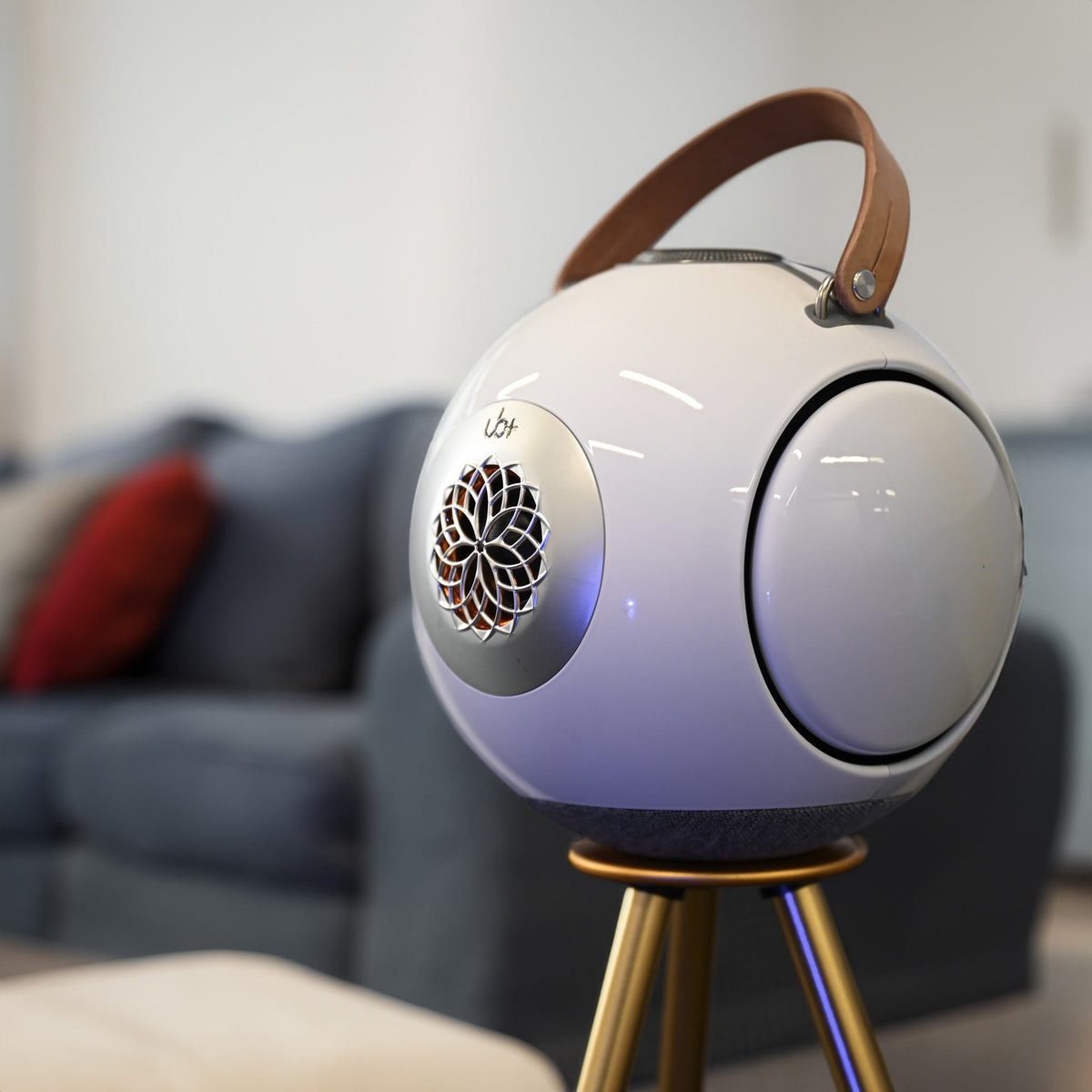
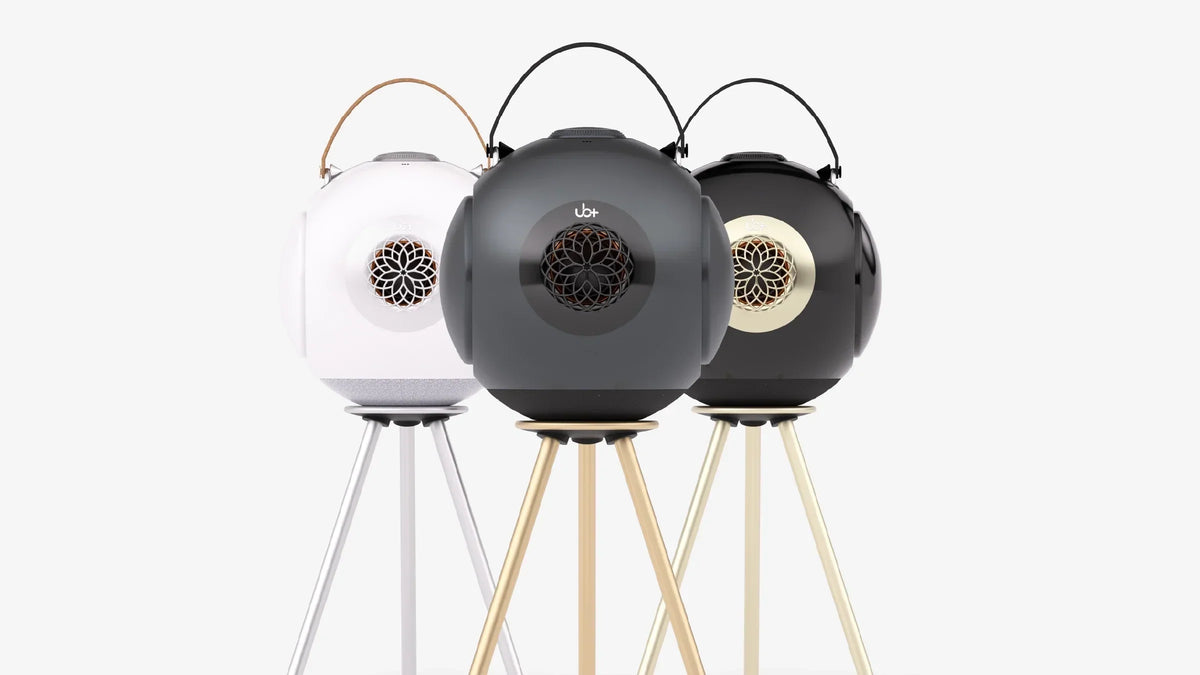
That is especially relevant when comparing conventional portable speakers with products such as the UB+ dB1 DoubleBass, which approaches portable audio through a spherical acoustic chamber, downward-firing mid-bass driver, dual opposing passive radiators, and 360° sound dispersion.
What Does a 100–150 Bluetooth Speaker Usually Give You?

The under-$150 category is extremely competitive. Manufacturers have learned how to package Bluetooth connectivity, rechargeable batteries, compact drivers, passive radiators, and digital tuning into relatively affordable products.
For casual listening, that can be enough.
A speaker in this price range can be useful for bedrooms, kitchens, desks, travel, small gatherings, and background music. Many are designed around convenience rather than complex acoustic architecture.
Typical priorities include:
- Compact size
- Simple Bluetooth connectivity
- Rechargeable battery operation
- Reasonable volume output
- Portable construction
- Basic water or dust resistance on some models
- Bass-enhancing acoustic or digital tuning
- Straightforward controls
The important thing is that affordable does not automatically mean poor.
A well-designed $100 speaker can be an excellent solution when the listening environment is small and the primary requirement is convenient wireless music.
The limitations tend to become more apparent when you ask the speaker to do more.
Higher listening levels, deeper bass, larger rooms, longer listening sessions, and more demanding music can expose differences in driver control, enclosure behavior, distortion, and dispersion.
That is where the price gap becomes more interesting.
What Changes When You Spend More Than $250?

Once a speaker moves above the $250 level, the additional cost can support more than cosmetic upgrades.
Manufacturers have greater room to invest in:
- Larger or more capable drivers
- Stronger motor systems
- Greater driver excursion
- More sophisticated acoustic chambers
- Larger passive radiators
- Better-controlled enclosures
- More complex crossover or DSP systems
- Higher-quality materials
- Improved mechanical stability
- More advanced wireless features
- Greater battery capacity
- More extensive engineering and testing
Not every expensive speaker includes all of these characteristics.
That distinction is important.
Price is an indicator of the product's overall market position, but it is not a technical specification. A $300 speaker can prioritize software and ecosystem features, while another $300 speaker may spend more of its engineering budget on acoustic performance.
The better comparison is therefore not simply:
$150 vs $300
It is:
What has actually been engineered differently?
The Biggest Difference: Acoustic Architecture

One of the most meaningful differences between inexpensive and more sophisticated speakers can be the enclosure itself.
In a basic portable speaker, the enclosure primarily provides structural support for the drivers, battery, electronics, and controls. Acoustic tuning is then used to get the desired sound from that package.
More ambitious designs can treat the enclosure as an active component of the acoustic system.
This is where the UB+ dB1 DoubleBass provides a useful example.
Rather than using a conventional rectangular or elongated cabinet, the dB1 uses a spherical acoustic chamber inspired by the principles of a Helmholtz resonator.
The spherical geometry is designed to distribute internal air pressure more evenly while reducing the internal conditions that can contribute to standing-wave behavior.
The result is not simply a speaker that happens to be round.
The sphere becomes part of the acoustic system.
You can read more about this approach in How spherical speaker design changes modern home audio.
Bass: More Than Just “More”

Bass is probably the area where price differences are most frequently misunderstood.
A cheaper speaker can be tuned to sound bass-heavy. Increasing low-frequency energy can make music seem immediately more powerful, particularly during a short listening session.
But perceived bass quantity and controlled bass reproduction are not the same thing.
A more sophisticated speaker can devote more engineering to the complete low-frequency system:
Driver + enclosure volume + acoustic loading + passive radiator/port + excursion + tuning
All of these factors influence bass performance.
The dB1 illustrates this through its DoubleBass architecture.
Its 4.5-inch mid-bass driver works with the spherical chamber and two large passive radiators positioned opposite each other. The combined passive-radiator surface area is approximately 3.5 times the area of the active woofer.
That large radiating area allows the passive-radiator system to contribute substantial low-frequency output without requiring the active driver to do all the work.
The symmetrical arrangement also helps balance mechanical forces.
This is fundamentally different from simply applying more bass through DSP.
For a deeper look at this architecture, see Passive Radiators vs. Ported Boxes: How Spherical Speakers Produce Bass.
Bass Comparison by Price Tier
|
Characteristic |
Under $150 |
Over $250 |
|
Bass approach |
Often compact-driver tuning and passive/ported assistance |
More room for advanced acoustic architecture |
|
Driver excursion |
Usually constrained by size and cost |
Can support more capable motor/excursion systems |
|
Enclosure engineering |
Generally optimized for compact production |
Greater opportunity for specialized chamber design |
|
Passive radiators |
Common on some models |
Can be larger or more sophisticated |
|
Deep bass |
Model-dependent |
Model-dependent |
|
Bass at higher volume |
Can become less controlled depending on design |
More engineering may be devoted to maintaining control |
|
Mechanical stability |
Depends on enclosure design |
More room for dedicated mechanical engineering |
The table does not mean every expensive speaker has better bass than every inexpensive speaker. It shows where the additional budget can be invested.
Cheap vs Expensive Bluetooth Speaker: Where You Hear the Difference
The difference between price tiers is often easier to hear at certain listening levels and in certain environments.
At low volume in a small bedroom, the difference between a $120 speaker and a $300 speaker may be relatively subtle.
Increase the volume.
Move into a larger room.
Play music with complex bass.
Listen for vocals underneath dense instrumentation.
This is where system design becomes more apparent.
A speaker with limited driver excursion may have to work harder to reproduce demanding low frequencies. A compact enclosure may introduce stronger resonances. A small passive radiator may have limited output capability.
A more advanced system can distribute the workload among multiple acoustic components.
This is one reason expensive speakers should not be judged solely by how impressive they sound during a short demonstration.
The better question is:
How well does the speaker maintain its character when the listening conditions become more demanding?
Midrange and Vocal Clarity
Bass tends to attract attention, but the midrange is where much of the information in music and spoken content lives.
Vocals, guitars, piano, strings, percussion, dialogue, and many other instruments occupy significant portions of the midrange.
When bass is overly emphasized, it can make vocals and instruments seem less distinct. This is sometimes described as a “muddy” presentation.
More sophisticated acoustic systems can devote greater attention to controlling the interaction between low frequencies and the midrange.
The dB1's spherical chamber is designed to reduce problematic internal resonances and phase-related issues while its driver system operates within the controlled air volume.
This does not mean a particular price automatically guarantees clearer vocals. Digital tuning, driver selection, crossover design, and enclosure construction all matter.
But as speaker systems become more ambitious, manufacturers have more opportunities to address those factors together.
High Frequencies and Listening Fatigue
High-frequency performance is another area where specifications alone do not tell the complete story.
A speaker can produce strong treble without producing comfortable treble.
If a system emphasizes upper frequencies too aggressively, music can become tiring during extended listening. On the other hand, insufficient high-frequency energy can make a speaker sound dull.
The goal is balance.
This becomes particularly important for people who listen for several hours at a time while working, studying, reading, or relaxing.
A more expensive speaker may devote additional engineering to driver integration, digital processing, crossover behavior, and enclosure design to achieve a more controlled tonal balance.
Again, this is not guaranteed simply because the speaker costs more.
Price gives you a larger engineering budget; it does not automatically determine how that budget was spent.
Sound Dispersion: Why Room Coverage Matters
Another major difference between speaker designs is how sound spreads through a room.
Many inexpensive portable speakers use a directional driver arrangement. This can work perfectly well when the listener sits directly in front of the speaker.
But real-life listening is rarely that consistent.
People move around.
Someone may be sitting on a sofa while another person is cooking in the kitchen. Music might play while people talk around a dining table. A speaker might sit in the middle of a room rather than against a wall.
This is where 360° sound can become useful.
The UB+ dB1 is designed around 360° spherical sound dispersion. Instead of creating one primary listening direction, its acoustic architecture is intended to distribute sound around the speaker.
This makes the design particularly relevant for shared spaces.
For more on the subject, read 360° vs. front-firing speakers.
Dispersion Comparison
|
Listening Factor |
Under $150 Speaker |
Over $250 Speaker |
|
Dispersion |
Model-dependent |
Model-dependent |
|
Single-listener use |
Usually effective |
Usually effective |
|
Shared listening |
Depends on driver layout |
More advanced dispersion systems may be available |
|
Room coverage |
Varies significantly |
Can be a major design priority |
|
360° architecture |
Available on some models |
More specialized implementations available |
|
Placement flexibility |
Model-dependent |
Model-dependent |
The important point is that price does not determine dispersion. Speaker architecture does.
Construction and Materials
Part of the price difference between speaker categories can also appear in physical construction.
An inexpensive speaker has to balance materials, manufacturing cost, battery, electronics, drivers, and enclosure design within a tight budget.
A more expensive product may have room for:
- More substantial enclosure materials
- Better mechanical reinforcement
- More sophisticated finishes
- Larger internal components
- More robust controls
- More carefully engineered mounting systems
- Improved protection against environmental conditions
But once again, materials should be evaluated based on function rather than appearance.
A premium finish is not necessarily an acoustic improvement.
The more useful question is whether the construction contributes to rigidity, vibration control, durability, acoustic performance, or long-term usability.
The dB1's spherical enclosure is particularly relevant here because its geometry is connected to both its acoustic and mechanical behavior.
The dual passive radiators move in opposing directions, helping balance the mechanical forces produced during operation.
Battery Life and Power Management
Battery performance is another area where the extra money may or may not matter.
A cheaper speaker may provide enough battery life for a few hours of casual use. For occasional listening, that can be completely adequate.
People who use a speaker throughout the day may care more about:
- Playback duration
- Charging speed
- Power management
- Output consistency as the battery declines
- Battery capacity
- Charging convenience
The dB1 offers up to 20 hours of playback, depending on usage conditions.
However, battery life should always be compared under equivalent conditions. Playback volume, wireless connection, audio content, and other features can affect actual runtime.
This is another reason not to assume that paying more automatically means longer battery life.
Connectivity: What Are You Actually Paying For?
Modern Bluetooth speakers can include far more than Bluetooth.
Depending on the price tier and product philosophy, features may include:
- Bluetooth
- Companion apps
- Multi-speaker pairing
- EQ controls
- Wi-Fi
- Voice assistant integration
- Wired inputs
- TF or memory-card playback
- Firmware updates
- Smart-home integration
A speaker over $250 may spend a significant portion of its development budget on software and connectivity rather than acoustic components.
That can be valuable if you actually use those features.
If your only requirement is:
Connect phone → play music → disconnect → repeat
then paying extra for an extensive ecosystem may not provide much practical benefit.
The dB1 focuses heavily on its physical acoustic architecture while providing Bluetooth 5.3, wired playback, and TF playback within its product design.
The right choice therefore depends on whether your priority is acoustic architecture, software functionality, ecosystem integration, or some combination.
What the Extra 100–150 Can Actually Buy
Moving from approximately $150 to $250 or more does not buy one specific feature.
It can buy engineering headroom.
That headroom can appear as:
1. Better Driver Systems
A larger magnet, stronger motor, greater excursion, or more capable driver can allow a speaker to reproduce demanding material with greater control.
The dB1 uses an oversized 90 mm neodymium magnet with its long-stroke mid-bass driver.
2. More Sophisticated Acoustic Loading
Instead of simply increasing electronic bass, manufacturers can use the enclosure volume and acoustic elements to produce low-frequency output mechanically.
The dB1's spherical chamber and DoubleBass passive-radiator system are examples of this philosophy.
3. Greater Mechanical Stability
Opposing passive radiators can help balance mechanical forces.
That allows the speaker to devote more of its energy toward producing sound rather than allowing unwanted enclosure movement to dominate.
4. Better Room Coverage
A more specialized speaker may be engineered around wider or 360° dispersion rather than simply projecting toward one direction.
5. More Refined Construction
Additional budget can support better materials, reinforcement, manufacturing tolerances, and mechanical design.
6. More Features
Some premium products invest heavily in apps, wireless ecosystems, multi-room playback, voice control, or other convenience features.
The important question is which of these improvements you will actually notice and use.
A $300 Speaker Is Not Automatically Better for You
This is one of the most important points when comparing price tiers.
Imagine two listeners.
Listener A: Bedroom Music
They listen at moderate volume for an hour or two each evening.
They primarily stream music from a phone.
They do not need extreme bass.
They do not move around the room.
For this listener, a well-designed 100–150 speaker may provide everything needed.
Listener B: Shared Living Space
They want music to fill a larger room.
Several people listen from different positions.
They care about bass control.
They listen for several hours at a time.
They want a speaker that combines portability with more advanced acoustic engineering.
For this listener, the additional engineering of a higher-priced product may become much more relevant.
The difference is not simply budget.
It is use case.
Under $150 vs Over $250: Complete Comparison
|
Category |
Under $150 |
Over $250 |
|
Primary focus |
Value and convenience |
Broader combination of performance and features |
|
Drivers |
Usually compact |
Potentially larger/more advanced |
|
Bass |
Often optimized for perceived impact |
Greater opportunity for controlled low-frequency reproduction |
|
Enclosure |
Cost-efficient design |
More specialized acoustic architecture possible |
|
Passive radiators |
Common in some models |
Can be larger or more sophisticated |
|
Dispersion |
Model-dependent |
More advanced designs available |
|
Construction |
Cost-conscious materials |
Greater material and engineering flexibility |
|
Battery |
Often adequate for casual use |
Can support larger batteries or additional power requirements |
|
Connectivity |
Basic to moderate |
Basic through highly advanced |
|
Apps/ecosystems |
Model-dependent |
More common in premium products |
|
Mechanical engineering |
Varies |
More opportunity for specialized systems |
|
Room-filling performance |
Model-dependent |
Can be a greater design priority |
|
Long-session performance |
Highly model-dependent |
More engineering headroom available |
|
Best for |
Casual listening and value-focused buyers |
Buyers prioritizing performance, design, features, or specialized engineering |
The table should be treated as a price-tier framework, not a guarantee. Individual models can perform very differently within the same price category.
When Is Spending Over $250 Worth It?
The extra money becomes easier to justify when you care about several of the following:
You listen at higher volumes.
Higher output places greater demands on drivers, enclosures, and thermal systems.
You want controlled bass rather than simply strong bass.
Low-frequency reproduction becomes more demanding as volume and complexity increase.
You listen in larger rooms.
Room coverage and dispersion become more important.
Multiple people listen at once.
A 360° architecture can be useful when listeners are not positioned directly in front of the speaker.
You listen for long periods.
Tonal balance and distortion become more noticeable over extended sessions.
You care about physical engineering.
Specialized chambers, drivers, passive radiators, and mechanical systems can provide meaningful differences beyond basic Bluetooth functionality.
You want premium construction.
Materials and enclosure engineering may matter more when the speaker is used frequently and expected to last.
When Should You Stay Under $150?
A less expensive speaker can make more sense when:
- You primarily listen at moderate volume
- The speaker is used in a bedroom or small office
- Portability is more important than acoustic refinement
- You need a secondary speaker
- You mainly listen to podcasts or background music
- You do not need advanced wireless features
- You are working within a strict budget
- You simply want reliable Bluetooth playback
There is no reason to spend $250 or more if the additional capabilities do not solve a problem you actually have.
Where the UB+ dB1 Fits Into the Conversation
The UB+ dB1 DoubleBass is interesting because its design is not based solely on adding features as the price increases.
Its core proposition is acoustic architecture.
The spherical chamber provides the acoustic volume.
The downward-firing mid-bass driver energizes that chamber.
The two opposing passive radiators respond to the internal pressure.
The passive radiators provide a combined surface area approximately 3.5 times that of the woofer.
The symmetrical arrangement helps balance mechanical forces.
And the overall system provides 360° sound dispersion.
This is a fundamentally different way of approaching the question of what additional engineering can accomplish in a portable speaker.
For more detail about the engineering philosophy, see Why UB+ Chose the Sphere: The Design and Engineering Story Behind dB1.
What Should You Listen for When Comparing Speakers?
If you are shopping across the $150 and $250+ categories, do not listen only for loudness.
Use the same song or playlist and compare:
Bass Control
Does the kick drum remain defined, or does the low end become one large sound?
Vocal Separation
Can you clearly hear vocals when bass and instruments become more complex?
High-Frequency Comfort
Do cymbals and higher frequencies remain detailed without becoming tiring?
Volume Scaling
Does the sound remain controlled as you increase the volume?
Dispersion
Walk around the speaker. Does the tonal balance change significantly as you move?
Cabinet Behavior
Listen for rattling, buzzing, or obvious enclosure vibration.
Overall Balance
After ten or fifteen minutes, does the speaker still sound natural, or does one frequency range dominate?
This type of comparison tells you more than a short demonstration at maximum volume.
The Real Difference Between Cheap and Expensive Bluetooth Speakers
The biggest misconception is that expensive Bluetooth speakers simply contain “better parts.”
Sometimes they do.
But the more meaningful difference is often how those parts work together.
A speaker is a system.
The driver cannot be separated completely from the enclosure. The enclosure cannot be separated from the air volume. The passive radiator cannot be separated from the tuning. The acoustic system cannot be separated from dispersion.
That is why advanced speaker design is often about integration rather than individual specifications.
The UB+ dB1 demonstrates this principle through its spherical architecture.
Its performance concept begins with the physical behavior of air and uses that behavior to support bass reproduction, mechanical balance, and broad sound dispersion.
Frequently Asked Questions
Is an expensive Bluetooth speaker always better than a cheap one?
No. Price does not automatically determine sound quality. A more expensive speaker may offer more advanced acoustic engineering, better materials, additional features, or stronger output, but the right choice depends on the specific model and your listening requirements.
What does the extra money buy in a Bluetooth speaker?
The additional budget can go toward better drivers, stronger motors, larger passive radiators, more sophisticated enclosures, improved mechanical construction, batteries, software, wireless features, or other engineering. The exact benefits depend on the product.
Is a $150 Bluetooth speaker enough for a bedroom?
For many listeners, yes. A small bedroom generally does not require the same acoustic output or room coverage as a large living space. A well-designed affordable speaker can be entirely suitable for moderate-volume listening.
Why does the UB+ dB1 use a spherical enclosure?
The dB1 uses a spherical acoustic chamber inspired by Helmholtz resonance principles. The geometry is designed to manage internal air pressure and reduce problematic internal acoustic behavior while working with the downward-firing driver and dual passive radiators.
Is the UB+ dB1 worth considering over a cheaper portable speaker?
That depends on what you value. If your priorities include spherical acoustic architecture, 360° sound dispersion, controlled bass, symmetrical passive-radiator design, and a more engineering-focused approach to portable audio, the dB1 offers characteristics that may justify considering a higher-priced speaker category.
Final Thoughts: What Are You Really Paying For?
The jump from an under-$150 Bluetooth speaker to a speaker costing more than $250 is not simply a jump from “bad” to “good.”
It is a move between different levels of engineering, features, materials, and design priorities.
An affordable speaker can deliver convenient wireless music, strong portability, and satisfying sound without requiring a large investment.
A more expensive speaker can justify its price when it uses that additional budget to solve specific problems: better driver control, deeper and more controlled bass, improved dispersion, stronger mechanical stability, more sophisticated acoustic architecture, better construction, or additional connectivity.
The key is to identify what the extra money actually buys.
For buyers researching cheap vs expensive bluetooth speaker options, the best comparison is therefore not based on price alone. Look inside the design. Examine the driver, enclosure, acoustic loading, passive-radiator system, dispersion, battery, connectivity, and intended environment.
That is where the real difference between price tiers becomes visible.
And if the goal is a portable speaker that treats its enclosure as an active part of the acoustic system rather than simply a container for electronics, the UB+ dB1 DoubleBass provides a distinctive example of what that approach can look like.
Explore More UB+ Speaker Guides
→ Explore the UB+ dB1 DoubleBass
→ How Spherical Speaker Design Changes Modern Home Audio
→ Passive Radiators vs. Ported Boxes: How Spherical Speakers Produce Bass
→ 360° vs. Front-Firing Speakers
→ Why UB+ Chose the Sphere: The Design and Engineering Story Behind dB1


Laisser un commentaire
Ce site est protégé par hCaptcha, et la Politique de confidentialité et les Conditions de service de hCaptcha s’appliquent.