
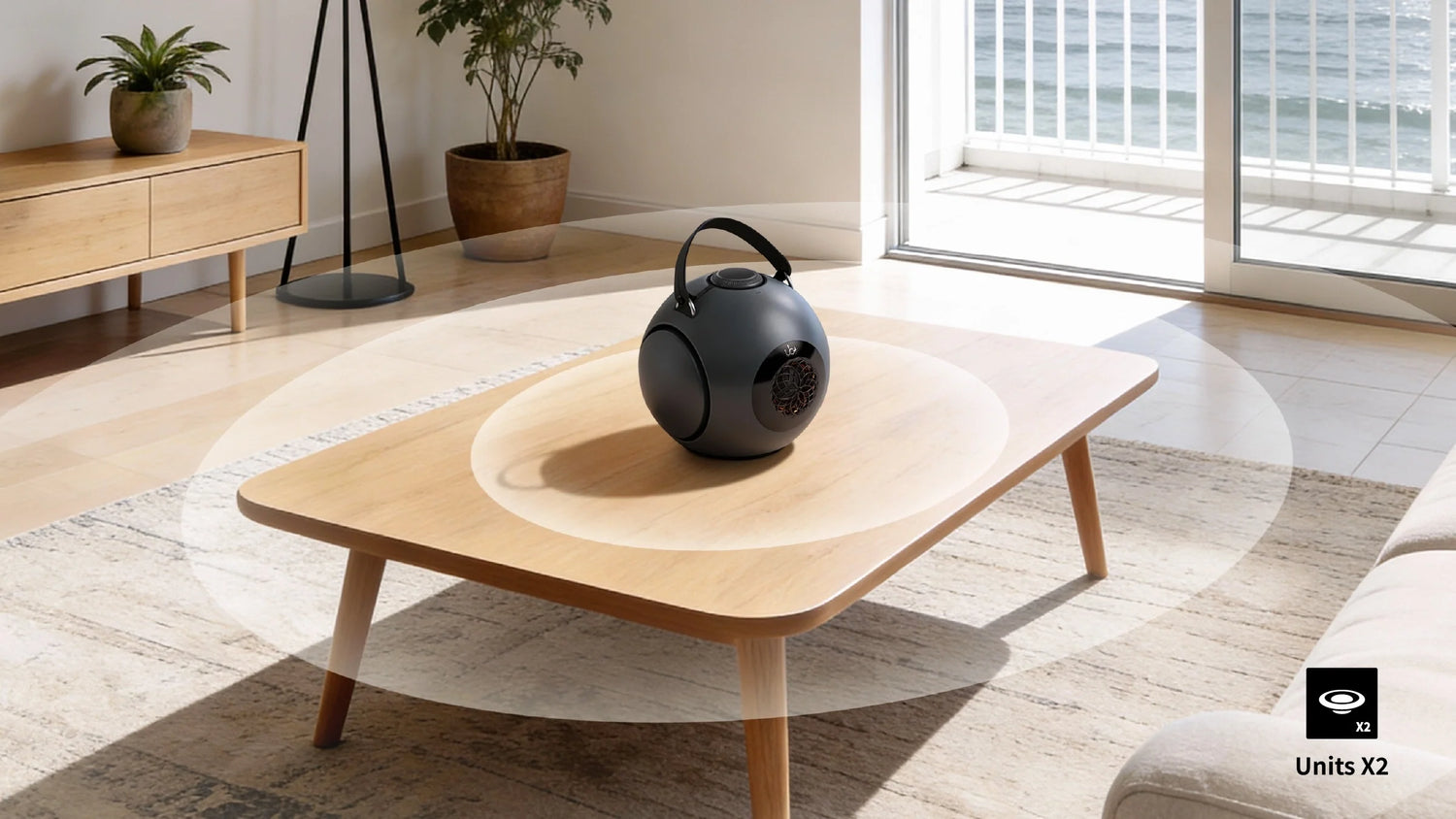
In the early days of home audio, speakers were often treated as purely functional objects. Their purpose was simple: reproduce sound as accurately and powerfully as possible. Design was secondary. Many speakers were large rectangular boxes that homeowners tried to place behind furniture, tuck into corners, or camouflage within a room.
Today, that philosophy is changing.
Modern consumers no longer view audio equipment as something that should disappear into the background. Instead, speakers are increasingly becoming part of interior design, personal identity, and lifestyle expression. Just as people carefully choose furniture, lighting, artwork, and décor, they are now selecting audio products that complement the overall atmosphere of their homes.
This shift has transformed how manufacturers approach product development. The most successful brands are no longer designing speakers solely around technical specifications. They are creating products that combine acoustic performance, craftsmanship, emotional appeal, and architectural beauty.
For buyers researching a portable bluetooth speaker, wireless bluetooth speaker, bluetooth speakers best bass, best wireless speakers bass, rechargeable bluetooth speaker, or best value bluetooth speaker, aesthetics have become nearly as important as sound quality.
The question is no longer:
"How can I hide my speakers?"
The question is:
"How can my speakers improve the way my space feels?"
This evolution explains why premium audio products are increasingly becoming lifestyle objects rather than simple consumer electronics.
The Shift from Hidden Technology to Visible Technology
For decades, home technology followed a predictable pattern.
Consumers wanted technology to disappear.
Televisions were hidden inside cabinets.
Stereo systems were placed inside entertainment centers.
Speakers were pushed against walls or concealed behind furniture.
The goal was to minimize visual disruption.
However, consumer preferences have changed dramatically.
Modern buyers increasingly embrace technology that contributes to the character of a space.
Examples include:
- Designer lighting
- Premium coffee equipment
- Mechanical watches
- Architectural furniture
- Minimalist smart home devices
Audio products have become part of this movement.
Rather than hiding technology, people want beautifully designed technology.
Why Design Matters More Than Ever
Several cultural trends have influenced this shift.
Open Living Spaces
Modern homes often feature:
- Open floor plans
- Integrated living areas
- Flexible room usage
Because speakers are more visible than ever, appearance matters.
Social Media and Interior Design
Platforms like Instagram, Pinterest, and design-focused publications have increased awareness of home aesthetics.
People invest more energy into creating visually pleasing environments.
Remote Work
Millions of people now spend more time at home.
As a result, consumers place greater value on products that improve both functionality and appearance.
Minimalism
Many homeowners seek fewer but better possessions.
Instead of filling rooms with equipment, they prefer thoughtfully designed products that serve multiple purposes.
The Emotional Side of Product Design
When people purchase a speaker, they are not only buying sound.
They are also buying an experience.
The best products create emotional connections through:
- Shape
- Materials
- Texture
- Craftsmanship
- Presence
A well-designed speaker can feel welcoming, inspiring, and timeless.
This emotional response often influences satisfaction just as much as technical performance.
Why People Display Some Products and Hide Others
Think about the objects people proudly display in their homes.
Examples include:
- Designer chairs
- Sculptures
- Luxury watches
- High-end cameras
- Art books
These products are appreciated beyond their practical purpose.
The same principle increasingly applies to audio products.
When a speaker possesses genuine design value, owners want it to remain visible.
The Rise of Lifestyle Audio
Audio manufacturers have recognized that consumer expectations have evolved.
People no longer want a product that sounds good but looks ordinary.
Nor do they want a product that looks attractive but performs poorly.
They want both.
This trend has given rise to lifestyle-oriented audio design.
Lifestyle audio products combine:
- Sound quality
- Visual appeal
- Ease of use
- Architectural integration
The best examples become natural elements within a room rather than technological intrusions.
Why Traditional Speaker Design Has Limitations
Most conventional speakers share a common characteristic:
They are boxes.
The rectangular enclosure became standard because it is simple and economical to manufacture.
While practical, this design often presents challenges.
Visually, box speakers can appear:
- Heavy
- Industrial
- Bulky
- Difficult to integrate
Acoustically, rectangular enclosures also introduce compromises.
Flat internal surfaces can create:
- Standing waves
- Internal reflections
- Resonance issues
These factors influence sound quality as well as aesthetics.
When Industrial Design Supports Acoustic Performance
The most successful products achieve harmony between design and engineering.
Rather than treating appearance and performance as separate goals, premium manufacturers integrate them into a single philosophy.
This approach is especially evident in modern spherical speaker designs.
Why Spherical Speakers Attract Attention
Humans naturally respond to curves.
Throughout architecture and product design, curved forms often feel:
- Softer
- More organic
- More approachable
- More timeless
A sphere possesses a unique visual quality.
Unlike rectangular products, it avoids sharp edges and rigid geometry.
This allows spherical speakers to function almost like sculptural objects within a living space.
The Acoustic Advantages of Spherical Design
The appeal of a sphere extends beyond appearance.
From an acoustic perspective, spherical enclosures offer meaningful benefits.
Because they lack parallel internal walls:
- Standing waves are reduced
- Internal reflections decrease
- Pressure distribution becomes more uniform
These characteristics contribute to cleaner sound reproduction.
In other words:
The shape is not merely decorative.
It serves a technical purpose.
UB+ and the Philosophy of Visible Audio
One example of this design-first philosophy is the UB+ dB1 DoubleBass.
The speaker was created around a simple but powerful idea:
A speaker should enhance both sound and space.
Instead of hiding behind furniture, it should contribute positively to the environment.
This philosophy reflects a growing trend in premium audio where products function as both acoustic instruments and design objects.
Helmholtz-Inspired Spherical Acoustic Chamber
At the core of the dB1 is a Helmholtz-inspired spherical acoustic chamber.
Unlike conventional box speakers, the spherical enclosure promotes:
- More even internal pressure distribution
- Reduced standing waves
- Lower internal resonance
These characteristics improve overall acoustic performance.
The design demonstrates how engineering and aesthetics can support one another rather than compete.
Engineering Bass Through Physics
Many modern speakers attempt to create stronger bass using aggressive digital processing.
While effective in demonstrations, this approach can introduce:
- Distortion
- Artificial tonal balance
- Listening fatigue
The dB1 takes a different approach.
Its architecture emphasizes mechanical bass amplification rather than relying solely on software enhancement.
The result is bass performance rooted in acoustic physics.
Dual Symmetrical Passive Radiators
One of the speaker's defining features is its dual passive radiator configuration.
The system includes:
- Two opposing passive radiators
- Symmetrical operation
- Balanced force distribution
As pressure develops within the enclosure:
- Both radiators move simultaneously
- Additional air displacement occurs
- Bass output increases efficiently
This contributes to substantial low-frequency performance despite the compact footprint.
Why 3.5× Passive Radiator Surface Area Matters
The dB1's passive radiators provide a combined surface area approximately:
3.5 times greater than the active woofer surface area.
This allows the system to move significantly more air.
Benefits include:
- Enhanced bass extension
- Greater efficiency
- Improved low-frequency presence
The result is deeper, richer sound without requiring a larger enclosure.
Self-Cancelling Vibration Architecture
Speaker vibration often reduces efficiency.
When cabinets vibrate:
- Energy is wasted
- Detail can be obscured
- Bass precision may suffer
The dB1's symmetrical passive radiator design helps counteract these issues.
As opposing radiators move together:
- Mechanical forces balance
- Cabinet vibration decreases
- More energy becomes usable sound
This contributes to cleaner performance.
Premium Driver Technology Matters
The enclosure is only part of the equation.
The dB1 also incorporates advanced driver technologies including:
90mm Neodymium Magnet
Provides strong magnetic control and efficiency.
35mm Long-Stroke Voice Coil
Supports substantial excursion while maintaining accuracy.
20mm Piston Movement
Allows meaningful air displacement for bass performance.
Aluminum Shorting Ring
Reduces distortion and improves linearity.
Extra-Wide 18mm Surround
Maintains cone stability during demanding playback.
Together, these elements help create sound quality that matches the sophistication of the design.
Hidden Technology vs Lifestyle Audio
|
Factor |
Traditional Hidden Speaker |
Modern Lifestyle Speaker |
|
Design Priority |
Low |
High |
|
Visual Appeal |
Functional |
Architectural |
|
Interior Integration |
Limited |
Excellent |
|
Emotional Connection |
Moderate |
Strong |
|
Placement Flexibility |
Moderate |
High |
|
Long-Term Satisfaction |
Moderate |
High |
|
Display Value |
Low |
High |
|
Design Identity |
Generic |
Distinctive |
Why Material Choices Matter
Premium audio products increasingly utilize materials selected for both performance and aesthetics.
Materials influence:
- Durability
- Resonance control
- Surface quality
- Perceived value
Consumers often recognize quality immediately through touch and visual detail.
This contributes to emotional engagement and long-term satisfaction.
The Relationship Between Design and Longevity
Timeless products age differently from trend-driven products.
Designs rooted in simplicity and balance often remain appealing for many years.
This is particularly important for audio products because speakers are typically long-term purchases.
A thoughtfully designed speaker should continue enhancing a room long after purchase.
Why Minimalism Works for Audio
Minimalist design remains popular because it focuses attention on essentials.
In audio products, minimalism often emphasizes:
- Form
- Proportion
- Materials
- Function
Rather than competing for attention, minimalist products contribute quietly to their surroundings.
This approach aligns closely with contemporary interior design trends.
Budget Speaker vs Design-Focused Premium Speaker
|
Feature |
Budget Speaker |
Design-Focused Premium Speaker |
|
Visual Appeal |
Basic |
High |
|
Material Quality |
Standard |
Premium |
|
Acoustic Engineering |
Moderate |
Advanced |
|
Room Integration |
Average |
Excellent |
|
Build Longevity |
Moderate |
High |
|
Emotional Value |
Limited |
Strong |
|
Display Worthiness |
Low |
High |
|
Ownership Experience |
Functional |
Elevated |
The Future of Audio Design
The movement toward visible technology is unlikely to reverse.
Consumers increasingly expect products to:
- Perform well
- Look beautiful
- Integrate naturally
- Reflect personal taste
Audio brands that understand this shift are redefining what speakers can be.
Rather than existing as isolated electronics, speakers are becoming part of modern living environments.
Why Design and Performance Must Work Together
Exceptional design alone is not enough.
Exceptional sound alone is not enough.
The most successful products combine both.
This balance creates experiences that are:
- Functional
- Emotional
- Practical
- Enduring
When design and engineering support one another, speakers become more than devices.
They become objects people genuinely enjoy living with.
Final Thoughts
The modern speaker is evolving from a hidden piece of technology into a visible lifestyle object.
Consumers increasingly seek products that combine:
- Beautiful design
- Strong acoustic performance
- Long-term value
- Emotional appeal
For buyers researching a portable bluetooth speaker, wireless bluetooth speaker, bluetooth speakers best bass, best wireless speakers bass, rechargeable bluetooth speaker, or best value bluetooth speaker, appearance is no longer a secondary consideration.
It is part of the ownership experience.
Products such as the UB+ dB1 DoubleBass demonstrate how thoughtful industrial design can coexist with advanced acoustic engineering through features like:
- Helmholtz-inspired spherical acoustic chamber
- Dual symmetrical passive radiators
- 3.5× passive radiator surface area
- Mechanical bass amplification
- Self-cancelling vibration architecture
- 90mm neodymium magnet
- 35mm long-stroke voice coil
- 20mm piston movement
- Aluminum shorting ring
- Extra-wide 18mm surround
The result is a speaker designed not to be hidden, but to be appreciated both for how it sounds and for how it enhances the spaces where people live.
Frequently Asked Questions
Why are modern speakers becoming design-focused products?
Consumers increasingly view technology as part of their living environment. Instead of hiding electronics, many homeowners want products that complement interior design while delivering strong performance. This shift has encouraged audio brands to prioritize aesthetics alongside sound quality.
Does speaker shape actually affect sound performance?
Yes. Enclosure shape influences internal reflections, resonance behavior, and pressure distribution. Spherical designs can reduce standing waves and improve acoustic consistency compared to traditional box-shaped cabinets, making shape both a visual and technical consideration.
What makes a speaker feel premium beyond sound quality?
Premium speakers often combine advanced engineering with superior materials, refined manufacturing, thoughtful design, and long-term durability. These factors contribute to ownership satisfaction and help the product remain desirable over many years.
Why do some speakers become part of a room's décor?
Products with distinctive design, high-quality materials, and balanced proportions often function like decorative objects. Instead of being hidden, they enhance the visual character of a room while serving a practical purpose.
Are lifestyle speakers only about appearance?
No. The best lifestyle speakers integrate design and performance. Premium examples use thoughtful engineering, acoustic innovation, and durable construction to ensure that aesthetics support functionality rather than replacing it.
Discover Audio Designed to Be Seen and Heard
Looking for a portable bluetooth speaker, wireless bluetooth speaker, or one of today's most refined options among bluetooth speakers best bass and best wireless speakers bass?
Explore the UB+ dB1 DoubleBass and experience:
✓ Helmholtz-inspired spherical acoustic chamber
✓ Dual symmetrical passive radiators
✓ 3.5× passive radiator surface area
✓ Self-cancelling vibration architecture
✓ Mechanical bass amplification
✓ Premium long-stroke driver technology
✓ Physics-driven acoustic engineering
✓ Sculptural design for modern interiors
Explore the UB+ dB1 DoubleBass →




Оставить комментарий
Этот веб-сайт защищается hCaptcha. Применяются Политика конфиденциальности и Условия использования hCaptcha.