
When building a home audio setup, one of the most common questions people face is surprisingly simple:
Do you really need two speakers or is one enough?
For decades, stereo pairs have been considered the “correct” way to listen to music. Two speakers, left and right, creating a soundstage. But modern listening habits and modern speaker design are changing that assumption.
Today, a single wireless bluetooth speaker can deliver room-filling sound that rivals traditional stereo setups, especially in smaller spaces like apartments, bedrooms, and home offices. At the same time, stereo pairs still offer undeniable advantages in certain environments.
So which one is right for you?
This guide breaks down the decision in a practical, technical, and lifestyle-focused way, covering:
- room coverage and sound dispersion
- when one speaker is enough
- when two speakers actually make a difference
- how space and placement affect performance
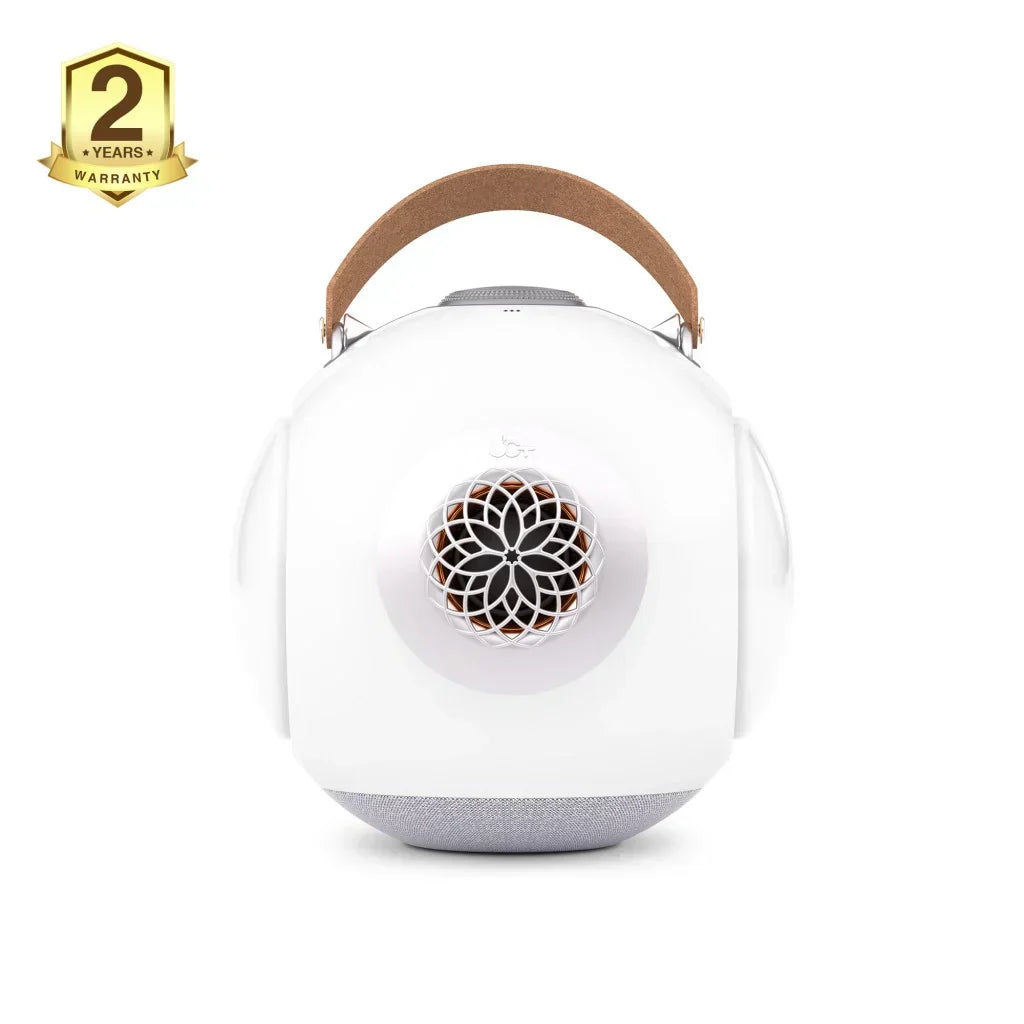
We’ll also explore how newer acoustic engineering like the system used in the UB+ dB1 DoubleBass challenges traditional assumptions about stereo sound.
Understanding Stereo: Why Two Speakers Became Standard
Stereo sound was designed to recreate spatial audio placing instruments and voices across a left-right field.
In a traditional stereo setup:
- the left speaker handles left-channel audio
- the right speaker handles right-channel audio
- your brain combines them into a spatial image
This creates:
- width
- separation
- directional cues
For large rooms or dedicated listening spaces, stereo can feel more immersive.
But this assumes one important condition:
You are sitting in the correct position.
The “Sweet Spot” Problem
Stereo systems rely heavily on positioning.
To hear proper stereo imaging:
- you need equal distance from both speakers
- speakers must be angled correctly
- the room must support balanced reflections
This creates a “sweet spot” a specific place where the sound is optimal.
Outside of that position:
- imaging collapses
- balance shifts
- clarity drops
For many modern homes, this becomes a limitation rather than an advantage.
How People Actually Listen Today
Most people don’t sit in one fixed position.
They:
- move around the room
- work at desks
- cook, relax, or multitask
This is where a single portable bluetooth speaker can sometimes outperform a stereo pair not in theory, but in real-world usability.
Single Speaker Advantage: Consistent Room Coverage
A well-designed single speaker focuses on:
- even sound distribution
- balanced frequency response
- consistent output in multiple positions
Instead of creating a narrow stereo image, it creates a shared listening field.
This is especially useful in:
- small apartments
- bedrooms
- open living spaces
- desk setups
The Role of Speaker Design in Single-Speaker Performance
Not all single speakers perform equally.
Traditional compact speakers often struggle with:
- limited bass
- directional sound
- uneven dispersion
However, advanced designs solve these issues at the structural level.
Spherical Acoustic Design: Eliminating Directional Limitations
The UB+ dB1 DoubleBass uses a spherical enclosure, which fundamentally changes how sound spreads.
Unlike rectangular speakers:
- there are no parallel internal walls
- sound waves distribute evenly
- pressure remains balanced
This allows for:
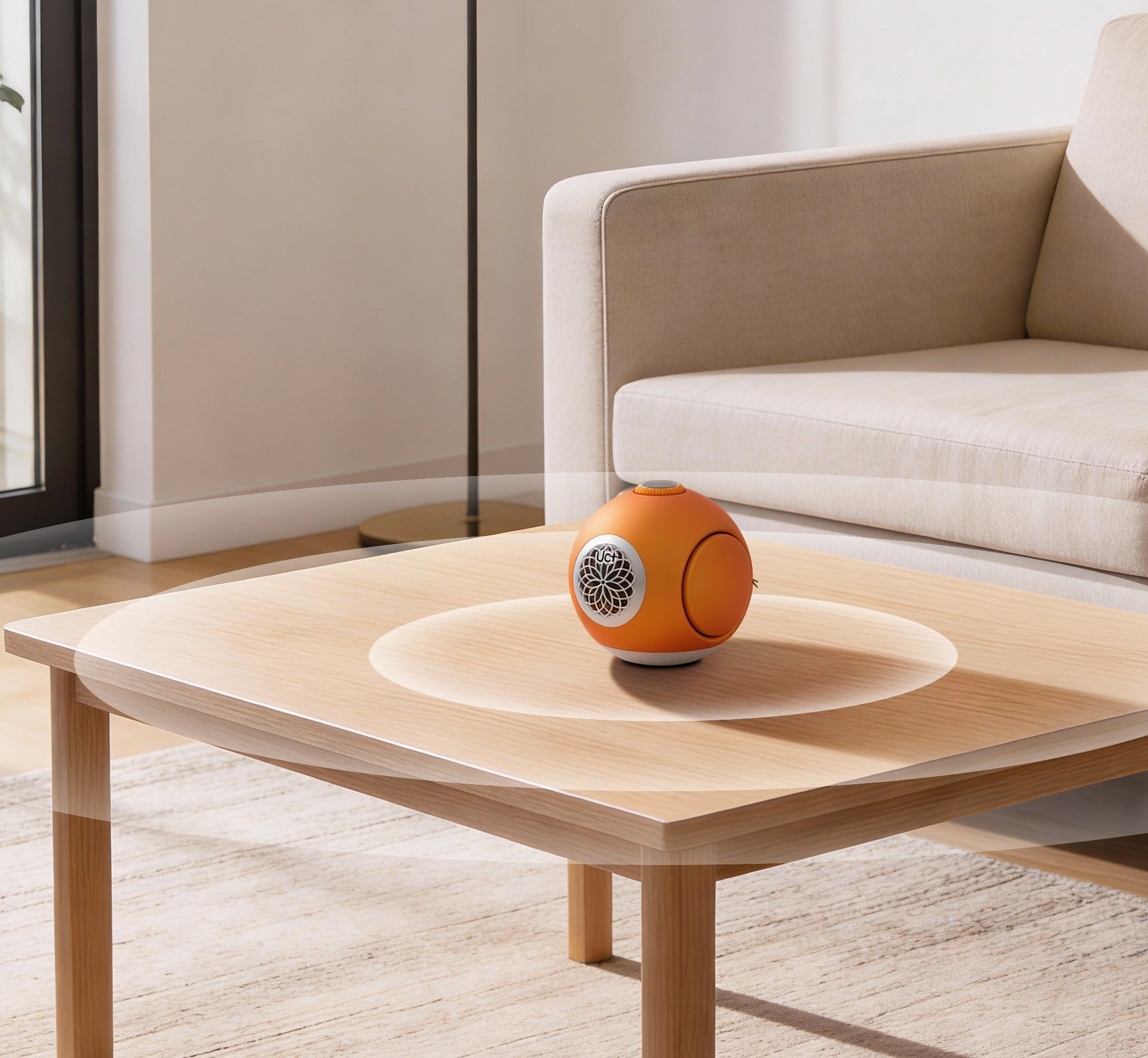
- 360° sound dispersion
- consistent audio throughout the room
- reduced dependence on positioning
This directly addresses the biggest weakness of single-speaker setups.
Helmholtz-Inspired Chamber: Why One Speaker Can Sound Bigger
The dB1 is built around a Helmholtz-inspired acoustic chamber, which improves how low frequencies are produced.
Instead of forcing bass:
- air pressure builds inside the spherical enclosure
- resonance is controlled and shaped
- bass develops naturally
This results in:
- deeper extension
- smoother response
- less distortion
For a single speaker, this is critical it must fill the room without relying on a second unit.
DoubleBass System: Creating Depth Without Stereo
One of the biggest advantages of stereo systems is perceived depth.
The dB1 addresses this differently using its DoubleBass system:
- dual passive radiators
- symmetrical left-right placement
- pressure-driven movement
When music plays:
- both radiators move in opposite directions
- vibration cancels out
- energy is converted into sound efficiently
This creates:
- physical bass presence
- spatial fullness
- room-filling energy
3.5× Air Movement: Why One Speaker Can Replace Two
A key technical factor:
The passive radiator surface area is 3.5× larger than the woofer.
This allows:
- more air displacement
- stronger bass output
- higher efficiency
In practical terms, this means:
- one speaker can fill a room more effectively
- without needing a second unit
High-End Driver Engineering: Precision Matters
The dB1 includes:
- 90mm neodymium magnet
- 35mm long-stroke voice coil
- 20mm piston movement
- aluminum shorting ring
- wide surround for stability
These features ensure:
- low distortion
- stable output
- consistent performance across volumes
This is what allows a best sounding bluetooth speaker to perform beyond its size.
Single Speaker vs Stereo Pair
|
Feature |
Single Speaker |
Stereo Pair |
|
Setup Complexity |
Minimal |
Moderate |
|
Space Required |
Low |
Higher |
|
Room Coverage |
Even (if well-designed) |
Position-dependent |
|
Soundstage |
Wide but unified |
Directional stereo imaging |
|
Sweet Spot Dependency |
None |
High |
|
Portability |
High |
Low |
|
Cost |
Lower |
Higher |
When One Speaker Is Enough
A single speaker is ideal if you:
- live in a small apartment
- use a desk setup
- move around frequently
- prefer simplicity
It works best when the speaker is designed for:
- wide dispersion
- strong bass
- stable output
This is where a rechargeable bluetooth speaker like the dB1 excels.
When You Actually Need Two Speakers
Stereo pairs still have advantages in specific scenarios.
Choose two speakers if you:
- sit in a fixed listening position
- want precise stereo imaging
- have a larger dedicated space
- listen critically to music production
In these cases, left-right separation enhances detail and placement.
Space Considerations: The Hidden Factor
Many people underestimate how much space stereo systems require.
Two speakers mean:
- more desk or shelf space
- more cables or connections
- more placement constraints
In contrast, a single speaker:
- simplifies layout
- reduces clutter
- integrates more easily
Real-World Usage
|
Scenario |
Single Speaker |
Stereo Pair |
|
Small Bedroom |
Excellent |
Overkill |
|
Desk Setup |
Ideal |
Space-consuming |
|
Living Room |
Very good (with strong design) |
Excellent |
|
Moving Around |
Consistent sound |
Uneven coverage |
|
Setup Time |
Instant |
Requires adjustment |
|
Daily Convenience |
High |
Moderate |
Loudness vs Coverage: What Actually Matters
Many assume two speakers are needed for loudness.
But loudness depends on:
- air movement
- enclosure efficiency
- driver control
Not just speaker count.
A well-engineered single speaker can:
- reach sufficient SPL
- maintain clarity
- fill a room evenly
The Myth of “Best Budget Stereo Setup”
Many buyers try to build a stereo system using two best budget bluetooth speakers.
This often leads to:
- mismatched performance
- sync issues
- inconsistent sound
A single high-quality speaker often delivers a better experience.
Listening Fatigue: One Speaker vs Two
Stereo systems can become tiring if:
- not positioned correctly
- too directional
- overly bright
A well-balanced single speaker offers:
- smoother listening
- less fatigue
- more natural presence
Why Modern Design Changes the Decision
Traditional advice “always choose stereo” comes from older technology.
Modern speakers, especially those using:
- spherical enclosures
- passive radiator systems
- advanced driver engineering
can deliver performance that challenges that assumption.
Final Thoughts: Do You Really Need Two Speakers?
The answer depends on your lifestyle not just your expectations.
Choose a single speaker if you want:
- simplicity
- flexibility
- consistent sound everywhere
Choose a stereo pair if you want:
- precise imaging
- dedicated listening experience
- maximum spatial detail
The UB+ dB1 DoubleBass demonstrates how far single-speaker design has evolved:
- Helmholtz-inspired spherical chamber
- dual symmetrical passive radiators
- 3.5× air movement efficiency
- self-cancelling vibration
- 360° sound dispersion
It proves that one speaker, when engineered correctly, can deliver a complete listening experience.
Explore the UB+ DoubleBass
→ Compare dB1 vs dB Mini
→ See color options
→ Check current price
Because the right choice isn’t about how many speakers you own.
It’s about how well your sound fits your space and your life.



Оставить комментарий
Этот веб-сайт защищается hCaptcha. Применяются Политика конфиденциальности и Условия использования hCaptcha.