
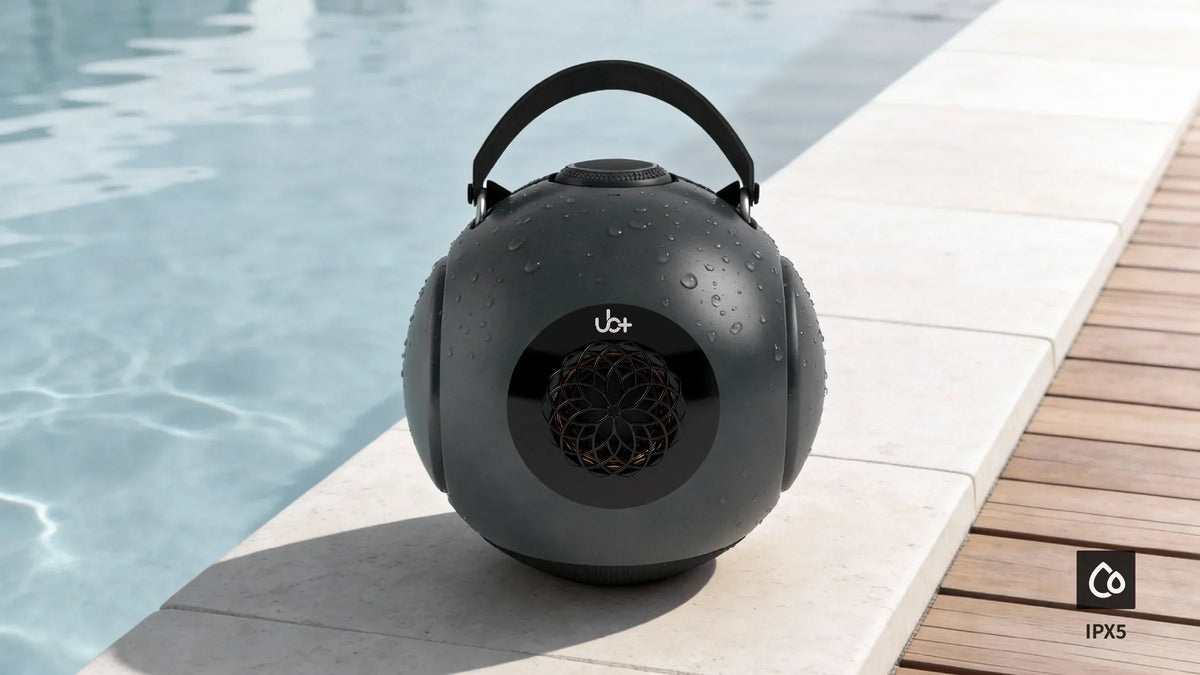
The best waterproof bluetooth speaker should match its water-protection rating to the environment while delivering reliable sound, battery performance, wireless connectivity, and physical durability. A poolside speaker faces different requirements from a hiking speaker, and a compact travel model has different priorities from a large outdoor party speaker. In 2026, the strongest buying decision comes from evaluating IP protection and acoustic engineering together rather than treating either one as the entire product.
What Waterproof Ratings Actually Tell You
Water resistance is measured through the Ingress Protection (IP) system. The liquid-protection number indicates how a device performs against defined water exposure during standardized testing.
|
Rating |
General liquid protection |
Typical relevance |
|
IPX4 |
Splashing water |
Light rain, indoor/outdoor transitions |
|
IPX5 |
Water jets |
Rain, splashes, patios, poolside |
|
IPX6 |
Powerful water jets |
More demanding wet environments |
|
IPX7 |
Temporary immersion |
Accidental drops into water |
|
IPX8 |
Deeper or prolonged immersion |
Manufacturer-defined immersion conditions |
An IP rating does not measure sound quality, impact resistance, battery life, or overall product durability.
It also does not mean that every speaker with a high rating can be used underwater indefinitely.
UB+ dB1: IPX5, Not Submersible
The UB+ dB1 DoubleBass carries an IPX5 rating.
That means its enclosure is designed to withstand water jets under the relevant test conditions. It is appropriate for environments involving splashes, rain, and wet outdoor use, but it should not be treated as a submersible speaker.
This distinction is important because the word "waterproof" is frequently used too broadly in consumer audio marketing.
For buyers, the correct question is:
What type of water exposure will the speaker actually encounter?
What Matters Beyond the IP Rating?
A waterproof portable speaker still has to reproduce music.
For outdoor use, evaluate six areas:
- Water protection
- Acoustic performance
- Bass reproduction
- Wireless connectivity
- Battery endurance
- Construction and portability
The IP rating answers only the first question.
A highly water-resistant speaker can still have weak bass, excessive distortion, poor battery performance, or an unstable wireless connection. Conversely, a speaker with excellent acoustic engineering may be unsuitable for heavy environmental exposure if its protection level is inadequate.
Outdoor Listening Changes the Acoustic Requirements

Indoor rooms provide walls, ceilings, floors, and furniture that reflect sound energy.
Those boundaries can reinforce certain frequencies, particularly lower frequencies, and increase perceived acoustic output.
Open environments remove much of that reinforcement.
At a beach, campsite, park, or open patio, acoustic energy disperses into the surrounding space rather than repeatedly reflecting toward the listener.
This creates a practical requirement for outdoor speakers: the enclosure and drivers must generate useful acoustic output without depending on room reinforcement.
Bass is particularly demanding because low-frequency reproduction requires significant air movement.
That is why a speaker that sounds bass-heavy inside a small room can sound considerably leaner outdoors.
Acoustic Spotlight: How UB+ Approaches Compact Bass
The UB+ dB1 DoubleBass uses a patented spherical acoustic chamber inspired by Helmholtz Resonance rather than a conventional rectangular internal enclosure.
The spherical geometry changes the way pressure and acoustic reflections behave inside the cabinet. The absence of conventional parallel internal walls helps reduce standing-wave formation and associated internal resonance.
The resulting design is intended to reduce phase distortion and improve harmonic reproduction, allowing the enclosure to function as an active part of the acoustic system rather than simply housing the electronics.
At the center of that chamber, a 4.5-inch long-throw mid-bass driver fires downward into the spherical volume.
Driver movement creates pressure changes inside the chamber. Those pressure changes activate dual symmetrical passive radiators positioned on opposing sides.
Their combined radiating surface area is approximately 3.5× larger than the active woofer.
That larger effective radiating area helps the compact system move more air at low frequencies.
The opposing radiator arrangement also creates a self-cancelling vibration architecture. Mechanical forces act in opposite directions, reducing unwanted enclosure movement and directing more of the system's energy toward acoustic output.
This is the basis of the dB1's mechanical bass amplification approach.
The system is supported by a 90 mm oversized neodymium magnet, 35 mm long-stroke voice coil, 20 mm piston movement, 18 mm extra-wide surround, and aluminum shorting ring. The specified acoustic performance is approximately 40 Hz–20 kHz frequency response and 93 dB SPL.
The onboard DSP monitors system behavior and provides driver protection and optimization; it is not used as the fundamental mechanism for generating artificial bass.
Why Mechanical Bass Matters Outdoors

Electronic bass enhancement can increase the perceived level of low frequencies, but DSP cannot remove the physical limitations of a driver's available excursion or the amount of air the system can move.
Mechanical acoustic design approaches the problem at the source.
The driver generates pressure.
The enclosure manages that pressure.
The passive radiators convert pressure into additional acoustic radiation.
This physical chain is important for portable speakers because the enclosure has limited volume and the listening environment often provides little acoustic reinforcement.
The objective is not simply to make bass louder. It is to produce usable low-frequency energy while maintaining control over the rest of the frequency range.
Best Waterproof Speaker for Different Environments
|
Environment |
Priority features |
Why |
|
Poolside |
Water protection, controls, portability |
Frequent splashes and wet handling |
|
Beach |
Water protection, enclosure construction, easy cleaning |
Moisture and sand create separate challenges |
|
Camping |
Battery, durability, wireless stability, bass |
Limited access to charging and open-air acoustics |
|
Hiking |
Weight, durability, battery |
Every additional gram matters over distance |
|
Patio |
Water protection, sound quality, wireless reliability |
Exposure changes while the speaker remains stationary |
|
Backyard party |
Output, bass control, battery, dispersion |
Larger listening area and fewer reflective boundaries |
|
Hotel/travel |
Portability, sound quality, connection stability |
Small spaces and frequent relocation |
Poolside and Rain Use

Poolside listening does not necessarily require submersion protection.
If the speaker will sit near a pool and receive occasional splashes, an appropriate splash or water-jet rating may be sufficient.
Rain presents a similar consideration.
The important factors are:
- The actual IP rating
- Protection around external interfaces
- Manufacturer usage instructions
- Charging requirements after exposure
- Physical construction
Never assume that a speaker can be charged immediately after water exposure simply because it has an IP rating.
Environmental protection applies to the conditions defined by the product and manufacturer.
Beach Use Requires More Than Water Protection
Sand introduces a different problem.
Fine particles can accumulate around buttons, charging connections, speaker grilles, and enclosure openings.
For beach use, evaluate:
- How exposed the external connections are
- Whether the speaker can be cleaned easily
- How the grille is protected
- Whether the enclosure is designed for repeated outdoor handling
- Whether the warranty covers the intended use
A high water rating does not automatically mean the speaker is optimized for sand.
Camping and Hiking: Battery and Weight Matter
Outdoor speakers are often used far from electrical outlets.
Battery specifications therefore deserve more attention when the product is intended for camping or travel.
Actual playback duration changes with:
- Volume
- Wireless activity
- Temperature
- Audio content
- Battery age
- Processing load
Published battery figures should therefore be treated as test-condition measurements rather than universal guarantees.
For hiking, weight becomes equally important.
A speaker that sounds excellent but is inconvenient to carry may not be the best choice for a multi-hour trail.
Outdoor Volume Is Not the Same as Sound Quality

A high maximum-volume number can be useful for a large gathering, but it does not automatically indicate better audio.
At higher levels, evaluate whether:
- Vocals remain intelligible
- Bass remains controlled
- Treble becomes aggressive
- Distortion increases
- Dynamic contrast remains usable
The dB1's approximately 93 dB SPL specification provides an indication of output capability, but SPL should always be considered alongside distortion, frequency response, and listening conditions.
A speaker that remains controlled at its practical operating level can be more useful than one that simply produces a larger headline number.
Bluetooth Connectivity for Outdoor Listening
Wireless reliability becomes particularly important when the speaker is placed several meters away from the source device.
The dB1 uses Bluetooth 5.3.
A current Bluetooth implementation can provide improvements in power efficiency and wireless behavior, but Bluetooth version alone does not guarantee a perfect connection.
Actual performance also depends on:
- Source device
- Antenna design
- Software
- Physical obstacles
- Radio interference
- Distance
For outdoor use, stable pairing and consistent playback are more important than simply seeing a newer Bluetooth number on a specification sheet.
What Specifications Are Actually Worth Paying For?
Not every number on a speaker's product page has equal value.
|
Specification |
What it tells you |
How to evaluate it |
|
IP rating |
Environmental protection |
Match it to actual exposure |
|
Frequency response |
Claimed frequency range |
Check measurement conditions |
|
SPL |
Potential acoustic output |
Look for measurement context |
|
Driver architecture |
Physical sound-generation system |
Examine excursion and motor design |
|
Battery life |
Expected playback duration |
Check testing conditions |
|
Bluetooth version |
Wireless platform generation |
Consider complete implementation |
|
Construction |
Physical durability |
Look for materials and protection |
|
Warranty |
Ownership support |
Read actual coverage |
Specifications that can mislead
Wattage: Higher electrical power does not automatically produce better sound.
"Extra bass": Usually describes a tuning mode rather than a complete acoustic solution.
Maximum range: Wireless range varies with the environment.
Unqualified frequency response: A range without tolerance or measurement methodology is difficult to compare.
Common Buying Mistakes
Buying an IP rating instead of a speaker
Water protection is useful only if the speaker also performs well for your intended listening environment.
Assuming IPX5 means waterproof immersion
It does not. IPX5 covers water jets under defined test conditions.
Choosing bass by marketing language
"Deep bass" is not enough information. Examine the physical architecture behind the claimed result.
Comparing wattage between brands
Different manufacturers can measure and report power differently. Wattage alone is not a reliable ranking system.
Ignoring outdoor acoustics
A speaker can sound different outside because the room is no longer reinforcing its output.
Treating DSP as a substitute for driver engineering
DSP can optimize performance, but physical air displacement remains fundamental to bass reproduction.
A Practical 2026 Buying Checklist
Before purchasing a waterproof or splash-resistant Bluetooth speaker, check:
- IP rating: Is it appropriate for your environment?
- Water exposure: Splash, rain, jets, or immersion?
- Acoustic design: How does the enclosure manage internal energy?
- Bass architecture: Is low-frequency output physically supported?
- Driver: Does the system provide sufficient excursion?
- Output: Is it adequate for your outdoor listening area?
- Wireless: Is the connection stable with your devices?
- Battery: Does realistic playback match your usage?
- Portability: Can you comfortably carry it?
- Durability: Does the physical construction suit the environment?
- Warranty: What happens if the product develops a problem?
Frequently Asked Questions
What is the best waterproof Bluetooth speaker in 2026?
There is no universal winner. JBL, Ultimate Ears, Bose, Sonos, and UB+ address different priorities. Compare water protection, portability, acoustic performance, wireless features, battery requirements, and intended environment before choosing.
Is the UB+ dB1 fully waterproof?
No. The UB+ dB1 is IPX5 rated. It is designed for protection against water jets and splashing, not underwater submersion.
Can a compact speaker produce serious bass outdoors?
Yes, provided its acoustic system can move sufficient air. Driver excursion, enclosure behavior, internal pressure, and radiating area all contribute to low-frequency performance.
Why does UB+ use a spherical chamber?
The spherical geometry is designed to manage internal acoustic pressure and reduce the standing-wave behavior associated with parallel-sided cabinets.
Are passive radiators better than bass ports?
Neither is universally better. They are different acoustic approaches. Passive radiators can be particularly useful in compact designs where a conventional port would create size, tuning, or airflow constraints.
Does DSP improve Bluetooth speaker sound?
DSP can improve system behavior through equalization, monitoring, protection, and optimization. It becomes problematic only when excessive processing is used to compensate for physical limitations.
Final Verdict
For buyers shopping for the best waterproof bluetooth speaker, start with the environment rather than the marketing category.
A poolside listener may need splash protection and easy portability. A camper needs battery endurance and reliable outdoor output. A hiker needs low weight and durability. A backyard host needs greater acoustic output and bass control.
The IP rating should then be matched to that use.
Among the major approaches, JBL offers a broad range of portable and high-output options; Ultimate Ears emphasizes rugged compact products; Bose focuses heavily on portable sound quality; Sonos is strongest when connected-home functionality matters; and UB+ differentiates the dB1 through its physical acoustic architecture.
For the UB+ dB1 specifically, IPX5 is the correct expectation: it provides water-jet and splash protection, not submersion capability.
Its acoustic system takes a separate engineering problem compact bass reproduction and addresses it through spherical enclosure geometry, controlled internal pressure, driver excursion, passive-radiator displacement, and opposing mechanical forces.
Explore UB+
→ Compare dB1 vs dB Mini
Compare the UB+ portable speaker options based on size, acoustic architecture, and intended listening environment.
→ See Color Options
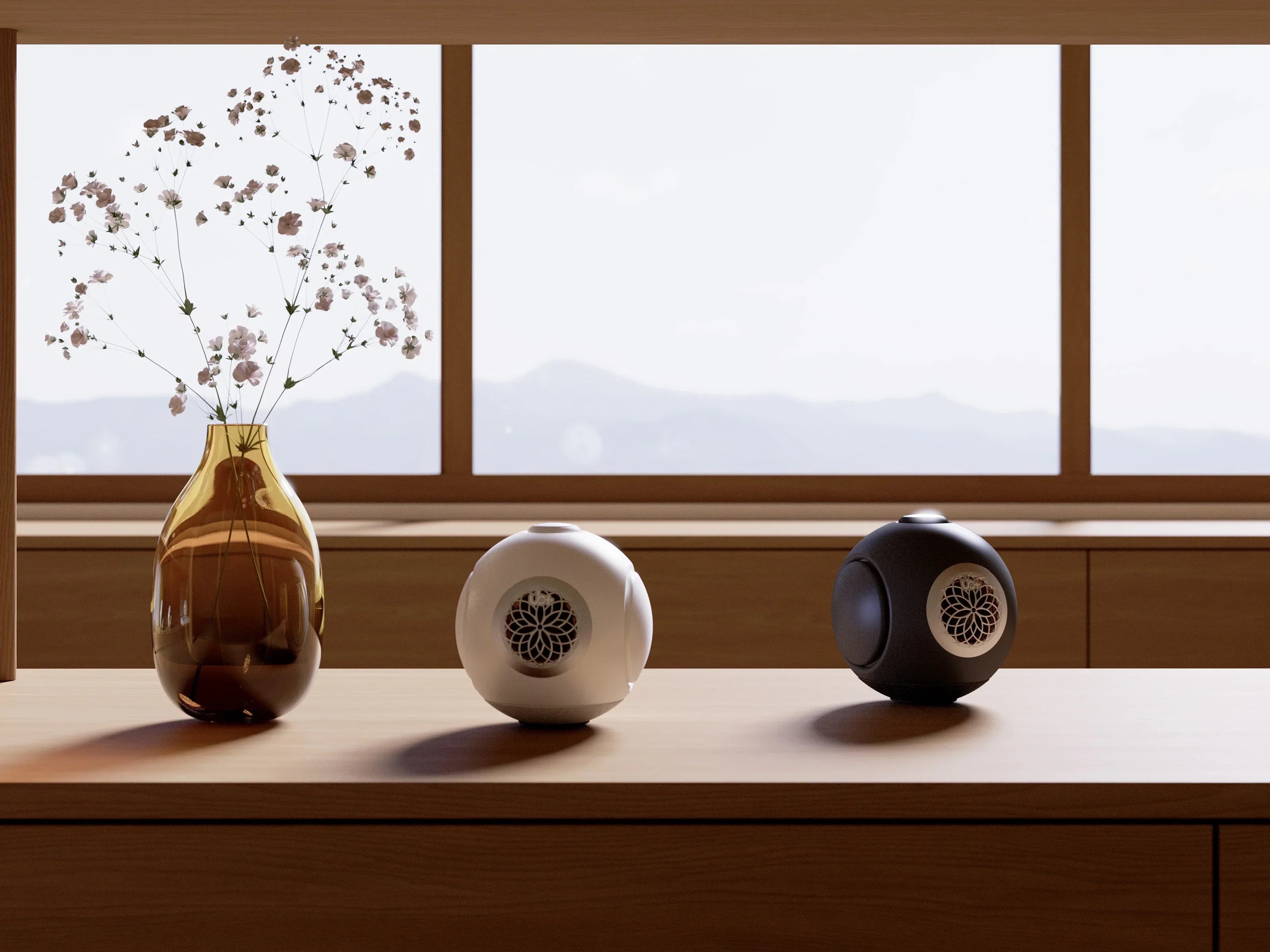
Explore available UB+ finishes for your home, travel, and outdoor setup.
→ Check Current Price
Visit https://ub-plus.com/ for current product information, specifications, pricing, and availability.


发表评论
此站点受 hCaptcha 保护,并且 hCaptcha 隐私政策和服务条款适用。