

Why Finding the Best Sounding Bluetooth Speaker Is About More Than Loudness
Searching for the best sounding bluetooth speaker has become increasingly challenging as manufacturers compete with bold claims about louder volume, deeper bass, and more powerful drivers. While modern Bluetooth speakers have improved dramatically over the past decade, many products still prioritize marketing specifications over genuine acoustic performance. For audiophiles, music lovers, and discerning listeners, the goal isn't simply to find a speaker that plays loudly it's to find one that reproduces music naturally, accurately, and emotionally.
A truly great speaker should disappear into the music. Instead of drawing attention to exaggerated bass or piercing treble, it should recreate the recording with balance, allowing every instrument and vocal to occupy its own space. Whether you're listening to classical orchestras, jazz ensembles, acoustic performances, electronic music, or high-resolution streaming services, the best speaker should reveal details that lesser speakers often hide.
Today's premium wireless speakers combine advanced acoustic engineering, carefully designed driver systems, intelligent wireless technology, and thoughtful industrial design to achieve this goal. Understanding these engineering principles is the key to choosing a speaker that continues to impress long after the excitement of a new purchase has faded.
What Does "Best Sounding" Actually Mean?
Many buyers associate sound quality with maximum volume or exaggerated bass. In reality, audiophiles evaluate speakers using very different criteria.
The best sounding bluetooth speaker should provide:
- Natural tonal balance
- Clear and lifelike vocals
- Detailed midrange
- Smooth, fatigue-free treble
- Deep but controlled bass
- Wide soundstage
- Precise instrument separation
- Low distortion across all listening levels
- Consistent performance indoors and outdoors
Rather than emphasizing one frequency range, a premium speaker reproduces the entire recording faithfully, allowing listeners to hear music exactly as the artist and recording engineer intended.
This balanced presentation is what creates an immersive listening experience during both casual listening and critical evaluation.
Why Engineering Matters More Than Marketing
Walk into any electronics store and you'll see speakers advertised with impressive wattage figures, oversized drivers, and "Extra Bass" features.
While these specifications may sound appealing, they rarely explain why one speaker sounds noticeably better than another.
True sound quality begins long before electricity reaches the driver.
It starts with intelligent acoustic engineering.
Every component including the cabinet, driver layout, airflow, magnet system, suspension, and resonance control works together as a complete acoustic system.
Premium manufacturers invest years developing these elements because they understand that great sound cannot be created through software alone.
The Speaker Cabinet Is an Instrument
Most people think of a speaker cabinet as nothing more than a protective enclosure.
In reality, the cabinet directly shapes how music sounds.
Traditional rectangular speakers contain parallel internal walls that encourage standing waves. These internal reflections interfere with the original audio signal, creating unwanted resonance that reduces clarity and alters tonal balance.
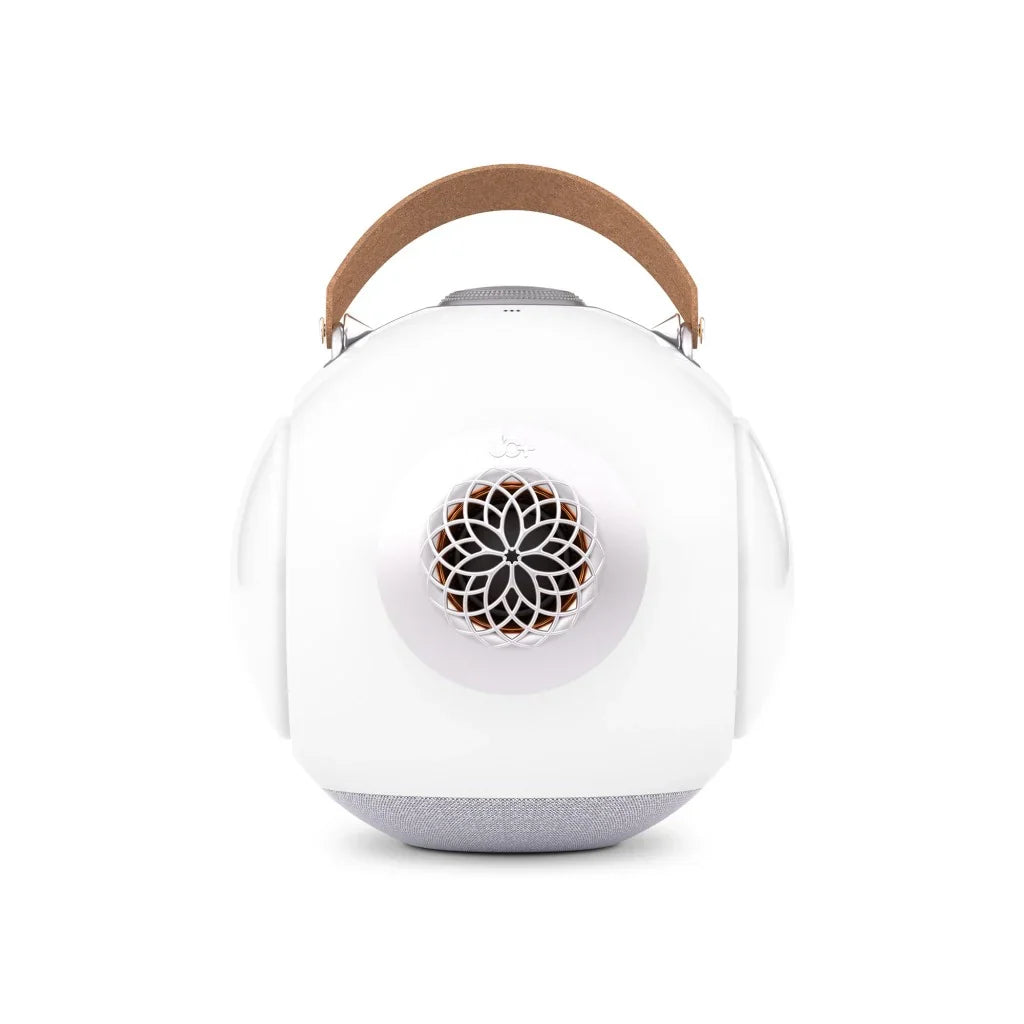
One of the most innovative solutions is the patented Helmholtz Resonance-inspired spherical acoustic chamber developed for the UB+ dB1 DoubleBass.
Inspired by the physics of the Helmholtz Resonator, this spherical enclosure distributes internal air pressure evenly throughout the cabinet instead of allowing reflections to build between flat internal surfaces.
The result is several important acoustic advantages:
- Reduced standing waves
- Lower cabinet resonance
- Minimized phase distortion
- Improved harmonic reproduction
- Greater tonal accuracy
- More natural instrument placement
Instead of coloring the sound, the enclosure becomes an active part of the speaker's acoustic system.
For audiophiles, this means cleaner recordings, more realistic vocals, and improved musical transparency.
Why Spherical Design Improves Musical Accuracy
The shape of a speaker enclosure has a significant influence on its acoustic behavior.
Conventional rectangular cabinets naturally create areas where reflected sound waves collide, generating resonances that blur fine musical detail.
A spherical enclosure dramatically reduces these unwanted reflections.
Because there are no parallel internal surfaces, sound energy is distributed more evenly throughout the chamber.
This helps preserve timing accuracy while reducing phase-related coloration.
The improvement is particularly noticeable with:
- Acoustic recordings
- Classical music
- Jazz ensembles
- Vocal performances
- Live recordings
Instead of sounding congested, instruments retain their natural separation and depth.
This creates the spacious presentation that many audiophiles associate with premium loudspeakers.
Mechanical Bass Instead of Artificial DSP
Producing convincing low frequencies from a compact wireless speaker is one of audio engineering's greatest challenges.
Many manufacturers rely heavily on Digital Signal Processing (DSP) to electronically boost bass.
Although this can create an exciting first impression, excessive DSP often introduces distortion while masking the finer details that audiophiles value.
The UB+ dB1 follows a different philosophy.
At the heart of the system sits a 4.5-inch downward-firing long-throw mid-bass driver positioned inside the spherical chamber.
As the driver moves, air pressure builds evenly before activating dual symmetrical passive radiators mounted on opposite sides of the enclosure.
This patented configuration creates mechanical bass amplification, allowing acoustic physics not artificial software to generate deep, controlled low frequencies.
Because the bass is produced mechanically, it integrates naturally with the midrange instead of overwhelming it.
The result is bass that supports the music rather than dominating it.
More Air Movement Creates More Natural Bass
An important advantage of the UB+ dB1 is the size of its passive radiator system.
The combined passive radiator surface area is approximately 3.5× larger than the active woofer, enabling substantially greater air movement than many conventional portable speakers.
Moving more air efficiently allows the speaker to reproduce lower frequencies without relying on excessive equalization.
Listeners benefit from:
- Fuller bass extension
- Better low-frequency control
- Reduced distortion
- Improved dynamic response
- Greater realism
This engineering is particularly beneficial when listening to orchestral recordings, cinematic soundtracks, modern electronic music, and live performances where bass should feel effortless rather than exaggerated.
Self-Cancelling Vibration Preserves Musical Detail
Another characteristic that separates premium speakers from ordinary designs is vibration control.
Whenever a conventional speaker driver moves, reactive forces can cause the cabinet itself to vibrate.
That movement wastes energy while introducing unwanted coloration into the sound.
The UB+ dB1 minimizes this issue through its self-cancelling vibration architecture.
Because the dual symmetrical passive radiators move simultaneously in opposite directions, the forces generated inside the enclosure naturally counteract each other.
Instead of shaking the cabinet, more energy is converted directly into controlled bass output.
The benefits include:
- Cleaner bass
- Greater clarity
- Lower cabinet resonance
- Improved efficiency
- More stable imaging
For audiophiles, preserving these small details often makes the difference between simply hearing music and becoming immersed in it.
Premium Components Deliver Audiophile-Level Performance
Advanced acoustic architecture is only part of the equation.
The UB+ dB1 incorporates premium driver technologies designed to maximize precision and efficiency, including:
- 90 mm oversized neodymium magnet
- 35 mm long-stroke voice coil
- 20 mm piston movement
- 18 mm extra-wide surround
- Aluminum shorting ring
These carefully selected components improve driver control, reduce distortion, and maintain accurate cone movement across the entire frequency range.
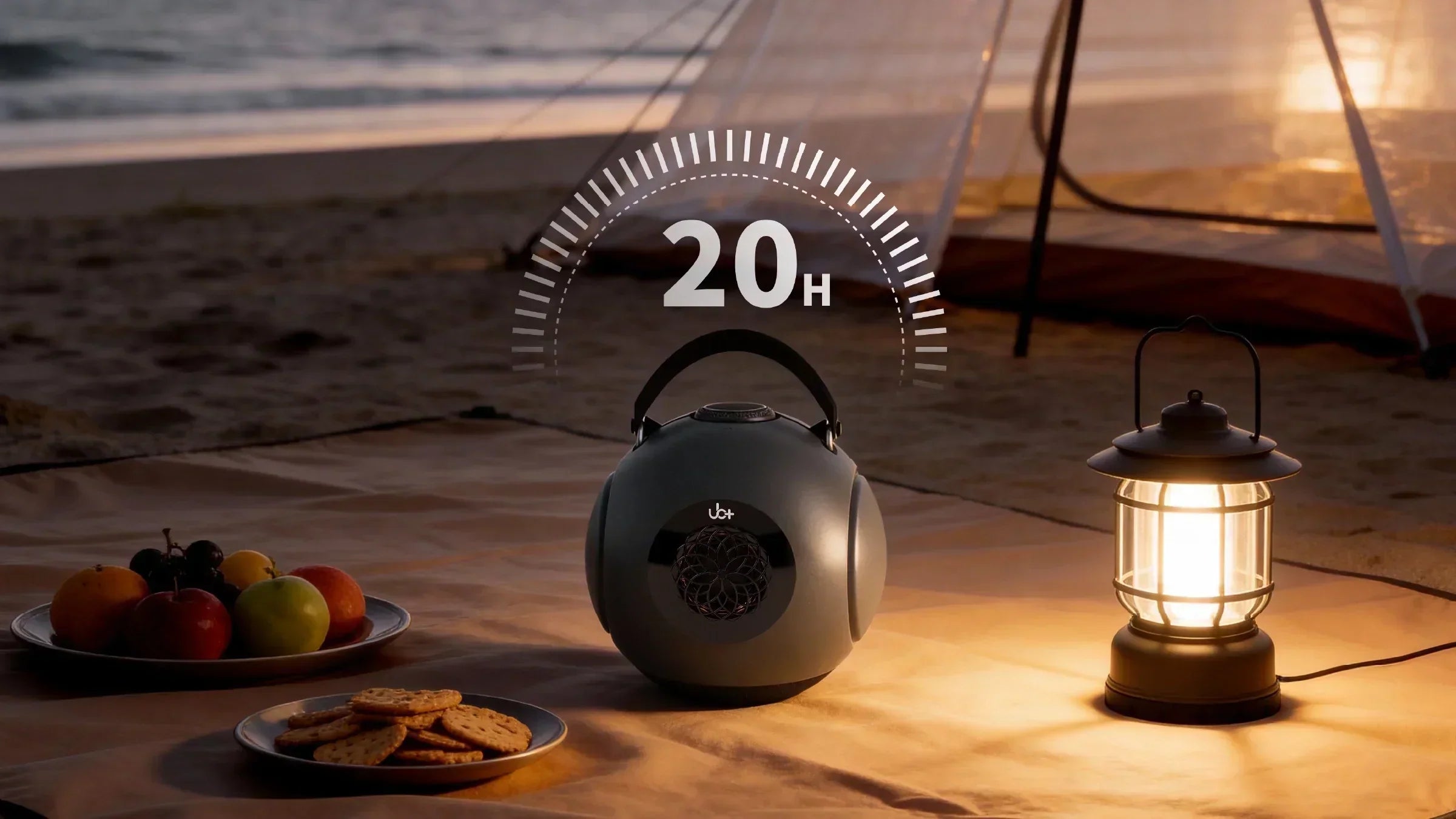
Combined with a 40 Hz–20 kHz frequency response, approximately 93 dB SPL, Bluetooth 5.3, and up to 20 hours of battery life, they enable the speaker to deliver premium performance without sacrificing portability.
Unlike many wireless speakers that depend primarily on software tuning, the dB1 allows its physical engineering to define its sound character.
What Audiophiles Look for in a Bluetooth Speaker
Audiophiles evaluate speakers differently from the average listener. Instead of chasing the loudest volume or the most powerful bass, they focus on how faithfully a speaker reproduces music. The goal is to hear every recording as naturally as possible, preserving the emotion, dynamics, and subtle details captured during production.
When choosing the best sounding bluetooth speaker, experienced listeners often pay attention to:
- Tonal balance
- Stereo imaging
- Soundstage
- Dynamic range
- Instrument separation
- Vocal clarity
- Bass control
- Low distortion
- Long-term listening comfort
These characteristics determine whether a speaker remains enjoyable after hours of listening rather than only impressing during the first few minutes.
Soundstage and Imaging Matter More Than Many People Realize
One characteristic that separates ordinary Bluetooth speakers from premium designs is their ability to create a convincing soundstage.
A high-quality speaker doesn't simply play music it creates the illusion that instruments occupy distinct positions in front of the listener.
For example:
- Vocals should appear centered.
- Guitars should occupy their own space.
- Drums should sound layered rather than compressed.
- Piano notes should feel open and natural.
This sense of depth and placement is known as stereo imaging, and it contributes significantly to musical realism.
Although compact wireless speakers cannot fully replace a dedicated stereo system, advanced acoustic engineering can dramatically improve imaging compared with conventional portable speakers.
Near-Field Listening for Maximum Detail
Many audiophiles listen in a near-field environment, where the speaker is positioned relatively close to the listener.
Examples include:
- Desktop setups
- Home offices
- Reading spaces
- Bedrooms
- Small studios
Near-field listening minimizes room reflections, allowing you to hear more direct sound from the speaker itself.
A well-designed speaker should maintain:
- Smooth frequency balance
- Controlled bass
- Excellent vocal intelligibility
- Low listening fatigue
- Consistent tonal accuracy
This is one reason premium engineering is so important it ensures the speaker performs naturally regardless of listening distance.
Why Bluetooth 5.3 Improves the Listening Experience
Wireless technology has advanced considerably over the past few years.
The latest Bluetooth 5.3 standard offers several advantages compared with previous generations:
- Faster device pairing
- Improved wireless stability
- Better resistance to interference
- Lower power consumption
- More reliable long-distance connections
While Bluetooth versions alone don't determine sound quality, a stronger and more stable connection contributes to a smoother listening experience, particularly when streaming high-quality music.
Combined with modern audio codecs, Bluetooth 5.3 allows premium wireless speakers to deliver impressive performance for both casual listeners and demanding enthusiasts.
Engineering Creates Better Sound Not DSP Alone
Many Bluetooth speakers rely heavily on aggressive Digital Signal Processing (DSP) to create the illusion of deeper bass.
While DSP is valuable for protecting the drivers and optimizing system performance, excessive processing often exaggerates low frequencies, masks musical detail, and introduces distortion at higher listening levels.
The UB+ dB1 DoubleBass follows a different philosophy.
Instead of depending primarily on software, it is built around a patented Helmholtz Resonance-inspired spherical acoustic chamber that allows acoustic physics to do most of the work.
Inspired by the Helmholtz Resonator, the spherical enclosure distributes internal air pressure evenly while reducing standing waves, minimizing phase distortion, and improving harmonic reproduction throughout the audible frequency range.
This creates a cleaner and more natural presentation before digital processing is even applied.
Mechanical Bass Designed Around Acoustic Physics
At the heart of the dB1 is a 4.5-inch downward-firing long-throw mid-bass driver positioned inside the spherical chamber.
As the driver moves, air pressure builds uniformly before activating dual symmetrical passive radiators mounted on opposite sides of the enclosure.
This patented configuration produces mechanical bass amplification, allowing the speaker to generate deep bass naturally rather than relying on excessive equalization.
The combined passive radiator surface area is approximately 3.5× larger than the active woofer, enabling substantially greater air movement than conventional compact speakers.
Meanwhile, the opposing passive radiators create a self-cancelling vibration architecture, directing more energy into useful bass output instead of cabinet movement.
The onboard DSP continuously monitors system performance, protects the drivers, and optimizes playback—but it does not artificially generate bass.
This balanced approach helps preserve musical accuracy across every genre.
Premium Components Deliver Lasting Performance
Beyond its innovative acoustic architecture, the UB+ dB1 incorporates premium internal components that contribute directly to sound quality.
These include:
- 90 mm oversized neodymium magnet
- 35 mm long-stroke voice coil
- 20 mm piston movement
- 18 mm extra-wide surround
- Aluminum shorting ring
Together, these components improve driver control, reduce distortion, and maintain accurate cone movement throughout the speaker's operating range.
Combined with:
- 40 Hz–20 kHz frequency response
- 93 dB SPL
- Bluetooth 5.3
- Up to 20 hours of battery life
the result is a portable speaker capable of delivering premium performance whether you're listening at home, in the office, or outdoors.
Conventional Bluetooth Speaker vs. Audiophile-Engineered Speaker
|
Feature |
Conventional Bluetooth Speaker |
Audiophile-Engineered Speaker |
|
Cabinet Design |
Standard Plastic Enclosure |
Patented Helmholtz Resonance-Inspired Spherical Chamber |
|
Internal Resonance |
Higher Standing Waves |
Reduced Standing Waves |
|
Phase Distortion |
More Noticeable |
Minimized |
|
Harmonic Reproduction |
Standard |
Enhanced |
|
Bass System |
DSP Bass Boost |
Mechanical Bass Amplification |
|
Driver Layout |
Conventional |
4.5-inch Downward-Firing Mid-Bass Driver |
|
Passive Radiators |
Single or Small |
Dual Symmetrical Passive Radiators |
|
Radiator Area |
Standard |
3.5× Larger Than Active Woofer |
|
Cabinet Vibration |
Noticeable |
Self-Cancelling Vibration Architecture |
|
Magnet System |
Standard |
90 mm Oversized Neodymium Magnet |
|
Wireless Technology |
Older Bluetooth |
Bluetooth 5.3 |
|
Frequency Response |
Limited |
40 Hz–20 kHz |
|
Maximum Output |
Average |
93 dB SPL |
|
Battery Life |
Standard |
Up to 20 Hours |
Buying Checklist for Audiophiles
Before purchasing your next Bluetooth speaker, consider the following questions:
✔ Does the speaker use intelligent acoustic engineering instead of relying mainly on DSP?
✔ Is the cabinet designed to reduce standing waves and resonance?
✔ Does it produce bass mechanically through advanced passive radiator technology?
✔ Are premium driver components used throughout the system?
✔ Does it support Bluetooth 5.3 for stable wireless performance?
✔ Will it provide balanced sound during long listening sessions?
✔ Is it designed to perform equally well indoors and outdoors?
A speaker built around these principles will generally provide greater long-term satisfaction than one focused only on headline specifications.
Frequently Asked Questions
1. What makes the best sounding Bluetooth speaker different from an ordinary Bluetooth speaker?
Premium speakers focus on tonal balance, imaging, harmonic accuracy, resonance control, and low distortion rather than simply producing more volume or exaggerated bass.
2. Can Bluetooth speakers satisfy audiophiles?
Yes. Advances in acoustic engineering, cabinet design, premium driver technology, and modern Bluetooth connectivity have significantly narrowed the gap between portable wireless speakers and traditional hi-fi systems.
3. Why does cabinet design matter so much?
The enclosure influences resonance, standing waves, airflow, and phase accuracy. A well-designed cabinet improves clarity, preserves instrument separation, and creates a more natural listening experience.
4. Is Bluetooth 5.3 important for audio quality?
Bluetooth 5.3 improves wireless reliability, connection stability, and energy efficiency. While it doesn't directly change the tuning of a speaker, it provides a more dependable listening experience.
5. Should I buy a premium Bluetooth speaker instead of a budget model?
If you value long-term performance, natural sound, superior engineering, and premium build quality, a thoughtfully engineered speaker typically provides a much better ownership experience.
Conclusion
Choosing the best sounding bluetooth speaker requires looking beyond marketing claims and focusing on the engineering that truly shapes audio performance. Cabinet design, resonance control, premium driver technology, and balanced acoustic tuning all contribute to a listening experience that remains enjoyable for years.
Whether you're building a desktop listening setup, relaxing at home, or taking your music on the go, investing in a speaker built around proven acoustic principles will reward you with cleaner vocals, deeper yet controlled bass, and greater musical realism.
Smarter Engineering Creates Better Sound
The UB+ dB1 DoubleBass demonstrates how intelligent acoustic engineering transforms the listening experience. Its patented Helmholtz Resonance-inspired spherical acoustic chamber, inspired by the Helmholtz Resonator, evenly distributes air pressure to reduce standing waves, minimize phase distortion, and improve harmonic reproduction, allowing music to sound cleaner and more natural.
A 4.5-inch downward-firing long-throw mid-bass driver works with dual symmetrical passive radiators featuring a combined surface area approximately 3.5× larger than the active woofer. This patented design creates mechanical bass amplification and a self-cancelling vibration architecture, converting energy into powerful, controlled bass rather than cabinet movement. Combined with a 90 mm oversized neodymium magnet, 35 mm long-stroke voice coil, 20 mm piston movement, 18 mm extra-wide surround, aluminum shorting ring, 40 Hz–20 kHz frequency response, 93 dB SPL, Bluetooth 5.3, and up to 20 hours of battery life, the dB1 delivers premium sound that satisfies both music lovers and audiophiles.
Find the UB+ speaker that best matches your listening preferences, room size, and everyday lifestyle.
Explore premium finishes designed to complement modern interiors while showcasing award-winning industrial design.
View the latest specifications, pricing, and availability directly from UB+.
Because the best speaker isn't always the biggest one.
It's the one designed to move sound naturally.


留言
此網站已受到 hCaptcha 保護,且適用 hCaptcha 隱私政策以及服務條款。