
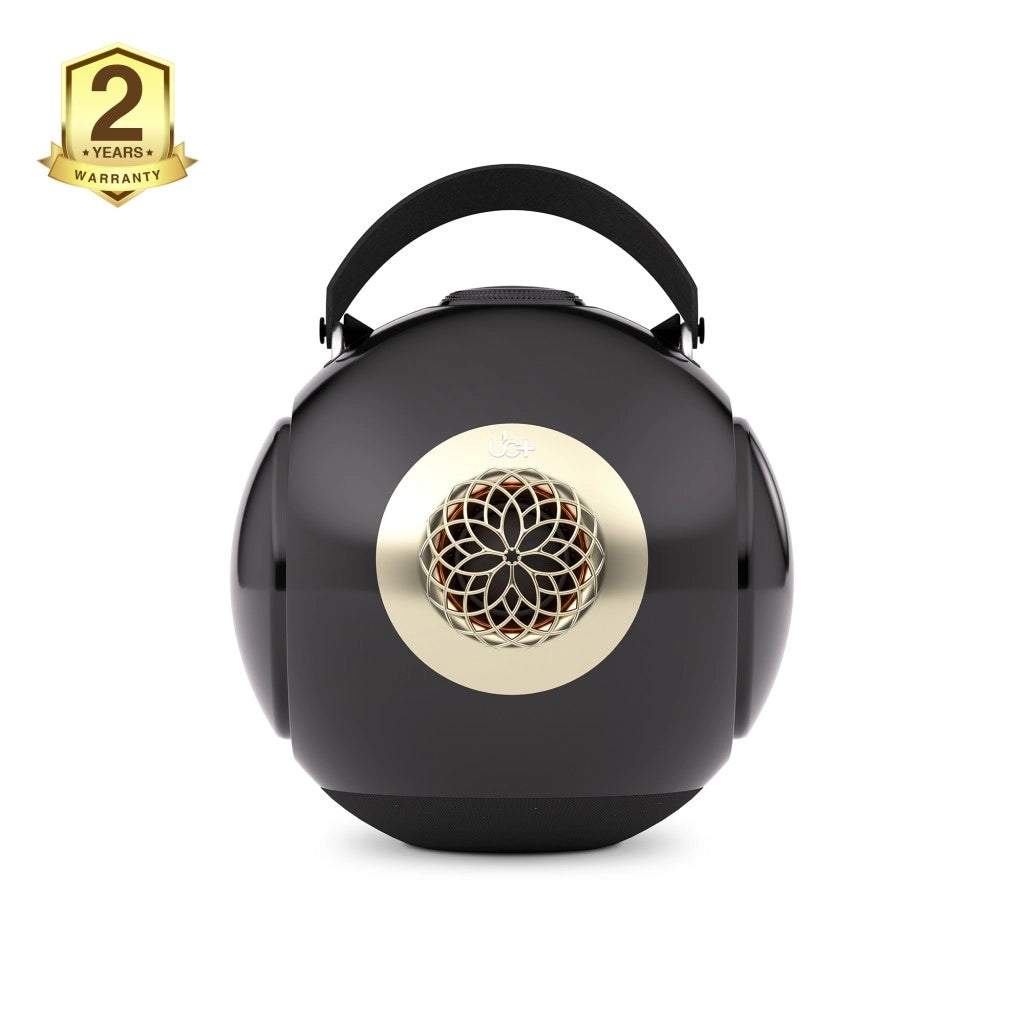

Choosing between two portable speakers from the same brand can be more difficult than comparing products from completely different categories. Both may offer wireless convenience and enjoyable everyday listening, but their physical designs, acoustic approaches, and practical strengths can make them better suited to different users.
The comparison of dbmini vs s2 alphorn comes down to three important considerations: how much space you have, what kind of bass performance you expect, and how long you want to listen between charges. The UB+ dB Mini and UB+ S2 Alphorn represent two different choices within the UB+ portable speaker lineup, making it useful to look beyond their names and consider how each model fits into everyday use.
A compact speaker can be easier to position, carry, and use in smaller spaces. A different form factor may offer a more suitable listening experience for someone who prioritizes its particular design and intended use. Neither approach is automatically better. The right decision depends on the environment, listening habits, and practical requirements.
This comparison examines size, bass expectations, battery life, portability, placement, and buying considerations to help you decide which model deserves a place in your setup.
UB+ dB Mini vs S2 Alphorn: Quick Comparison

Before examining the details, here is a practical overview of the differences buyers should consider.
|
Comparison Factor |
UB+ dB Mini |
UB+ S2 Alphorn |
|
Product category |
Compact portable Bluetooth speaker |
Portable Bluetooth speaker |
|
Design consideration |
Smaller-format everyday listening |
Alternative Alphorn-style speaker design |
|
Space requirements |
Suited to compact placements |
Consider the intended placement and available space |
|
Bass evaluation |
Consider enclosure design and low-frequency tuning |
Evaluate its bass presentation in your intended listening environment |
|
Maximum playback time |
Up to 20 hours |
Up to 16 hours |
|
Portability priority |
Strong option when compact size matters |
Consider the physical form and carrying requirements |
|
Best buying consideration |
Compact convenience and longer playback |
Design preference and listening requirements |
The most straightforward specification difference is battery life. The dB Mini offers up to 20 hours of playback, compared with up to 16 hours for the S2 Alphorn. Actual playback time can vary with volume, content, connection conditions, and usage.
For buyers comparing compact bluetooth speakers, this difference matters because battery capacity affects how conveniently a speaker fits into a daily routine.
Size and Design: Which Speaker Fits Your Space?

Size is often the first consideration when choosing a portable speaker. A model that sounds excellent but is inconvenient to position or transport may not be the right purchase for everyday use.
The dB Mini is the compact-format option in this comparison. Its smaller-speaker positioning makes it worth considering for people who want a portable listening device that can fit naturally into different everyday environments.
The S2 Alphorn offers a different product design within the UB+ lineup. Buyers should consider its physical dimensions, shape, and placement requirements alongside the dB Mini rather than assuming that the two models will serve exactly the same purpose.
Why Compact Size Matters
A smaller speaker can offer several practical advantages:
- Flexible placement: Easier to accommodate on a desk, shelf, bedside table, or other limited surface.
- Everyday portability: More convenient when moving between rooms or carrying a speaker for personal use.
- Space efficiency: Less likely to dominate a small room or work area.
- Simple storage: Easier to put away when the speaker is not being used.
These advantages make the dB Mini an appealing option for listeners who prioritize a compact footprint.
However, smaller does not automatically mean better sound. Acoustic performance depends on the driver, enclosure, tuning, and how the complete system manages air movement.
When a Different Speaker Design Makes Sense

The S2 Alphorn deserves consideration when its particular form factor and design appeal to your intended setup. Some buyers prioritize the appearance and physical character of a speaker just as much as its portability.
Before purchasing, compare the listed product dimensions and consider:
- Where the speaker will normally sit.
- Whether you plan to move it frequently.
- How much desk, shelf, or table space is available.
- Whether the speaker will be used mainly indoors or in different locations.
For a broader explanation of how enclosure geometry affects speaker performance, see Spherical vs. Box Speakers: Sound Comparison.
Bass Performance: What Should You Expect?

Bass is one of the most important considerations in a portable speaker comparison. It influences how music feels, how rhythm is reproduced, and whether a speaker sounds balanced during extended listening.
However, comparing bass performance requires more than looking at product size or assuming that one model will automatically produce deeper low frequencies.
A speaker's bass response is influenced by several interacting elements:
- Driver diameter and excursion.
- Enclosure volume and internal geometry.
- Passive radiator or port configuration, where applicable.
- Resonance frequency and acoustic tuning.
- Amplifier output and digital signal processing.
- Placement and nearby surfaces.
These factors determine how effectively a speaker reproduces low-frequency information.
Compact Speakers and Low-Frequency Reproduction

A compact speaker has less internal volume available for acoustic engineering than a larger enclosure. That creates design challenges, particularly when reproducing lower frequencies at higher listening levels.
Engineers can address these limitations through careful driver selection, enclosure tuning, and resonance management.
For buyers considering the dB Mini, the important question is whether its bass presentation suits the music and listening environment they use most often. A compact model can be a practical choice for everyday music, podcasts, and general listening without needing to occupy a large amount of space.
The S2 Alphorn should be evaluated using the same principles. Its product specifications and real-world listening performance are more useful than assumptions based on its name or physical appearance.
Deep Bass Is Not the Same as Excessive Bass

A speaker with strong bass is not necessarily a speaker with good bass.
There is an important distinction between low-frequency extension and excessive bass emphasis.
Controlled bass should have definition, timing, and a suitable relationship with vocals and instruments. Excessive bass emphasis can make music sound thick or obscure details in the midrange.
When comparing these two models, listen for:
- Whether kick drums sound defined rather than boomy.
- Whether bass lines remain distinguishable.
- Whether vocals retain clarity when bass-heavy music is playing.
- Whether the sound remains balanced at your preferred volume.
- Whether low-frequency output becomes less controlled as volume increases.
For a more technical understanding, read Bass Extension Explained: Understanding Hz Numbers Before You Buy a Speaker. It explains why frequency-response figures need context before they can be used to judge real listening performance.
Why Speaker Placement Changes Bass
The same speaker can sound different depending on where it is positioned.
A speaker placed near a wall may produce a different bass balance from one positioned in an open area. Nearby surfaces can reinforce certain low frequencies, while room dimensions and furniture can influence reflections and resonance.
When comparing the dB Mini and S2 Alphorn, use similar listening conditions. Place each speaker in the same location, play the same tracks, and maintain approximately the same listening level.
You can also review Bluetooth Speaker Placement Tips for Better Bass and Clarity for practical guidance on positioning.
Battery Life: 20 Hours vs 16 Hours

Battery life is one area where the comparison has a clear numerical difference.
|
Model |
Maximum Playback Time |
|
UB+ dB Mini |
Up to 20 hours |
|
UB+ S2 Alphorn |
Up to 16 hours |
|
Difference |
4 hours |
The dB Mini offers up to four additional hours of stated playback time.
That difference may seem modest, but it can matter when you use a portable speaker throughout the day. Longer playback reduces how frequently you need to recharge and provides additional flexibility when moving between locations.
What 20 Hours Means in Everyday Use
The dB Mini's maximum 20-hour playback figure makes it an attractive option for buyers who place a high priority on listening time.
It may be particularly useful for:
- Extended listening sessions at home.
- Background music during work.
- Everyday use across multiple rooms.
- Travel and other situations where charging access is limited.
- Listeners who prefer fewer charging interruptions.
The actual runtime will depend on volume and operating conditions. Listening continuously at higher output levels can reduce playback time compared with manufacturer maximum figures.
Is 16 Hours Enough?
For many users, 16 hours is still substantial playback capacity.
The S2 Alphorn's stated maximum runtime can support extended listening without requiring frequent charging under suitable conditions. If you generally listen for a few hours each day, the four-hour difference may not be the deciding factor.
The more important question is how you use your speaker.
If longer battery life is a major buying priority, the dB Mini has the numerical advantage. If the S2 Alphorn better suits your preferred design and listening setup, its 16-hour maximum playback time may still be sufficient.
Portability and Everyday Convenience
Portability involves more than battery life. Physical size, shape, handling, and the convenience of placing a speaker where you need it all contribute to the experience.
The dB Mini is worth considering when portability and compact placement are central requirements. Its positioning in the UB+ lineup makes it a relevant choice for people who want a speaker that fits into everyday routines without requiring a large dedicated space.
The S2 Alphorn provides an alternative for buyers who prefer its particular design. The decision should account for the way you intend to carry, position, and use it rather than relying on product category labels alone.
Which One Is Better for a Desk or Bedroom?
For a desk, bedside table, or compact bedroom setup, available space is often a more important consideration than maximum output.
The dB Mini is a natural model to investigate if you want a compact speaker for these environments.
Before choosing, think about:
- The amount of surface space available.
- How close you will sit to the speaker.
- Whether you prefer background music or more focused listening.
- How frequently you move the speaker.
- Whether you need longer playback between charges.
The S2 Alphorn may also suit a personal listening setup, depending on its physical dimensions and your placement preferences. Check the product listing before deciding whether its form factor is appropriate for your available space.
Which One Is Better for Moving Between Locations?
If you frequently move a speaker between rooms or take it with you, physical convenience becomes particularly important.
A compact speaker can be easier to accommodate in a bag or carry alongside other everyday items. However, the best choice should still account for the complete product dimensions and handling requirements.
For this reason, buyers should compare the actual dimensions of both models rather than treating portability as a specification that can be determined by battery life alone.
Sound Quality: Beyond Bass and Battery
Bass and battery life are useful comparison points, but they do not fully determine sound quality.
A well-balanced portable speaker should reproduce different types of audio without allowing one frequency range to dominate unnecessarily.
Three areas deserve particular attention.
Midrange Clarity
The midrange carries much of the information in vocals, guitars, keyboards, and many other instruments.
When comparing the dB Mini and S2 Alphorn, listen to familiar vocal recordings. Pay attention to whether voices sound natural, whether lyrics remain intelligible, and whether instruments retain their individual character.
Treble Detail
Treble contributes to cymbal texture, high-frequency instrument detail, and the sense of openness in a recording.
Excessive treble can become tiring, while insufficient treble can make music sound dull. A good listening comparison should consider clarity and comfort rather than simply identifying which speaker sounds brighter.
Overall Tonal Balance
The most useful test is to listen across different music genres.
Try:
- Vocal recordings for midrange naturalness.
- Acoustic music for instrument texture.
- Electronic tracks for bass control.
- Live recordings for spatial presentation.
- Busy arrangements for separation and clarity.
Use the same tracks and similar volume levels for both speakers. This helps reduce the influence of different recordings and listening conditions.
Room characteristics can also change what you hear. Room Acoustics Basics: Why Speakers Sound Different in Different Rooms provides additional context on how the listening environment affects perceived performance.
UB+ dB Mini vs S2 Alphorn: Which Should You Buy?
The best choice depends on which features matter most to you. There is no reason to pay for a design or capability that does not support your actual listening habits.
Choose the UB+ dB Mini If:
- You prefer a compact portable speaker.
- You have limited desk, shelf, or bedside space.
- You value up to 20 hours of maximum playback time.
- You frequently move your speaker around.
- You want a practical option for everyday personal listening.
The dB Mini is especially worth considering when compact convenience and longer stated battery life are high priorities.
Choose the UB+ S2 Alphorn If:
- You prefer its particular speaker design.
- Its physical dimensions suit your intended placement.
- You are comfortable with its up-to-16-hour maximum playback time.
- You have compared its sound presentation with the dB Mini.
- Its design and listening characteristics better match your preferences.
The S2 Alphorn is worth evaluating on its own merits rather than treating it simply as an alternative based on size or battery capacity.
Buying Checklist: What to Compare Before Ordering
A useful comparison should lead to a confident purchase, not just a preference based on one specification.
Before deciding, check these points:
|
Buying Consideration |
What to Check |
|
Physical dimensions |
Confirm the listed height, width, and depth |
|
Weight |
Consider how frequently you will carry it |
|
Battery |
Compare the maximum playback figures |
|
Bass |
Listen for extension, definition, and control |
|
Vocals |
Check clarity and natural presentation |
|
Treble |
Evaluate detail without excessive brightness |
|
Connectivity |
Confirm the playback and connection options you need |
|
Placement |
Consider the room, furniture, and listening distance |
|
Price |
Compare current prices and overall value |
This checklist is particularly useful when comparing portable Bluetooth speakers because specifications can look similar while the products serve different everyday requirements.
Frequently Asked Questions
Is the UB+ dB Mini better than the S2 Alphorn?
It depends on your priorities. The dB Mini offers a compact-format option and up to 20 hours of maximum playback. The S2 Alphorn offers a different design and up to 16 hours of maximum playback. Compare physical dimensions, listening preferences, and intended placement before choosing.
Which model has longer battery life?
The UB+ dB Mini has the longer stated maximum playback time, at up to 20 hours. The UB+ S2 Alphorn offers up to 16 hours. Actual runtime varies with volume and usage conditions.
Which speaker is better for a small room?
The dB Mini is worth considering if compact placement is your main priority. However, the best choice also depends on the room layout, listening distance, and the speaker's actual dimensions.
Does a larger speaker always produce deeper bass?
No. Bass performance depends on the complete acoustic system, including driver characteristics, enclosure design, resonance, and tuning. Physical size alone cannot establish which speaker produces better bass.
Is the four-hour battery difference important?
It can be important if you regularly listen for extended periods or have limited access to charging. For shorter daily listening sessions, both stated maximum runtimes may be sufficient.
What should I listen to when comparing the two models?
Use familiar recordings with vocals, acoustic instruments, bass-heavy music, and complex arrangements. Compare both speakers at similar volumes and in the same location to make the evaluation more consistent.
Explore UB+ Speaker Options for Your Listening Needs
Choose the UB+ speaker that best matches your space, listening preferences, and everyday needs:
- Explore UB+ dB Mini: Discover a compact portable speaker option with up to 20 hours of maximum playback for everyday listening and convenient placement.
- Discover UB+ S2 Alphorn: Explore an alternative UB+ speaker design with up to 16 hours of maximum playback and compare its form factor with the dB Mini.
- Browse All UB+ Speakers: Explore the UB+ range and compare available speaker options.
Before choosing, consider your available space, preferred listening volume, battery requirements, and the type of sound you enjoy. The better purchase is not necessarily the speaker with the biggest design or the longest specification list. It is the one that fits your listening habits and gives you the features you will actually use.


Leave a comment
This site is protected by hCaptcha and the hCaptcha Privacy Policy and Terms of Service apply.