

Upgrading from phone speakers to a dedicated audio system is one of the most noticeable improvements you can make to your everyday listening experience. Music that once sounded thin or compressed can become more detailed, vocals can feel more natural, and bass can gain depth without overwhelming the rest of the recording. But choosing your first serious speaker can also be confusing. Specifications, Bluetooth codecs, driver sizes, power ratings, passive radiators, and audiophile terminology can make a straightforward purchase seem unnecessarily complicated.
The best bluetooth speaker for first time audiophile buyers is not necessarily the most expensive model, the one with the largest driver, or the speaker advertised as having the deepest bass. It is the one that delivers a meaningful improvement over phone audio while fitting your budget, room, music preferences, and everyday habits.
A dedicated Bluetooth speaker should make listening more satisfying without turning your home into a complicated audio project. You should be able to hear familiar songs with greater fullness, appreciate vocal details, enjoy a more convincing bass response, and move between playlists without constantly adjusting settings. At the same time, it is important to understand what a compact wireless speaker can realistically achieve and which limitations remain.
For first-time buyers, this distinction matters. A premium speaker can provide better sound and more considered engineering, but a high price does not automatically guarantee a better experience for every listener. The right choice depends on how the speaker is designed, how it is used, and how well it performs in the environment where you listen.
This guide explains what changes when you move beyond your phone's built-in speakers, which specifications deserve attention, how to evaluate sound quality without specialist equipment, and how to avoid paying for features you do not need. It also examines how a design-focused portable speaker such as the UB+ dB1 DoubleBass fits into the upgrade decision.
Why Phone Speakers Stop Being Enough

Phone speakers are designed around severe physical constraints. Manufacturers must fit the audio system into a thin device that also needs a display, battery, cameras, processors, and other components. The acoustic space available to the speaker is extremely limited.
As a result, phone speakers are optimized for practical communication and convenient playback rather than reproducing a full-range musical performance. They can make voices understandable, deliver sound for short videos, and play background music, but their size limits how much air they can move and how effectively they can reproduce low frequencies.
A dedicated speaker has more physical space for drivers, enclosure volume, amplification, and acoustic design. These advantages can make a substantial difference even before you move into expensive home audio equipment.
The difference you hear first: fullness
The first improvement is often not a subtle detail. It is the overall sense of fullness.
When you play the same familiar track through a phone and a properly designed dedicated speaker, you may notice:
- More substantial bass: Kick drums and bass guitars can have a more convincing foundation.
- Clearer separation: Vocals, percussion, and other instruments may be easier to distinguish.
- Greater perceived scale: Music can sound less confined to the tiny physical space of the phone.
- More comfortable listening: A suitable speaker can deliver satisfying sound without requiring the phone to operate at its maximum volume.
- Greater flexibility: You can listen from a desk, sofa, bedside table, or other suitable position without keeping the phone next to your ear.
These improvements are not identical across every product. A poorly designed speaker can sound boomy, harsh, or congested, while a well-tuned model can provide a more natural and enjoyable presentation.
Why phone speakers often struggle with bass
Low frequencies require air movement. Producing meaningful bass generally requires sufficient driver displacement, appropriate enclosure behavior, and enough power to operate within the system's limits.
A phone's built-in speaker has very little room to accomplish these tasks. Manufacturers may use signal processing to emphasize certain frequencies or preserve perceived fullness, but processing cannot eliminate the physical constraints of a tiny driver and enclosure.
A dedicated speaker can use a larger acoustic system, a tuned enclosure, and additional moving components to reproduce low-frequency energy more effectively.
The difference is especially noticeable in music that relies on bass for rhythm and structure, including electronic music, hip-hop, funk, rock, and cinematic soundtracks. However, the purpose is not simply to produce more bass. Good bass should complement the recording rather than obscure the midrange.
What Does It Mean to Be a First-Time Audiophile?

The word audiophile can make better audio seem like an exclusive hobby requiring expensive equipment and specialist knowledge. In practice, you do not need to become a measurement expert or purchase an elaborate system to appreciate improved sound.
For a first-time buyer, becoming more discerning simply means paying attention to how music is reproduced rather than judging a speaker only by volume, appearance, or marketing claims.
You begin noticing whether vocals sound natural, whether bass notes remain distinct, whether cymbals are detailed without becoming sharp, and whether instruments remain recognizable when several sounds play together.
These are practical listening skills, and they develop through experience.
Sound quality is more than bass and loudness
A speaker may sound impressive during a short demonstration because it emphasizes bass or treble. That presentation can create an immediate sense of impact, but it does not necessarily mean the speaker is more accurate or enjoyable over several hours.
A more complete evaluation considers:
- Tonal balance: Are bass, midrange, and treble reasonably well integrated?
- Clarity: Can you follow vocals and instruments without difficulty?
- Separation: Do different musical elements remain distinguishable?
- Dynamics: Can the speaker communicate changes between quieter and louder passages?
- Distortion: Does the sound become rough or strained when the volume increases?
- Consistency: Does the speaker remain enjoyable across the types of music you actually listen to?
You do not need a technical background to evaluate these qualities. Start with familiar recordings, use a comfortable listening level, and compare products under similar conditions.
For a broader overview of the measurements and specifications that can help you make an informed decision, read UB+'s guide to seven key speaker specifications. Understanding what a specification actually measures is more valuable than collecting numbers without knowing how they affect your listening experience.
How to Choose Your First Serious Bluetooth Speaker

The easiest way to make a good purchase is to begin with your use case rather than a feature list.
A speaker for bedroom listening has different requirements from one used for outdoor gatherings. A person who listens mainly to acoustic music may prioritize natural vocals and instrument detail, while someone who enjoys electronic music may care more about bass extension and output capability.
Before comparing individual models, decide where the speaker will live, how often you will move it, and what you expect to hear that your phone cannot provide.
Choose according to your main listening environment
For a bedroom: Look for balanced sound at low and moderate volumes, a compact footprint, and convenient placement on a desk or bedside table.
For a desk or home office: Prioritize vocal clarity, controlled bass, and a design that does not consume too much workspace. If you sit close to the speaker, excessive bass or sharp treble can become tiring.
For a small apartment: Consider room-friendly bass, placement flexibility, and sound quality at moderate volume. A large party speaker may offer capabilities that you rarely use.
For travel and outdoor use: Portability, battery performance, durability, and the ability to produce sufficient sound in a more open environment become more important.
For focused music listening: Pay attention to tonal balance, separation, distortion, and whether the speaker supports your preferred listening arrangement. A single portable speaker can be convenient, while a properly positioned stereo pair can create a more distinct left-right image.
Your primary use case should determine which features deserve the most weight. Otherwise, it is easy to pay for capabilities that look impressive but contribute little to your daily experience.
Should you choose a portable speaker or a home audio system?
A portable Bluetooth speaker is generally the simpler starting point. It combines the speaker, amplifier, wireless connection, and power system into one product, reducing setup complexity.
A traditional home audio system can offer advantages such as stereo separation, greater placement control, or higher output, depending on the equipment. However, it may require several components, cables, and more careful positioning.
Neither option is universally better.
Choose a portable design when convenience, mobility, and simple setup matter most. Consider a dedicated stereo system if you plan to build a more permanent listening arrangement and want greater control over speaker placement.
For many first-time buyers, a capable portable speaker is a sensible first upgrade because it delivers an audible improvement without requiring a new room layout or an advanced understanding of audio equipment.
The Specifications That Actually Matter

Speaker specifications help narrow down your options, but they do not provide a complete description of sound quality. Each measurement answers a particular question, and its usefulness depends on how it is defined and measured.
The goal is to understand which specifications affect your priorities rather than assuming the largest number represents the best product.
Frequency response: understanding the range of sound
Frequency response describes the range of frequencies a speaker can reproduce and, when measured as a curve, how its output changes across that range.
Human hearing is commonly described as extending from approximately 20 Hz to 20 kHz, although individual hearing varies with age and other factors. A speaker listing a wide frequency range does not necessarily reproduce every frequency equally or at the same output level.
When comparing products, look for the stated frequency range and any available measurement conditions. A range without tolerances, output levels, or other context can be difficult to interpret.
For first-time buyers, a balanced response throughout the speaker's useful range is often more valuable than an impressive-looking range that does not describe real-world performance.
Bass extension: how low can the speaker go?
Bass extension concerns how far into the low-frequency range a speaker can reproduce meaningful output. It is different from bass emphasis.
A speaker may produce pronounced upper bass that makes music sound punchy while offering limited deep-bass extension. Another may reach lower frequencies more effectively but sound less forceful if its tuning is more restrained.
Neither behavior is inherently wrong. The suitable choice depends on your preferred music, listening volume, and room.
If you want to understand the meaning of low-frequency specifications before comparing products, see Bass Extension Explained: Understanding Speaker Frequency in Hz.
The important lesson is that a low-frequency figure should not be treated as a guarantee of deep, powerful bass at every volume. Output capability, distortion, enclosure tuning, and the measurement method all influence performance.
Driver size: bigger is not automatically better
Driver size is one of the most visible specifications in speaker marketing. Larger drivers can move more air under suitable conditions, but diameter alone does not determine sound quality or bass performance.
Motor strength, excursion, cone design, suspension, enclosure volume, tuning, and available amplifier power all influence the result.
A smaller driver in a carefully engineered speaker can outperform a larger driver in a poorly designed enclosure. The reverse can also be true when the larger system has appropriate engineering and sufficient power.
For a deeper look at this issue, read UB+'s article on speaker driver size vs. sound quality.
When choosing your first speaker, evaluate the complete system rather than treating driver diameter as a shortcut for sound quality.
Wattage and loudness: what power ratings can tell you
Power ratings describe electrical power handling or amplification under particular conditions, depending on the specification. They do not directly tell you how loud a speaker will sound at a particular distance or how cleanly it will reproduce music.
Sensitivity, enclosure design, frequency, distortion, and the way the rating is measured all matter.
A speaker with a higher advertised wattage is not automatically clearer, more detailed, or better suited to your room. For ordinary home listening, usable performance at your preferred volume matters more than a maximum rating you may never approach.
Distortion: staying clear when the music gets demanding
Distortion occurs when the reproduced signal differs from the intended audio signal. It can result from driver limitations, excessive excursion, amplifier clipping, enclosure problems, or signal processing.
A speaker may sound clean at moderate volume but become strained as the level increases. Listen for rough vocals, harsh percussion, compressed dynamics, or bass that loses definition.
You do not need to push a speaker to maximum volume to judge whether it suits you. Test the product at the levels you expect to use in your home.
Understanding Bass: Deep, Punchy, or Simply Too Much?
Bass is one of the biggest reasons people upgrade from phone speakers. More capable low-frequency reproduction can make music feel fuller and more engaging, but strong bass is not the same as accurate bass.
A speaker with excessive bass emphasis may sound exciting with one playlist but make other recordings muddy. Too little bass can leave some genres feeling thin, particularly at low volumes.
The ideal balance depends on your taste, but the relationship between bass and the rest of the frequency range deserves attention.
Why enclosure engineering matters
A speaker enclosure is part of the acoustic system. Its dimensions, volume, rigidity, and internal behavior influence how the driver reproduces sound.
Compact speakers may use tuned enclosures, bass ports, or passive radiators to support low-frequency output within limited space. Each approach has advantages and trade-offs, and none guarantees superior performance on its own.
Passive radiators, for example, move in response to pressure changes inside the enclosure rather than receiving their own electrical audio signal. When properly designed and tuned, they can help a compact speaker extend its bass response without a conventional open bass port.
The result depends on the entire system: driver behavior, radiator tuning, enclosure volume, amplification, and processing.
For a first-time buyer, the practical question is whether the speaker produces bass that sounds defined and proportionate to the recording rather than whether it uses one specific component.
Room placement changes perceived bass
Even a good speaker can sound different in different locations. Nearby walls and corners can reinforce particular low frequencies, while room dimensions may create positions where some notes become much stronger or weaker.
This means a speaker that sounds balanced on a store display may sound boomy on your bedroom shelf.
Before assuming you need a different model, try moving the speaker a small distance from a wall or corner. Listen from your usual seat and compare the change.
This is particularly important in apartments and small bedrooms, where placing a speaker against a boundary may intensify bass more than expected.
Bluetooth Codecs and Wireless Connectivity: Keep It Practical
Bluetooth makes dedicated audio more convenient because it allows music to stream from phones, tablets, computers, and other compatible devices without a direct audio cable.
However, Bluetooth is not a guarantee of identical sound quality or performance across all products. Connection implementation, supported codecs, signal conditions, and device compatibility can influence the experience.
Does a newer Bluetooth version mean better sound?
Not automatically. Bluetooth version numbers describe aspects of the wireless technology, but they do not independently determine how balanced or detailed a speaker sounds.
The acoustic design, codec implementation, processing, and drivers remain important.
For most first-time buyers, a stable and convenient connection is more important than chasing a version number simply because it is newer. Check that the speaker supports the devices you use and that pairing remains reliable in your normal environment.
What about high-resolution Bluetooth audio?
Some wireless audio technologies advertise higher-quality codecs or support for particular audio formats. These features may matter to listeners with compatible sources and specific priorities, but their practical benefit depends on the entire playback chain.
The source file, phone or computer, codec negotiation, wireless conditions, and speaker all influence what you hear.
A premium codec cannot compensate for poor speaker tuning, and a high-resolution file does not automatically sound better when played through a poorly designed system.
Start by choosing a speaker that sounds good with your usual music and connects reliably to your everyday devices. Advanced codec support can be a useful additional consideration, but it should not replace evaluating the actual sound.
Soundstage, Separation, and the Difference Between One Speaker and Two
When upgrading from a phone, listeners often notice that music sounds larger and more substantial. Some of this comes from improved bass and output capability. Another part can come from stereo presentation and how sound is distributed through the room.
What is soundstage?
Soundstage describes the perceived spatial arrangement of sounds in a recording. A well-positioned stereo system can create a sense that instruments and voices occupy different positions between the speakers rather than appearing to come from one point.
Stereo separation depends on the recording, speaker placement, listening position, and the system's acoustic behavior. A single speaker playing a combined mono signal cannot produce the same left-right separation as a properly configured stereo pair.
However, a single portable speaker can still provide an enjoyable and convenient listening experience. It can be a good fit for bedrooms, desks, kitchens, travel, and casual listening where mobility matters more than precise stereo imaging.
Should your first upgrade be a stereo pair?
It depends on your priorities.
A single high-quality portable speaker may provide a significant upgrade from phone audio while keeping setup simple. A matched stereo pair can improve left-right separation and create a more defined listening image, particularly when the speakers are positioned appropriately.
Consider a stereo pair if you regularly sit in one listening position and enjoy detailed music playback. Consider a single portable model if you move around frequently, value portability, or want one speaker that can serve several rooms.
You do not need to buy every component at once. Starting with a speaker that fits your actual needs is often a more sensible approach than building a larger system before understanding your listening preferences.
Cheap vs. Premium Bluetooth Speakers: What Are You Actually Paying For?
One of the most common concerns for first-time audiophiles is whether a more expensive speaker is genuinely worth the additional cost.
The answer depends on the products being compared. A higher price can reflect more sophisticated acoustic engineering, higher-quality components, more substantial construction, better tuning, added features, or design and manufacturing costs. It does not guarantee that every listener will prefer the more expensive option.
A lower-priced speaker may be entirely adequate for background music, podcasts, or occasional travel. A premium model may be more appealing when you listen to music frequently and care about tonal balance, bass control, distortion, materials, and long-term ownership.
What can justify a higher price?
When evaluating a premium speaker, look for tangible advantages such as:
- Better acoustic implementation: The drivers, enclosure, and tuning work together effectively.
- More controlled bass: Low frequencies remain defined rather than overwhelming vocals.
- Cleaner playback at useful volumes: The speaker avoids obvious strain within its intended operating range.
- More considered construction: The enclosure, controls, and materials feel appropriate for the price.
- More suitable features: Connectivity, portability, or durability match your needs.
- Distinctive engineering: The product offers a meaningful design approach rather than relying solely on marketing language.
The price alone does not prove these benefits. Compare credible specifications, test products when possible, and consider how a speaker performs with the music you actually listen to.
UB+'s guide to premium vs. budget Bluetooth speakers explores the differences buyers should consider before paying more for a wireless audio system.
When an expensive speaker may not be worth it
Spending more may not improve your experience proportionately if you listen primarily to spoken audio, use the speaker in a noisy environment, or rarely listen carefully enough to notice differences in tonal balance and detail.
Similarly, paying for extreme output capability makes little sense if you mainly listen quietly in a small bedroom.
The better question is not whether premium audio is always worth the money. It is whether a particular speaker delivers benefits that matter to you often enough to justify its price.
A First-Time Audiophile's Guide to Equalization and Listening Tests
You do not need to become an expert at equalization to enjoy a good speaker. Nevertheless, understanding basic EQ can help you tailor sound to your preferences and room.
Equalization changes the relative levels of different frequency ranges. Depending on the controls available, it can reduce excessive bass, adjust treble, or alter the balance of the midrange.
Use EQ to refine, not rescue, a poor setup
If your speaker sounds excessively bass-heavy near a wall, moving it may solve more of the problem than aggressively cutting low frequencies. If vocals sound unclear, check the listening position, source recording, and volume before applying large EQ adjustments.
Start with the default tuning, then make modest changes if something consistently bothers you.
Avoid assuming that a complicated EQ curve is automatically better. Large adjustments can affect multiple parts of the recording and may push the speaker toward its operating limits.
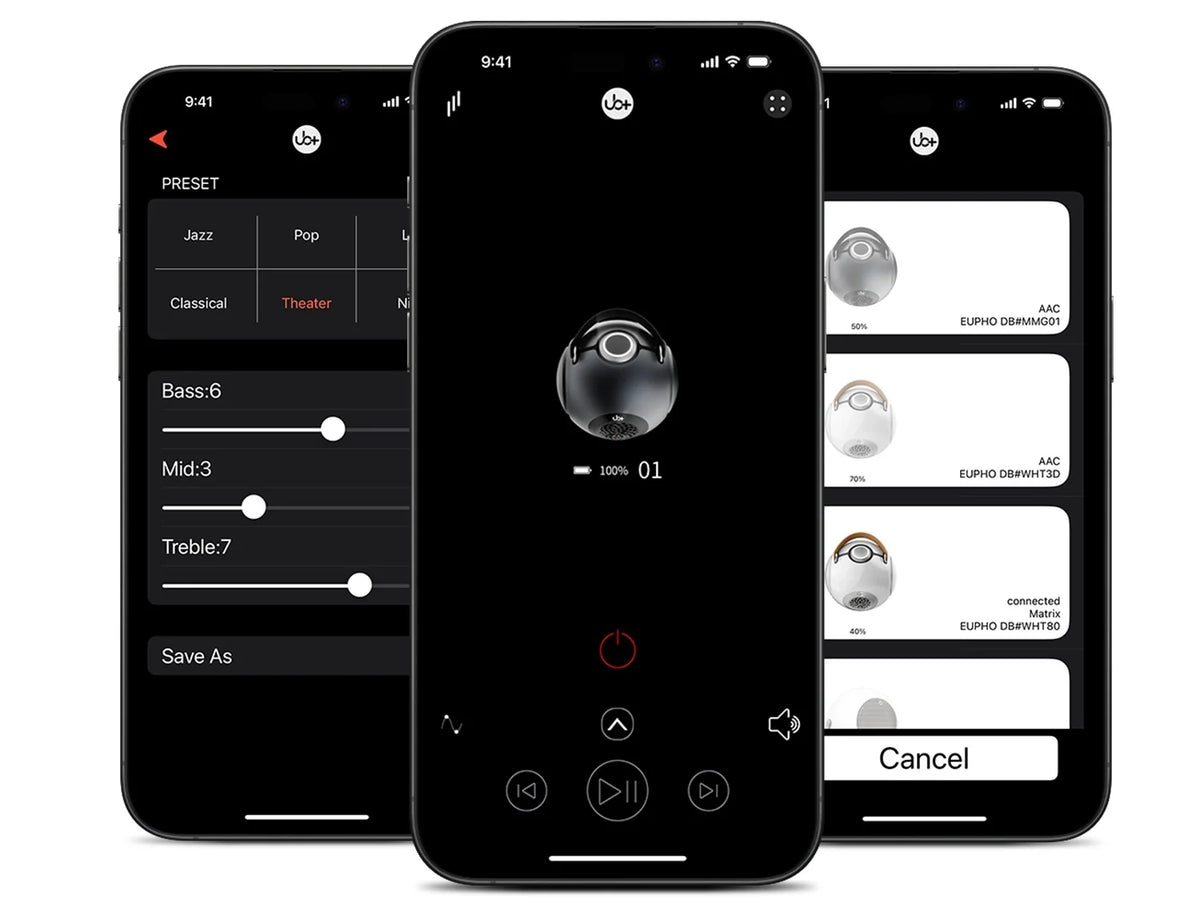
If your chosen speaker supports an equalizer or companion application, UB+'s guide to Bluetooth speaker EQ apps provides further context on what such tools can and cannot do.
How to compare speakers fairly
A reliable comparison should control for volume, music selection, and listening position as much as possible.
Use several familiar tracks:
- A vocal recording to evaluate voice naturalness and intelligibility.
- An acoustic recording to listen for instrument texture and separation.
- A bass-heavy track to assess definition and low-frequency balance.
- A busy recording to determine whether instruments remain distinguishable.
- A quiet passage to evaluate detail without relying on loudness.
Keep the playback levels similar. A louder speaker can initially seem more impressive simply because higher volume changes the way we perceive sound.
Listen for the qualities that matter most to you, and avoid choosing a speaker based on one short demonstration or one impressive track.
Where the UB+ dB1 DoubleBass Fits Into Your First Upgrade
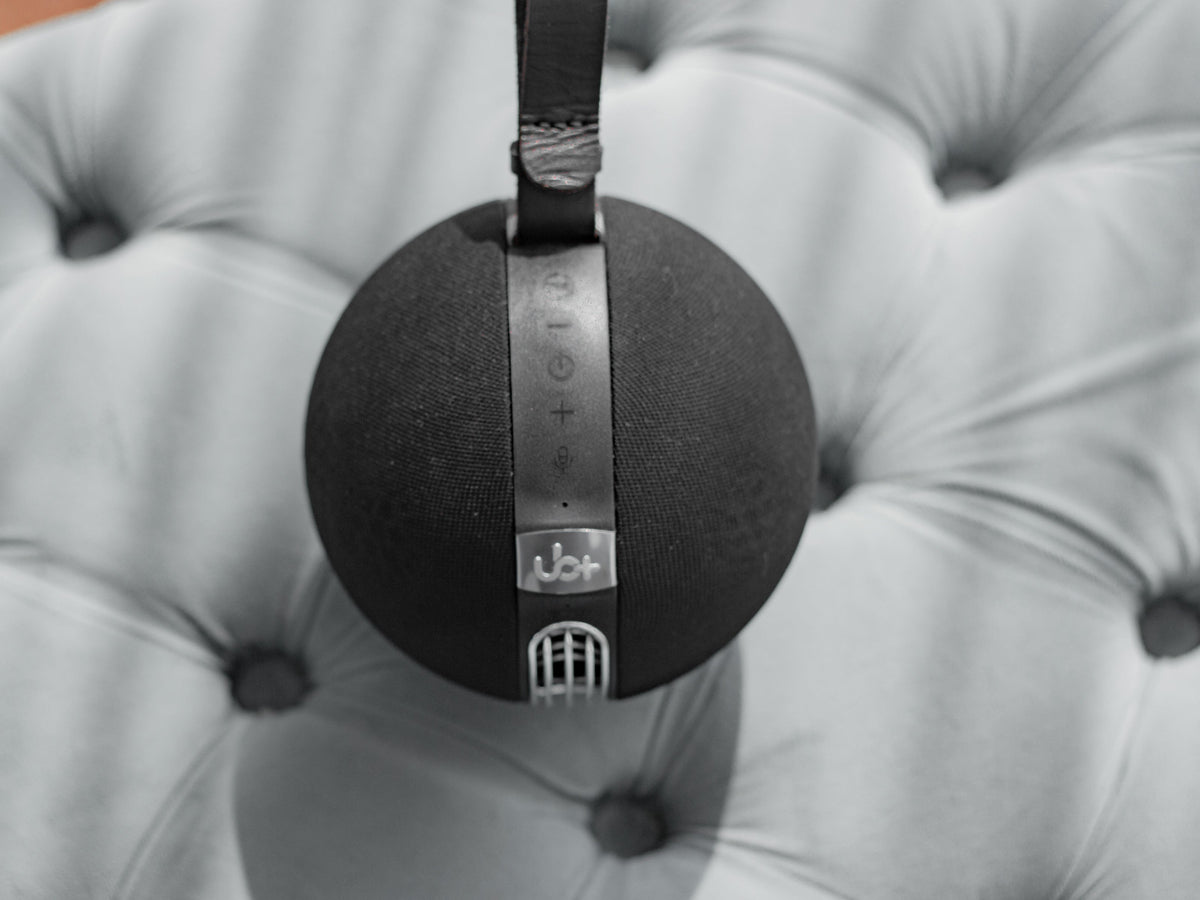
The UB+ dB1 DoubleBass is worth considering if you want a portable speaker with a distinctive acoustic architecture rather than a conventional rectangular cabinet.
Its design uses a spherical acoustic chamber inspired by the Helmholtz resonator principle, a downward-firing 4.5-inch mid-bass driver, and two symmetrical passive radiators. The combined passive-radiator area is approximately 3.5 times the woofer's area, according to the product's stated architecture.
These components are designed to work together to support low-frequency reproduction within a compact enclosure. The passive radiators respond to changes in internal air pressure, while their symmetrical positioning can help counterbalance some mechanical forces. This may reduce certain forms of enclosure movement, although it does not eliminate all vibration.
The dB1's stated frequency range is approximately 40 Hz–20 kHz, and its stated maximum sound-pressure level is 93 dB SPL. These figures should be interpreted in the context of the manufacturer's measurement conditions rather than as a guarantee of equal output at every frequency or distance.
For a first-time buyer, the important point is not that this architecture automatically makes the dB1 superior to every competitor. It is that the speaker takes a specific approach to enclosure geometry and bass reproduction that may appeal to people who value both acoustic design and a distinctive physical form.
Consider it in the context of your use case:
For home listening: Its portable format can be useful when you want one speaker that can move between a bedroom, desk, or living area.
For bass-conscious listeners: The enclosure and passive-radiator architecture are designed to support low-frequency output without relying exclusively on digital bass boosting.
For design-conscious buyers: The spherical form offers a different visual and physical approach from conventional rectangular portable speakers.
For first-time audiophiles: It is an option to audition and compare against other speakers using familiar recordings, similar volume levels, and the listening environment in which you plan to use it.
The UB+ dB Mini is another option to consider if you are comparing compact UB+ products. Rather than assuming which model will suit you better, review their available features, dimensions, connectivity, and product information. UB+'s dB1 vs. dB Mini comparison can help organize that decision.
A Practical Buying Checklist Before You Spend
Before choosing your first dedicated Bluetooth speaker, use this checklist to connect the technical details to your real listening needs.
|
Buying consideration |
What to look for |
Why it matters |
|
Primary use |
Bedroom, desk, travel, apartment, or focused listening |
Determines which features deserve priority |
|
Tonal balance |
Clear vocals, defined bass, and non-fatiguing treble |
Makes music enjoyable over longer sessions |
|
Bass performance |
Extension, control, and acceptable distortion |
Prevents impressive specifications from masking weak real-world performance |
|
Driver and enclosure design |
A well-integrated acoustic system |
Components work together rather than being judged individually |
|
Maximum output |
Sufficient level for your space and listening distance |
Helps avoid buying more power than you need |
|
Connectivity |
Reliable Bluetooth and suitable input options |
Supports your devices and everyday setup |
|
Size and portability |
Fits your room and movement requirements |
Makes the speaker practical to live with |
|
Build and durability |
Appropriate materials and construction |
Supports long-term use |
|
Cost |
Benefits that matter to your listening habits |
Helps distinguish real value from unnecessary features |
|
Upgrade path |
Whether one speaker or a later stereo setup suits your plans |
Keeps the first purchase aligned with future needs |
A good buying decision is not about finding the longest specification list. It is about identifying the speaker that delivers the greatest useful improvement for your money.
Buy for the Music You Love, Not the Audiophile Label
The best bluetooth speaker for first time audiophile buyers should make music more engaging without demanding complicated equipment, expensive accessories, or expert knowledge. The most important improvements are likely to be fuller sound, more convincing bass, clearer vocals, and a listening experience that remains enjoyable at the volumes you normally use.
Start with your environment and preferred music. Understand what frequency response, driver size, wattage, and Bluetooth support actually tell you. Listen for tonal balance and distortion rather than assuming the most expensive model is automatically the best. Consider whether you need one portable speaker or a stereo pair, and be realistic about the limitations of compact audio.
The UB+ dB1 DoubleBass offers an interesting option for buyers who value a spherical enclosure, a distinctive bass-reproduction architecture, and portable convenience. As with any speaker, its suitability depends on your listening preferences, budget, and room.
You do not need to become an audio expert before making your first upgrade. You simply need to choose a speaker that gives your favorite music the clarity, balance, and presence you have been missing from your phone.
Explore UB+ Speaker Options
Compare the UB+ dB1 DoubleBass if you are interested in spherical acoustic design and a bass-focused portable speaker. Explore the UB+ dB Mini as another compact option, or browse the UB+ speaker collection to review available products.
Frequently Asked Questions
What is the best first Bluetooth speaker for someone interested in audiophile sound?
Look for a speaker with balanced tuning, clear vocals, controlled bass, low distortion at your preferred volume, and reliable connectivity. The most suitable choice depends on your budget, room, music preferences, and whether you prioritize portability or focused home listening.
Is an expensive Bluetooth speaker always better than a budget model?
No. A higher price may reflect better acoustic engineering, construction, components, or additional features, but it does not guarantee that every listener will prefer the result. Compare sound quality, useful features, and real-world performance against your needs and budget.
What matters more: driver size or speaker design?
Driver size matters, but it is only one factor. Motor strength, excursion, enclosure tuning, amplification, and signal processing all influence sound quality. Evaluate the complete speaker system rather than assuming a larger driver will always produce better bass or clearer audio.
Do I need a special Bluetooth codec for better sound quality?
Not necessarily. Codec compatibility can influence wireless audio performance, but speaker tuning, source quality, implementation, and listening conditions also matter. For most beginners, choosing a well-designed speaker that connects reliably and sounds good with their usual music is a sensible starting point.
Is the UB+ dB1 DoubleBass suitable as a first upgrade from phone speakers?
The dB1 is worth considering if you want a portable speaker with a spherical acoustic chamber, a mid-bass driver, and symmetrical passive radiators designed to support low-frequency output. Whether it is the right choice depends on your budget, preferred sound, and intended listening environment, so compare it with other suitable speakers before deciding.


Leave a comment
This site is protected by hCaptcha and the hCaptcha Privacy Policy and Terms of Service apply.