
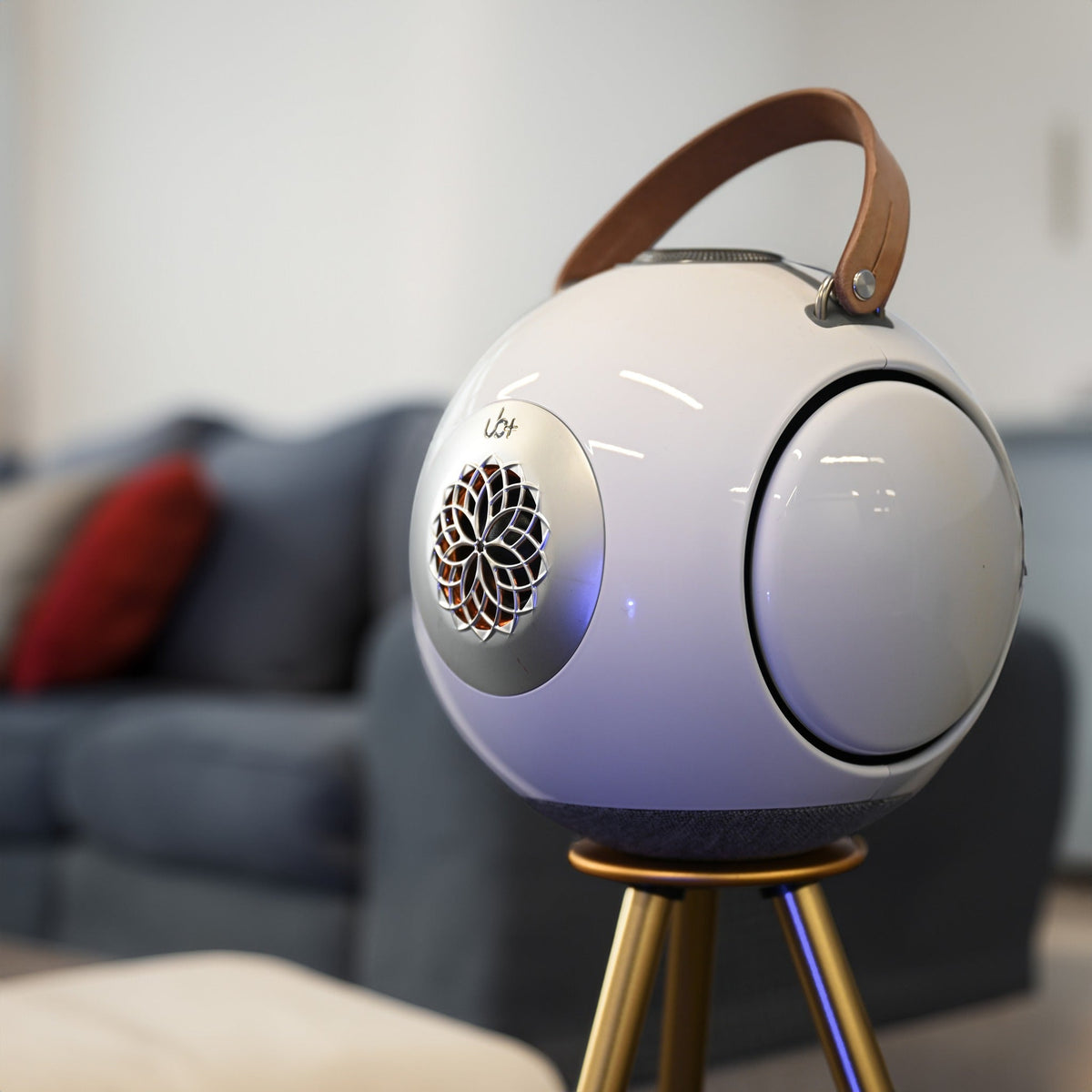
Choosing between the dB1 Doublebass vs S2 Alphorn depends on more than speaker size, loudness claims, or design preference. When a speaker is used for gatherings, outdoor events, parties, or social spaces, its performance must be evaluated through several factors: acoustic output, bass authority, sound dispersion, listening distance, portability, and how well it maintains clarity as more people and background noise enter the environment.
The dB1 Doublebass and S2 Alphorn represent different approaches to delivering a strong listening experience. The dB1 focuses on spherical acoustic engineering, deep bass reproduction, and controlled low-frequency movement. The S2 Alphorn is better considered through the needs of a crowd-oriented listening environment, where projection, coverage, and overall presentation may be especially important.
This comparison explains how to evaluate the dB1 Doublebass vs S2 Alphorn for gatherings and helps determine which type of UB+ speaker better matches your space, audience, and listening priorities.
What Makes a Speaker Effective for a Crowd?
A speaker that sounds excellent in a quiet room may not perform equally well at a busy gathering. People absorb sound, conversations create competing noise, and listeners may be spread across a large area rather than sitting directly in front of the speaker.
A crowd-friendly speaker should provide a combination of:
- Strong acoustic output
- Clear vocal and instrumental reproduction
- Sufficient bass energy
- Wide or useful sound coverage
- Low distortion at higher volume
- Consistent performance across listening positions
- Reliable battery or power performance
- Practical placement and portability
The most important factor is not simply maximum loudness. A speaker must remain intelligible and balanced when the listening environment becomes more demanding.
For a more detailed explanation of output levels, read how loud a speaker should be for different listening environments.
dB1 Doublebass vs S2 Alphorn: The Main Difference in Approach

The dB1 Doublebass is built around a spherical acoustic chamber and a dual passive-radiator system. Its design is intended to improve low-frequency efficiency, control internal pressure, and reduce unwanted mechanical vibration.
The S2 Alphorn should be evaluated according to its own acoustic presentation, room coverage, and intended use. Without relying on unsupported technical assumptions, the most useful comparison is based on how each speaker performs in the situations where buyers are likely to use it.
|
Evaluation Area |
UB+ dB1 Doublebass |
UB+ S2 Alphorn |
|
Primary consideration |
Deep bass, acoustic efficiency, and controlled low-frequency reproduction |
Crowd-oriented listening, coverage, and overall presentation |
|
Acoustic design focus |
Spherical chamber with symmetrical passive radiators |
Evaluate according to its specific enclosure and acoustic configuration |
|
Bass evaluation |
Driver displacement, passive-radiator movement, and chamber behavior |
Assess low-frequency output, balance, and bass control in actual use |
|
Crowd performance |
Strong option where bass depth and compact placement matter |
Consider where coverage, projection, and larger-area listening are priorities |
|
Best comparison method |
Test bass impact, clarity, and output at realistic volume |
Test coverage, clarity, and sustained output across the listening area |
|
Ideal buyer question |
“How much controlled bass can I get from a compact design?” |
“How effectively can this speaker serve a larger listening group?” |
The final choice should be based on the type of crowd, the size of the listening area, and whether the event prioritizes bass-heavy music, general background sound, or high-volume entertainment.
Acoustic Spotlight: Why the dB1 Doublebass Is Different

The dB1 Doublebass uses a spherical acoustic chamber inspired by the Helmholtz resonance principle. Rather than relying on a conventional rectangular cabinet, the spherical structure distributes internal air pressure throughout the chamber.
This approach is intended to reduce problematic standing-wave behavior and phase irregularities inside the enclosure. These factors matter because unwanted internal reflections can affect tonal accuracy, bass definition, and the way different frequencies combine.
The dB1’s central mid-bass driver fires into the spherical chamber. Two large passive-radiator plates are mounted on opposite sides of the speaker. When the driver generates internal pressure, both radiators respond symmetrically.
The combined passive-radiator surface area is approximately 3.5 times larger than the active woofer’s surface area. This provides a greater radiating area for moving air and supports the speaker’s low-frequency performance.
The opposing radiator arrangement also contributes to a self-balancing mechanical structure. Because the radiators move in opposite directions, their mechanical forces can partially cancel. This helps reduce cabinet shake and directs more of the system’s energy into acoustic output.
The dB1’s bass performance is therefore based substantially on mechanical and acoustic efficiency, rather than depending only on aggressive DSP bass enhancement. DSP can still manage protection, tonal balance, linearity, and driver control, but the physical design provides the foundation.
For more information, see the UB+ dB1 DoubleBass engineering guide.
Bass Performance: Which Speaker Is Better for Music-Heavy Gatherings?
Bass can strongly influence how a crowd experiences music. Kick drums, bass guitars, electronic music, and cinematic soundtracks all rely on low-frequency energy to create weight and physical presence.
However, bass quality involves more than producing the lowest possible frequency. A speaker should deliver:
- Deep extension
- Sufficient output
- Controlled driver movement
- Low distortion
- Balanced mid-bass
- Consistent performance at higher volume
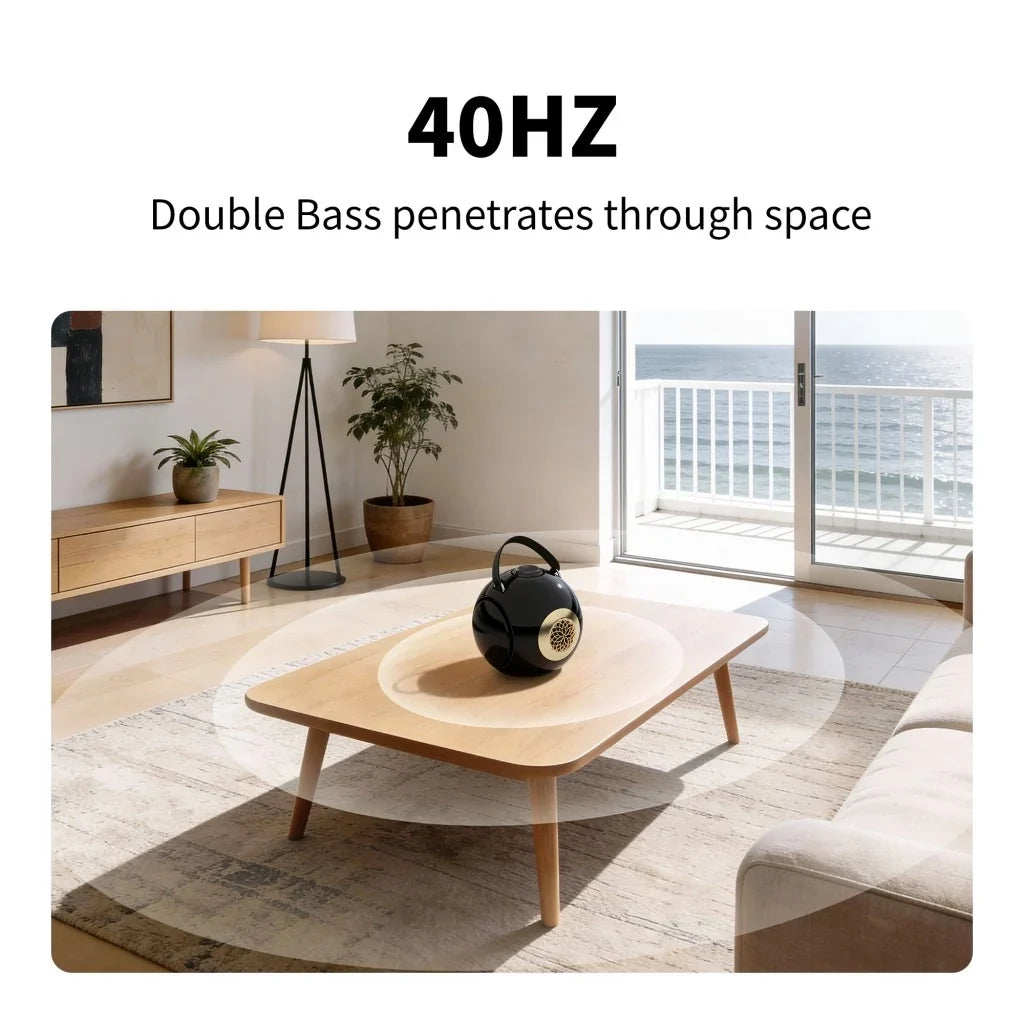
The dB1 Doublebass is particularly relevant for buyers who want a compact speaker with a strong focus on low-frequency reproduction. Its spherical chamber and symmetrical passive-radiator system are designed to support efficient air movement and controlled bass.
For the S2 Alphorn, the relevant buying question is how its low-frequency output integrates with its overall sound presentation. A speaker may sound powerful because of strong upper-bass energy, but that does not necessarily mean it reproduces deep bass accurately.
The difference between bass extension and bass impact is important. Bass extension describes how low a speaker can reach, while bass impact describes how convincingly it reproduces the force of drums, bass lines, and low-frequency effects.
For a broader explanation, read this guide to bass extension and speaker frequency response.
Loudness and Maximum Output
A crowd can create a challenging acoustic environment. Conversations, movement, outdoor background noise, and distance from the speaker can all reduce perceived loudness.
Maximum sound-pressure level, or SPL, is therefore an important consideration. However, a high SPL rating does not automatically mean that a speaker will sound better at high volume.
A useful crowd-performance evaluation should examine:
- Maximum usable volume
- Bass retention at high output
- Vocal clarity
- Treble harshness
- Distortion
- Dynamic compression
- Battery performance during extended use
A speaker that becomes harsh or loses bass when pushed hard may be less satisfying than a speaker that maintains a balanced sound at a slightly lower maximum level.
The dB1’s mechanical approach is relevant here because reducing unwanted cabinet movement can help improve the relationship between electrical energy and acoustic output. The speaker’s opposing passive radiators are designed to reduce self-generated vibration while supporting low-frequency reproduction.
For any direct dB1 Doublebass vs S2 Alphorn decision, the best test is to compare both speakers at the volume you expect to use during an actual gathering.
Sound Coverage: Can Everyone Hear the Music?
A crowd does not listen from one fixed position. Some people may be directly in front of the speaker, while others stand to the side or several metres away.
Sound coverage depends on:
- Speaker orientation
- Driver placement
- Dispersion pattern
- Room reflections
- Outdoor conditions
- Listener distance
- Speaker height
- Number of people in the space
A speaker with broad dispersion can make it easier for people positioned around it to hear a consistent balance. A more directional speaker may deliver stronger sound directly in front but lose energy toward the sides.
The dB1’s spherical form is relevant to this discussion because its shape supports a more distributed acoustic presentation than many conventional front-facing box designs. However, placement still matters. A spherical enclosure does not eliminate the effects of walls, furniture, distance, or outdoor sound loss.
The S2 Alphorn should be assessed by listening across the entire intended coverage area rather than judging it from one position.
For more information, see this guide to 360-degree versus front-firing speakers.
Indoor Gatherings Versus Outdoor Events
The better speaker may change depending on where the crowd will gather.
Indoor Gatherings
Indoor spaces provide walls and ceilings that reflect sound. These reflections can help reinforce output, but they can also create uneven bass and excessive reverberation.
In a living room, lounge, or apartment, the most important factors may include:
- Bass control
- Placement flexibility
- Clear vocals
- Moderate-to-high output
- Reduced cabinet vibration
- Visual integration with the room
The dB1 Doublebass can be attractive for indoor gatherings where the listener wants strong bass without using a large traditional speaker cabinet. Its spherical acoustic structure and compact form can also make placement more flexible.
Outdoor Gatherings
Outdoor spaces remove much of the room reinforcement that helps bass sound fuller indoors. Sound energy spreads into open space, and background noise can become more significant.
Outdoor performance depends on:
- Maximum usable SPL
- Low-frequency output
- Battery capacity
- Dispersion
- Weather resistance
- Stability on different surfaces
- Ability to maintain clarity at distance
For a large outdoor gathering, the speaker that provides the most useful coverage and sustained output may be preferable, even if another model produces deeper bass at close range.
Portability and Placement
A crowd-oriented speaker should be easy to position correctly. Placement can influence both loudness and bass response.
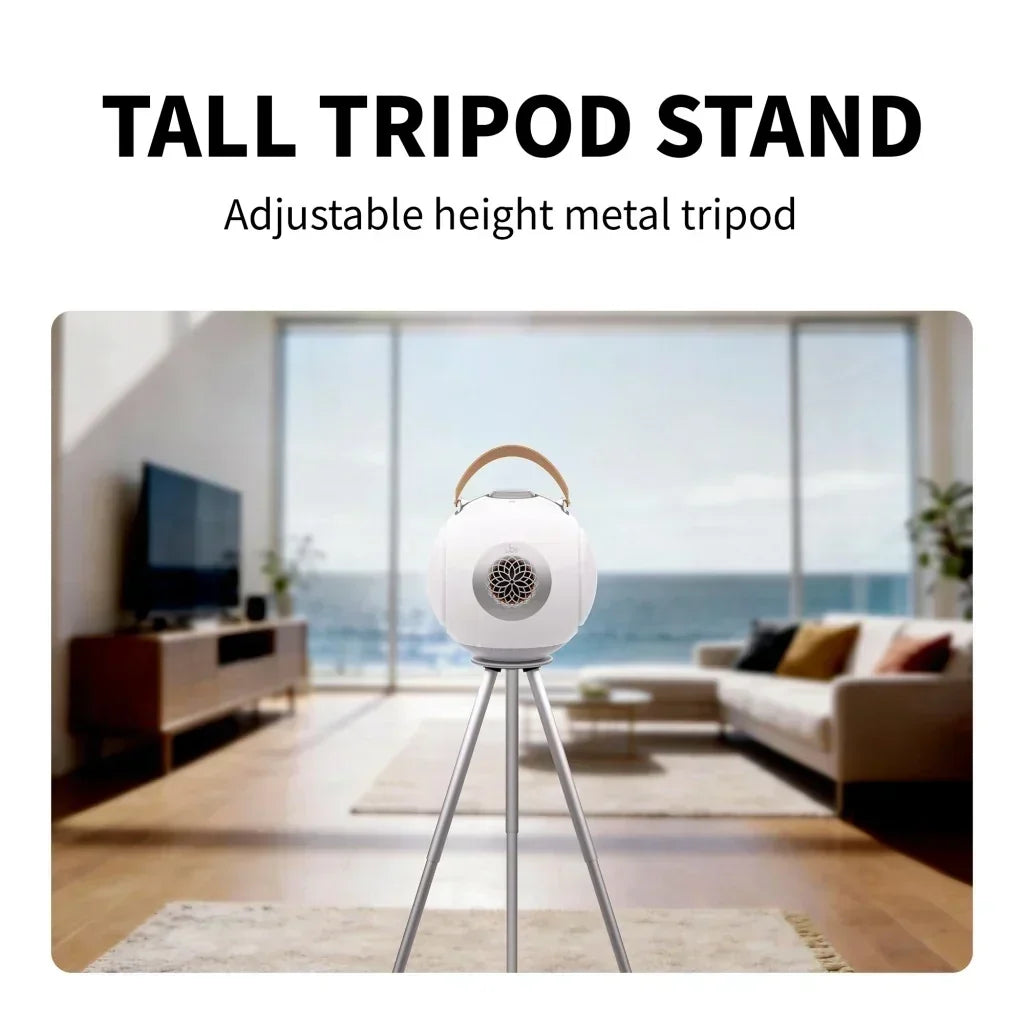
A speaker placed too close to a corner may produce excessive or uneven bass. A speaker placed in the centre of an open outdoor space may lose low-frequency reinforcement. Raising the speaker can improve coverage for listeners farther away, while placing it too low may cause bodies and furniture to obstruct sound.
When comparing the dB1 Doublebass vs S2 Alphorn, consider:
- Where the speaker will be carried
- How much space it occupies
- Whether it can be placed at listening height
- Whether it needs a stable surface
- How easily it can be moved during an event
- Whether its sound remains consistent after repositioning
The dB1’s compact spherical design may suit buyers who want strong bass in a relatively flexible form factor. The S2 Alphorn may be more appropriate if its physical configuration and acoustic output better match the dimensions of the event space.
Bass Control Versus Bass Quantity
Crowd music often encourages buyers to focus on loud bass. But too much uncontrolled bass can make a gathering sound muddy.
Excessive or poorly controlled bass may:
- Mask vocals
- Blur kick drums
- Reduce instrumental separation
- Create room resonance
- Make music tiring at high volume
- Overload a small enclosure
- Trigger DSP limiting
Good bass should have definition. A listener should be able to distinguish the kick drum from the bass guitar and hear changes in rhythm without everything becoming one low-frequency mass.
The dB1’s spherical chamber and dual passive-radiator architecture are intended to improve the control and efficiency of low-frequency reproduction. The system’s mechanical balance also helps reduce unwanted enclosure movement.
For a wider discussion of passive-radiator design, read passive radiators versus ported speaker boxes.
Which Speaker Fits Different Crowd Scenarios?
There is no single speaker that is automatically best for every gathering. The right choice depends on the event’s size, music style, location, and volume requirements.
|
Use Case |
What Matters Most |
Potentially Better Direction |
|
Small indoor gathering |
Bass control, clarity, and placement flexibility |
dB1 Doublebass may be attractive for compact, bass-focused listening |
|
Apartment or lounge event |
Balanced output and reduced cabinet vibration |
dB1 Doublebass may suit listeners who value controlled bass in a smaller space |
|
Bass-heavy music session |
Low-frequency extension and driver control |
dB1 Doublebass is relevant because of its acoustic bass architecture |
|
Outdoor social gathering |
Coverage, usable SPL, and battery performance |
Compare both models across the full listening area |
|
Larger crowd |
Projection, sustained output, and clarity at distance |
Choose the model that maintains balanced output throughout the space |
|
Mixed music and conversation |
Vocal clarity and controlled bass |
Test midrange intelligibility at realistic volume |
|
Design-conscious gathering |
Appearance, placement, and sound quality |
Compare both models according to the room’s visual and acoustic needs |
This table should be treated as a buying framework rather than a substitute for measured, side-by-side testing.
How to Compare the Two Speakers in Person
A practical listening test can reveal more than specifications alone.
Test at the Same Volume
Match the perceived loudness of both speakers before comparing bass or clarity. A louder speaker can initially seem better even when its tonal balance is less accurate.
Use Familiar Music
Choose tracks with:
- Kick drums
- Acoustic bass
- Electronic sub-bass
- Vocals
- Dense arrangements
- Sudden dynamic changes
Familiar music makes it easier to identify differences in bass texture, vocal clarity, and distortion.
Listen at Different Distances
Test directly in front of each speaker, to the side, and several metres away. A crowd will rarely remain in one listening position.
Increase the Volume Gradually
Listen for bass compression, harsh treble, cabinet rattling, and loss of vocal clarity. The better crowd speaker should remain controlled as the volume increases.
Test Indoors and Outdoors
If possible, evaluate both models in the environment where they will actually be used. Indoor room gain can make bass seem deeper, while outdoor listening reveals how much acoustic output the speaker can produce without wall reinforcement.
Observe Battery and Connection Performance
For long events, wireless stability and sustained battery performance are as important as sound quality. A speaker that sounds excellent but cannot maintain reliable operation may not be suitable for a crowd.
dB1 Doublebass vs S2 Alphorn: Which Should You Choose?
The dB1 Doublebass vs S2 Alphorn comparison ultimately comes down to the kind of crowd experience you want to create.
The dB1 Doublebass is a strong candidate for buyers who prioritize controlled bass, spherical acoustic engineering, compact placement, and efficient low-frequency reproduction. Its central driver, spherical chamber, dual passive radiators, and self-balancing mechanical architecture give it a distinct approach to bass performance.
The S2 Alphorn should be selected based on how effectively it serves the intended listening area, how it maintains clarity at distance, and whether its overall output matches the size and character of the gathering.
For small or medium-sized gatherings where bass depth, acoustic design, and flexible placement matter, the dB1 Doublebass may be the more compelling choice. For larger events, the final decision should be based on measured coverage, sustained output, and how each speaker performs with people spread throughout the space.
The best crowd speaker is not necessarily the one with the biggest enclosure or the most aggressive bass. It is the one that delivers enough output, coverage, clarity, and control for the environment in which it will be used.
Frequently Asked Questions
1. Is the dB1 Doublebass better than the S2 Alphorn for large gatherings?
It depends on the size of the space, listening distance, and required output. The dB1 Doublebass is especially relevant for buyers who prioritize controlled bass and acoustic efficiency. For larger gatherings, compare both speakers for coverage, clarity, and sustained volume across the entire listening area.
2. Which UB+ speaker delivers deeper bass?
The dB1 Doublebass is designed around deep-bass reproduction through its spherical acoustic chamber, central mid-bass driver, and dual symmetrical passive radiators. Its approximately 3.5-times-larger combined passive-radiator surface area supports efficient air movement and controlled low-frequency output.
3. Is the dB1 Doublebass suitable for outdoor parties?
The dB1 Doublebass can be considered for outdoor gatherings, but performance depends on the size of the space, background noise, listening distance, and required volume. Outdoor testing is important because open spaces provide less natural bass reinforcement than indoor rooms.
4. What should I compare when choosing between the dB1 Doublebass and S2 Alphorn?
Compare maximum usable volume, bass performance, sound coverage, clarity at a distance, portability, battery performance, placement flexibility, and distortion at higher volume. The best choice depends on the environment and the type of gathering.
5. Does a louder speaker always perform better with a crowd?
No. Maximum loudness is only one part of crowd performance. A good speaker should also maintain clear vocals, controlled bass, balanced sound, and low distortion at higher volume. Coverage and consistency across the listening area are equally important.
Explore UB+ Options
→ Explore the UB+ dB1 DoubleBass
→ Compare the dB1 DoubleBass with the dB Mini
Because the right speaker for a crowd is not simply the loudest one. It is the one that keeps music clear, bass controlled, and every listener connected to the sound.


댓글 남기기
이 사이트는 hCaptcha에 의해 보호되며, hCaptcha의 개인 정보 보호 정책 과 서비스 약관 이 적용됩니다.