
A minimalist desk setup is not simply about removing objects. It is about creating a workspace where every element has a clear purpose and contributes to a calm, functional environment. The monitor, keyboard, lighting, materials, and even the space around the desk all influence how the workspace feels.
Audio deserves the same attention.
A speaker can either become visual clutter or integrate naturally into the design of the room. It can also affect the atmosphere of the workspace through its tonal balance, bass response, dispersion, and physical presence. For anyone building a clean modern workspace, choosing the right minimalist desk speaker means considering both aesthetics and acoustic performance.
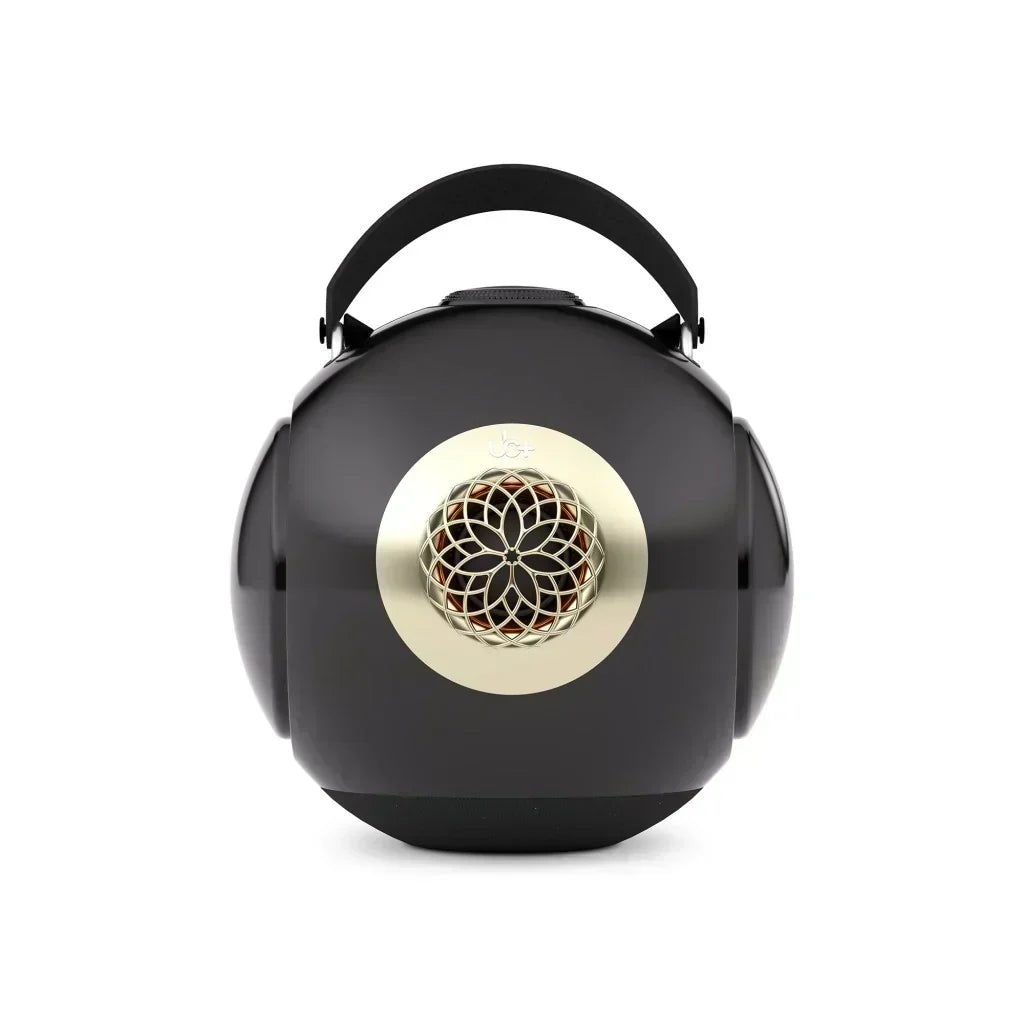
The UB+ dB1 DoubleBass takes this approach further by combining a sculptural spherical enclosure with a wireless audio system designed around controlled air movement, 360° dispersion, and symmetrical passive-radiator architecture.
The result is a speaker designed to be part of the workspace rather than something that simply occupies space on it.
Minimalism Is About Intentional Design

A successful minimalist desk does not necessarily contain the fewest possible objects. Instead, the objects that remain should feel intentional.
A monitor should be positioned for comfortable viewing. A keyboard should have enough surrounding space to feel uncluttered. Lighting should provide useful illumination without creating visual distraction. Cables should be managed rather than allowed to dominate the workspace.
The same principle applies to audio.
Traditional desktop speakers are often rectangular and directional. They may need to sit on either side of a monitor, occupy valuable desk width, and remain pointed toward the listener.
That arrangement can work, but it does not always suit a modern minimalist environment.
A wireless Bluetooth speaker can reduce cable clutter while allowing more freedom in placement. A spherical design can also introduce a softer visual shape that works naturally alongside wood, aluminum, glass, fabric, and other common desk materials.
For a broader look at how speaker aesthetics and acoustics can work together, see Designer Speakers vs Regular Speakers: What Changes in Sound and Design?.
Why Speaker Shape Matters on a Desk

Speaker shape is often treated as an industrial-design decision, but enclosure geometry also influences acoustic behavior.
Traditional box speakers rely on rectangular cabinets because they are practical to manufacture and position. However, their internal parallel surfaces can create reflections and standing-wave patterns that designers need to manage through enclosure construction, damping, driver placement, and tuning.
A sphere presents a fundamentally different geometry.
The UB+ dB1 DoubleBass uses a spherical acoustic chamber inspired by the principles of the Helmholtz resonator. The curved enclosure becomes part of the acoustic system rather than simply acting as a container around the driver.
This is one reason a spherical Bluetooth speaker can be interesting in a desk environment. The shape is visually distinctive, but its acoustic purpose is equally important.
The goal is not simply to make the speaker look different.
It is to use the enclosure as part of the way air, pressure, resonance, and sound are managed.
Desk Audio Has Different Requirements

A desk is not the same listening environment as a large living room.
Listening distances are usually shorter. Volumes are often moderate. Music may play continuously for several hours while you work, study, design, write, edit, or browse.
That changes what matters.
Instead of simply asking how loud a speaker can become, consider:
- How clear are vocals and speech?
- Does bass remain controlled at moderate volume?
- Does the speaker sound balanced over long sessions?
- Is the sound overly directional?
- Does the speaker consume too much desk space?
- Are cables creating unnecessary clutter?
- Can the speaker be repositioned easily?
These factors matter when choosing a Bluetooth speaker for a desk setup.
A speaker that sounds impressive for five minutes but becomes tiring after several hours is not necessarily well suited to a workspace.
The objective should be an audio system that supports the environment rather than constantly demanding attention.
The Acoustic Architecture Behind the dB1

The dB1 DoubleBass approaches compact speaker design through a combination of enclosure geometry, driver placement, and passive-radiator mechanics.
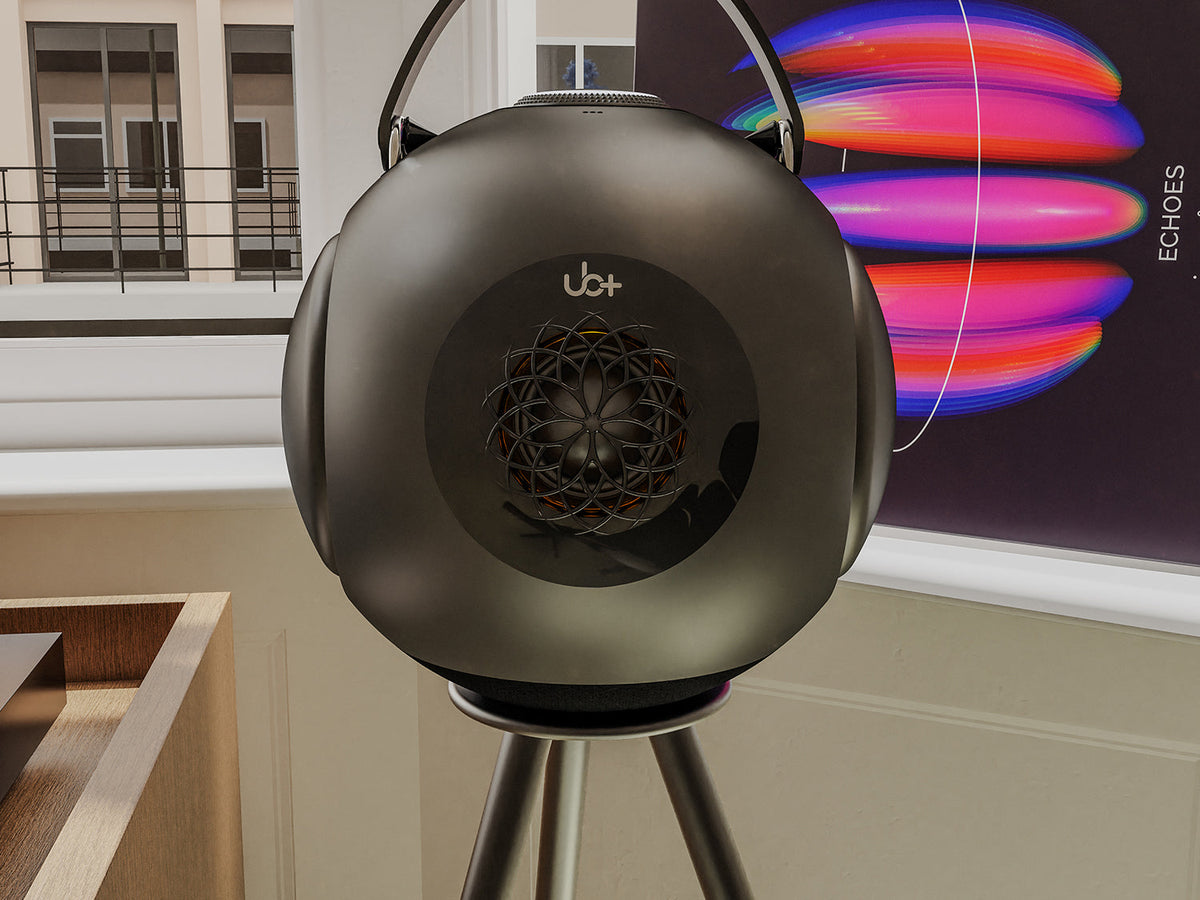
Its spherical chamber works together with a downward-firing mid-bass driver and two symmetrical passive radiators.
Rather than simply firing the main driver directly toward the listener, the driver energizes the internal air volume of the spherical chamber. That pressure then interacts with the passive-radiator system.
This makes the enclosure itself an active part of the acoustic process.
The architecture is particularly relevant to a minimalist desk because it allows the speaker to combine a relatively compact physical presence with an acoustic system designed for broad sound distribution.
For another detailed look at the relationship between spherical geometry and audio performance, see Spherical vs. Box Speakers: How Enclosure Shape Changes Sound.
Downward-Firing Driver and Controlled Air Loading

The dB1's downward-firing mid-bass driver is central to its acoustic architecture.
Instead of directing all of its energy toward one outward-facing axis, the driver works into the internal spherical chamber. The air inside the enclosure becomes part of the mechanism that supports low-frequency reproduction.
This approach is different from simply increasing electronic bass enhancement.
The physical enclosure, driver, and air volume work together.
For desk listening, that can be useful because low-frequency energy does not have to be created entirely through aggressive processing. The acoustic system is designed to contribute to the result.
The dB1's frequency response extends toward 40Hz, giving the speaker the ability to reproduce low-frequency content that is important for music, cinematic material, electronic tracks, and other bass-rich recordings.
However, good bass is not simply about reaching a lower number.
Control matters.
Why Symmetrical Passive Radiators Matter
The dB1 DoubleBass system uses two passive radiators positioned opposite one another.
Passive radiators respond to changes in internal air pressure and contribute to low-frequency output without requiring their own powered motor system.
The symmetrical arrangement adds another mechanical consideration.
As the radiators move, their opposing motion helps counterbalance mechanical forces within the enclosure. That can reduce unwanted cabinet movement and allow more of the system's energy to contribute to acoustic output.
This matters on a desk because the speaker and the desk surface are physically connected.
A speaker that transfers unnecessary vibration into a tabletop can create unwanted buzzing, movement, or coloration. Mechanical stability therefore becomes part of the overall listening experience.
For a deeper technical explanation, explore How Passive Radiators Work in Bluetooth Speakers.
360° Sound for a More Flexible Workspace
One of the biggest advantages of a spherical speaker on a desk is that you are not always required to remain perfectly aligned with the front of the enclosure.
You may sit directly in front of your monitor while writing.
Later, you may move to the side while reading.
You may stand up to make coffee, walk around the room during a phone call, or move between different parts of a home office.
A conventional front-facing speaker is designed around a preferred direction.
The dB1's 360° spherical sound presentation is designed to distribute audio more broadly around the speaker.
That does not eliminate the importance of placement. Walls, furniture, room dimensions, and surfaces still influence what you hear. But broad dispersion can make the speaker more adaptable to the changing positions common in a modern workspace.
This is also why a 360° Bluetooth speaker can be useful beyond a desk.
The same speaker can move to a shelf, side table, bedroom, living area, or outdoor space without requiring the same directional positioning associated with traditional desktop speakers.
Keep the Desk Visually Clean
Good desk audio should not create another organizational problem.
Wireless connectivity is therefore particularly useful in minimalist setups.
Bluetooth eliminates the need for a permanent audio cable between the computer or phone and the speaker. That can make it easier to maintain a clean surface, particularly when the desk already contains a monitor, keyboard, mouse, charging equipment, and other accessories.
The physical form of the speaker also matters.
A large pair of traditional desktop speakers can consume considerable horizontal space. A single spherical speaker provides a different visual and spatial arrangement.
Instead of thinking of the speaker as two separate boxes positioned around a monitor, you can treat it as one acoustic object within the overall composition.
Materials, Color, and Visual Balance
Minimalist interiors often depend on subtle contrasts rather than dramatic decoration.
Matte surfaces can sit alongside polished metal. Wood can provide warmth against a neutral desk. Glass can create openness while fabric adds texture.
A speaker should complement those elements rather than compete with them.
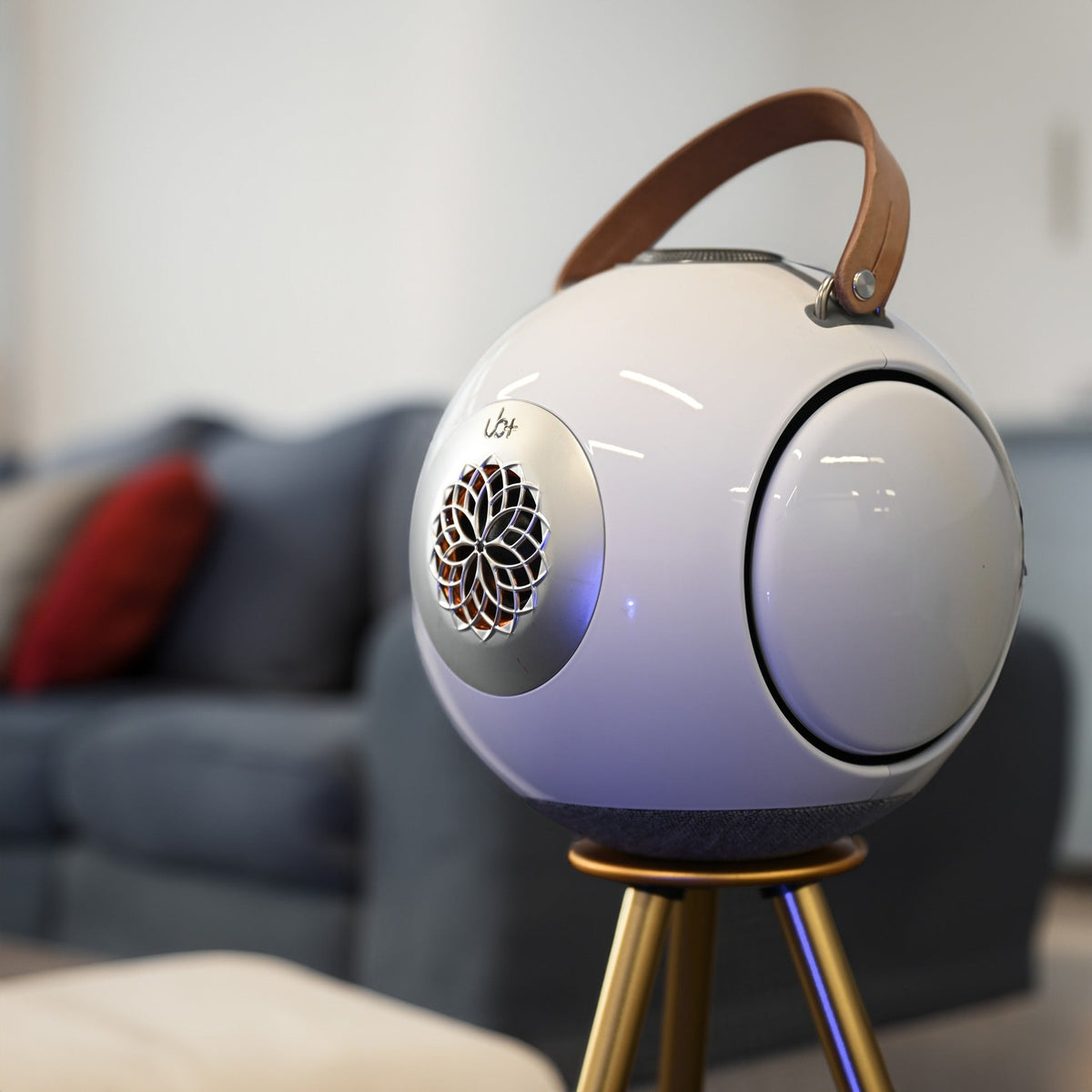
The spherical form of the dB1 has a sculptural quality that can work naturally within contemporary interiors. Its rounded geometry also avoids some of the visual heaviness associated with multiple rectangular boxes.
This is where the idea of an aesthetic Bluetooth speaker becomes more than a marketing phrase.
Industrial design matters because objects remain visible in a workspace for hours every day.
A speaker that looks appropriate on the desk is more likely to feel like part of the environment rather than equipment that needs to be hidden.
Positioning a Speaker on a Minimalist Desk
Even a well-designed speaker benefits from thoughtful placement.
Avoid placing it directly against a wall if doing so unnecessarily restricts sound dispersion. Give the speaker enough surrounding space for its acoustic output to interact naturally with the room.
If the speaker sits beside a monitor, make sure it does not block the display or interfere with other equipment.
For a spherical design, there is also less reason to treat the speaker like a conventional front-firing box that must be aimed precisely at your chair.
The goal is simple: allow the speaker to breathe.
For more practical guidance on how placement affects low frequencies and clarity, see Bluetooth Speaker Placement Tips for Better Bass and Clarity.
Audio for Work, Study, and Creative Sessions
A desk speaker may spend more time playing background audio than dedicated listening sessions.
That means versatility is important.
During focused work, you might listen to ambient music or instrumental tracks.
During a break, you might switch to a podcast.
Later, the same speaker might handle video audio, streaming content, or casual music listening.
A good workspace speaker therefore needs to reproduce more than bass.
Vocals should remain intelligible. Midrange information should remain clear. High frequencies should not become excessively aggressive.
The dB1's acoustic architecture is designed around a balanced system rather than treating bass as the only measure of performance.
That makes it relevant for people who want an audiophile Bluetooth speaker for a desk without building a traditional wired hi-fi system around their workstation.
When You Need More Than a Desk Speaker
A major benefit of choosing a portable wireless design is that the workspace does not have to be the speaker's permanent home.
Your routine can change.
The speaker can move from the desk to a bookshelf when you finish working. It can go into the bedroom in the evening or accompany you to another room.
That flexibility is difficult to achieve with permanently installed desktop speakers.
It also means your audio investment can serve several environments rather than being limited to one workstation.
For people living in apartments or smaller homes, that can be especially useful.
A Minimalist Desk Is Also an Acoustic Space
It is easy to think about minimalism entirely in visual terms.
But the workspace has an acoustic character too.
Hard desk surfaces, walls, windows, shelves, and nearby furniture all interact with sound. A small room can emphasize certain frequencies, while a more open room can allow sound to disperse differently.
That is why choosing a speaker based only on appearance is not enough.
The best minimalist desk speaker should make sense visually and acoustically.
The dB1's spherical architecture addresses both sides of the equation. Its form creates a distinct visual object while its enclosure geometry, air loading, driver arrangement, and passive radiators contribute to its acoustic behavior.
Building a More Intentional Desk Setup
A strong minimalist workspace does not require expensive equipment everywhere.
Instead, focus on a few elements that genuinely improve the experience.
Start with the desk itself. Keep the surface organized and leave enough open space around your primary equipment.
Then consider lighting. Soft, controlled illumination can reduce visual fatigue and create a more comfortable environment.
Manage cables wherever possible.
Finally, treat audio as part of the overall workspace rather than an afterthought.
A minimalist desk speaker should provide the sound you need without forcing the rest of the desk to be organized around it.
That is where a compact spherical design can make sense.
Why the dB1 Fits a Modern Minimalist Workspace
The UB+ dB1 DoubleBass brings together several characteristics that suit a contemporary desk environment:
- Spherical acoustic enclosure
- Helmholtz-inspired acoustic principles
- Downward-firing mid-bass driver
- Symmetrical DoubleBass passive-radiator architecture
- 360° sound presentation
- Wireless Bluetooth connectivity
- Portable form factor
- Sculptural industrial design
The value is in how these elements work together.
The speaker does not need to be treated as a decorative object that happens to produce sound. Its physical design is connected directly to its acoustic purpose.
The sphere is the enclosure, the acoustic chamber, and the visual form at the same time.
Frequently Asked Questions
What is the best speaker for a minimalist desk setup?
The best choice depends on desk size, listening distance, sound preferences, and whether you want a fixed or portable system. A compact wireless speaker can be particularly useful when reducing cables and visual clutter is important.
Is a spherical speaker good for desk listening?
A spherical speaker can work well on a desk when broad sound distribution and flexible positioning are priorities. The UB+ dB1 uses a spherical acoustic chamber together with a downward-firing driver and symmetrical passive radiators.
Why does speaker shape matter for sound?
Enclosure geometry influences internal air movement, reflections, resonance, and pressure distribution. A spherical enclosure has different acoustic characteristics from a conventional rectangular enclosure because it does not rely on parallel internal surfaces.
Is a portable Bluetooth speaker suitable for working?
Yes. Portable Bluetooth speakers can be useful for work because they offer wireless connectivity, flexible placement, and easy movement between rooms. For longer sessions, tonal balance and controlled bass are particularly important.
Can a minimalist desk speaker also work elsewhere?
A portable design can move between a desk, bedroom, living room, shelf, or outdoor area. This flexibility is one of the main differences between portable wireless speakers and permanently positioned desktop systems.
Final Thoughts
A minimalist desk setup should feel intentional from every angle.
The monitor, keyboard, lighting, materials, organization, and audio should work together rather than compete for attention.
That makes speaker selection more important than it might initially appear.
A conventional desktop system can provide excellent focused listening, but it may also require more space and more deliberate positioning. A small portable speaker provides greater flexibility, while a 360° spherical design introduces another approach to sound distribution.
The UB+ dB1 DoubleBass combines that flexibility with a spherical acoustic chamber, downward-firing driver, symmetrical passive radiators, and 360° sound presentation.
For a modern workspace, the result is an audio system that can be both visually understated and acoustically purposeful.
The right speaker does not need to dominate a minimalist desk.
It should belong there.
Explore UB+
If you want to see how the dB1's spherical acoustic architecture fits into a modern workspace and everyday listening environment:


Laat een reactie achter
Deze site wordt beschermd door hCaptcha en het privacybeleid en de servicevoorwaarden van hCaptcha zijn van toepassing.