
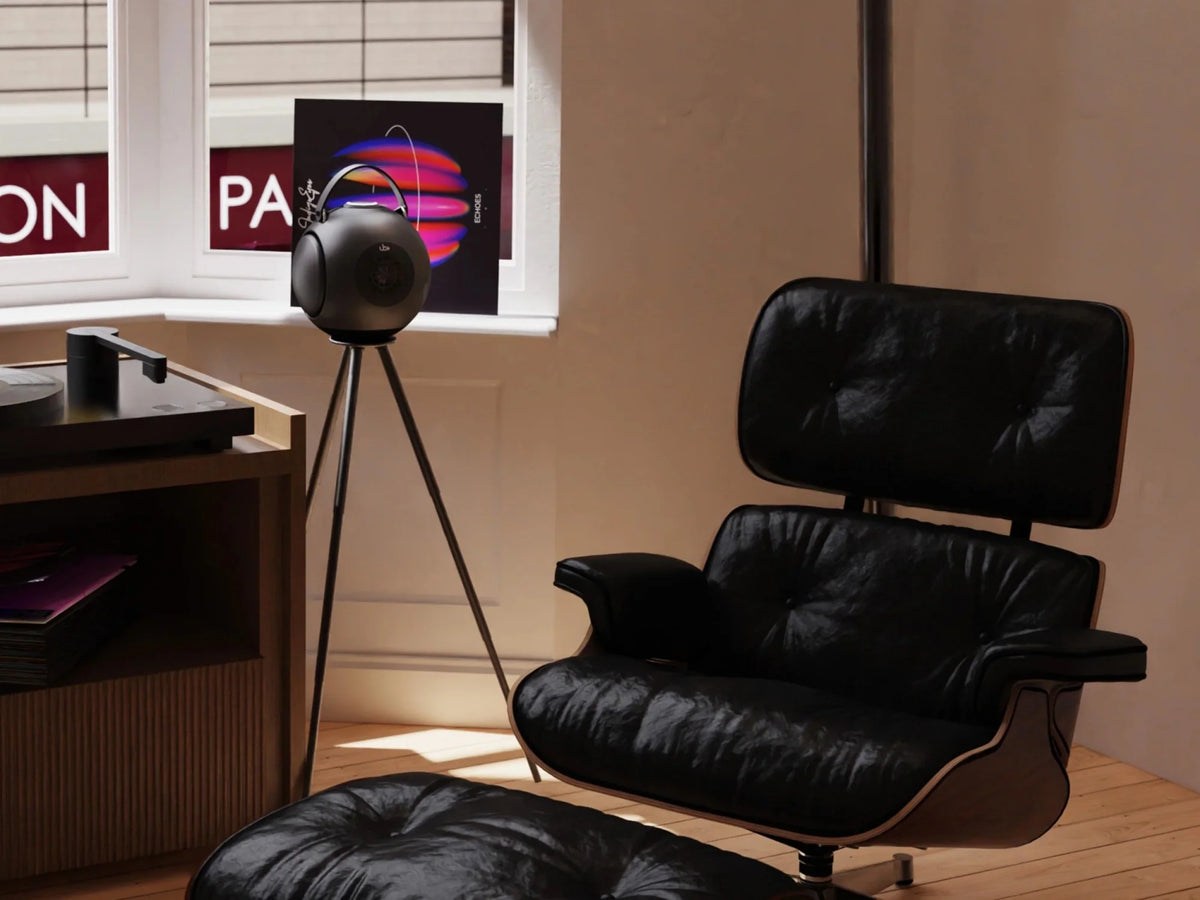
Finding a cheap bluetooth speaker good bass option is not simply about choosing the lowest-priced model with the biggest woofer or the highest advertised wattage. It is about understanding which components actually influence bass performance, how much sound quality you can expect at different price levels, and where spending a little more can make a meaningful difference.
Budget Bluetooth speakers have improved considerably. Many now offer wireless connectivity, rechargeable batteries, compact designs, and enough output for everyday listening. However, bass performance remains one of the biggest differences between an inexpensive speaker and a well-engineered portable audio system. Two speakers at similar prices can sound completely different because of their enclosure design, driver capabilities, passive radiator configuration, acoustic tuning, and power management.
The smartest purchase is not necessarily the cheapest speaker available. It is the speaker that delivers the most useful combination of bass depth, clarity, volume, portability, and long-term reliability for the money.
For buyers comparing different price categories, the important question is not simply how much bass a speaker produces. It is how efficiently the speaker produces that bass, how well it maintains control at different volume levels, and whether the rest of the music remains clear. A speaker that produces a strong low-frequency effect but loses vocal detail or becomes distorted at higher volume may not be a good investment.
A more useful buying approach is to evaluate the complete acoustic system. The driver, enclosure, passive radiator, amplifier, DSP, battery, and tuning all contribute to the final sound. Understanding these elements makes it easier to distinguish genuine engineering improvements from specifications that mainly look impressive on a product page.
What Does Good Bass Actually Mean in a Budget Bluetooth Speaker?

Bass quality is often reduced to one question: how powerful does the low end sound? In reality, good bass involves several characteristics working together.
A speaker can produce a noticeable bass effect without reproducing low frequencies accurately. Some inexpensive models use aggressive digital signal processing (DSP) to emphasize a narrow bass region. This can make music sound impressive during a short demonstration, but it may also reduce vocal clarity, create distortion at higher volumes, or make different songs sound unusually similar.
A more capable speaker balances bass extension, output, control, and midrange performance. These qualities determine whether bass sounds like part of the music or simply an added effect.
Consider these factors before comparing prices:
- Bass extension: How low the speaker can reproduce meaningful low-frequency information.
- Bass control: Whether individual bass notes remain defined rather than blending into a continuous rumble.
- Distortion: Whether the sound becomes rough, compressed, or unpleasant when the volume increases.
- Integration: Whether bass works naturally with vocals, guitars, keyboards, and other instruments.
- Dynamic response: Whether the speaker can reproduce changes in musical intensity without making everything sound equally loud.
- Consistency: Whether the tonal balance remains reasonably stable at different listening levels.
There is also a difference between bass quantity and bass quality. Quantity describes how prominent the low frequencies sound. Quality involves definition, timing, consistency, and the ability to reproduce different bass notes without excessive resonance.
For example, electronic music may contain sustained sub-bass, while acoustic recordings often rely on the attack and decay of a bass guitar or upright bass. A speaker that simply boosts one part of the low-frequency range may make electronic tracks sound powerful but can make acoustic recordings less natural.
Bass response also needs to work alongside the midrange. Vocals, guitars, piano, and many of the instruments that give music its character occupy frequencies above the deepest bass region. If a speaker emphasizes low frequencies too aggressively, these elements can become less distinct. A balanced speaker should make bass audible and satisfying without allowing it to dominate every recording.
Frequency response specifications can help, but they should not be treated as the complete picture. A speaker advertised with a low frequency limit may not reproduce that frequency at a useful listening level. The enclosure, driver excursion, available power, and acoustic design all influence real-world performance.
For a clearer understanding of frequency specifications, see our guide to bass extension and speaker frequency response.
Why the Cheapest Bluetooth Speakers Often Struggle With Bass

Small speakers have physical limitations. A compact enclosure provides limited internal air volume, while a small driver has a restricted surface area and excursion range. Producing strong low-frequency output requires moving enough air, and that becomes increasingly difficult as the frequency decreases.
Manufacturers can compensate in several ways, but each approach involves trade-offs. Understanding these limitations helps explain why a speaker with a low price and impressive bass claims may not perform as expected.
Small Drivers and Limited Air Movement

A driver produces sound by moving air. At lower frequencies, producing substantial output generally requires greater displacement. A small driver inside a very compact enclosure may struggle to deliver deep bass without approaching its mechanical limits.
Two driver characteristics are particularly important: diaphragm area and excursion. A larger diaphragm can move more air for a given amount of movement, while greater linear excursion allows the driver to travel farther without excessive distortion. Both characteristics matter, but they must work within the limits of the motor, suspension, and enclosure.
This is why two speakers with similar advertised wattage can produce noticeably different results. Power alone does not establish how effectively a speaker converts electrical energy into controlled acoustic output.
A driver also needs sufficient mechanical control. When the diaphragm moves too far beyond its intended operating range, distortion can increase and the sound may become less precise. This is particularly noticeable in bass-heavy music, where repeated low-frequency signals place sustained demands on the driver.
Aggressive DSP Bass Boosting

Digital signal processing can improve a speaker's tonal balance and protect its components. However, excessive bass boosting cannot remove the physical limitations of a small driver.
When a speaker is pushed beyond its practical operating range, the system may reduce output, compress the signal, or produce distortion. A bass-heavy tuning can also make vocals and instruments less distinct.
DSP is not inherently a disadvantage. It can provide equalization, dynamic control, excursion protection, and compensation for the acoustic characteristics of a speaker. The important distinction is whether processing supports a capable physical design or attempts to compensate for limitations that cannot be solved electronically.
For example, equalization can adjust the relationship between bass, midrange, and treble. Dynamic processing can help protect the driver when the input signal becomes demanding. Neither technique can make a physically small driver move unlimited air or reproduce every low frequency at high volume.
Basic Enclosure Design

The enclosure is part of the acoustic system, not merely a protective shell. Its internal volume, shape, stiffness, and air movement influence how the driver behaves at low frequencies.
Poorly controlled internal reflections, resonance, and air leakage can affect clarity and bass response. Conventional box-shaped enclosures can also develop internal standing-wave patterns, depending on their dimensions and construction.
Enclosure construction matters because the cabinet experiences mechanical forces while the driver operates. If the cabinet itself vibrates excessively, unwanted movement can affect the listening experience and waste some of the system's mechanical energy.
A speaker's physical construction is therefore just as important as its driver specification. Understanding the difference between enclosure designs is useful when comparing spherical and conventional box speakers.
Limited Amplifier and Battery Capacity

An inexpensive portable speaker may also have limitations in its amplifier and power supply. Strong low-frequency output can require substantial electrical power, especially when the speaker is expected to maintain volume over extended listening sessions.
The amplifier, battery, and driver must operate as a coordinated system. If the battery cannot provide sufficient energy or the electronics reach their operating limits, the speaker may reduce output or alter its performance to protect the components.
This does not mean that every affordable speaker needs a large battery or powerful amplifier. It means that the advertised output should be considered alongside the complete system rather than in isolation.
Where Your Money Should Go: The Features That Matter Most
When comparing budget and mid-priced Bluetooth speakers, it is easy to become distracted by features that have little influence on the listening experience. A long specification list does not automatically indicate better sound.
The following areas deserve more attention.
1. Acoustic Design and Enclosure Construction
The enclosure is part of the speaker's acoustic system, not simply a protective shell. Its volume, shape, rigidity, and internal arrangement influence how efficiently the driver operates.
A well-designed enclosure can help control unwanted resonance and improve the consistency of bass reproduction. Some designs also use passive radiators to increase low-frequency output without requiring a conventional port.
A passive radiator responds to pressure changes inside the enclosure. It moves with the air displaced by the active driver and contributes to low-frequency output. Its effectiveness depends on the complete acoustic design, including the radiator's mass, suspension, enclosure volume, and tuning.
Enclosure rigidity matters as well. When cabinet panels vibrate excessively, some energy is converted into unwanted mechanical movement rather than useful acoustic output. A carefully constructed enclosure helps maintain predictable driver behavior and reduces unwanted cabinet resonance.
The shape of the enclosure can also influence internal acoustic behavior. Parallel surfaces may support particular standing-wave patterns, depending on cabinet dimensions. Designers can address these effects through internal damping, bracing, geometry, and other construction techniques.
For a compact speaker, these decisions are especially important because there is less internal volume available to work with. Good engineering is therefore not simply about making the enclosure smaller. It is about using the available space effectively.
2. Driver Quality, Excursion, and Motor Strength
The driver converts electrical signals into sound. Its motor strength, diaphragm construction, suspension, and available excursion influence how it performs.
A larger driver is not automatically better, but a capable driver with appropriate excursion can move more air and maintain better control when reproducing demanding bass content.
The voice coil and magnetic motor are also important. The voice coil converts electrical current into mechanical movement through its interaction with the magnetic field. The motor's ability to maintain controlled movement across the driver's operating range influences linearity and distortion.
The suspension system helps guide the diaphragm's movement and maintain its position. Its compliance and mechanical behavior affect how the driver responds to different signals. A poorly matched suspension can limit excursion or contribute to unwanted distortion.
Look beyond the diameter printed on the product specification. Driver quality and system integration matter just as much.
3. Passive Radiator Configuration and Resonance
Passive radiators can be useful in compact portable speakers because they provide an alternative way to extend low-frequency output.
They operate through the pressure variations created inside the enclosure by the active driver. The passive radiator has no separate electrical drive signal; its movement is determined by the acoustic pressure and its own mechanical properties.
The system is tuned around the relationship between enclosure air volume and the moving mass of the radiator. This is why radiator size alone does not establish performance. Suspension compliance, mass, enclosure volume, and tuning frequency all influence the result.
A well-engineered system should maintain a reasonable balance between bass output and the clarity of the rest of the frequency range. The presence of a passive radiator does not guarantee deep or controlled bass.
The number and position of passive radiators also matter. Their movement, combined surface area, and relationship with the active driver influence the system's output and mechanical behavior. A manufacturer should consider the complete acoustic arrangement rather than simply adding a radiator to make the specification sheet look more impressive.
4. Battery and Power Management
Portable speakers need to balance output with battery consumption. Strong bass at high volume can demand considerable power, so battery capacity and power management influence how consistently a speaker performs during extended listening.
A speaker may also adjust its output as battery voltage changes or as the system approaches thermal and excursion limits. These protective behaviors can help prevent damage, although they may affect maximum output under demanding conditions.
Check the manufacturer's stated maximum playback time, but remember that actual battery life depends on volume, content, connection type, and operating conditions.
Maximum playback figures should be treated as reference values rather than guarantees for every listening situation. High-volume playback, bass-heavy music, wireless features, and environmental conditions can all influence battery performance.
5. Frequency Response and Tuning
Frequency response describes how a speaker reproduces different frequencies. It can provide a useful starting point when comparing models, but a single range does not explain how evenly or loudly the speaker reproduces each frequency.
A frequency response measurement should ideally include a tolerance, such as ±3dB, and information about the measurement conditions. Without that context, a broad frequency range can be difficult to interpret.
Tonal tuning also matters. Some speakers emphasize mid-bass to create an immediate impression of warmth, while others aim for a more balanced response. The best choice depends on your music preferences, listening environment, and desired sound.
A speaker that emphasizes mid-bass may sound energetic with pop and electronic music. A more controlled response may be preferable for acoustic recordings, jazz, classical music, and tracks where the natural texture of instruments matters.
6. Amplifier Efficiency and Thermal Management
Amplifier efficiency is another factor that can influence the value of a portable speaker. The amplifier must provide enough power for the driver while operating within the system's electrical and thermal limits.
Electrical energy that is not converted into useful output can contribute to heat. If components become too hot, the speaker may need to reduce output to protect itself. Thermal management therefore affects sustained performance, not just the maximum volume available for a short demonstration.
For everyday buyers, this means a speaker should be judged by how it performs over a normal listening session. A brief loud demonstration does not necessarily reveal whether it can maintain consistent sound for an hour or more.
7. Durability and Everyday Usability
A good-value speaker should remain useful beyond the first few weeks. Consider its construction, water resistance, controls, connectivity, charging arrangement, and portability.
A lower-priced model that fails to meet your everyday needs may not represent good value, even if its initial purchase price is attractive. A slightly more expensive speaker can make better financial sense if it offers the reliability and performance you actually need.
Think about where the speaker will be used. A desk speaker may benefit from a stable footprint and straightforward controls. A speaker used in different rooms may need a convenient carrying design. Outdoor use can make water resistance and battery performance more important.
Budget, Mid-Range, or Premium: Which Price Tier Makes Sense?
The best place to spend money depends on what you expect from your speaker. A model intended for background music in a small room does not need the same capabilities as one expected to fill a larger space with energetic music.
|
Price tier |
What to expect |
Main limitation |
Best suited for |
|
Entry-level budget |
Basic wireless playback and noticeable bass emphasis |
Limited low-frequency control and output |
Casual listening and podcasts |
|
Better budget |
More balanced tuning and improved construction |
Bass depth and loudness may remain restricted |
Bedrooms, desks, and personal listening |
|
Mid-range |
Better acoustic engineering, stronger output, and more refined sound |
Higher purchase cost |
Regular music listening and versatile use |
|
Premium portable |
More developed driver and enclosure systems |
Greater cost and potentially larger size |
Listeners prioritizing sound quality and performance |
Entry-Level: Pay for the Essentials
At the lowest price level, prioritize reliable wireless playback, acceptable vocal clarity, reasonable battery performance, and durable construction.
Do not pay extra simply because a speaker advertises exaggerated bass or a high wattage number. If the enclosure and driver cannot support the claimed performance, the listening experience may not match the marketing.
At this level, it is usually better to choose a speaker with consistent everyday performance than one that promises unusually powerful bass from a very small enclosure.
Also consider the cost of replacing an inexpensive speaker. If a very cheap model has poor battery life, unreliable controls, or weak construction, the initial saving may disappear when you need another speaker sooner than expected.
Better Budget: Look for Balanced Performance
This tier can offer a more satisfying everyday experience. Better tuning and enclosure construction may produce bass that feels fuller without overwhelming vocals and instruments.
For many casual listeners, this is the most practical spending category. The goal is not maximum bass output but a sound profile that remains enjoyable across different genres.
Pay attention to the speaker's performance at moderate and higher listening levels. A model that maintains its tonal balance as the volume changes can be more satisfying than one that sounds impressive only at low volume.
This is also where it becomes useful to compare the complete feature set. Battery life, water resistance, connectivity, build quality, and sound consistency can collectively make a moderate price increase worthwhile.
Mid-Range: Spend More on Engineering
Moving into the mid-range can make sense when you listen frequently, want more convincing bass, or need a speaker that performs well in different environments.
At this level, compare acoustic architecture, driver construction, passive radiator design, battery performance, and overall sound balance. These details can explain why one speaker costs more than another.
A better-engineered acoustic system may deliver more consistent output and improved control. That can be more valuable than simply increasing the advertised power rating.
The mid-range is also a sensible category for listeners who use one speaker for several purposes. It may need to provide background music while working, more energetic playback during gatherings, and balanced sound for longer listening sessions.
Premium: Pay for Specific Improvements
Premium pricing should correspond to improvements that matter to your listening habits. These may include more sophisticated acoustic engineering, stronger output capability, refined tuning, or additional connectivity options.
A higher price is not automatically justified. Compare the actual benefits with what you will use rather than paying for specifications that do not affect your experience.
A premium portable speaker should provide a clear reason for its price. That reason may be more advanced acoustic engineering, better driver control, more consistent performance, or a design that suits a particular listening environment. If the difference is not meaningful in your daily use, a less expensive model may be the smarter purchase.
How UB+ Approaches Bass Performance
UB+ offers several portable speaker designs for listeners comparing compact size, bass reproduction, and everyday usability. Rather than treating every model as interchangeable, it is useful to consider what each design is intended to offer.
UB+ dB1 DoubleBass: An Acoustic Approach to Low Frequencies
The UB+ dB1 DoubleBass is particularly relevant to buyers interested in how enclosure engineering can influence bass performance.
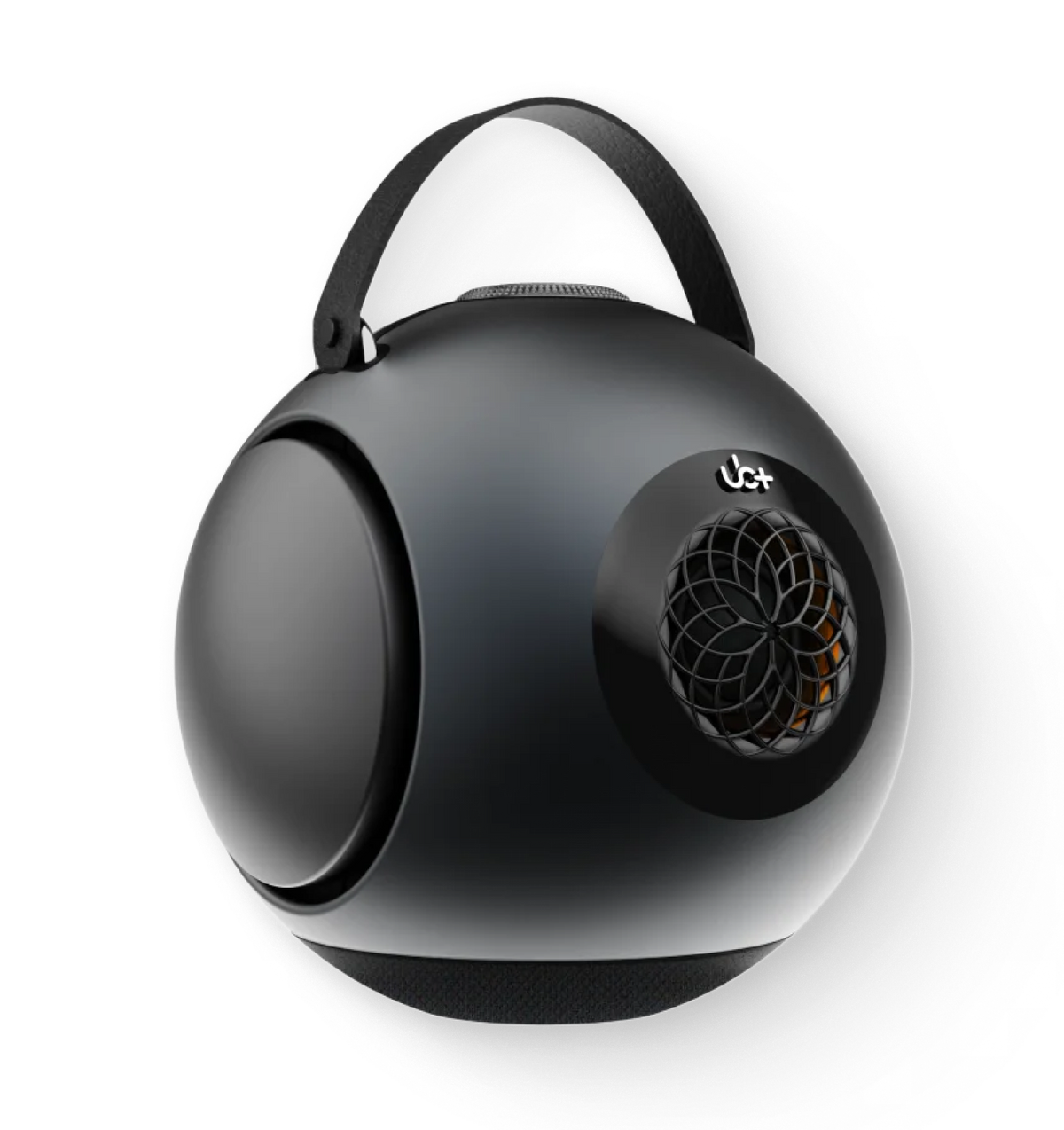
Its design uses a spherical acoustic chamber inspired by the Helmholtz resonator principle. The concept involves air moving through a controlled opening and interacting with the enclosed air volume. This relationship creates a resonant acoustic system that can influence low-frequency behavior.
The spherical enclosure also avoids the parallel-wall geometry found in conventional rectangular cabinets. This design approach helps manage internal acoustic behavior and reduce certain unwanted standing-wave patterns, although no enclosure shape eliminates every internal reflection or resonance.
A centrally positioned, downward-firing 4.5-inch mid-bass driver works with two opposing passive radiator plates. The combined passive-radiator surface area is approximately 3.5 times the woofer's surface area.
The active driver creates pressure changes inside the spherical chamber. Those pressure changes drive the two passive radiators outward together, allowing the system to generate additional low-frequency output through mechanical acoustic design.
The opposing radiator arrangement is also important mechanically. Because the radiators move in opposite physical directions, their reaction forces can help reduce the vibration transmitted to the speaker's supporting surface. This is a self-balancing approach rather than a claim that all vibration is eliminated.
The driver assembly includes a 90mm neodymium magnet and a 35mm long-stroke voice coil. These components support the driver's ability to operate through its intended movement range. DSP contributes to system linearity, protection, and tonal balance, while the enclosure and radiator architecture provide the underlying acoustic mechanism.
The design illustrates an important distinction in portable audio: bass performance does not have to depend entirely on increasing electronic bass emphasis. A speaker can use enclosure geometry, internal air pressure, driver movement, and passive radiator behavior as part of its acoustic solution.
Relevant specifications include:
- 40Hz–20kHz stated frequency response
- 93dB SPL
- 4.5-inch mid-bass driver
- 90mm neodymium magnet
- 35mm long-stroke voice coil
- Bluetooth 5.3
- Up to 20 hours of maximum playback
- IPX5 water resistance
- Wired and TF-card playback support
The dB1 is not an entry-level budget model, but its design illustrates why engineering can be a more meaningful measure of value than a low price or a large bass claim. For listeners comparing portable speakers by acoustic architecture, driver control, and bass reproduction, it offers a different approach from a conventional small box speaker.
For buyers who want to examine this acoustic design in more detail, the UB+ dB1 DoubleBass is worth comparing against conventional portable speakers. Its spherical acoustic chamber and passive-radiator architecture are central to understanding how its low-frequency system is designed.
UB+ dB Mini: A Compact Everyday Option
The UB+ dB Mini is another option for listeners who want a compact portable speaker.
Its maximum stated playback time is 20 hours. That makes battery performance one of the practical considerations when comparing it with other compact Bluetooth speakers.
For buyers who mainly listen at a desk, in a bedroom, or while moving between everyday spaces, portability and convenient operation may matter as much as maximum bass output. Compare the dB Mini with other speakers based on the listening environment, preferred volume, and the type of music you play.
When evaluating a compact model, consider whether its size fits your daily routine. A speaker that is easy to position and move may be more useful than a larger product that is inconvenient for your available space. The best choice depends on the balance between portability, sound expectations, and how frequently you plan to use it.
If portability and longer listening sessions are important, review the UB+ dB Mini alongside other compact speaker options. Its maximum playback rating of 20 hours is a useful reference when comparing portable listening requirements.
UB+ S2 Alphorn: Another Design to Compare
The UB+ S2 Alphorn provides another option within the UB+ range. Its maximum stated playback time is 16 hours.
When comparing the S2 Alphorn with compact alternatives, consider the physical design, intended use, portability, and listening preferences. The right choice depends on how you plan to use the speaker rather than simply which model has the most impressive-looking specification.
Battery performance is one part of that decision, but it should be considered alongside the speaker's form, placement requirements, and everyday convenience. Buyers should compare the actual design and product information rather than assuming that models in the same brand range share identical acoustic components.
The UB+ S2 Alphorn is worth examining if you are comparing different speaker designs within the same product range. Its 16-hour maximum playback rating gives buyers another practical factor to consider when evaluating daily use.
How to Compare Bass Without Being Misled by Marketing
A quick demonstration in a shop or a short online video cannot always reveal how a speaker performs across different types of music. A more consistent comparison process will help you make a better decision.
Use the following approach:
- Listen to familiar tracks: Choose music you know well, including songs with vocals, acoustic instruments, and deep bass.
- Compare at similar volume levels: A louder speaker can initially seem more impressive, even when its sound quality is not better.
- Check bass at moderate volume: Some speakers sound acceptable at low volume but become distorted when pushed harder.
- Listen for separation: Bass notes should remain distinguishable rather than covering vocals and instruments.
- Check performance away from a wall: Nearby surfaces can reinforce low frequencies and change the perceived bass balance.
- Consider the whole frequency range: A speaker should not sacrifice all midrange clarity simply to create a stronger bass impression.
- Test different musical styles: Electronic music, rock, acoustic recordings, and spoken content reveal different strengths and weaknesses.
- Pay attention to compression: If the speaker becomes noticeably less dynamic as volume increases, its output management may be limiting performance.
Placement is another important factor. A speaker positioned close to a wall or corner may sound bassier because of boundary reinforcement. This can be useful, but it can also make the sound less balanced. Our guide to Bluetooth speaker placement for better bass and clarity explains why positioning changes what you hear.
Room characteristics matter too. Furniture, walls, room dimensions, and reflective surfaces all influence perceived sound. Read more about room acoustics and why speakers sound different before assuming that every difference comes from the speaker itself.
One useful comparison technique is to listen at more than one volume. At low volume, a speaker may appear balanced because its bass and treble are emphasized. At higher volume, however, its driver may reach excursion limits or its protection system may reduce output. Listening at several levels gives you a better idea of how consistently the speaker performs.
You should also avoid judging bass performance through a phone recording or compressed online demonstration. Microphones, recording levels, playback devices, and platform compression can change the sound significantly. A video may communicate the general design of a speaker, but it cannot reliably demonstrate the full low-frequency response of the physical product.
If possible, listen to the same track on each speaker using the same source and similar volume. Give yourself enough time to notice whether bass notes are distinct, whether vocals remain clear, and whether the sound becomes tiring after several minutes.
Matching a Speaker to Your Listening Environment
The right speaker also depends on where you plan to use it. A model that performs well on a desk may not provide the same experience in a large open living area. Room size, nearby surfaces, and listening distance all affect perceived output.
For Bedrooms and Small Rooms
A compact speaker can be practical in a bedroom or smaller room because it does not need to produce enough sound to cover a large area. Moderate output, balanced tuning, and convenient placement may be more important than maximum loudness.
Avoid positioning a speaker directly inside a corner if its bass already sounds excessive. Moving it slightly away from nearby walls can help reduce unwanted bass reinforcement.
When comparing compact options such as the UB+ dB Mini, consider the space available on your desk or bedside table and how close you will normally sit to the speaker. A convenient size can be more valuable than additional output you rarely need.
For Desks and Workspaces
For desk listening, vocal clarity and balanced sound are important. A bass-heavy speaker can become distracting during long work sessions, especially when listening at close range.
Consider the available desk space, speaker orientation, controls, and whether the sound remains comfortable at lower volumes. A portable design can also be convenient if you sometimes move between a desk and another room.
The UB+ dB Mini is one model to consider when compact placement and everyday portability are priorities. Buyers comparing different UB+ designs can also explore the UB+ S2 Alphorn and evaluate which form and listening experience best suit their space.
For Outdoor Listening
Outdoor environments usually provide fewer nearby surfaces to reinforce low frequencies. A speaker that sounds bass-heavy indoors may seem less powerful outside.
For outdoor use, consider output capability, battery performance, durability, and water resistance. Do not assume that an indoor listening impression will translate directly to an open environment.
The UB+ dB1 DoubleBass includes IPX5 water resistance, which is a useful specification to review when considering everyday use in environments where splashes may occur. Always follow the manufacturer's care and water-resistance guidance.
Common Buying Mistakes That Waste Money
A low purchase price does not guarantee value. Some buying mistakes can lead to a speaker that needs replacing sooner or fails to deliver the sound you expected.
- Choosing wattage over sound quality: Wattage is only one part of a speaker's performance. It does not independently describe bass extension, distortion, sensitivity, or acoustic efficiency.
- Assuming bigger bass means better bass: Excessive bass emphasis can make music sound less natural. Controlled low frequencies are often more useful than a constant heavy bass effect.
- Ignoring battery performance: A speaker that sounds good but requires frequent charging may be inconvenient for portable use.
- Overlooking enclosure construction: Weak construction and poorly controlled resonance can affect sound quality and long-term reliability.
- Buying based on one specification: Frequency response, driver diameter, battery life, and Bluetooth version each describe different aspects of a product. No single number tells you whether the speaker is the right choice.
- Ignoring listening conditions: A speaker can sound different in a bedroom, open living area, or outdoor environment. Room boundaries and reflections affect perceived bass.
- Paying for features you will not use: Extra connectivity or specialized functions may be unnecessary if your main requirement is straightforward music playback.
- Confusing maximum volume with everyday performance: A speaker may reach a high volume briefly but struggle to maintain a balanced sound over a longer session. Sustained performance is often more relevant than a short demonstration.
- Treating frequency response as a complete quality score: A stated frequency range does not reveal distortion, output level, response consistency, or how the speaker behaves near its operating limits.
The best purchase is the one that fits your actual listening habits. Spend on the features that improve your daily experience, not simply the longest specification list.
Frequently Asked Questions
Can a cheap Bluetooth speaker produce deep bass?
Yes, but physical size, driver excursion, enclosure volume, and available power limit how much low-frequency output a compact speaker can produce. Some budget models create a stronger bass impression through tuning, but that does not necessarily mean they reproduce deep bass accurately.
Does a larger driver always produce better bass?
No. A larger driver can move more air, but its motor, suspension, excursion, enclosure, and tuning also matter. A well-integrated smaller driver can outperform a poorly designed larger one.
Are passive radiators better than bass ports?
Neither approach is universally better. Passive radiators use a moving diaphragm to contribute to low-frequency output, while ports use airflow through an opening. The best choice depends on enclosure design, tuning, available space, and the intended performance.
Is more wattage better for bass?
Not necessarily. More power can support higher output, but it does not guarantee deeper or cleaner bass. Driver capability, enclosure design, and system tuning are equally important.
How much should I spend on a Bluetooth speaker?
Set a budget based on how often you will use the speaker and what performance you need. Casual background listening may not justify a premium purchase, while frequent music listening can make better acoustic engineering worth the additional cost.
What should I prioritize when buying a portable speaker for bass?
Start with bass control, driver and enclosure design, distortion at your preferred volume, battery performance, and durability. Compare these factors together rather than choosing based on a single bass or wattage claim.
Does Bluetooth version determine sound quality?
Bluetooth version alone does not determine overall sound quality. The audio source, supported codecs, wireless implementation, speaker electronics, drivers, and acoustic design all contribute to the result. A newer Bluetooth version may improve connectivity or efficiency, but it does not automatically make a speaker sound better.
Why does my Bluetooth speaker sound different in different rooms?
Room dimensions, wall placement, furniture, reflective surfaces, and nearby boundaries affect how sound reaches your ears. Low frequencies can be reinforced or reduced depending on the speaker's position and the room's acoustic characteristics. This is why placement and room conditions should be considered during a comparison.
Explore UB+ Speaker Options for Better Bass and Everyday Listening
Choose the UB+ speaker that best matches your listening preferences, available space, and expectations for portable sound:
- Explore UB+ dB1 DoubleBass: Discover its spherical acoustic chamber, Helmholtz-inspired design, and dual passive-radiator architecture for controlled bass reproduction.
- Compare UB+ dB Mini: Explore a compact portable speaker option with up to 20 hours of maximum playback.
- Discover UB+ S2 Alphorn: Compare another UB+ speaker design with up to 16 hours of maximum playback.
- Browse All UB+ Speakers: Explore the UB+ range and compare available speaker options.
Before buying, consider where you will listen, how much volume you need, and whether you prefer powerful bass or a more balanced presentation. The best value is not always the lowest purchase price. It is the speaker that delivers the sound, reliability, and everyday convenience you will continue to appreciate.



Оставить комментарий
Этот веб-сайт защищается hCaptcha. Применяются Политика конфиденциальности и Условия использования hCaptcha.