

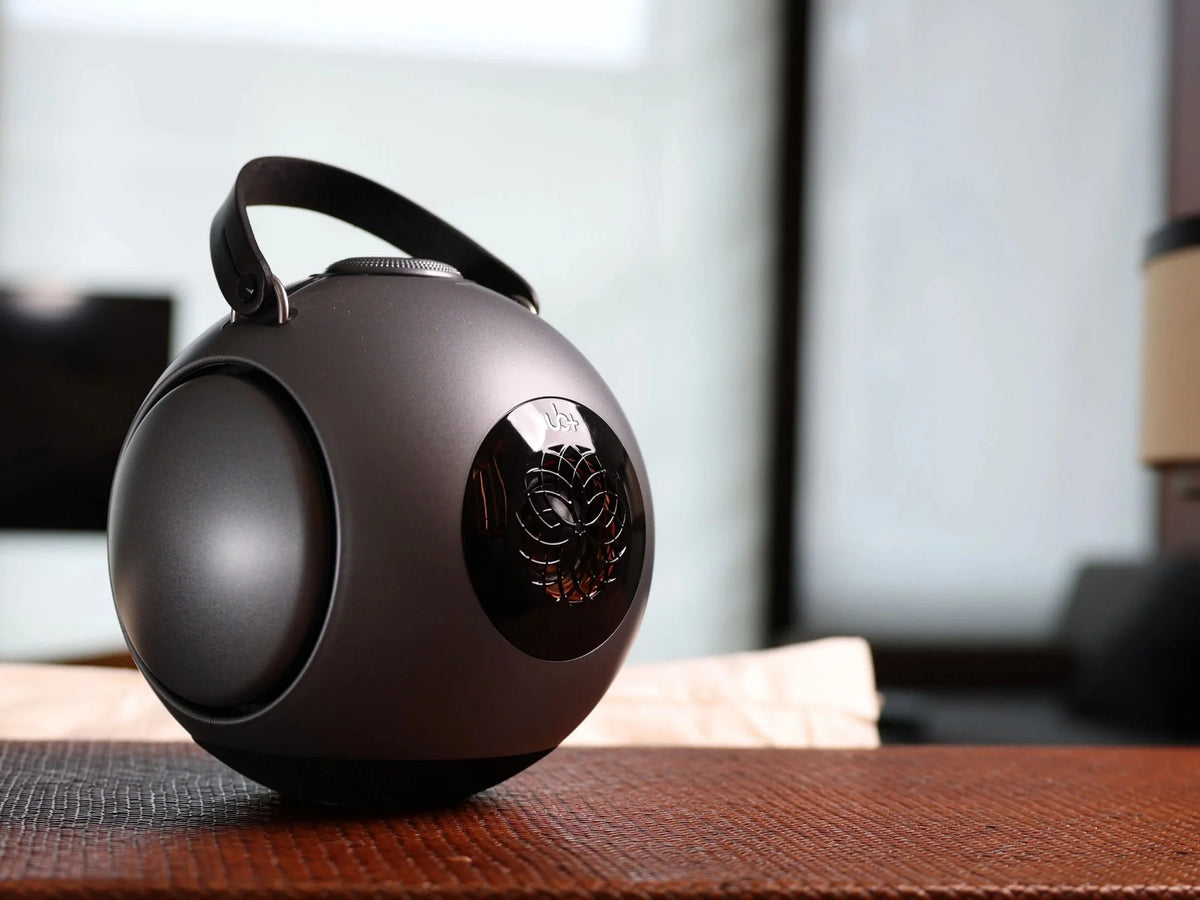
A round Bluetooth speaker for home use offers a different approach to home audio, combining a distinctive physical design with the potential for more flexible sound distribution and a more natural fit within modern interiors. As buyers compare wireless speakers, they are increasingly evaluating more than volume, battery life, or connectivity. They also consider how a speaker distributes sound, how it performs in different rooms, how much space it occupies, and whether its design complements the environment in which it will be used.
Round speakers are attracting attention because their shape can serve a functional purpose rather than acting as a purely decorative choice. Depending on the acoustic architecture, a spherical enclosure can support more even internal pressure distribution, while a carefully designed 360-degree speaker can make music accessible from multiple listening positions. These benefits are particularly relevant in living rooms, bedrooms, home offices, and shared spaces where listeners do not always sit directly in front of the speaker.
However, not every round speaker delivers the same results. The quality of its drivers, enclosure design, passive radiator system, digital signal processing, and overall engineering still determines how convincingly it reproduces music. Buyers comparing a spherical Bluetooth speaker with a conventional rectangular model should therefore understand what the shape can contribute, what it cannot guarantee, and which design characteristics deserve attention before making a purchase.
Why Speaker Shape Is Becoming Part of the Buying Decision

Traditional speaker designs often prioritize a front-facing arrangement. This can work extremely well when the listening position is predictable, such as a desk setup, television area, or dedicated stereo system. The challenge appears when music needs to serve a more flexible living environment.
In a modern home, speakers may be positioned on a side table, kitchen counter, bookshelf, bedside cabinet, or open shelf. People move around while listening, and furniture placement does not always allow a speaker to face every listener directly. A speaker that performs well only from one preferred direction may be less convenient for casual background listening.
This is one reason modern home audio design increasingly considers how a speaker interacts with its surroundings. Buyers want products that fit into their interiors without requiring a dedicated listening area or complicated installation.
A round enclosure can help address some of these expectations, but its advantages depend on the complete acoustic design. The physical shape alone does not automatically produce 360-degree sound, deeper bass, or superior clarity. Those outcomes require appropriate driver positioning, acoustic tuning, and careful control of unwanted resonance.
For buyers, the important question is not simply whether a speaker is round. It is whether its shape and acoustic system work together to create a meaningful improvement in everyday listening.
The Acoustic Benefits of a Spherical Speaker Design

A spherical enclosure changes the way a speaker is constructed internally. Unlike a conventional box with several parallel walls, a sphere has a continuous curved surface. This geometry can help reduce certain problematic internal reflections and standing-wave behavior associated with parallel enclosure surfaces.
That does not mean a sphere eliminates every resonance or acoustic problem. Internal dimensions, damping, driver placement, and the materials used in construction remain important. Nevertheless, a well-engineered spherical enclosure offers designers a different set of acoustic possibilities.
Internal pressure distribution and resonance control
When a driver moves, it creates pressure variations inside the enclosure. Those variations influence how the speaker's mechanical components behave and how the system reproduces sound.
In an enclosure with parallel surfaces, internal reflections can reinforce particular frequencies or create uneven pressure patterns. A curved enclosure changes those reflection paths and may help reduce some of these effects. The result depends on the entire acoustic system, but the design can support more controlled reproduction across the speaker's operating range.
This is especially relevant when buyers want clear bass and balanced mids rather than a sound profile dominated by one frequency region.
The enclosure must still be engineered around the driver and its intended operating range. A poorly tuned spherical speaker can sound less convincing than a well-designed rectangular speaker. Shape creates an opportunity; execution determines the result.
For a deeper explanation of this relationship, UB+ explores the acoustic principles behind spherical speaker design and DoubleBass technology.
Sound distribution around the room

The terms round speaker and 360-degree speaker are often used together, but they are not interchangeable.
A round enclosure describes the physical shape. A 360-degree speaker describes how its acoustic output is distributed. Some spherical speakers use front-facing drivers and therefore remain directional, while others position their drivers or acoustic outlets to provide broader sound coverage.
For shared spaces, broader dispersion can make listening more convenient. Someone sitting beside the speaker may hear a more consistent presentation than they would from a narrowly front-facing design, depending on the product's acoustic configuration.
This is useful for background music during meals, conversations with guests, or everyday activities that involve moving between different parts of a room.
Still, omnidirectional or wide-dispersion sound is not automatically better for every purpose. Focused stereo imaging can be preferable for critical listening, while broad coverage may be more practical for social and casual environments.
Buyers should therefore look for verified information about 360-degree sound distribution, rather than assuming a rounded exterior guarantees it.
Why Round Speakers Fit Modern Home Interiors

Home audio equipment is no longer always hidden inside a cabinet or treated as a separate technical component. Speakers increasingly sit in visible locations where their appearance affects the overall room.
A rounded silhouette can complement curved furniture, soft furnishings, circular tables, and minimalist interiors. It can also provide a visual contrast to the straight edges of monitors, televisions, shelving, and desks.
This makes a stylish home audio speaker relevant to buyers who want good sound without introducing another visually dominant rectangular device into their space.
A natural fit for minimalist rooms
Minimalist interiors rely on intentional placement, restrained forms, and a limited number of visible objects. A spherical speaker can function as both an audio device and a design element without necessarily looking like conventional electronics.
Its compact visual footprint may make it suitable for a bedside table, sideboard, reading corner, or workspace. The actual physical footprint still depends on the product's dimensions, so buyers should check measurements before purchasing.
For readers building a cohesive workspace, the principles in this minimalist desk setup guide explain how speaker placement and visual simplicity can work together.
Less visual emphasis on a single listening direction
A conventional front-facing speaker often communicates its intended orientation through a visible grille or driver arrangement. A spherical design can appear more neutral from different viewing angles, which may make it easier to integrate into open-plan interiors.
This is an aesthetic advantage rather than a guarantee of acoustic performance. The speaker's sound may still be directional even if its exterior looks symmetrical.
The best choice is one that complements the room while delivering the listening experience the buyer actually needs.
Round Bluetooth Speakers vs. Traditional Box Speakers
Both spherical and box-shaped speakers can produce excellent sound. Their differences are best understood as design trade-offs rather than a contest in which one shape always wins.
|
Buying consideration |
Round or spherical speaker |
Traditional box speaker |
|
Visual design |
Curved, sculptural appearance that can complement modern interiors |
Familiar rectangular form that fits shelves and conventional audio layouts |
|
Internal acoustics |
Curved surfaces can reduce certain parallel-wall reflection patterns |
Parallel surfaces may require careful internal damping and acoustic treatment |
|
Sound coverage |
Can offer broad or 360-degree coverage when designed for it |
Often optimized for front-facing output, although dispersion varies by model |
|
Bass performance |
Depends on driver, enclosure volume, tuning, and radiator design |
Depends on driver, enclosure volume, ports or radiators, and tuning |
|
Stereo listening |
Can work in stereo configurations if supported |
Often suitable for conventional left-right stereo arrangements |
|
Placement |
May suit central tables and open living spaces, depending on dispersion |
May suit shelves, desks, and defined listening positions |
|
Space and fit |
Curved shape may be visually compact, but dimensions still matter |
Flat sides can make placement against walls or on shelves easier |
|
Best reason to buy |
A combination of design, flexible listening, and suitable acoustic engineering |
Familiar placement, directional listening, or a specific room and audio setup |
A buyer should avoid making a decision based on enclosure shape alone. A well-engineered box speaker may offer more appropriate stereo imaging for a desk, while a carefully designed spherical speaker may be more convenient in a shared living area.
For a more detailed comparison of enclosure types and listening characteristics, see the guide to spherical versus box speakers.
Why Bass Performance Depends on More Than the Enclosure Shape
Bass is one of the most important considerations for buyers comparing premium wireless speakers. Small speakers face a physical challenge: reproducing low frequencies at useful levels requires sufficient air displacement, appropriate driver excursion, and a carefully tuned acoustic system.
A rounded cabinet does not automatically produce deeper bass. The result depends on the driver, enclosure volume, resonance characteristics, passive radiators or ports, available amplifier power, and the way the speaker is tuned.
This distinction matters because some products emphasize their appearance while offering little explanation of how their bass systems work.
Active drivers and passive radiators
An active driver converts an electrical signal into mechanical movement, producing sound. A passive radiator responds to internal pressure generated by the active driver and helps the enclosure system produce additional low-frequency output around its tuning range.
When correctly matched to the driver and enclosure, passive radiators can support useful bass output without requiring a conventional open bass port. Their performance depends on their moving mass, compliance, available excursion, and the system's tuning.
The design is especially relevant to compact speakers where engineers must balance enclosure size, bass extension, output level, and distortion.
To understand this mechanism in more detail, read how passive radiators work in Bluetooth speakers.
Acoustic engineering in the UB+ dB1 DoubleBass
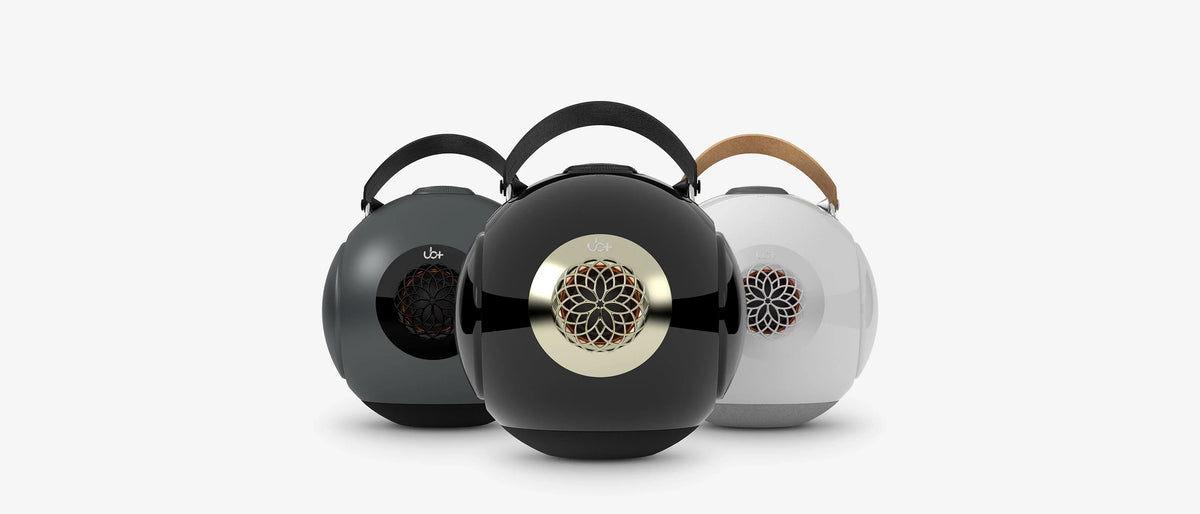
The UB+ dB1 DoubleBass is a useful example of a spherical speaker design in which the enclosure and bass architecture are developed as part of the same system.
Its Helmholtz-Inspired Chamber draws on principles of Helmholtz resonance. Rather than treating the sphere as a decorative shell, the design uses the chamber as an active part of the acoustic system.
Acoustic Spotlight: UB+ dB1 DoubleBass
Key elements of the spherical acoustic architecture
Spherical acoustic chamber
The curved enclosure is designed to manage internal pressure and reduce problematic parallel-surface reflections, supporting controlled sound reproduction.
Dual symmetrical passive radiators
Two radiators positioned on opposite sides work with the internal chamber to support low-frequency air movement.
Mechanically supported bass
The bass system relies primarily on acoustic and mechanical design, while DSP supports system optimization and component protection.
Wireless convenience
Bluetooth connectivity makes the speaker practical for everyday listening without a traditional wired home audio installation.
The dual passive radiators have a combined surface area approximately 3.5 times that of the active woofer. That larger radiating area supports air displacement within the tuned system; it does not independently guarantee a particular bass depth or output level.
The opposing radiator arrangement is also designed to help counteract mechanical reaction forces, reducing the tendency for the enclosure to vibrate in response to bass movement. Actual performance still depends on operating level, mounting conditions, and the complete system.
This approach illustrates why spherical speaker technology should be evaluated as an integrated acoustic design, not simply as a visual trend.
What Buyers Should Compare Before Choosing a Round Wireless Speaker
Commercial consideration is the stage where product differences become more important than broad category descriptions. Two speakers may share a similar shape and price range but deliver very different results.
Before choosing a round Bluetooth speaker for home use, compare the following characteristics.
Sound quality across different listening levels
Listen for vocal clarity, balanced midrange reproduction, controlled bass, and treble that remains comfortable during extended sessions. A speaker that sounds impressive at low volume may behave differently when played louder.
If possible, listen to familiar tracks that include vocals, acoustic instruments, bass-heavy music, and complex arrangements. This provides a more useful comparison than relying on a single demo track.
For an explanation of the specifications that can help contextualize listening tests, consult the speaker specifications guide.
Dispersion and intended room use
Consider where the speaker will normally sit and where people will listen.
- Living room: Broad dispersion can be useful when listeners sit in different positions.
- Bedroom: Compact dimensions and comfortable low-volume performance may matter most.
- Home office: Clear vocals and convenient placement can be more important than maximum output.
- Dining area: Even coverage can help music remain audible without forcing the speaker to face one specific seat.
- Dedicated listening space: Stereo imaging and precise placement may be more important than omnidirectional coverage.
Room size, furniture, wall reflections, and speaker position influence perceived sound. A product that works well in one room may need a different placement in another.
Connectivity and everyday usability
Wireless convenience should not come at the expense of practical features. Check Bluetooth compatibility, available wired or local playback options, pairing behavior, control accessibility, and whether the speaker supports stereo pairing if that matters to your setup.
Battery performance and portability are also worth checking when the speaker may move between rooms or be used away from a power outlet. Verify the manufacturer's current specifications rather than relying on generic claims about what a portable speaker should deliver.
Materials and build quality
The enclosure, grille, finish, controls, and connection points all affect how a speaker fits into daily life. A premium-looking finish can improve the visual experience, but it should be considered alongside acoustic performance and practical durability.
For more context on the relationship between construction and sound, explore the materials behind premium speaker performance.
Price relative to the complete system
A higher price is justified only when the overall product offers value that matters to the buyer. That may include better acoustic engineering, stronger build quality, more useful connectivity, a distinctive design, or a combination of these features.
Instead of paying a premium for a spherical exterior alone, compare the complete speaker system and how well it fits your needs.
Who Should Consider a Spherical Bluetooth Speaker?
A spherical speaker is worth considering when its acoustic behavior and design align with the way a home is used.
Design-conscious homeowners may prefer a rounded form that works naturally with contemporary furniture and restrained interiors. In this case, appearance is a legitimate buying consideration, provided the sound quality meets expectations.
People who listen in shared spaces may benefit from a model with broad dispersion, particularly when listeners are not always positioned directly in front of the speaker. The important detail is to confirm that the speaker actually provides the coverage its design suggests.
Buyers seeking compact bass performance should examine the driver and enclosure architecture rather than assuming a round cabinet will outperform a box. A well-tuned system with suitable air displacement can deliver satisfying bass from a compact enclosure, but the result depends on engineering.
Home office and bedroom listeners may value a speaker that combines a modest visual footprint with clear everyday playback. Placement flexibility can be useful when desk space, bedside furniture, or room layout limits where audio equipment can go.
On the other hand, buyers building a dedicated stereo system for focused listening may prefer conventional left-right speakers. A spherical model can also support stereo use if the manufacturer provides the appropriate pairing functionality, but one speaker's wide dispersion is not the same as a true stereo soundstage.
The best purchase is the one that matches the listening environment rather than the one that follows the most noticeable design trend.
Are Round Bluetooth Speakers a Lasting Home Audio Trend?
The appeal of round speakers is not based on appearance alone. The form creates opportunities for different approaches to enclosure construction, internal pressure management, driver placement, and sound distribution.
At the same time, rounded products are not inherently superior to rectangular alternatives. A sphere can still suffer from poor tuning, limited bass, uneven frequency response, or inadequate driver performance. A box enclosure can be acoustically excellent when its dimensions, materials, and internal treatment are carefully designed.
The more meaningful trend is that buyers are evaluating speakers as complete products. They want sound quality, visual compatibility, connectivity, and practical placement to work together.
That shift favors manufacturers that can explain the purpose behind their design choices. A compelling speaker should not ask buyers to choose between aesthetics and acoustic performance when the engineering can address both.
For anyone comparing premium Bluetooth speakers for home, the most useful question is therefore not whether round speakers are becoming fashionable. It is whether a particular model uses its shape to solve a real listening or placement challenge.
Frequently Asked Questions
Are round Bluetooth speakers better than square or rectangular speakers?
Not automatically. A spherical enclosure can help reduce certain internal reflection patterns and can support distinctive driver arrangements, but sound quality depends on the complete acoustic system. A well-designed rectangular speaker can outperform a poorly engineered round model.
Does a round Bluetooth speaker provide 360-degree sound?
Only if its driver arrangement and acoustic design support that coverage. A rounded exterior does not guarantee omnidirectional sound. Buyers should check the manufacturer's description of dispersion and, where possible, listen from different positions around the speaker.
Is a spherical speaker better for a living room?
It can be a good choice when the speaker offers suitable dispersion, fits the room's layout, and provides the desired sound quality. A model with broad coverage may be practical for shared spaces, while a conventional stereo setup may be preferable for focused listening.
Can a round Bluetooth speaker produce deep bass?
Yes, if its driver, enclosure, tuning, and air-displacement system are appropriately engineered. The shape alone does not determine bass extension. Passive radiators, ports, driver excursion, and DSP can all influence performance.
What should I look for when buying a round Bluetooth speaker for home use?
Prioritize sound quality, actual dispersion, bass control, connectivity, build quality, room suitability, and price. If you want the speaker to function as a visible design object, consider its dimensions and finish as well—but do not treat appearance as a substitute for acoustic performance.
Is the UB+ dB1 DoubleBass worth considering?
The UB+ dB1 DoubleBass is worth considering if you want a spherical speaker whose enclosure and bass system are designed together. Its Helmholtz-inspired chamber and dual symmetrical passive radiators distinguish its acoustic approach. Whether it is the right choice depends on your room, listening preferences, and budget.
Explore UB+ Options
If you are comparing spherical speakers for your home, evaluate how their acoustic design, bass performance, sound coverage, and appearance fit your everyday listening needs.
- → Explore the UB+ dB1 DoubleBass
- → Compare the dB1 DoubleBass with the UB+ dB Mini
- → Explore UB+ speakers
- → Check current product options and prices
The right home speaker is not simply the one with the most distinctive shape. It is the one whose design, acoustic engineering, and everyday usability work together to make listening more enjoyable.


Leave a comment
เว็บไซต์นี้ได้รับการคุ้มครองโดย hCaptcha และมีการนำนโยบายความเป็นส่วนตัวของ hCaptcha และข้อกำหนดในการใช้บริการมาใช้