

The jump from a budget Bluetooth speaker to a mid-range model is not always about getting a louder speaker. In many cases, the real difference appears in bass control, vocal clarity, enclosure design, distortion, sound dispersion, driver performance, and how consistently the speaker sounds at different volume levels.
That is why comparing a budget vs mid-range bluetooth speaker should go beyond price tags and wattage claims. Two speakers can look similar on a store shelf while using very different acoustic architectures.
For buyers deciding whether to spend more, the useful question is not simply, “Is the expensive speaker louder?” It is:
What does the additional money actually buy in terms of sound and everyday listening?
In this guide, we will break down where budget speakers typically make compromises, what changes as you move into the mid-range, and which improvements are most noticeable in a real room.
What Defines a Budget Bluetooth Speaker?

Budget Bluetooth speakers are designed around accessibility. The goal is generally to provide wireless playback, compact portability, simple controls, and acceptable sound without requiring a large investment.
That makes them useful for casual listening. A small speaker can sit on a desk, travel in a backpack, or provide background music in a kitchen without taking up much space.
The limitations usually become more apparent when you ask the speaker to do more.
A compact enclosure has limited internal volume. A small driver has limited excursion. Battery size can constrain available power. And inexpensive enclosure construction may provide less control over unwanted resonance.
As a result, a budget Bluetooth speaker may sound perfectly acceptable at moderate volume but become noticeably different when pushed harder.
Bass may lose definition. Vocals can become less distinct. High frequencies may sound more aggressive. The overall presentation can become compressed or congested.
These aren't necessarily failures. They are often consequences of designing a product around a specific price and use case.
What Changes in a Mid-Range Bluetooth Speaker?

Moving into the mid-range gives manufacturers more room to invest in the components and engineering surrounding the basic Bluetooth connection.
That can include:
- More capable drivers
- Larger or better-controlled acoustic chambers
- Better passive-radiator or port designs
- Improved amplifier sections
- More sophisticated DSP
- Stronger enclosure construction
- Better vibration control
- Wider or more carefully controlled dispersion
- More capable batteries and power management
The important point is that these improvements work together.
A larger driver by itself does not guarantee better sound. Neither does a bigger battery or a higher advertised wattage.
The improvement comes from the relationship between the driver, enclosure, amplifier, acoustic loading, and tuning.
This is where the difference between inexpensive and better-engineered portable audio becomes easier to hear.
Budget vs Mid-Range: Where You Actually Hear the Difference

The biggest improvements aren't necessarily distributed equally across the frequency range.
For many listeners, the first noticeable difference is bass.
A budget speaker may produce a noticeable low-end bump through tuning or DSP. It can sound impressive during a short demonstration, particularly with bass-heavy music.
A better-engineered speaker focuses more on how that bass is produced.
Bass quality depends on enclosure volume, driver excursion, acoustic loading, radiator or port design, and system tuning. When these elements work together, low frequencies can remain controlled instead of simply becoming louder.
That distinction matters during longer listening sessions.
Bass Extension vs Bass Control

There is a difference between hearing more bass and hearing better-controlled bass.
A speaker can emphasize low frequencies without accurately reproducing them. When the system reaches its limits, the bass may become soft, bloated, or distorted.
A mid-range design may instead provide greater headroom and better mechanical control.
This is particularly relevant to speakers using passive radiators. A properly designed passive-radiator system can help a compact speaker extend its low-frequency response without relying exclusively on electronic bass enhancement.
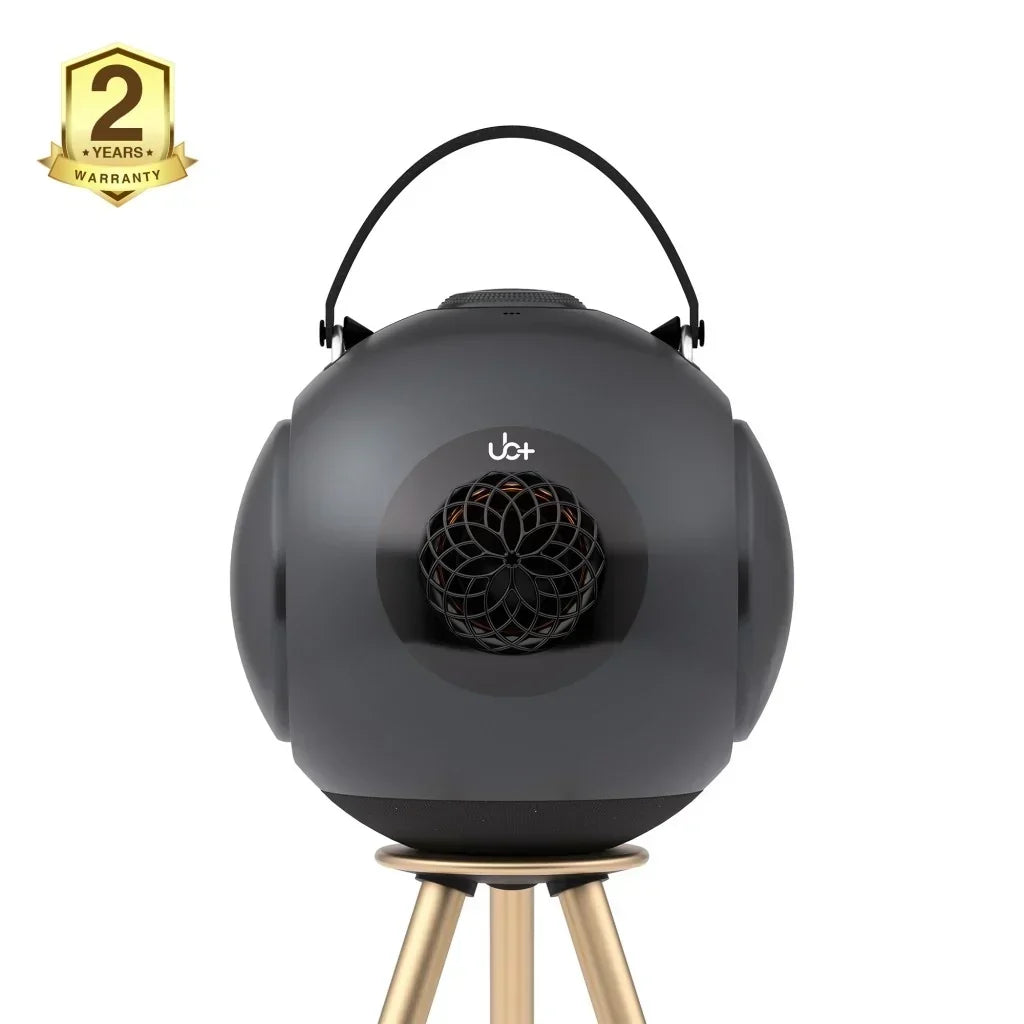
UB+ takes this concept considerably further with the dB1 DoubleBass architecture. Its spherical acoustic chamber works together with a downward-firing mid-bass driver and two opposing passive radiators.
The combined passive-radiator surface area is approximately 3.5 times the active woofer area, allowing the system to move substantial amounts of air while maintaining a mechanically balanced configuration.
For a deeper explanation of this approach, see Passive Radiators vs. Ported Boxes: How Spherical Speakers Produce Bass.
The Enclosure Is One of the Biggest Differences
One of the easiest things to overlook when comparing Bluetooth speakers is the enclosure.
Consumers naturally focus on the visible driver, battery capacity, Bluetooth version, and advertised power. But the enclosure determines how the air behind and around that driver behaves.
Traditional compact speakers often use rectangular or cylindrical cabinets because they are practical to manufacture, transport, and position.
A different enclosure geometry can approach the acoustic problem differently.
The UB+ dB1 uses a spherical chamber inspired by the principles of a Helmholtz resonator. Rather than treating the enclosure as a simple shell around the electronics, the chamber becomes part of the acoustic system.
The spherical geometry helps distribute internal pressure more evenly and reduces the parallel surfaces associated with conventional box construction.
That design philosophy is explored in greater detail in How spherical speaker design changes modern home audio.
The important lesson for buyers is broader than one particular product:
When comparing speakers at different price points, look at the acoustic architecture, not just the external appearance.
Midrange Clarity Is Another Major Upgrade
Bass gets most of the marketing attention, but midrange performance often determines whether a speaker remains enjoyable over time.
Vocals, guitars, piano, speech, strings, and much of the detail in popular music occupy the midrange.
A speaker with excessive low-frequency emphasis can make these elements feel pushed backward. A speaker with uncontrolled resonance can add coloration that becomes noticeable after extended listening.
A better-designed system attempts to maintain separation between different parts of the frequency range.
This is one reason a speaker can sound more refined without necessarily being dramatically louder.
Imagine listening to a podcast at moderate volume.
On a basic speaker, the voice may be understandable but lack texture. On a better system, consonants, vocal tone, background ambience, and subtle changes in the recording can remain easier to distinguish.
The same principle applies to music.
You don't necessarily need more volume. You need more information to survive the reproduction process.
High Frequencies: Detail Without Harshness
The high-frequency range is another area where price differences can become apparent.
Inexpensive speakers may use EQ to create the impression of additional detail. Boosting the upper frequencies can make a speaker sound more exciting initially.
But excessive emphasis can become tiring.
A more controlled system aims to provide treble detail without turning every recording into an aggressive listening experience.
This matters particularly for people who use a speaker for several hours at a time.
A speaker designed for short demonstrations may prioritize immediate impact. A speaker designed around longer listening can prioritize balance and control.
Neither approach is automatically right for everyone. The difference comes down to how you listen.
Soundstage and Dispersion Matter More Than You Think
Price also intersects with another important factor: how widely and evenly the speaker distributes sound.
A traditional front-firing speaker creates a preferred listening direction. This can work extremely well when one listener is sitting directly in front of it.
But modern listening environments are rarely that predictable.
You may walk around a living room while music is playing. Friends may sit on different sides of a table. A speaker may move between a desk, kitchen, bedroom, and outdoor space.
A 360° speaker approaches this problem differently.
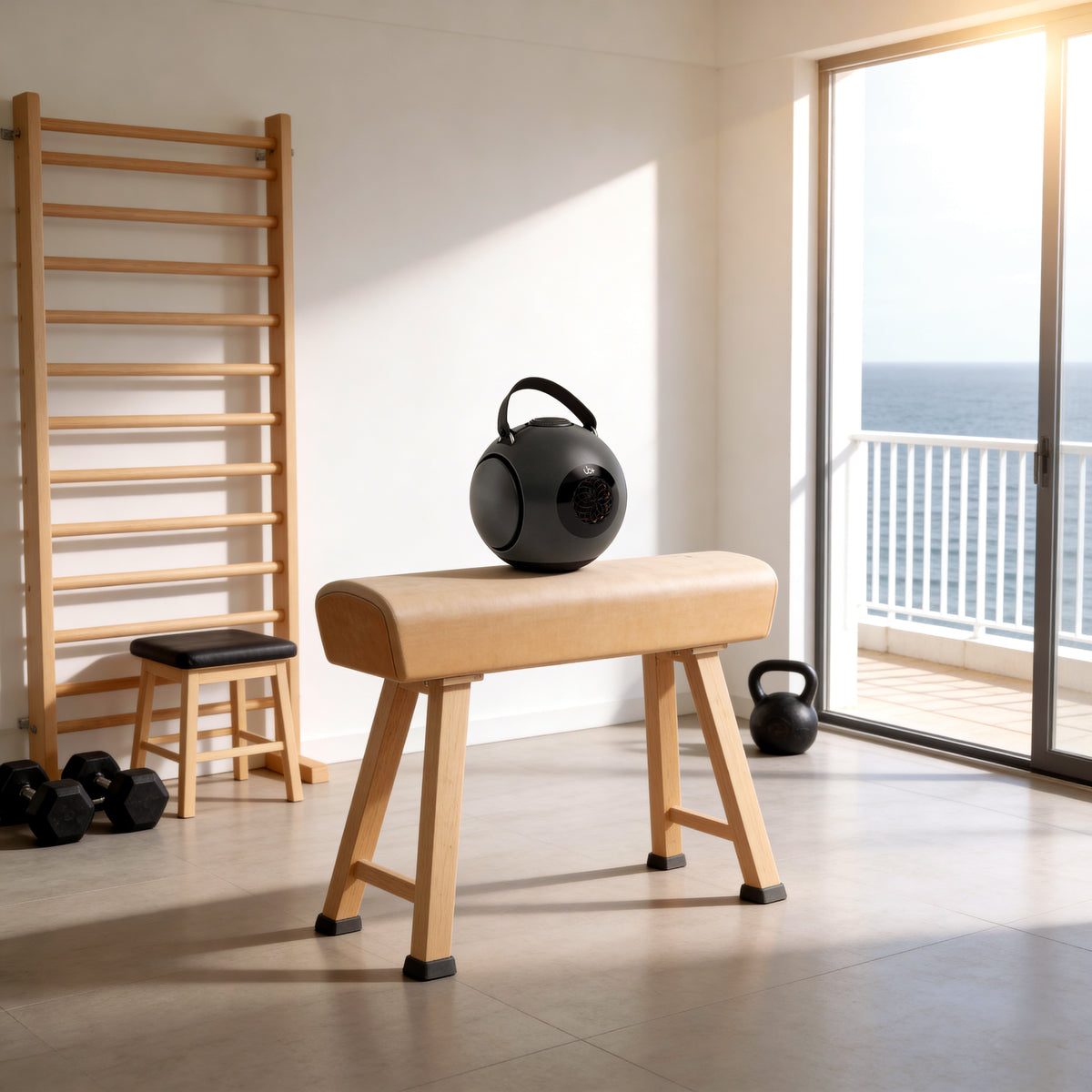
The UB+ dB1 is designed around spherical 360° sound dispersion, making its architecture particularly relevant for shared spaces where listeners are not positioned directly in front of the speaker.
If you're comparing directional and omnidirectional approaches, our guide to 360° vs. front-firing speakers explains the difference in greater detail.
Budget vs Mid-Range Bluetooth Speaker: Feature Comparison
|
Feature |
Budget Bluetooth Speaker |
Mid-Range Bluetooth Speaker |
|
Basic wireless playback |
Usually included |
Usually included |
|
Driver capability |
Compact/basic |
Generally more capable |
|
Bass reproduction |
Often limited by size and enclosure |
Greater emphasis on control and extension |
|
Enclosure engineering |
Simpler |
More sophisticated designs are common |
|
Passive radiator system |
Model-dependent |
More developed implementations are common |
|
Volume headroom |
More limited |
Typically greater |
|
Distortion control |
Can become noticeable at higher output |
Generally more attention to headroom and tuning |
|
Sound dispersion |
Often directional |
May offer wider or 360° designs |
|
Materials |
Cost-focused |
More room for premium construction |
|
DSP |
Often used for basic tuning |
Can provide more sophisticated system management |
|
Long-session listening |
Model-dependent |
Often designed with broader performance goals |
|
Acoustic engineering |
Price-constrained |
Greater scope for specialized architecture |
This table describes common product positioning rather than every individual speaker. A particularly well-engineered budget speaker can outperform a poorly designed mid-range model in a specific area.
Is a More Expensive Speaker Always Better?
Not necessarily.
Price should never be treated as a direct measurement of sound quality.
A more expensive speaker may allocate its additional cost toward features you don't need. You might pay more for advanced app functionality, voice control, ruggedization, networking, premium materials, or a larger battery rather than a fundamental improvement in acoustic performance.
That is why the better buying question is:
Where is the additional budget being spent?
If the increase goes toward better drivers, enclosure engineering, acoustic loading, amplifier headroom, and vibration management, you may hear the difference.
If it primarily adds features you won't use, the sound-quality improvement may be less significant.
What Does the Extra Money Actually Buy?
There are several areas where additional budget can make a meaningful difference.
1. Better Drivers
A better driver can provide greater excursion, improved motor control, and lower distortion.
The result isn't necessarily louder sound. It can mean cleaner reproduction when the speaker is working harder.
2. Better Acoustic Loading
The enclosure determines how efficiently the driver interacts with air.
This is where carefully engineered ports, passive radiators, chambers, and other acoustic structures become important.
3. More Headroom
Headroom gives a speaker more room to reproduce peaks without immediately reaching its limits.
This becomes particularly noticeable when listening at higher volumes or with music containing significant dynamic range.
4. Better Vibration Control
A speaker cabinet doesn't simply sit passively around the electronics.
Mechanical energy can cause the enclosure itself to move. Good engineering attempts to control where that energy goes.
The dB1's opposing passive-radiator arrangement is an example of this approach. The radiators move symmetrically, helping counterbalance mechanical forces rather than concentrating them in a single direction.
5. Better Dispersion
Some speakers are engineered around a particular listening position.
Others are designed to spread sound more widely.
If you frequently listen with other people or move around the room, dispersion can matter more than an additional specification on a product sheet.
Why Mechanical Bass Design Matters
One of the most interesting distinctions between different portable speaker architectures is whether low-frequency performance is achieved primarily through electronic processing, mechanical design, or a combination of both.
DSP is extremely useful. It can help manage frequency response, protect drivers, maintain linearity, and optimize output.
But DSP cannot completely remove the physical limitations of a small enclosure and driver.
Mechanical design therefore remains important.
The UB+ dB1 combines DSP support with a physical acoustic architecture consisting of its spherical chamber, downward-firing driver, and symmetrical passive radiators.
This is part of the broader engineering philosophy behind DoubleBass: let the acoustic system do more of the work instead of depending only on digital bass enhancement.
Budget vs Mid-Range for Different Rooms
The right price point also depends on where you use the speaker.
Bedroom
A budget speaker can be sufficient for podcasts, background music, alarms, or occasional listening.
A mid-range speaker becomes more attractive if you spend several hours listening to music and want better bass control and clarity at moderate levels.
Home Office
For long work sessions, balanced reproduction can be more important than maximum loudness.
Clear speech, natural vocals, and controlled bass can make a noticeable difference when the speaker remains active for hours.
Living Room
Room size and listener position become more important.
A directional speaker can work well when positioned deliberately. A 360° design can be useful when people move around the room.
Outdoor Spaces
Outdoor listening removes much of the acoustic reinforcement provided by walls.
This places greater demands on the speaker's ability to move air while maintaining control.
A more capable acoustic system can therefore become more valuable outdoors, although battery life, durability, and water resistance should also be considered.
What About Portability?
This is one area where budget speakers can remain extremely competitive.
A small, inexpensive speaker can be easier to carry than a larger, more sophisticated system.
If your primary requirement is simply:
“I want something small that plays music wherever I go.”
then spending substantially more may not produce an equally substantial improvement in usefulness.
But if you want portability and serious acoustic performance, the equation changes.
The objective becomes finding a speaker where portability doesn't require abandoning acoustic engineering.
That is one of the design principles behind the UB+ dB1.
When Should You Stay With a Budget Speaker?
A budget speaker can make sense when:
- You primarily listen to podcasts or spoken content.
- You use the speaker occasionally.
- Maximum portability matters more than sound refinement.
- You generally listen at moderate volumes.
- You need a secondary speaker for travel or casual use.
- Advanced acoustic performance isn't a major priority.
There is no reason to pay for engineering you won't use.
When Does Mid-Range Become Worth Considering?
A mid-range speaker becomes more relevant when:
- Music is a significant part of your daily routine.
- You want deeper and more controlled bass.
- You regularly listen at higher volume.
- Multiple people listen together.
- You care about vocal and instrumental clarity.
- You want better room coverage.
- You expect the speaker to serve as a primary listening system rather than a secondary gadget.
At that point, the additional investment is less about luxury and more about addressing the physical limitations of simpler designs.
The Real Sound Quality Jump Isn't Just About Price
The phrase budget vs mid-range bluetooth speaker can make the difference sound like a simple pricing ladder.
In reality, it is more useful to think of it as an engineering ladder.
At the budget level, manufacturers have to balance sound, size, battery, materials, electronics, and manufacturing cost within a tight limit.
As the budget increases, there is more room to solve individual acoustic problems rather than simply making the speaker louder.
That can mean:
better driver control → better enclosure → better acoustic loading → greater headroom → lower distortion → more consistent sound.
But the exact progression varies by product.
This is why specifications should be considered together rather than individually.
How to Compare Before You Buy
Before choosing between a budget and mid-range speaker, look at these areas:
|
What to Check |
Why It Matters |
|
Driver size and type |
Influences output capability and frequency reproduction |
|
Frequency response |
Gives an indication of the intended operating range |
|
Enclosure design |
Affects internal pressure and resonance |
|
Passive radiator/port system |
Can influence low-frequency extension |
|
Dispersion |
Determines how sound reaches listeners around the room |
|
Maximum output |
Indicates how much acoustic output the system can provide |
|
Battery life |
Important for portable use |
|
IP rating |
Relevant for outdoor and wet environments |
|
Bluetooth version |
Relevant to wireless compatibility and features |
|
Physical construction |
Affects durability and vibration behavior |
|
DSP implementation |
Can help manage response and driver protection |
|
Intended listening environment |
Often more important than a single specification |
The most expensive specification isn't necessarily the most important one.
The best comparison starts with how you actually intend to use the speaker.
Where the UB+ dB1 Fits
The UB+ dB1 DoubleBass is designed for buyers who want more than basic wireless playback but don't necessarily want a traditional fixed hi-fi setup.
Its architecture combines a spherical acoustic chamber inspired by Helmholtz principles with a downward-firing mid-bass driver and two opposing passive radiators.
The result is a speaker designed around acoustic loading, mechanical balance, and 360° sound dispersion rather than simply adding more electronic bass.
The dB1 also provides a 40Hz–20kHz stated frequency response, Bluetooth 5.3 connectivity, and IPX5 protection.
More importantly, the design treats the enclosure, driver, and passive-radiator system as interconnected components.
That makes it particularly relevant to listeners who are trying to move beyond the compromises of basic portable speakers without moving to a conventional stationary speaker system.
You can also explore the broader thinking behind the product in Why UB+ Chose the Sphere: The Design and Engineering Story Behind dB1.
Frequently Asked Questions
Is a mid-range Bluetooth speaker worth the extra money?
It depends on what you expect from the speaker. If you care about bass control, clarity, volume headroom, room coverage, and longer listening sessions, a more engineered mid-range model can provide noticeable improvements. If you only need basic portable playback, a budget model may be sufficient.
What is the biggest difference between budget and mid-range speakers?
There isn't one universal difference. The most noticeable improvements can come from better drivers, enclosure design, acoustic loading, distortion control, headroom, and dispersion. The specific product matters more than the price category alone.
Do more expensive Bluetooth speakers always have better bass?
No. Price alone does not determine bass quality. Bass performance depends on the driver, enclosure volume, acoustic loading, passive radiator or port design, excursion, amplifier capability, and tuning.
Does a larger Bluetooth speaker always sound better?
Not necessarily. A larger enclosure can provide advantages, but the overall acoustic architecture still matters. A carefully engineered compact speaker can outperform a larger speaker with a less effective design in particular areas.
Is 360° sound useful for a Bluetooth speaker?
It can be particularly useful when listeners are positioned around different sides of the speaker or when people move around a room. A directional speaker can be preferable when you want focused sound toward a specific listening position.
Final Thoughts
The real difference between budget and mid-range Bluetooth speakers isn't simply that one costs more.
The meaningful difference is what the additional engineering budget allows the manufacturer to solve.
Better drivers can improve control. Better enclosures can manage internal acoustic behavior. Passive radiators or carefully designed ports can support low-frequency reproduction. Improved mechanical construction can reduce unwanted vibration. More sophisticated tuning can help the system maintain balance as volume increases.
For casual listening, a budget speaker can absolutely be enough.
For listeners who use a speaker as a primary source of music every day, the additional investment can become more meaningful—particularly when it goes toward acoustic architecture rather than features that don't affect the way you listen.
The important thing is to compare the engineering, not just the price.


发表评论
此站点受 hCaptcha 保护,并且 hCaptcha 隐私政策和服务条款适用。