
Shopping for the best Bluetooth speaker under $300 can quickly become confusing. At this price point, speakers may offer impressive battery claims, large drivers, modern wireless connectivity, and plenty of bass-focused marketing. Yet similar-looking specifications can produce very different listening experiences.
The reason is simple: speaker performance is not determined by one specification.
Enclosure geometry, driver design, acoustic loading, passive-radiator configuration, resonance control, sound dispersion, and system tuning all influence what you actually hear. A speaker can have impressive numbers on paper and still sound overly boomy, compressed, or fatiguing.
That makes the under-$300 category particularly interesting for buyers who want more than basic portability.
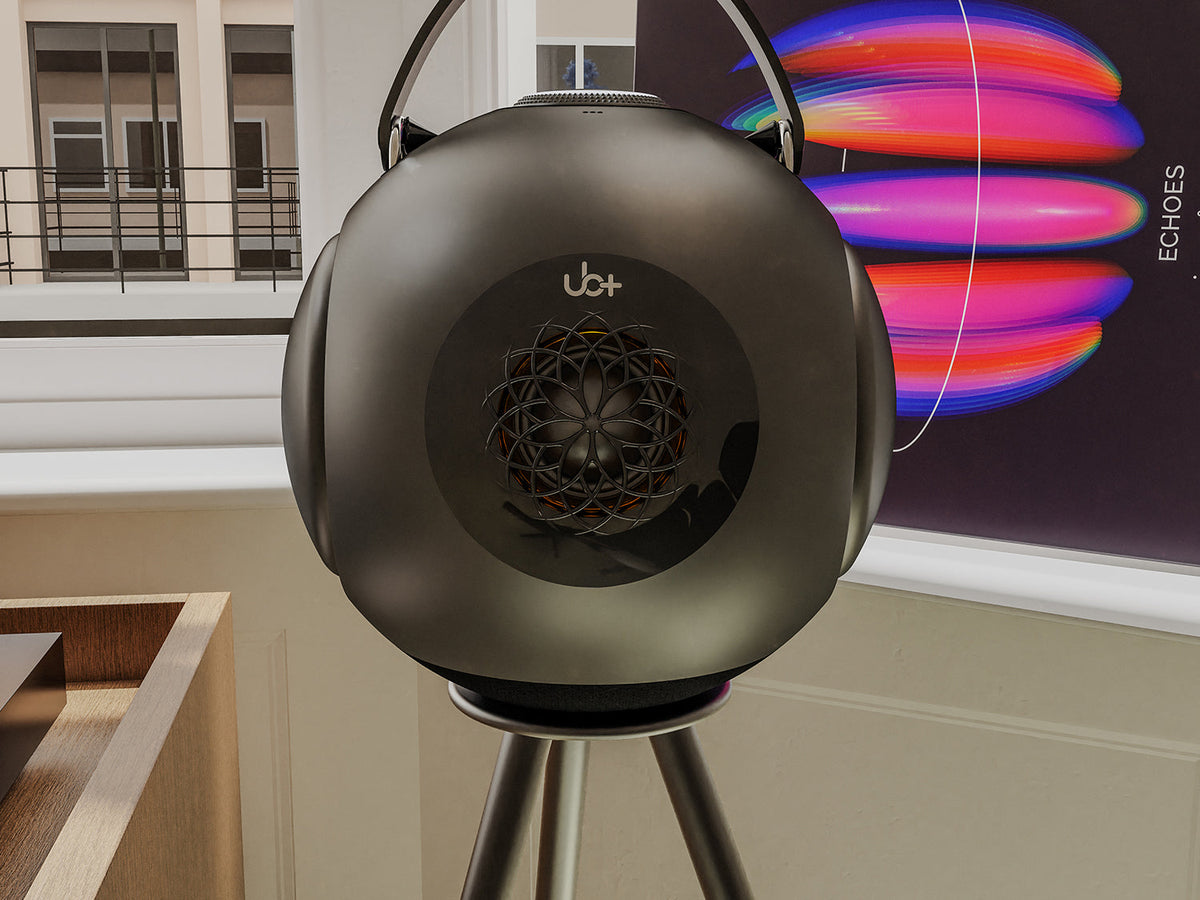
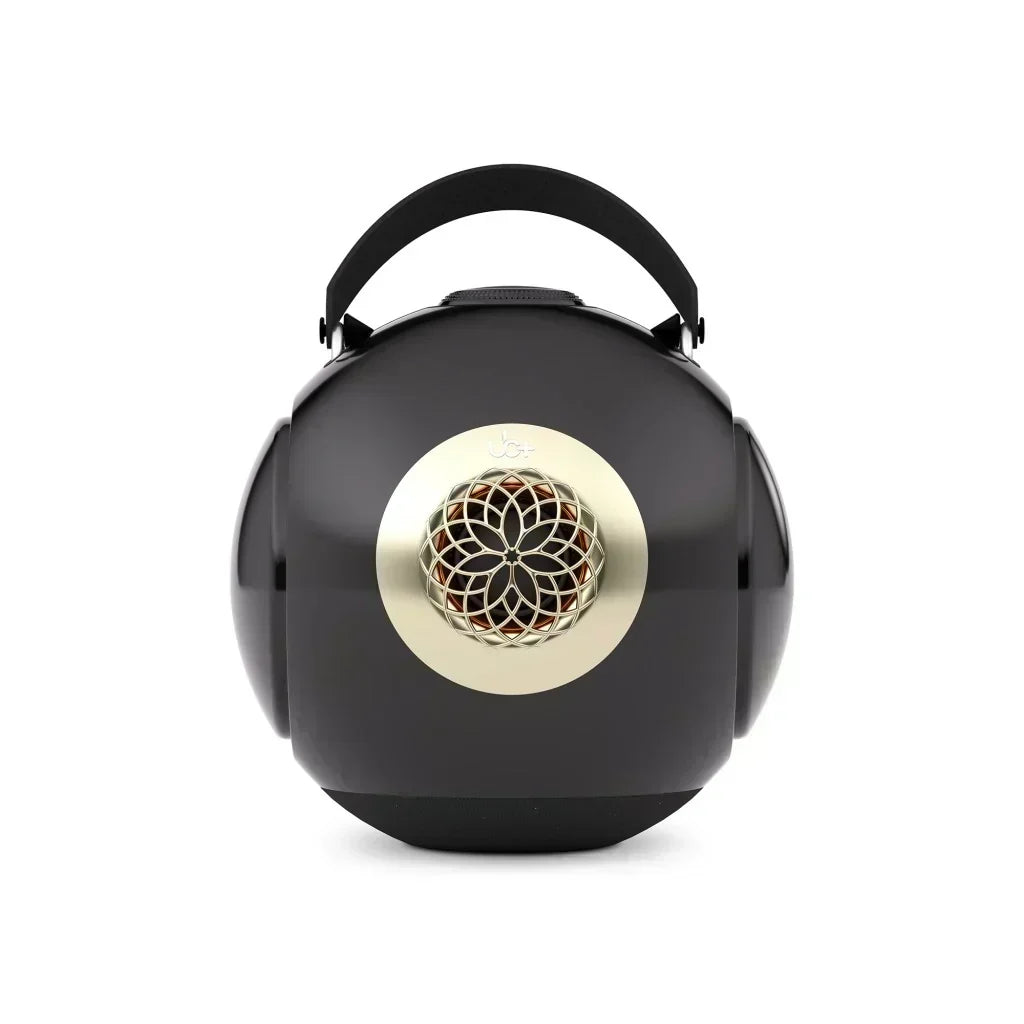
The UB+ dB Mini and UB+ dB1 DoubleBass approach the category from an acoustic-engineering perspective. Instead of treating the enclosure as a simple container for electronic components, UB+ uses spherical geometry as part of the acoustic system.
For shoppers comparing the best Bluetooth speaker under $300, that difference is worth understanding.
What Should You Actually Look For Under $300?

Price is useful as a starting point, but it does not tell you what kind of speaker you are buying.
A speaker under $300 can prioritize portability, battery life, durability, loudness, bass impact, room coverage, industrial design, or acoustic refinement. Two models at similar prices may therefore be designed around completely different objectives.
Before looking at individual features, consider these areas:
|
Factor |
Why It Matters |
|
Enclosure design |
Influences internal reflections, resonance, and air movement |
|
Driver architecture |
Determines how efficiently the system produces sound |
|
Bass system |
Ports, passive radiators, and acoustic chambers behave differently |
|
Dispersion |
Determines how consistently sound reaches listeners around the room |
|
Resonance control |
Helps reduce unwanted coloration and vibration |
|
Connectivity |
Affects everyday wireless convenience |
|
Battery performance |
Matters for portable and extended listening |
|
Build and water resistance |
Important for flexible indoor and outdoor use |
|
System tuning |
Determines how all physical components work together |
This broader way of evaluating speakers is also useful when comparing different price categories. The existing Bluetooth speaker buying guide covers many of the practical specifications buyers should consider before making a purchase.
Why Enclosure Design Matters More Than Most Spec Sheets Suggest

One of the least discussed parts of a portable speaker is the enclosure.
The cabinet influences how air moves, how internal sound waves interact, and how mechanical energy is transferred through the system. It is not simply a protective shell surrounding the driver.
Traditional rectangular cabinets contain flat internal surfaces, including parallel walls that can contribute to standing-wave behavior and uneven pressure distribution.
Engineers can address these problems through damping, internal structures, DSP, and careful tuning. But the enclosure geometry remains part of the acoustic equation.
The UB+ approach starts somewhere different.
Both the dB Mini and dB1 DoubleBass use spherical enclosure concepts designed around controlled internal air movement. The dB1 takes this further with a Helmholtz-inspired spherical acoustic chamber that makes the enclosure an active part of the acoustic architecture.
This is one reason a round speaker should not automatically be dismissed as an industrial-design decision.
The relationship between enclosure geometry and sound is explored in more detail in Spherical vs. Box Speakers: How Enclosure Shape Changes Sound.
UB+ dB Mini: Compact Acoustic Design

For someone searching for a compact Bluetooth speaker under $300, physical size can be just as important as output.
A smaller speaker needs to make efficient use of its available internal volume. Simply making the driver work harder is not always the best solution.
The UB+ dB Mini uses a spherical enclosure to manage its internal acoustic environment while maintaining a compact footprint. Its design is intended for listeners who want a wireless speaker that can move easily between a desk, bedroom, small apartment, travel setup, or other personal listening space.
The spherical form provides a different acoustic environment from a conventional rectangular portable cabinet.
Instead of relying entirely on electronic equalization to compensate for a small enclosure, the design incorporates the behavior of the chamber itself.
That approach can help explain why enclosure architecture matters when comparing compact wireless speakers.
For buyers specifically interested in smaller rooms, the existing guide to portable Bluetooth speakers for small apartments provides another useful way to evaluate speaker size, placement, and room coverage.
UB+ dB1 DoubleBass: A More Advanced Bass Architecture

The UB+ dB1 DoubleBass takes the spherical concept further.
At the center of the system is a 4.5-inch long-stroke mid-bass driver that fires downward into the spherical chamber. Rather than directing all of its energy immediately toward the listener, the driver energizes the internal air volume.
That pressure then interacts with two large passive radiators positioned on opposite sides of the enclosure.
This is the foundation of the DoubleBass system.
The combined passive-radiator surface area is approximately 3.5 times the area of the active woofer. The large radiating area allows the system to move substantial amounts of air while keeping the physical architecture compact.
The two radiators also operate symmetrically.
As they move in opposite directions, their mechanical forces counterbalance each other. This self-cancelling vibration architecture helps reduce unwanted cabinet movement, allowing more of the system's energy to contribute to acoustic output rather than enclosure vibration.
The result is an approach to bass reproduction based on mechanical and acoustic design rather than simply increasing electronic bass boost.
How the dB1 Produces Low-Frequency Output
Bass reproduction is one of the biggest challenges in compact wireless audio.
Low frequencies require substantial air movement, but portable speakers have limited enclosure volume and limited physical space for large drivers.
There are several ways manufacturers approach this challenge:
- Bass-reflex ports
- Passive radiators
- DSP-based bass shaping
- Larger drivers
- Multiple drivers
- Specialized acoustic chambers
The dB1 combines several physical approaches.
Its downward-firing driver energizes the spherical chamber. The chamber manages the internal air pressure, while the two opposing passive radiators convert that pressure into additional low-frequency movement.
This is different from simply boosting bass electronically.
The system is designed so that the physical enclosure and air volume participate in the reproduction process.
The result is a frequency response extending toward approximately 40Hz, while the passive-radiator architecture provides substantial radiating area relative to the active driver.
For a deeper explanation of passive-radiator engineering, see Passive Radiators vs. Ported Boxes: How Spherical Speakers Produce Bass.
Why Mechanical Bass Design Matters
Bass can be made more noticeable in several ways.
Electronic processing can increase the perceived level of low frequencies. A larger driver can move more air. A port can extend the low-frequency response around its tuning frequency. A passive radiator can provide additional acoustic output without requiring an open port.
But the challenge is maintaining control.
When low-frequency energy becomes excessive or poorly controlled, it can mask vocals and instruments. Cabinet vibration can also waste energy and affect how the speaker interacts with the surface beneath it.
The dB1's symmetrical passive-radiator arrangement addresses part of this mechanical problem.
The opposing radiators are designed to move together in a balanced configuration. Instead of concentrating reactive forces into one part of the cabinet, the system works toward mechanical cancellation.
That is an important distinction between more bass and controlled bass.
Spherical Design and 360° Sound
Bass is not the only reason enclosure geometry matters.
The spherical architecture of the dB1 also supports its 360° sound presentation.
A conventional front-firing speaker has a preferred direction. This is useful when the speaker is placed toward a specific listener, but it can become less convenient when people move around the room.
A spherical wireless speaker is designed around a different listening pattern.
The dB1 can be placed in a living room, workspace, bedroom, dining area, or other shared environment where listeners may not remain directly in front of the speaker.
This makes it particularly relevant for people who want a portable speaker to become part of the room rather than remain pointed toward a single listening position.
The difference between broad sound distribution and directional speaker placement is explained further in 360° vs. Front-Firing Speakers: Which Design Fits Your Listening Space?.
What About Sound Quality Beyond Bass?
A speaker should not be judged entirely by its low-frequency output.
Vocals, acoustic instruments, dialogue, percussion, and higher-frequency details all depend on how well the entire acoustic system is controlled.
This is where enclosure design becomes important again.
If internal reflections and resonances are poorly managed, they can influence the tonal balance before the sound even reaches the listener.
The dB1's spherical chamber is designed to reduce the problems associated with parallel internal surfaces and provide a more uniform internal pressure environment.
The goal is not simply to make bass louder.
It is to allow the low-frequency system to work without overwhelming the midrange.
That can help the speaker maintain a more balanced presentation across different types of content.
For readers evaluating speakers based on sound rather than just specifications, Why Some Speakers Sound Better Than Others provides useful context on the relationship between design and perceived performance.
UB+ dB1 vs. dB Mini: Which Approach Fits You?
Both UB+ models share the broader spherical design philosophy, but they address different listening needs.
|
Consideration |
UB+ dB Mini |
UB+ dB1 DoubleBass |
|
Primary focus |
Compact wireless listening |
More substantial acoustic output |
|
Form factor |
Compact sphere |
Larger spherical architecture |
|
Portability |
Highly portable |
Portable |
|
Acoustic approach |
Spherical enclosure |
Helmholtz-inspired spherical chamber |
|
Bass architecture |
Compact acoustic system |
Downward-firing driver + dual passive radiators |
|
Sound presentation |
Compact, room-friendly |
Broad, room-filling presentation |
|
Best suited to |
Desk, bedroom, travel, smaller spaces |
Living rooms, larger spaces, indoor/outdoor use |
|
Bass emphasis |
Balanced compact output |
Deeper low-frequency capability |
|
Design philosophy |
Small-format spherical audio |
Full DoubleBass acoustic architecture |
The choice therefore does not need to come down to which model has the most specifications.
It should come down to how much acoustic output you need and where you intend to use the speaker.
What Makes a Speaker Feel More Premium?
The word "premium" is often used to describe materials, finishes, or brand positioning.
But in audio, premium performance also comes from how carefully the individual parts work together.
The dB1 combines:
- A spherical acoustic chamber
- A 4.5-inch downward-firing mid-bass driver
- Dual symmetrical passive radiators
- Approximately 3.5× the active woofer area in combined passive-radiator surface
- A large 90 mm neodymium magnet
- Long-stroke driver architecture
- 360° sound presentation
- Bluetooth 5.3 connectivity
- IPX5 water resistance
These specifications matter because they form part of a larger acoustic system.
The objective is not to make one component impressive in isolation. The objective is to make the driver, chamber, air volume, radiators, and enclosure work together.
Why Price Alone Does Not Tell You Which Speaker Is Better Value
When comparing the best Bluetooth speaker under $300, it is tempting to divide products into simple categories: cheap, mid-range, and premium.
But price does not directly tell you how a speaker is engineered.
A more useful question is:
What are you getting for the money?
A speaker may justify a higher price through:
- More sophisticated acoustic architecture
- Better driver components
- More efficient bass reproduction
- More controlled resonance
- Better dispersion
- Higher-quality construction
- More flexible connectivity
- Greater listening consistency
This is why a buyer should compare architecture as well as specifications.
The existing Best Value Bluetooth Speaker guide takes a similar approach by focusing on the relationship between features, performance, and overall value rather than treating the lowest price as the only measure.
Why the dB1 Is Different From a Typical Compact Bluetooth Speaker
The dB1's distinguishing feature is not simply that it is round.
Its architecture combines several elements that are designed to work together:
The sphere provides the acoustic chamber.
The downward-firing driver energizes the internal air volume.
The passive radiators transform internal pressure into additional low-frequency output.
The symmetrical configuration helps counteract mechanical forces.
The 360° presentation allows the speaker to distribute sound around its surrounding environment.
Each element supports the next.
That is what makes the design more meaningful than simply changing the exterior shape of a conventional portable speaker.
A Practical Buying Checklist for Speakers Under $300
Before choosing a speaker in this price category, look beyond the marketing headline.
Consider the enclosure
Ask how the cabinet manages internal reflections, resonance, and air pressure.
Look at the bass architecture
Determine whether the speaker uses a port, passive radiator, acoustic chamber, DSP, or a combination of approaches.
Consider dispersion
Think about whether you usually sit directly in front of your speaker or move around the room.
Check the actual driver arrangement
Driver size alone does not determine performance. Orientation, excursion, enclosure volume, and system tuning also matter.
Look at connectivity
Bluetooth version and additional playback options can affect everyday usability.
Consider the environment
A speaker used primarily at a desk has different requirements from one used in a living room, on a patio, or outdoors.
Don't ignore physical stability
Low-frequency energy can cause unwanted cabinet movement. Mechanical balance is therefore an important part of speaker engineering.
Which UB+ Speaker Makes Sense for Your Setup?
The dB Mini is designed for buyers who want a compact spherical wireless speaker that fits naturally into smaller spaces and portable listening situations.
The dB1 DoubleBass is intended for listeners who want a more substantial acoustic system, with deeper low-frequency capability, broad sound distribution, and the additional mechanical architecture of its DoubleBass passive-radiator system.
If your listening happens mostly at a desk, in a bedroom, or while traveling, the dB Mini provides a smaller footprint.
If you want a speaker for a living room, shared space, or flexible indoor/outdoor listening, the dB1 provides a larger acoustic platform while remaining portable.
Both follow the same broader principle: use physical acoustic design to do more of the work before relying on electronic processing.
Why UB+ Deserves Consideration Under $300
The best Bluetooth speaker under $300 does not have to be defined by the biggest driver, the loudest marketing claim, or the longest specification list.
What matters is how the components interact.
UB+ approaches this price category through spherical acoustic architecture, controlled air movement, and mechanical bass design.
The dB Mini brings the spherical concept into a compact format.
The dB1 DoubleBass expands that philosophy with its downward-firing mid-bass driver, Helmholtz-inspired chamber, dual symmetrical passive radiators, and approximately 3.5× passive-radiator surface area relative to the active woofer.
That makes the dB1 particularly interesting for buyers who want something beyond the conventional rectangular portable-speaker formula.
Frequently Asked Questions
What should I look for in the best Bluetooth speaker under $300?
Look at enclosure design, driver architecture, bass system, dispersion, connectivity, battery performance, build quality, and how the speaker is tuned as a complete system. No single specification tells you how a speaker will perform in a real room.
Is the UB+ dB1 suitable for home listening?
Yes. Its spherical design and 360° sound presentation make it suitable for shared rooms, living spaces, work areas, and other environments where listeners may not remain in one fixed position.
Does the dB1 use DSP for its bass?
DSP is part of the system's overall control and protection, but the dB1's low-frequency architecture is primarily based on its spherical chamber, downward-firing driver, and dual symmetrical passive radiators rather than relying solely on artificial bass boosting.
Why does the dB1 use two passive radiators?
The two passive radiators contribute to low-frequency output while their symmetrical positioning helps counterbalance mechanical forces. The combined radiating area is approximately 3.5× that of the active woofer.
Is a spherical Bluetooth speaker better for every listener?
Not necessarily. Speaker design should match the listening environment and priorities. A spherical design can be particularly useful for listeners who value broad sound distribution, flexible placement, and an enclosure designed around controlled internal air movement.
Final Thoughts
Finding the best Bluetooth speaker under $300 is ultimately about looking beyond the specification sheet.
A compact speaker needs to manage limited space, limited power, and the physical challenges of producing convincing low frequencies. The way it solves those problems is what separates different designs.
The UB+ dB Mini approaches compact wireless audio through spherical acoustic architecture in a smaller format.
The UB+ dB1 DoubleBass takes that concept further through its Helmholtz-inspired spherical chamber, downward-firing mid-bass driver, dual symmetrical passive radiators, and broad sound presentation.
Rather than treating the enclosure as something that simply holds the electronics, UB+ makes the acoustic structure part of the engineering solution.
For buyers comparing Bluetooth speakers around the $300 price point, that is the key question to ask:
Is the speaker simply producing sound, or is its physical design helping produce better-controlled sound?
Explore UB+ Speakers


Leave a comment
This site is protected by hCaptcha and the hCaptcha Privacy Policy and Terms of Service apply.